MUAC, Museo Tamayo, Museo Jumex and kurimanzutto lead an unusually strong September in Mexico City, from Julian Rosefeldt and John Giorno to Richard Prince and a transatlantic reconsideration of Tamayo, Nieto and Toledo.
What to See in Mexico City in September 2026
MUAC, Museo Tamayo, Museo Jumex and kurimanzutto lead an unusually strong September in Mexico City, from Julian Rosefeldt and John Giorno to Richard Prince and a transatlantic reconsideration of Tamayo, Nieto and Toledo.

Mexico City in September is unusually good at collapsing the distinction between historical depth and contemporary urgency. The month brings a major moving-image installation to MUAC, a dense cluster of exhibitions at Museo Tamayo, the first major Richard Prince survey in Latin America at Museo Jumex and a John Giorno exhibition at kurimanzutto that pushes poetry back into sound, performance and architecture. None of these projects needs a fair week to justify the trip; together, they make the city one of the strongest institutional viewing programmes of the month.
This is an unranked ARTCOLLECTORNEWS selection rather than a travel itinerary. The point is not to cover the city exhaustively but to identify exhibitions that reward serious looking and give collectors useful context: how artists move across media, how museums revise national narratives, how the same historical material changes when seen from Mexico rather than Europe or the United States, and how institutional framing can expose the difference between a familiar name and a genuinely understood practice.
Julian Rosefeldt: Manifesto — MUAC
MUAC opens Julian Rosefeldt’s Manifesto on 5 September, where it remains on view through 6 December. The work is a thirteen-channel cinematic installation built from a montage of twentieth-century artistic manifestos. Cate Blanchett appears across thirteen personas, allowing declarations associated with Futurism, Dada, Suprematism, Fluxus, the Situationists, Dogme 95 and other movements to migrate into unlikely contemporary settings.
The result is less a history lesson than a test of language under pressure. Manifestos were written to sound urgent, definitive and often generationally combative. Rosefeldt detaches that rhetoric from its original movement and asks whether the conviction survives. In a museum environment, the work also makes a useful argument about duration: there is no single image to absorb and move past. Viewers have to choose where to stand, which voice to follow and when to let competing screens interfere with one another.
For collectors of moving image, Manifesto is a reminder that the edition is only part of the object. Display architecture, channel synchronisation, sound, playback specifications, file migration and installation instructions are integral to the work’s identity. A museum presentation can therefore be more revealing than a fair encounter: it shows what ownership must preserve, not merely what the image looks like on a screen.
Tamayo, Nieto, Toledo: The Paris Years — Museo Tamayo
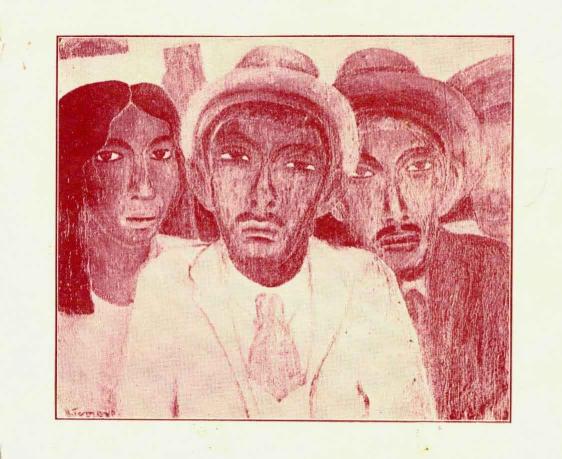
At Museo Tamayo, Tamayo, Nieto, Toledo: The Paris Years, opened on 20 August and runs into February 2027. The exhibition brings Rufino Tamayo, Rodolfo Nieto and Francisco Toledo together through periods spent in Paris during the second half of the twentieth century. It is an intelligent way to complicate the old binary between “Mexican” identity and “international” modernism.
All three artists carried local visual memories into a European art centre, but none simply exchanged one language for another. Their work across painting, drawing, printmaking and collage absorbed transatlantic encounters while remaining alert to pre-Hispanic forms, popular imagery, animals, myth and material traditions. The exhibition therefore asks a question with real collecting relevance: when an artist is canonised nationally, how much of the work’s complexity gets lost by forcing it to represent a single place?
The pairing is especially valuable for collectors who know Tamayo and Toledo well but encounter Nieto less often. Grouping artists across generations makes differences of market visibility harder to confuse with differences of historical consequence. It also rewards close comparison of works on paper and graphic production, categories in which technical experimentation can be more legible—and in which price hierarchies are often very different from those attached to major paintings.

Before the Eclipse, Fátima Rodrigo and the museum looking at itself
Museo Tamayo has enough on view in September to justify thinking of the institution as a concentrated exhibition ecosystem. Before the Eclipse: Archaeologies of Art in Mexico continues through 18 October, while Fátima Rodrigo’s For All and my Sadness runs through 27 September. Tamayo Horizons closes on 20 September, and Architecture and Cosmotechnics continues into January.
That combination matters because it refuses to separate collection history, exhibition-making, architecture and contemporary practice. For All and my Sadness begins from the visual grammar of Latin American television entertainment: stages, competitions, spectacle and the manufactured intimacy of popular culture. Rodrigo’s project demonstrates how material that can look “too popular” for a conventional art history becomes a serious language once an artist treats its social choreography as form.
Before the Eclipse, meanwhile, invites a different kind of historical attention by treating archaeology not simply as a source of ancient objects but as a method through which modern and contemporary culture constructs relationships to the past. That distinction is important in Mexico, where pre-Hispanic material has repeatedly been mobilised by artists, governments, museums and markets for different ideological purposes.
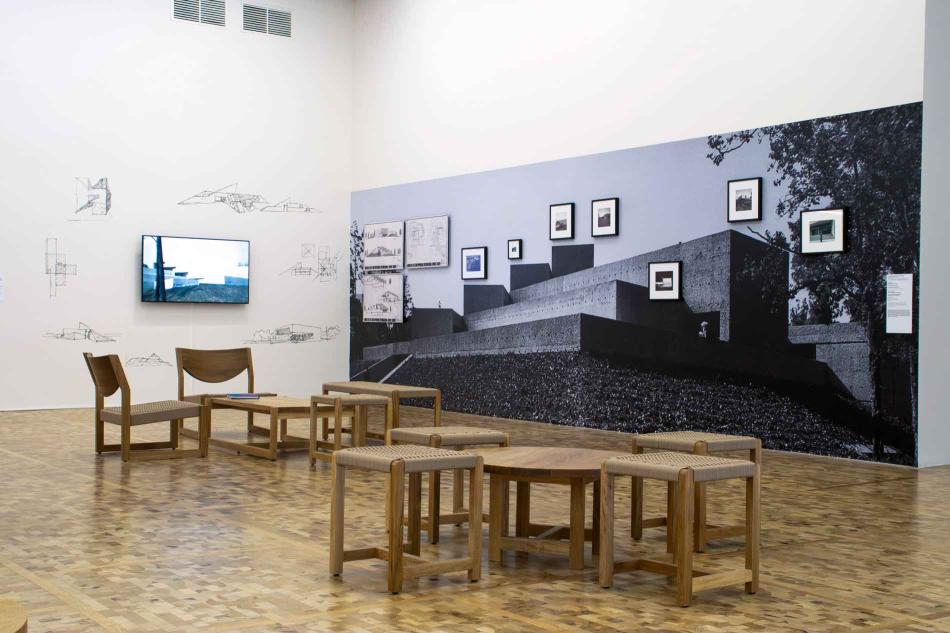
Architecture and Cosmotechnics makes the museum itself part of the argument. Collectors often treat architecture as the neutral envelope around art, but institutions teach viewers how to move, compare, pause and assign importance. A museum building is a technology of attention. When the institution turns that technology into its subject, it becomes easier to see how display conditions shape the art historical narratives collectors later inherit.

Richard Prince: Tell Me Everything — Museo Jumex
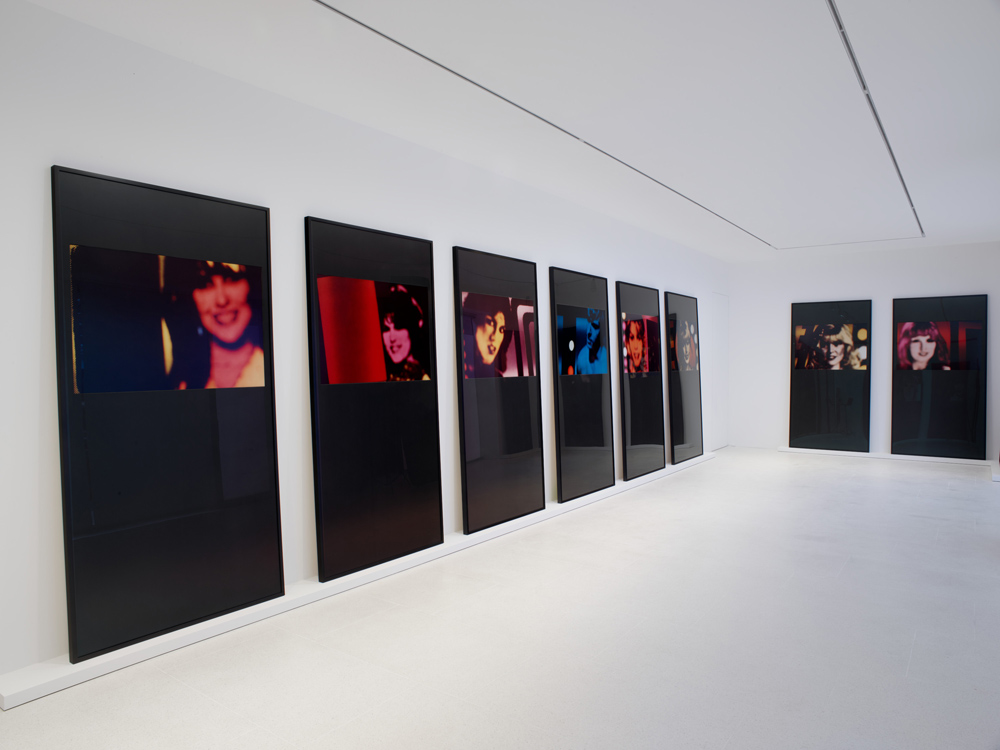
Late September shifts the tone. On 26 September Museo Jumex opens Richard Prince: Tell Me Everything, the first major survey of the artist in Latin America. More than 150 works, spanning the 1970s to the present, are organised around long-running groups including the Cowboys, Girlfriends, Jokes and Cartoons, while early rephotography, the Nurses, de Koonings, High Times, Hoods and other sculptures broaden the picture.
Prince is so familiar as a market name that a large survey can perform a useful corrective. The strongest question is not whether appropriation remains controversial—it does—but how many different operations are hidden inside that label. Cropping, rephotographing, joke transcription, pulp-fiction imagery, altered car parts, painterly quotation and internet-era reuse do not function identically. A survey allows collectors to distinguish a method from a brand.
The Mexico City context also changes the viewing conditions. Prince’s work emerged from American advertising, magazines, masculinity, celebrity and consumer desire. Seeing those materials in Latin America creates a productive distance from the cultural assumptions that made the source images appear ordinary in the first place. It may also sharpen the ethical questions around authorship and image ownership because the exhibition is not protected by nostalgia for the media environment from which the work came.
A strong September programme does not ask collectors to choose between history and the present. It shows how each continually edits the other.

John Giorno: LIFE IS A KILLER — kurimanzutto
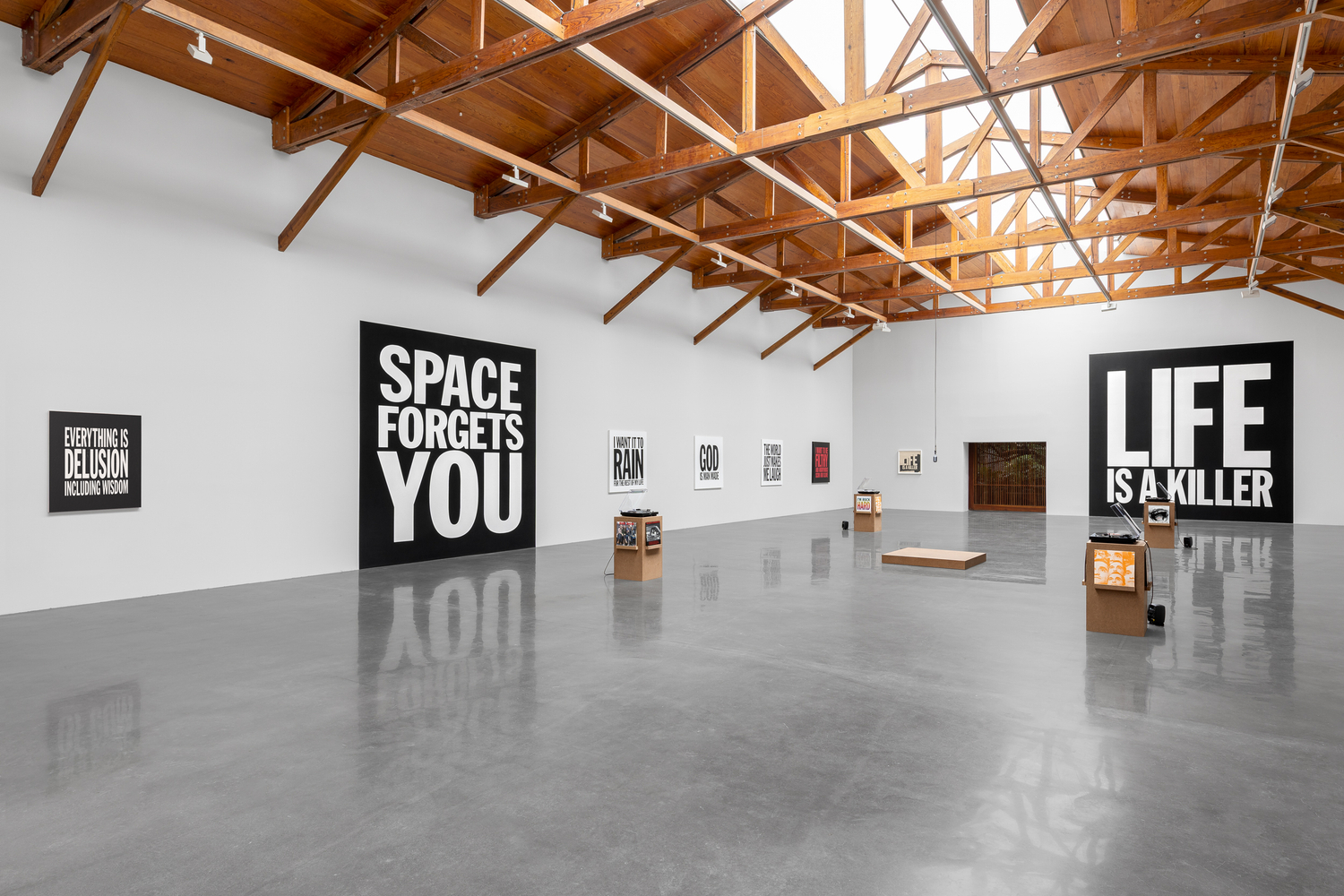
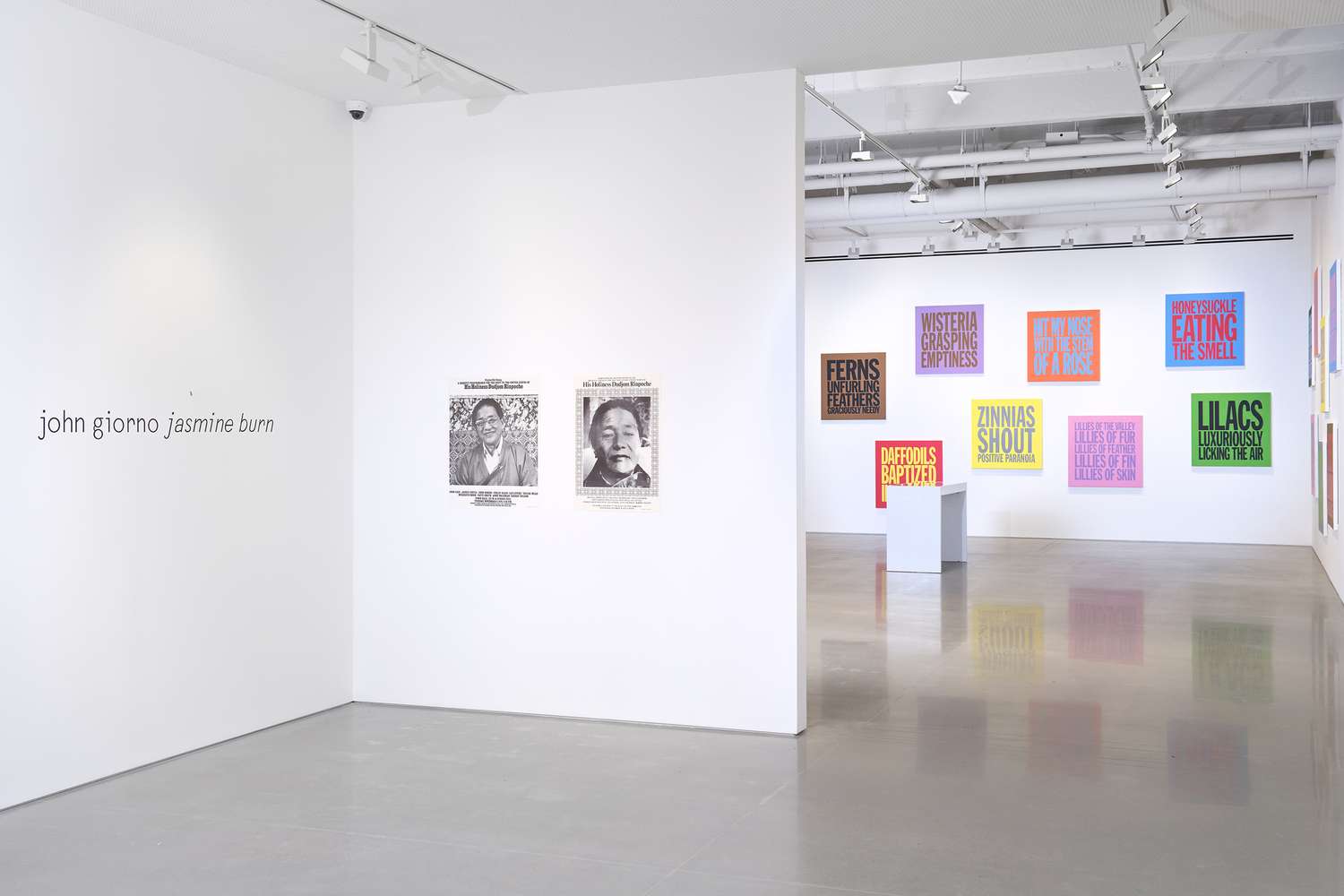
John Giorno’s LIFE IS A KILLER, on view at kurimanzutto from 29 August to 10 October, offers the month’s most porous relationship between visual art and another discipline. It is the first solo exhibition in Mexico City dedicated to Giorno and brings together paintings, works on paper, wall paintings, recordings, film and live performance.
Giorno’s achievement was to treat poetry as something that should circulate through whatever technology could reach an audience. The poem could become a phone call, record, screenprint, performance or enormous painted phrase. At kurimanzutto, four turntables playing releases from Giorno Poetry Systems sit around a performance platform, while archival material and a long film by Rirkrit Tiravanija enlarge the exhibition beyond the wall-bound object.
For collectors, the show is a useful reminder that an artist’s most legible market category may not be the full practice. Giorno’s poem paintings are collectible objects, but the ecosystem around them—recordings, performance, publishing, activism and collaboration—is what makes the language feel consequential rather than decorative. Provenance, edition details and exhibition history are therefore most meaningful when connected to that broader network.

Collector Notes
MUAC: allow enough time for Manifesto. A thirteen-channel installation is not improved by being treated as a quick screening. Collectors of time-based media should pay attention to the relationship between the work and its technical display system.
Museo Tamayo: September is unusually dense. See The Paris Years alongside Before the Eclipse and the architecture exhibition rather than isolating the headline names. The institution’s strength this month is the conversation between historical and contemporary framing.
Museo Jumex: Prince opens only on 26 September. The survey’s scale makes it valuable for distinguishing series, dates and media within a market that can otherwise flatten the artist into a few high-recognition motifs.
Kurimanzutto: Giorno is strongest when the sound and performance elements are active. Check the public programme and do not reduce the exhibition to the poem paintings alone.
Mexico City’s September advantage is breadth without incoherence. Modern Mexican art is being reconsidered through Paris; a museum interrogates its own architecture; a Peruvian artist turns television spectacle into an exhibition language; a canonical American appropriation artist receives his first major Latin American survey; and John Giorno makes poetry audible, physical and social again.
For collectors, the value is not simply that there is a lot to see. It is that the month repeatedly asks how context creates meaning. That is a better reason to look closely than any checklist of names.
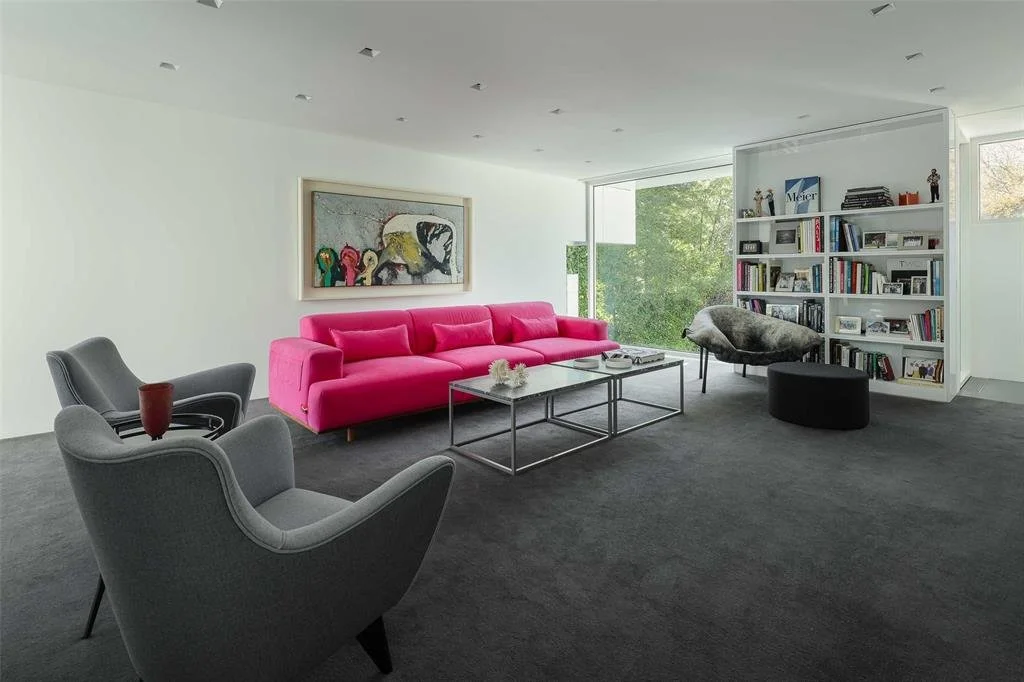
From Richard Meier’s glass-walled rooms to Gutai paintings, Arte Povera and site-specific sculpture, the Rachofsky House shows what happens when art leaves the gallery and becomes part of daily life.
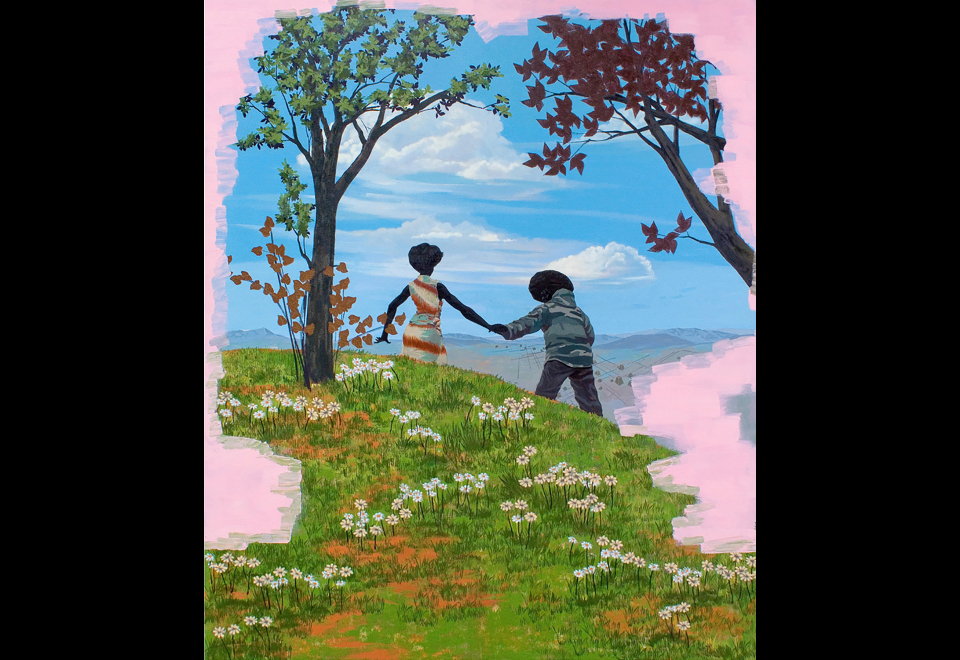
Before Art Basel Paris arrives in October, September brings a concentrated Paris season spanning Kerry James Marshall, Cezanne, Christian Marclay, Paris Design Week, Fine Arts Paris and a gallery-history exhibition in the Marais.