
September 7, 2026
Articles
Articles
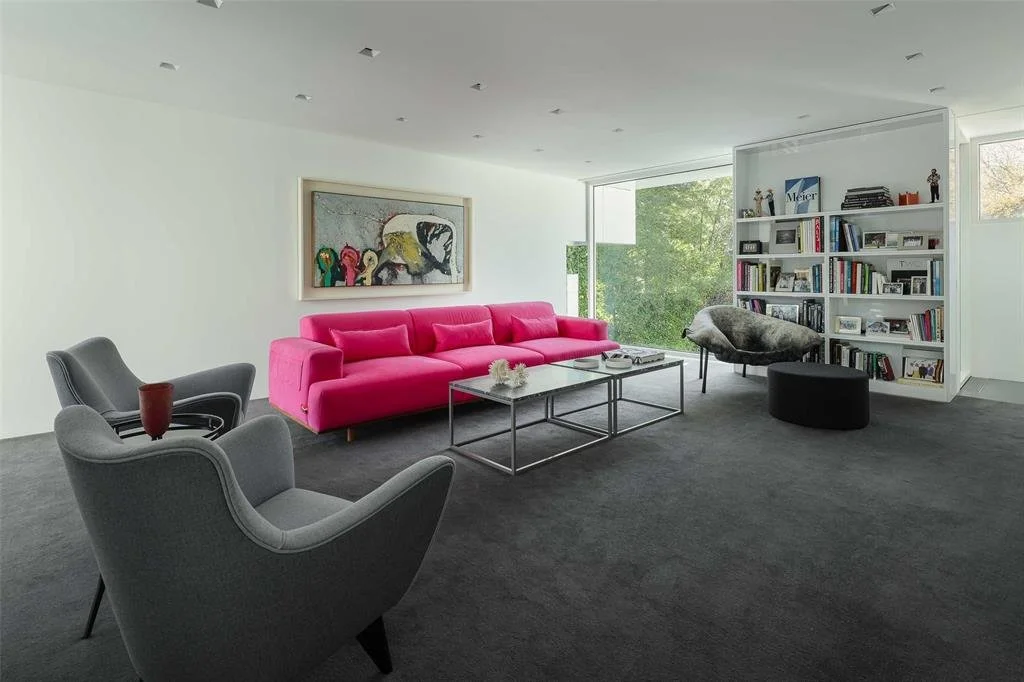
From Richard Meier’s glass-walled rooms to Gutai paintings, Arte Povera and site-specific sculpture, the Rachofsky House shows what happens when art leaves the gallery and becomes part of daily life.
From Richard Meier’s glass-walled rooms to Gutai paintings, Arte Povera and site-specific sculpture, the Rachofsky House shows what happens when art leaves the gallery and becomes part of daily life.
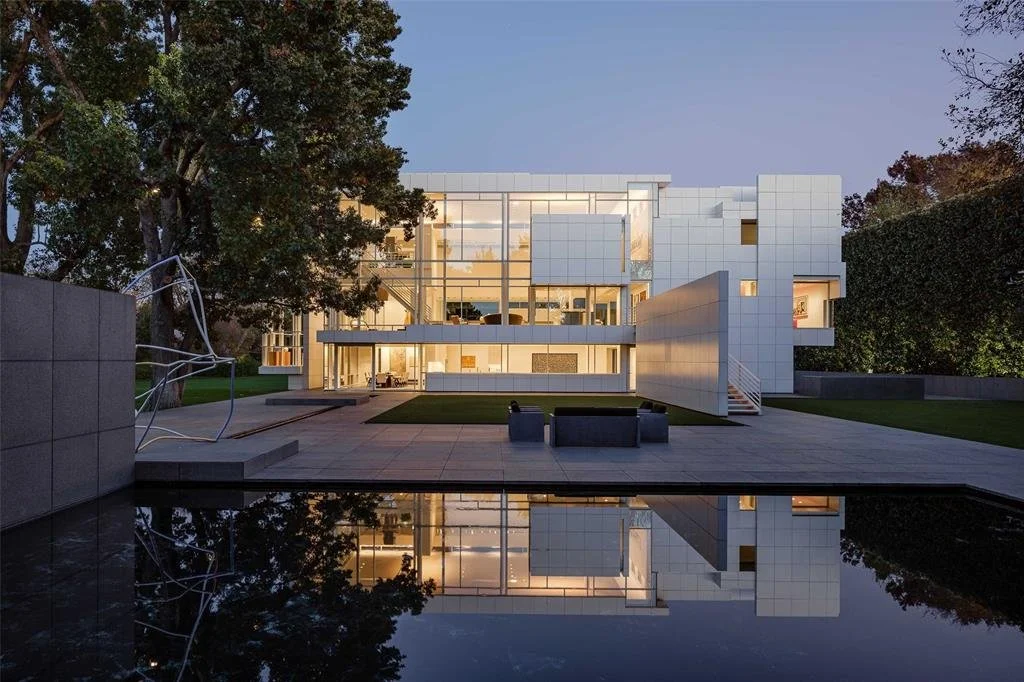
Richard Meier’s Rachofsky House is famous as a work of architecture, but its deeper importance lies in what Cindy and Howard Rachofsky did inside it. Over three decades, the Dallas residence became a place where Minimalism met domestic life, Gutai paintings met staircases and morning light, sculpture entered the lawn, and a private collection grew by being continually moved, questioned and shared. The result is not art displayed like a gallery, but art lived with.
The most revealing photographs of a collector’s house are rarely the empty architectural ones. They are the photographs in which the room has begun to resist perfection: books on a table, a saturated sofa beneath an important work, a sculpture caught between a chair and a wall of glass, a painting seen from the staircase rather than straight on. Those images tell us something the white cube cannot. They show how art behaves after acquisition, once it has entered the routines, arguments, hospitality and memory of a life.
The Rachofsky House in Dallas is unusually rich territory for that question. Designed by Richard Meier and completed in 1996, the 9,062-square-foot residence was publicly offered for sale at $23 million in 2025, reduced to $17.5 million in May 2026, and MLS-derived records show that the listing was withdrawn in July. The recent appearance of the house on the market gives us a reason to look again, but the real story is not the price. It is how a building originally conceived with almost monastic clarity became inseparable from the growth of one of America’s most consequential private contemporary-art collections.
Howard Rachofsky’s route into serious collecting did not begin with Arte Povera or Gutai. As he later recalled, his early purchases were comparatively conventional: prints by Picasso, Matisse and Degas acquired through a local dealer. He had grown up in Dallas, studied at Wharton and the University of Texas School of Law, and made his fortune in finance. By the early 1990s he was in a position to commission something extraordinary.
After admiring Richard Meier’s High Museum of Art in Atlanta, Rachofsky asked the architect to create a residence in Dallas. Construction began in 1993; he moved in three years later. The original brief was famously uncompromising—a vast one-bedroom bachelor house whose white metal panels, black-granite podium, glass walls and precisely controlled circulation appeared to belong as much to the history of modern architecture as to domestic life.
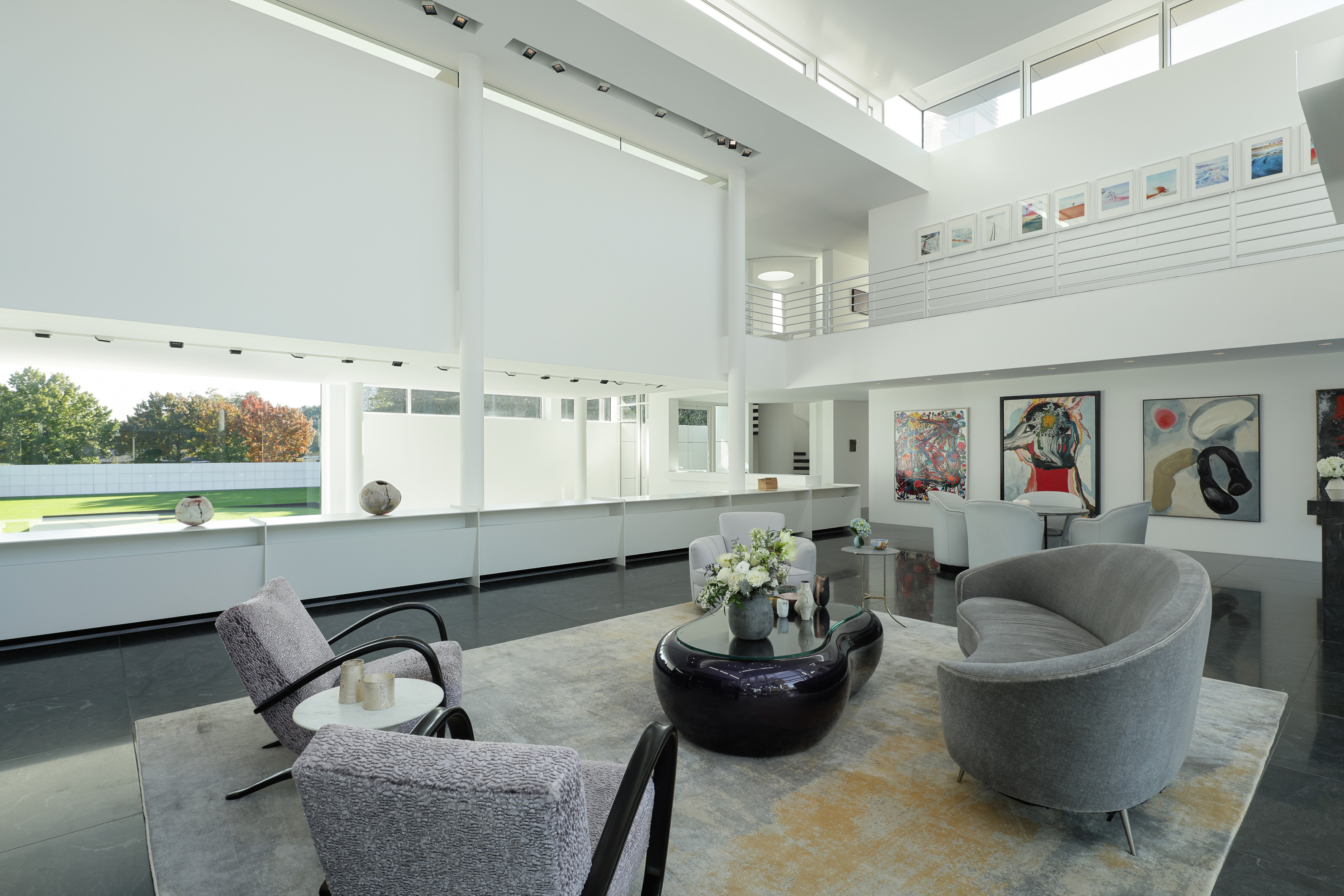
The architecture mattered because it gave Rachofsky a problem to solve. Once the house was complete, he wanted to collect with more depth and coherence. On the recommendation of a friend he began working with Allan Schwartzman, then a critic who had not yet become one of the art world’s best-known advisers. Schwartzman later described the Meier house as the “logical beginning point” for the collection. Its geometry and emphasis on volume, material and perception pointed naturally toward American Minimalism.
In that sense, the house was not merely built to receive a finished collection. It helped generate one.
At the Rachofsky House, architecture was not a background for collecting. It became one of the forces that taught the collector how to look.
Howard’s bachelorhood did not last. He met Cindy, and the story of the building changed. For a period the couple lived nearby while the Meier house operated more like a private exhibition and event space, open by appointment and used for school groups, collectors, curators and charitable gatherings. When The Warehouse opened in 2012 as an 18,000-square-foot exhibition space for the collection, Cindy and Howard moved back into the Meier house and turned it again into their primary residence.
That movement—from home to exhibition space and back to home—is essential. It explains why the most recent photographs are so valuable. They show what happens when a building celebrated for architectural purity has to accept colour, comfort, books, flowers, furniture and the small visual interruptions of daily life.
Cindy’s own comments about living well are telling. Speaking about the influence she passed to her daughter Meghan Looney, she has stressed both investing in art and the supposedly minor things that make a house feel inhabited: good wine, music, books, flowers, photographs, candles and friends around a dining table. Meghan has recalled growing up with minimalism and very little colour, while absorbing her mother’s willingness to take risks.
The pink sofa in the current sitting room is therefore more than a decorative surprise. It is evidence that the Rachofsky House did not remain an architectural diagram. The home softened without losing its clarity. Art did not require the domestic world to disappear.
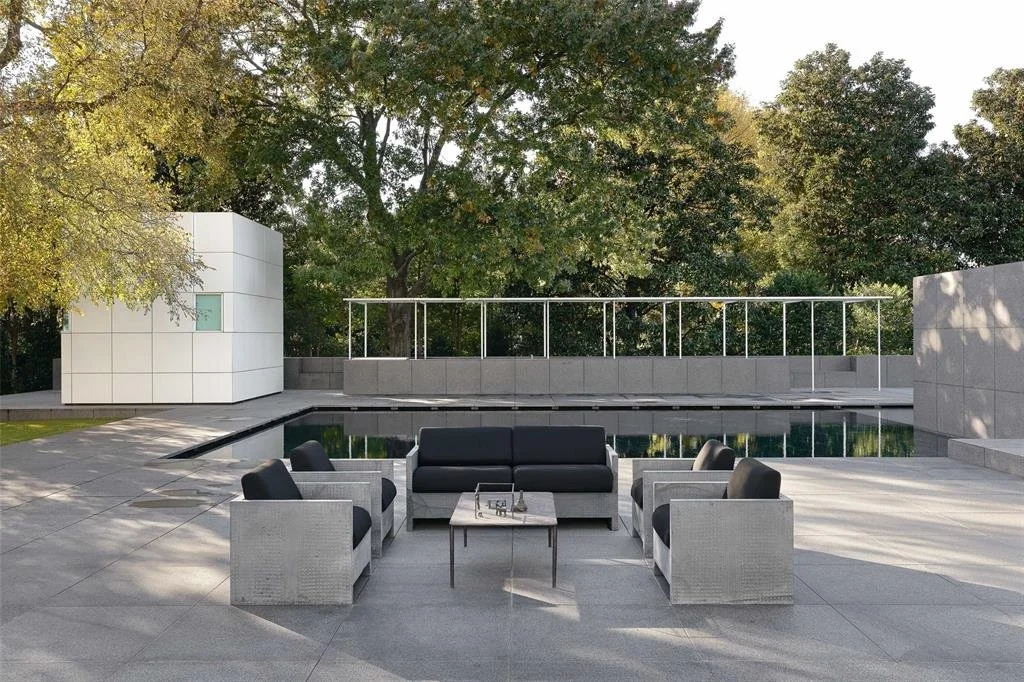
Meier’s own handling of landscape reinforces that idea. The house unfolds between interior and exterior rather than treating them as separate realms. Floor-to-ceiling glass repeatedly returns the eye to the pond, mature red oaks and lawn; the black-granite terrace and reflecting pool continue the visual language of the interior outdoors. It is an architecture built around movement and changing viewpoints—exactly the conditions in which art can be encountered from more than one formal position.
For ARTCOLLECTORHOMES, this is where the Rachofsky story becomes most compelling. The collection was not simply stored in a great building. It was repeatedly reinstalled through the building, allowing different rooms to become temporary arguments about art.
By 2018, Artsy described the collection as roughly 800 works. Its range had expanded dramatically from Howard’s early prints and the initial Minimalist focus. Schwartzman’s approach led from American Minimalism into related but less familiar postwar histories: Italian Arte Povera, Japanese Gutai, later Korean experimental practices, German painting and a younger generation of artists concerned with identity, memory and the body.
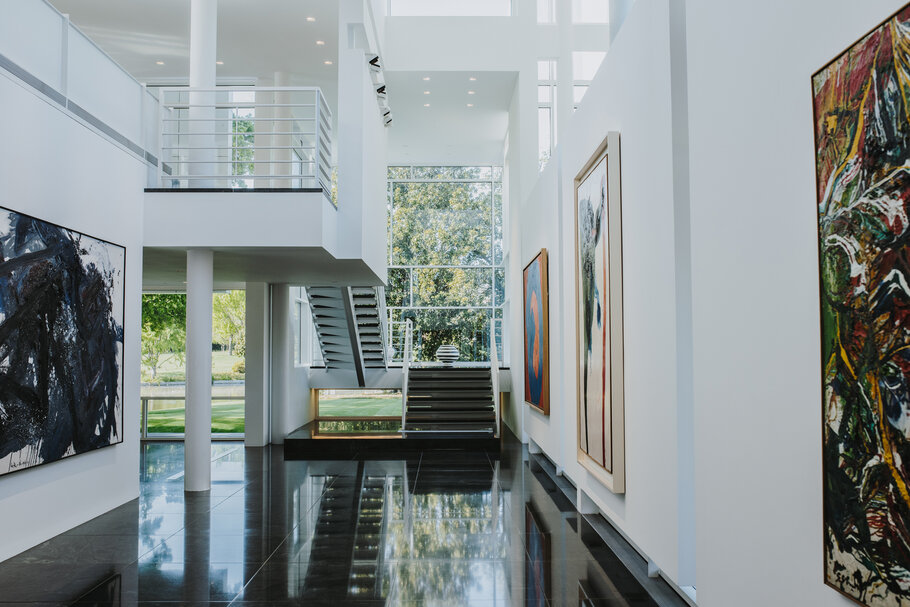
A photograph by Valerie Chiang for Artsy catches the collection in precisely the way a gallery cannot. Works by Kazuo Shiraga, Kazunori Hamana, Sadamasa Motonaga and Shozo Shimamoto are installed along the interior circulation of the house. The black floor reflects them. A staircase cuts across the architecture. Daylight and trees remain present beyond the glazing. The paintings are not politely isolated from one another; they are part of the experience of walking through the building.
That matters particularly for Gutai. Shiraga and Shimamoto belonged to a movement in which gesture, material, force and physical action were central. Against Meier’s clean white architecture, their surfaces feel even more bodily. The house does not neutralise them. It makes their resistance to control more visible.
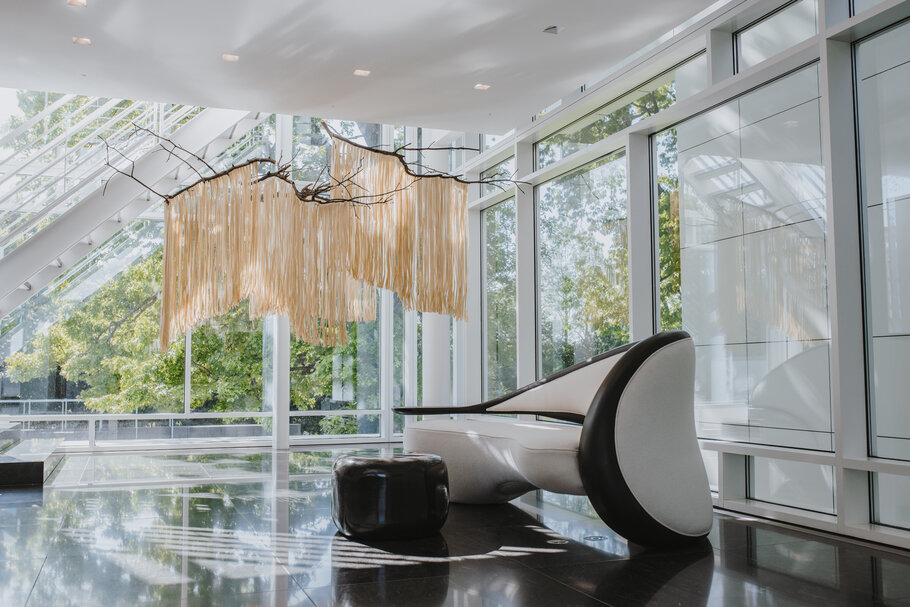
Seung-Taek Lee’s Paper Tree, from the 1970s, offers a different kind of encounter. Suspended inside the glass-walled home, it shares a visual field with furniture and the trees outside. Its fragility becomes part of the room. The work is no longer only an object with a place in Korean experimental-art history; it becomes something affected by daylight, season, human movement and the fact that it is being lived beside.
This is the distinction that collector-home photography can reveal at its best. Context does not diminish serious art. It can uncover qualities that institutional display suppresses.
The Rachofsky House’s installation archive confirms how deliberately Cindy and Howard used the building in this way. A Rachofsky Collection Primer, presented in 2008–09, organised the house room by room around works the collectors regarded as defining the intellectual and sensory infrastructure of the collection. The entrance gallery and dining room placed Donald Judd, Mario Merz, Robert Irwin, Richard Serra and Laurie Anderson into dialogue. Other rooms followed different strands.
The point was not to create the perfect final hang. It was to let one work alter the reading of another.
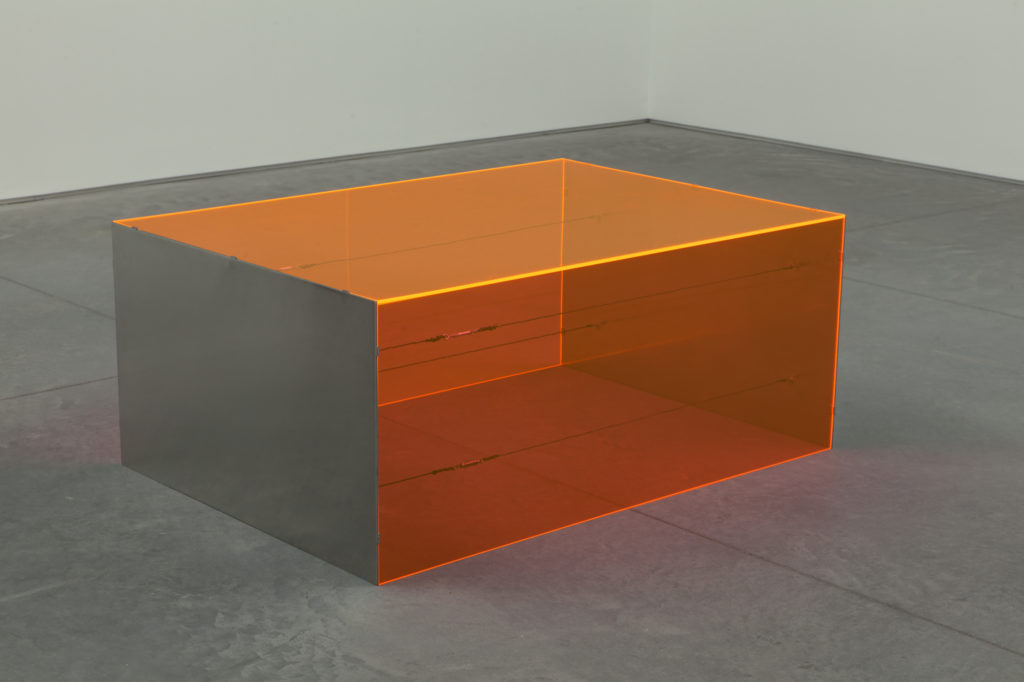
Donald Judd’s Untitled of 1965 is an important anchor for understanding that process. Stainless steel and fluorescent plexiglass create an object whose colour and material are inseparable from the space around it. Judd became central to the Rachofsky Collection not because his work happened to look good in a Meier house, but because Minimalism gave the collectors a language for thinking about architecture, perception and the autonomy of objects.
In the 2003–04 installation Thinking about Sculpture, the Rachofskys began with a simple but revealing desire: to bring five Judd sculptures into the same space. That is a collector’s experiment rather than an interior decorator’s decision. The question was what happened when works made at different moments could be compared directly through one architectural environment.
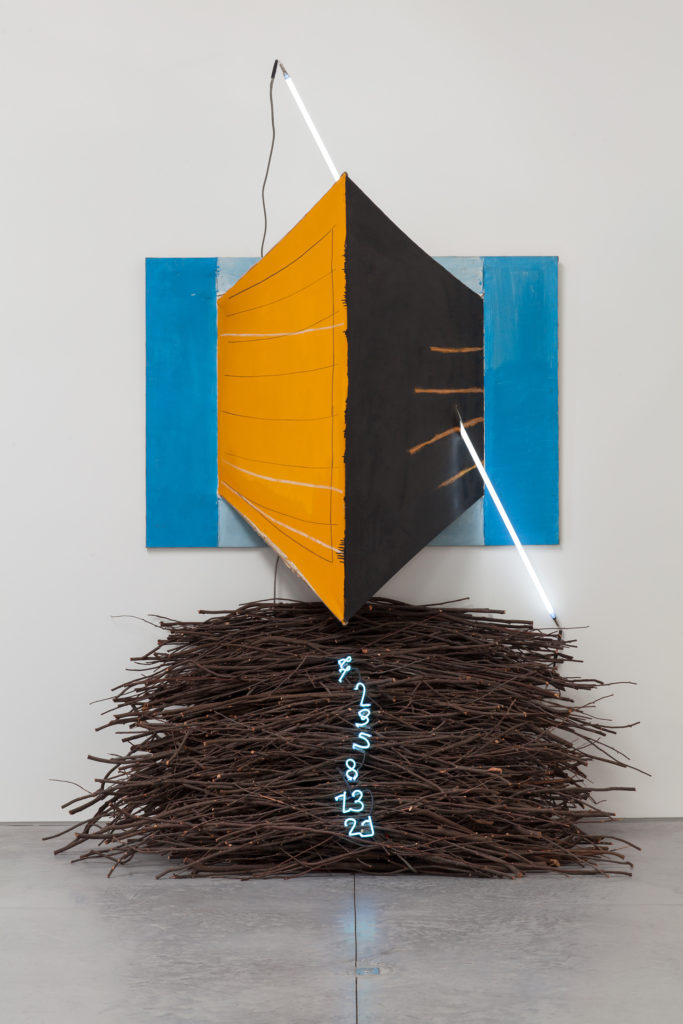
Mario Merz’s Vento preistorico dalle montagne gelate of 1967 pushes the collection in the opposite direction. Canvas, neon and branches refuse the conventional rectangle, spilling into the viewer’s physical space. Within Meier’s carefully controlled rooms, that refusal becomes almost theatrical. The organic and provisional collides with the precise and permanent.
This is one of the deepest lessons of the Rachofsky House: art does not have to “match” its architecture. The more interesting relationship is often friction. A severe room can intensify an unruly work; an irregular material can make architectural order newly visible.
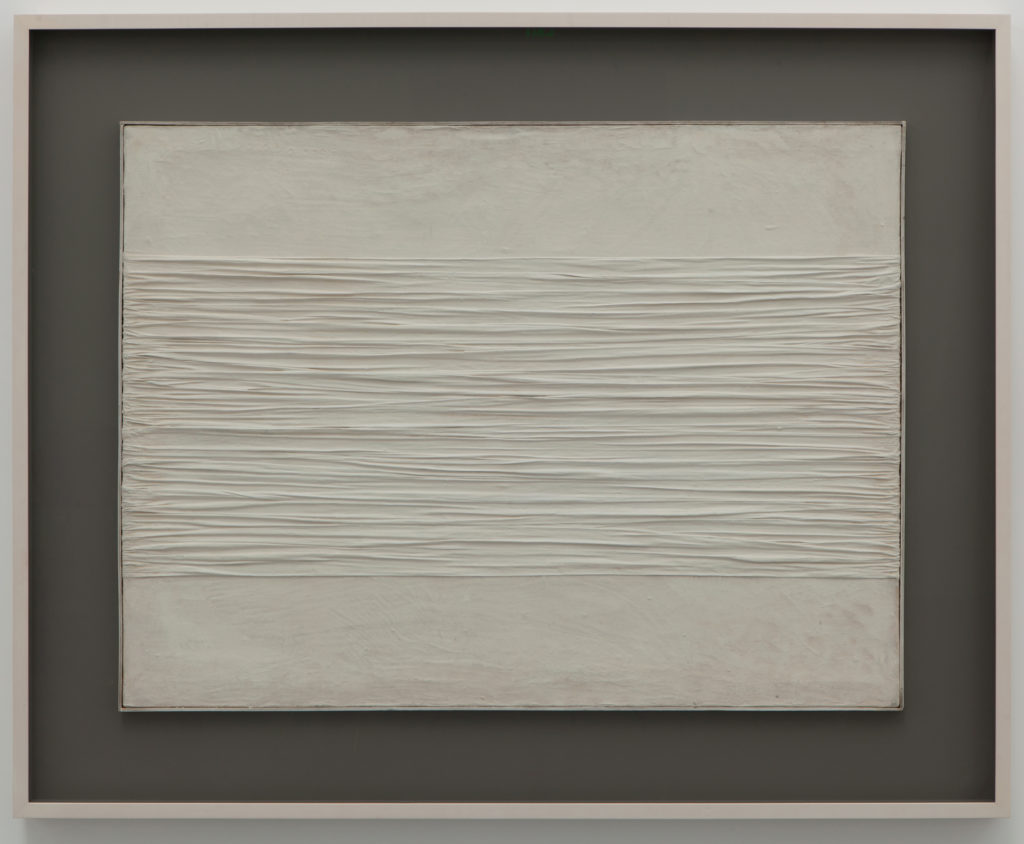
Piero Manzoni’s Achrome, 1958, makes the same point more quietly. At first glance, a white kaolin-on-canvas work in a white Richard Meier house could seem almost too perfectly coordinated. Yet the resemblance is superficial. Meier’s whiteness belongs to systems of control, light and proportion. Manzoni’s whiteness is anti-pictorial, material and deliberately resistant to conventional composition. The visual echo opens onto an intellectual disagreement.
For collectors, that is an important distinction. Coherence does not mean sameness. A strong collection can be held together by questions rather than by appearance.
The second major strand of the Rachofsky Collection complicates the idea that the house is fundamentally a Minimalist environment. Artists such as Felix Gonzalez-Torres, Robert Gober and Do Ho Suh brought personal, social and bodily experience into the collection’s conversation about space.
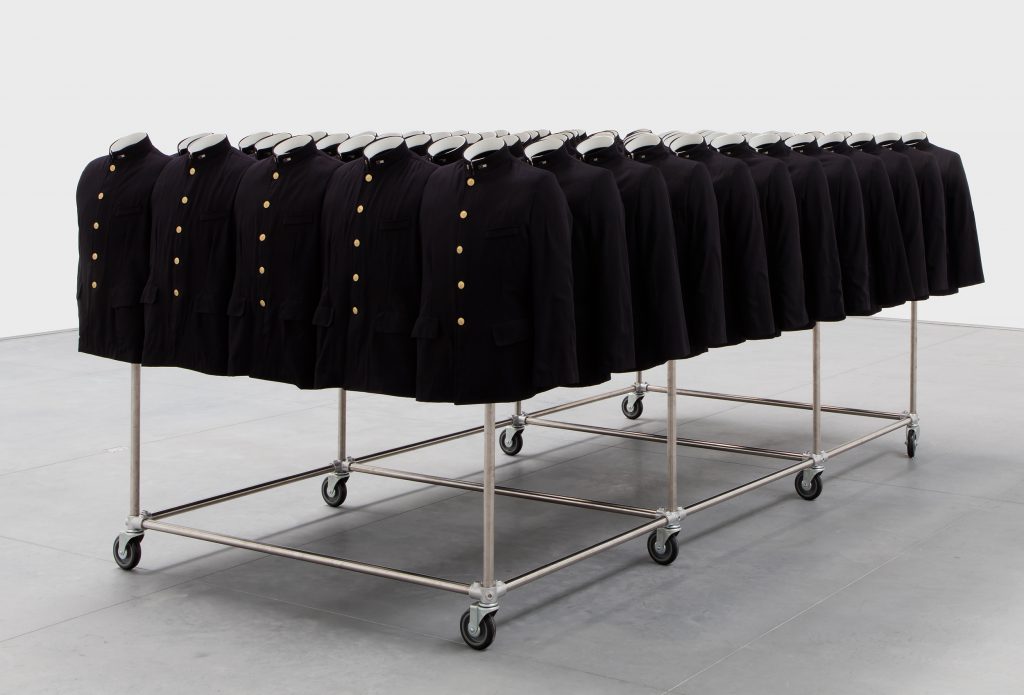
Do Ho Suh’s High School Uni-Form, 1996, is a particularly clear example. Repeated fabric uniforms generate visual order, but the work is concerned with conformity, individual identity and the systems through which bodies are organised. Its presence in the collection shows how a formal interest in repeated units can evolve into a more human question: what happens to the person inside the system?
This expansion is what keeps the Rachofsky Collection from becoming a historical illustration of one taste. The house may have provided an initial framework, but the collectors did not keep buying objects simply because they reinforced that framework. The collection grew by complication.
Their willingness to edit was equally important. In 2008, the Rachofskys sold Jeff Koons’s Balloon Flower (Magenta) at Christie’s for $25.8 million specifically to acquire a suite of four paintings by Sigmar Polke. The episode is useful because it shows collection-building as a process of choosing depth over accumulation. An important work could leave if its departure allowed the collection to become more intellectually complete elsewhere.
The Rachofsky House is also a reminder that living with sculpture can change the meaning of a garden. The grounds have included major outdoor and site-specific works, among them Robert Irwin’s Tilted Planes (1999), Dan Graham’s Argonne Pavilion II (1998), a Maurizio Cattelan drummer boy perched at the roofline, and works by Richard Long and Liz Larner.
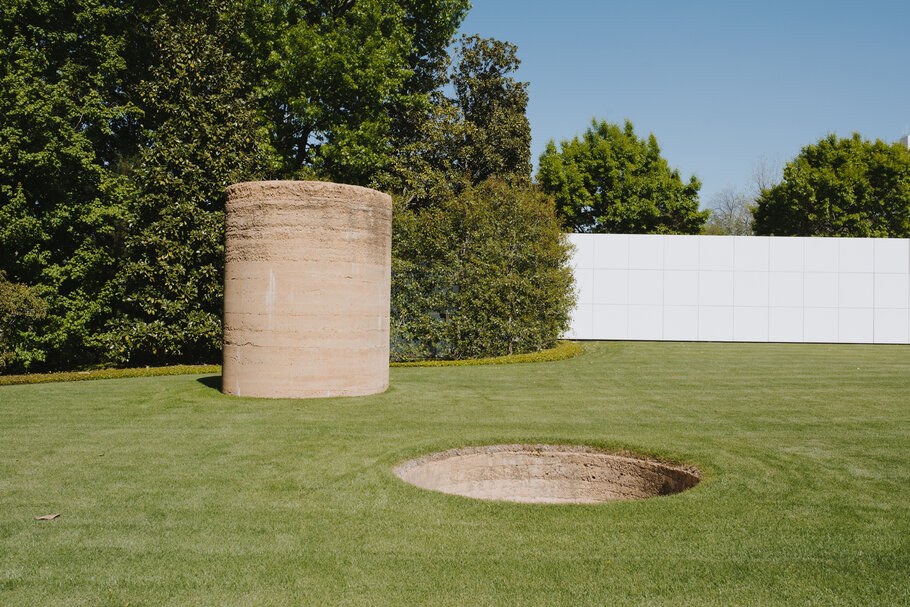
Nobuo Sekine’s Phase—Mother Earth, reconstructed at the house in 2012, makes the relationship between land, architecture and collection especially explicit. The work is not something that could simply be placed against a wall. Its excavation and displaced earth make the ground itself the material of the encounter.
From inside the Rachofsky House, the garden is almost always present through the glass. That means sculpture outdoors becomes part of interior life as well. A work can be encountered while crossing a room, sitting at a table, looking out in rain or watching the light change across the lawn. The collection becomes seasonal.
The house’s cultural importance in Dallas was never only visual. Cindy and Howard repeatedly opened it to other people. School groups visited. Collectors and art professionals came through. The domestic context gave contemporary art a different social temperature.
Howard once described the house as an “intellectual safe house” for people who were curious about contemporary art but not yet entirely comfortable with it. That is one of the most persuasive arguments for showing art outside institutions. A museum can ask for reverence; a fair can make every encounter feel transactional. A home allows a work to be discussed over a drink, beside a dining table, between conversations.
The most visible expression of that hospitality was TWO x TWO for AIDS and Art, launched in 1999 and hosted for decades at the property to benefit amfAR and the Dallas Museum of Art. The house became a setting in which collecting, philanthropy, social life and education overlapped rather than remaining separate worlds.
In 2005, Cindy and Howard Rachofsky joined Marguerite and Robert Hoffman and Deedie and Rusty Rose in committing their private collections and future acquisitions to the Dallas Museum of Art. The DMA described the Rachofsky holdings as particularly strong in Arte Povera and Minimalism while also containing leading contemporary artists including Robert Gober, Felix Gonzalez-Torres, Mona Hatoum, Donald Judd, Bruce Nauman, Sigmar Polke, Gerhard Richter and Kiki Smith.
That promised public future makes the private history of the house even more interesting. The rooms were never the final destination of the works. They were one chapter in how those works were understood.
The opening of The Warehouse in 2012 changed the role of the Meier building once again. The larger exhibition space became the primary venue for displaying the collection at institutional scale. Cindy and Howard returned to Preston Road and made the Rachofsky House a residence again.
The move completed an unusual circle: a house built for a collector had become an exhibition venue because the collector’s life changed; then a purpose-built exhibition venue allowed the architectural landmark to become more domestic again.
That is why the recent images of sofas, books and furniture are not a dilution of the Rachofsky story. They are its conclusion. The architecture survived contact with life. The collection did too.
The recent sales process adds one further chapter. After entering the public market at $23 million, the asking price was reduced to $17.5 million in May 2026; public MLS-derived sources indicate the listing was withdrawn in July. Whatever eventually happens to the building, its significance does not depend on remaining a frozen private museum. Its history is defined by repeated change.
For ARTCOLLECTORHOMES, that may be the most useful lesson of all. A collector’s home should not imitate the gallery. It should do what the gallery cannot: allow art to be encountered through time, domesticity, architecture, weather, friendship and repetition. The Rachofsky House became important not because every artwork was perfectly installed forever, but because Cindy and Howard Rachofsky kept allowing the relationship between house and collection to evolve.
That is what it means to live with art.
From Richard Meier’s glass-walled rooms to Gutai paintings, Arte Povera and site-specific sculpture, the Rachofsky House shows what happens when art leaves the gallery and becomes part of daily life.
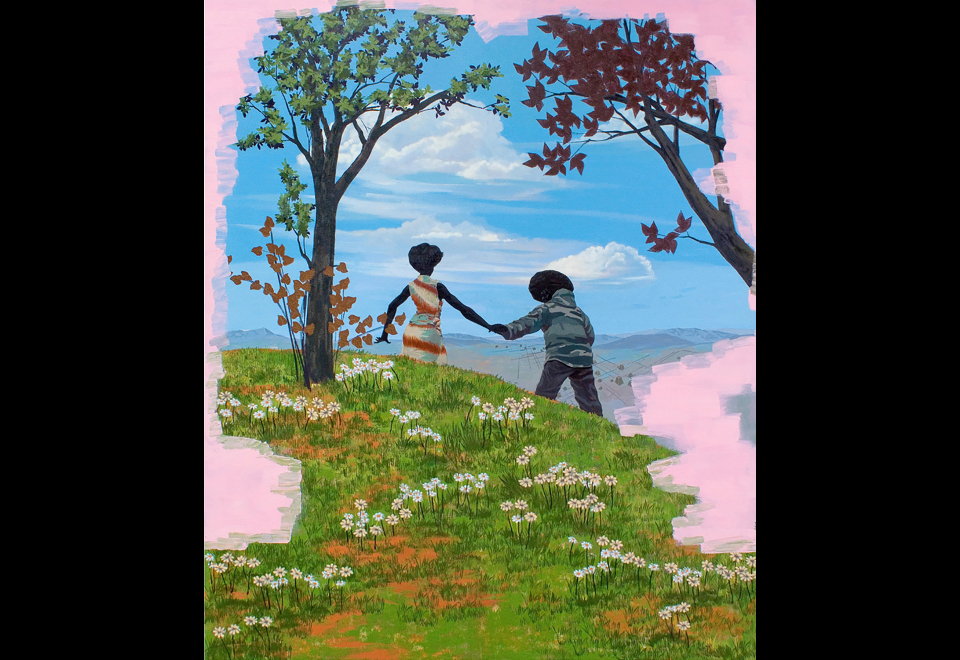
Before Art Basel Paris arrives in October, September brings a concentrated Paris season spanning Kerry James Marshall, Cezanne, Christian Marclay, Paris Design Week, Fine Arts Paris and a gallery-history exhibition in the Marais.
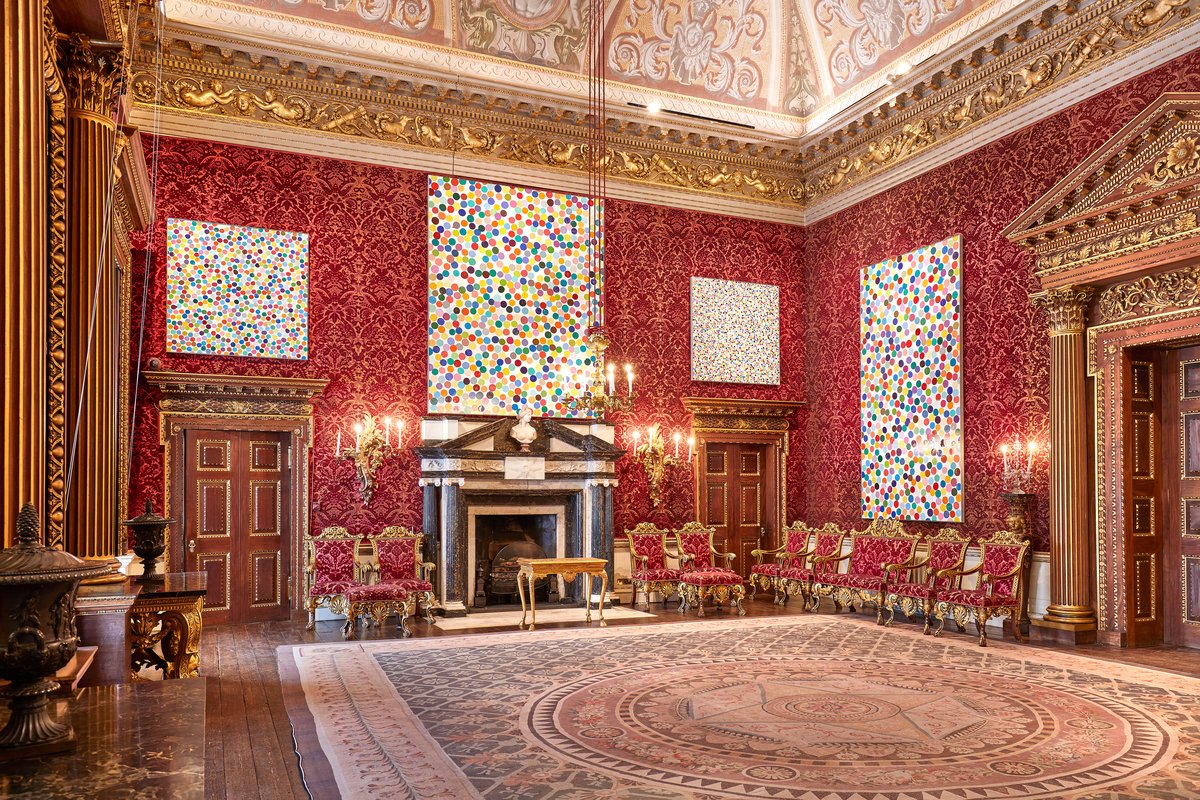
Gagosian’s Damien Hirst solo booth at Frieze Seoul is less a comeback than a compact map of a highly segmented market—placing Spots, Spins, cabinets, Colour Space, Secret Gardens and Treasures side by side for collectors.