
September 10, 2026
Exhibitions
Exhibitions

The first French exhibition devoted to Kerry James Marshall brings 70 works and eight new paintings to Paris, revealing why institutional importance and market recognition do not arrive at the same moment.
The first French exhibition devoted to Kerry James Marshall brings 70 works and eight new paintings to Paris, revealing why institutional importance and market recognition do not arrive at the same moment.

The first French exhibition devoted to Kerry James Marshall brings 70 works—including eight new paintings—to the Musée d’Art Moderne de Paris. For collectors, it is a chance to separate a mature institutional achievement from the market headlines that followed it.
Kerry James Marshall has spent decades refusing a false choice between formal ambition and social meaning. His paintings are saturated with art history, but they do not approach the canon as something to admire from outside. They enter it, test it and make demands of it.
That is why The Histories, opening at the Musée d’Art Moderne de Paris on 18 September, matters beyond the familiar language of retrospective acclaim. The exhibition is the first in France devoted to Marshall and presents 70 works, including eight new paintings made specifically for the project. It originated at the Royal Academy of Arts in London and travelled through Kunsthaus Zürich before Paris. The scale is substantial; the sharper point is that France now receives Marshall in a city whose museums contain so many of the European paintings he has spent a career interrogating.

Marshall’s achievement is often summarised as placing Black figures where Western art history excluded them. True as that is, the formulation can make the paintings sound corrective before they sound pictorial. In fact, the works are exuberantly constructed. Gardens, salons, bedrooms, studios, housing projects, banners, flowers, glitter, text and visual jokes are organised with the compositional intelligence of a painter who knows exactly how old pictures create authority.
School of Beauty, School of Culture is exemplary. The beauty salon is not treated as a documentary scene waiting for institutional validation. It becomes a grand public image, dense with references and small acts of looking. Marshall’s insertion of an anamorphic blonde figure invokes the skewed skull in Holbein’s The Ambassadors, but the quotation does not turn the work into an art-history puzzle. It asks whose beauty has traditionally been naturalised by museums, and whose has required explanation.
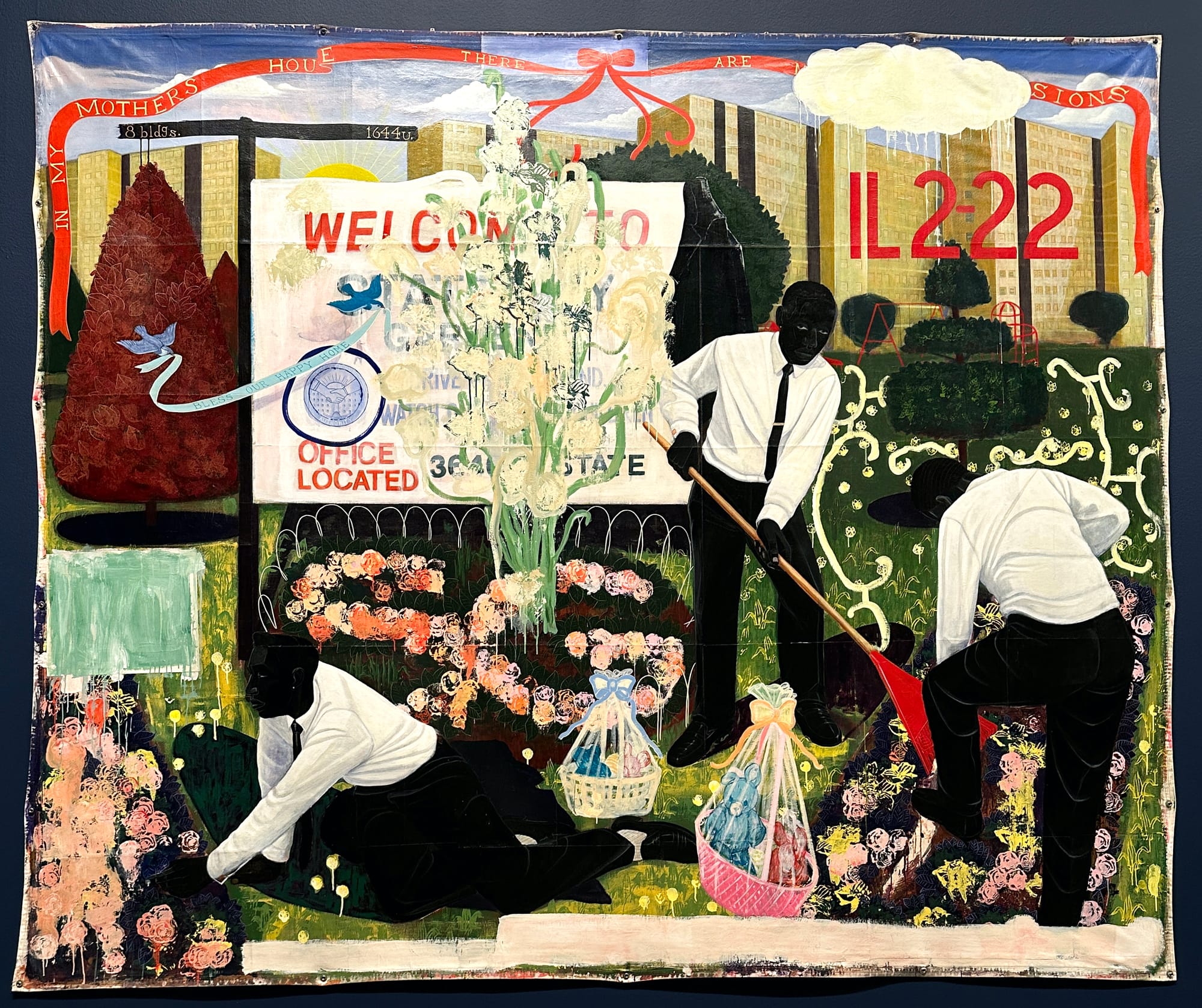
Collectors know Marshall’s market through the spectacular 2018 sale of Past Times. Sotheby’s sold the 1997 painting for $21.1145 million, more than quadrupling his previous auction record at the time. It was a landmark result and helped publicise the recalibration already under way around major Black American artists.
But the chronology matters. Past Times had already been a significant painting, shown at the 1997 Whitney Biennial and central to Marshall’s Garden Project, long before the auction house supplied a number. The sale did not confer importance; it monetised an importance that museums, scholars, artists and serious collectors had been building for years. For collectors, that distinction is essential. Price can be evidence of consensus, but it is not the same thing as the intellectual formation of consensus.
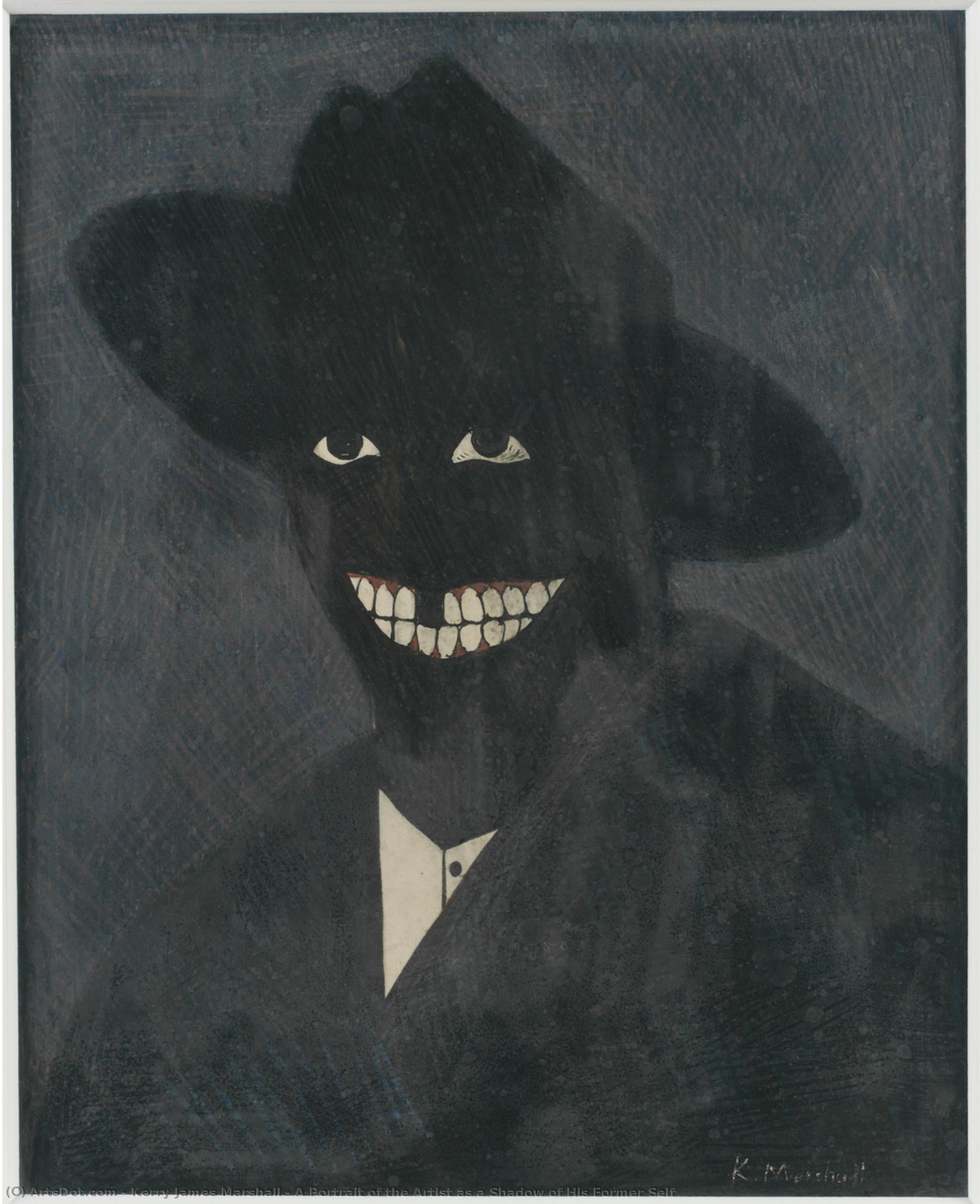
The Paris presentation provides a particularly productive context because Marshall’s relationship with French painting is explicit. Rococo, nineteenth-century painting, modernism and the grand machinery of European narrative painting all sit behind works that are completely contemporary in subject and cultural reference.
The museum is also programming a conversation between Marshall and the curators on opening day, followed by a lecture series that approaches the work transatlantically. That signals the right way to see the exhibition: not as a celebration isolated within American identity politics, but as a sustained argument with the traditions through which painting acquired cultural authority.

The most important collector lesson in Marshall’s career may be patience. A serious body of work can be visible for years before market recognition, institutional recognition and broad public familiarity align. When they finally converge, the result can look sudden from the outside.
The Histories makes that convergence legible without allowing it to flatten the paintings. The market milestone matters. So does the museum tour. But the enduring reason Marshall matters is that the work remains difficult to reduce to either one. These are paintings that can carry history, beauty, humour, grief, pleasure, politics and formal experiment simultaneously—and insist that none of those categories has to cancel the others.
Exhibition: Kerry James Marshall: The Histories, Musée d’Art Moderne de Paris, 18 September 2026–24 January 2027. Scale: 70 works, including eight new paintings. Market marker: Past Times sold at Sotheby’s in May 2018 for $21.1145 million with fees. Collector lens: distinguish institutional/art-historical formation from later auction consensus.
The first French exhibition devoted to Kerry James Marshall brings 70 works and eight new paintings to Paris, revealing why institutional importance and market recognition do not arrive at the same moment.
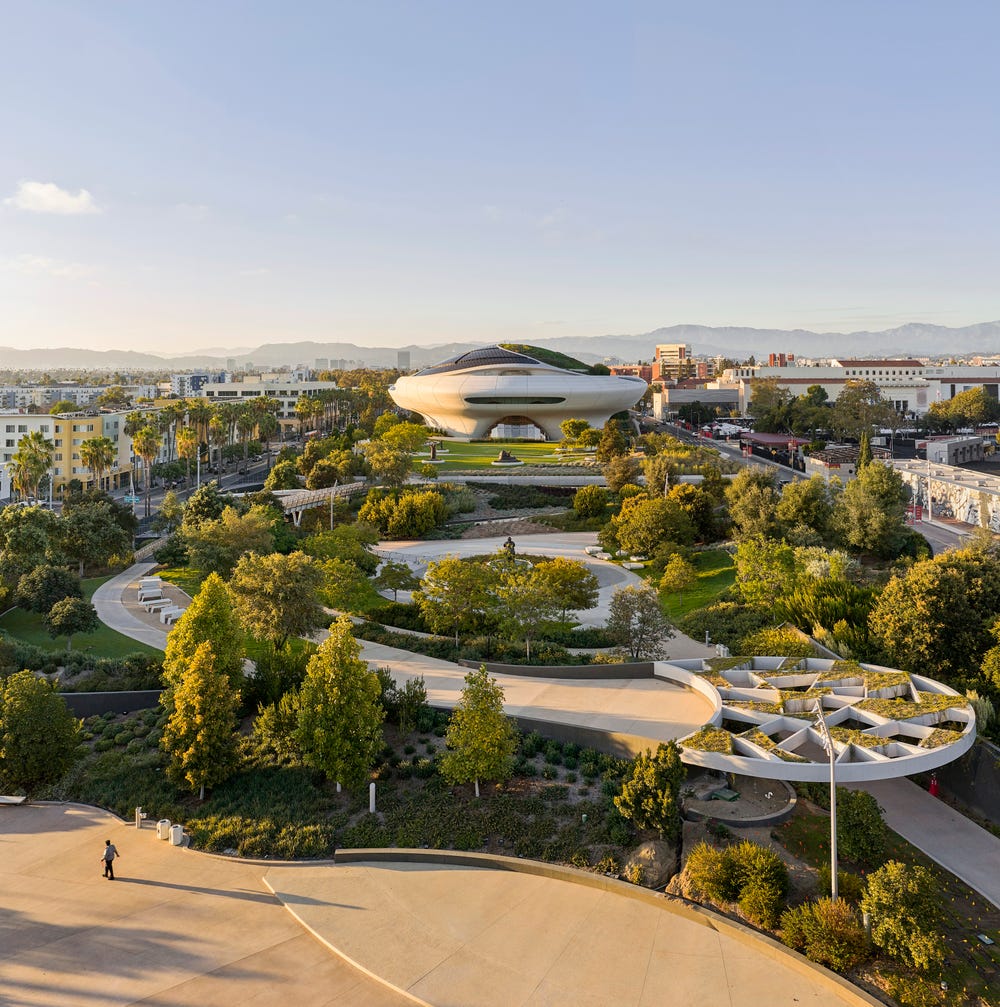
Opening 22 September, the Lucas Museum of Narrative Art turns George Lucas and Mellody Hobson’s cross-category collecting philosophy into a major public institution.
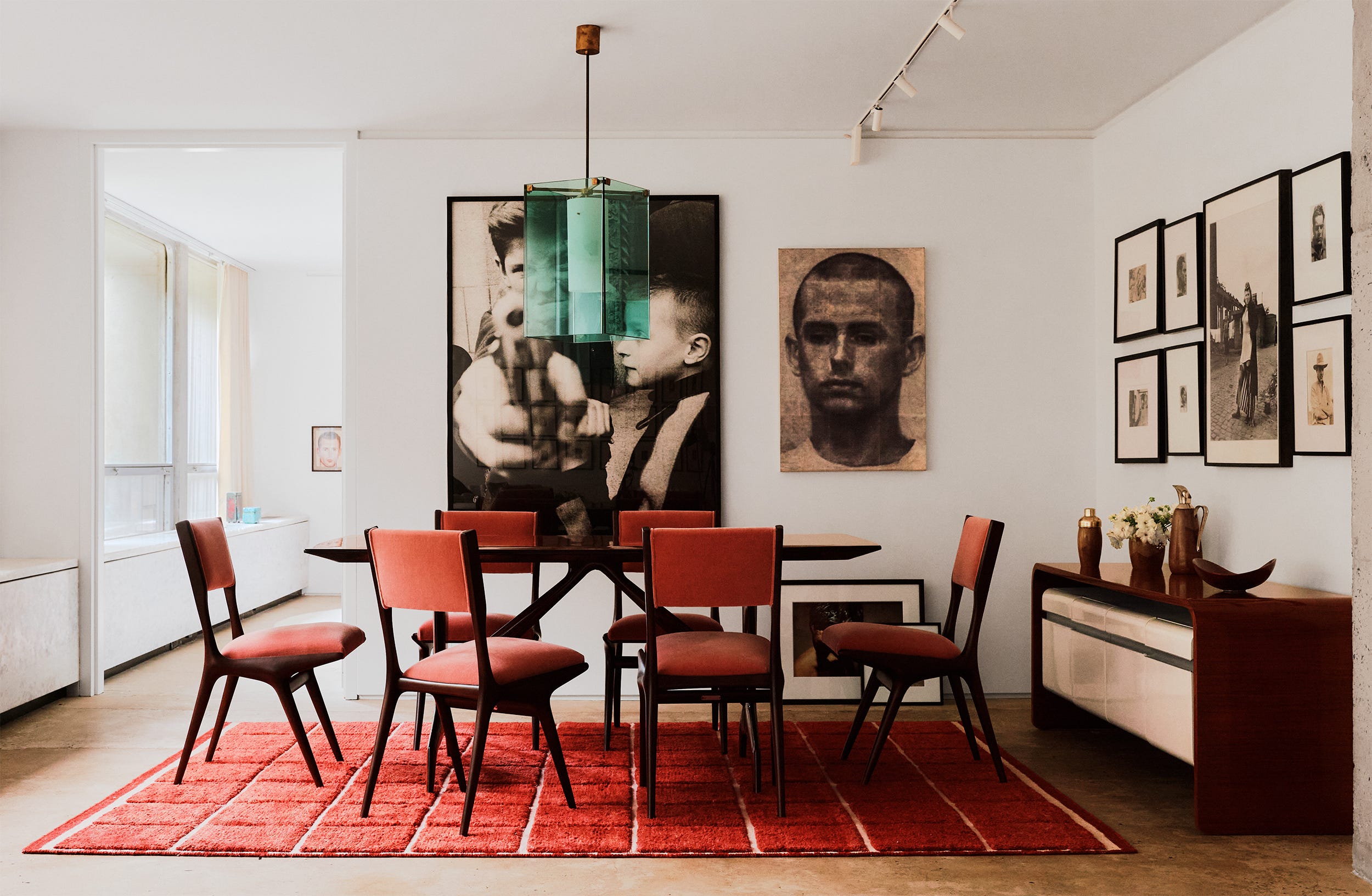
Inside an I.M. Pei apartment at Kips Bay Towers, an exceptional photography and design collection reveals a mature collecting problem: when every object is strong, editing becomes the real form of connoisseurship.