LATEST NEWS:
Jenny Holzer & Andy Goldsworthy win 2026 Praemium Imperiale • €9m Renoir museum heist in France • Dimitris Daskalopoulos donates 51 works to museums in Greece & Scotland • Artist Lucien Smith dies aged 37 • Faro Santander opens with 1,000-work collection • Argentina orders return of Nazi-looted Old Master • Greece rejects Parthenon Marbles loan request • Smithsonian chief Lonnie Bunch announces retirement
Go Back
Magazine

Teresa Solar Abboud and the Sculptural Underground

Tunnel-boring machines become creatures and infrastructure starts to resemble metabolism in Teresa Solar Abboud’s first UK solo. We look at the hidden systems beneath the city—and what collectors need to know about her materially complex sculpture.

Exhibitions
Exhibitions
Teresa Solar Abboud and the Sculptural Underground

Most cities depend on an enormous world their inhabitants almost never see. Tunnels, foundations, cables, pipes, geological strata and machines occupy the ground beneath everyday movement. Teresa Solar Abboud treats that hidden territory not as background infrastructure but as a speculative ecosystem.

Atlantic Ridge Multiplicity, her first solo exhibition in the United Kingdom, is now open with Lehmann Maupin at No.9 Cork Street in London. The sculptures continue a practice in which clay, resin, industrial forms and bodily imagery repeatedly merge. Tunnel-boring machines acquire beaks, flippers or pincers. Geological pressure begins to resemble digestion. A piece of engineered infrastructure becomes difficult to distinguish from an animal imagined for an environment humans cannot inhabit.

This is not sculpture about machines in any conventional sense. It is sculpture about the fantasy that machines and bodies belong to separate orders.

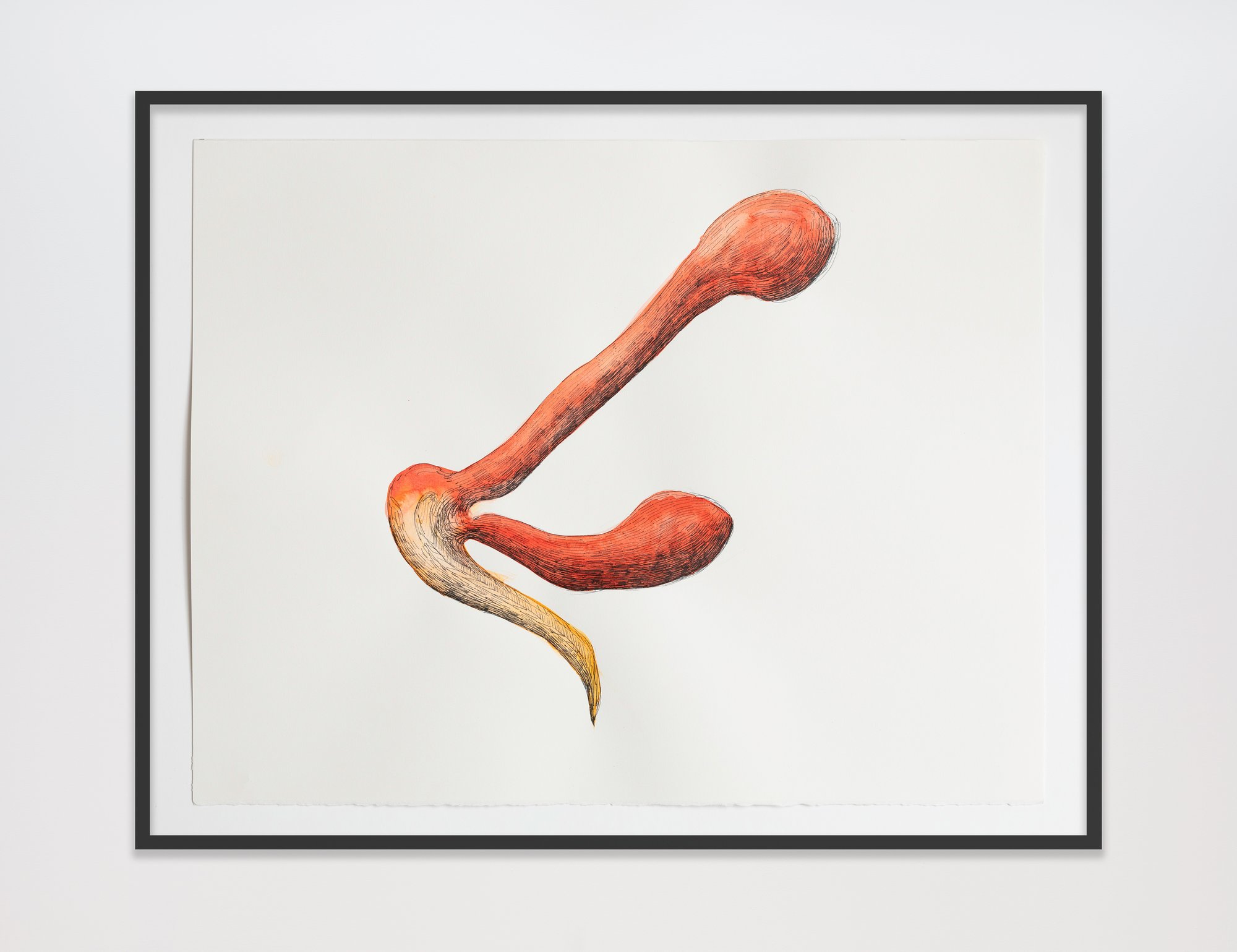
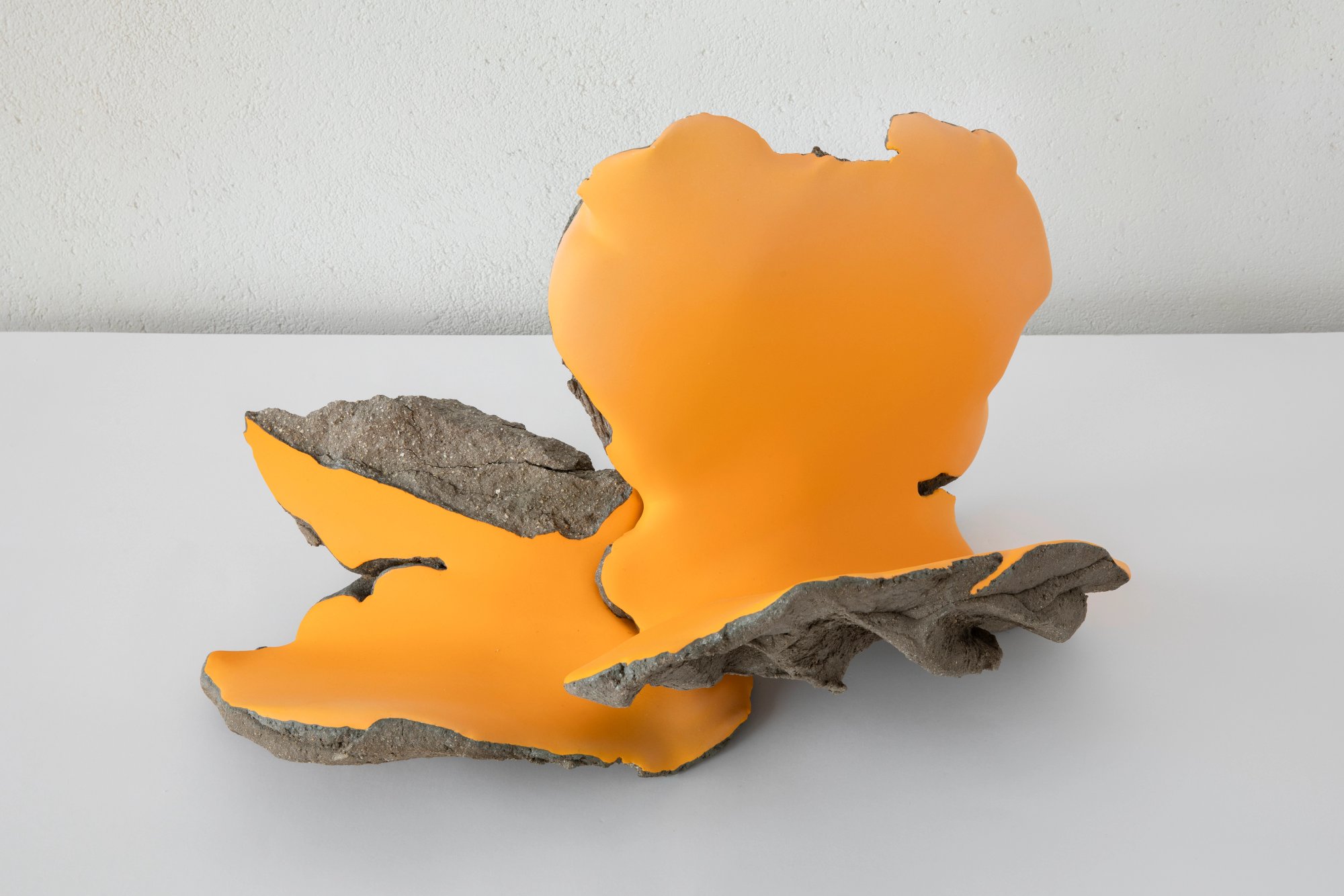
Teresa Solar Abboud Oozing out 2026
Teresa Solar Abboud, Oozing out, 2026. The artist’s current work treats matter as something unstable, bodily and continuously transforming. © Teresa Solar Abboud; courtesy the artist and Lehmann Maupin.

The underground as an unknown world

Solar Abboud has described the underground as a vast space that humans traverse constantly while knowing surprisingly little about it. The statement sounds poetic, but it is also literal. Urban life relies on engineered access to layers of earth that remain geologically, biologically and materially complex.

Tunnel-boring machinery becomes a particularly rich sculptural reference because it enters that hidden territory through force. The machine cuts, rotates, removes material and produces a passage where none existed. Its usefulness depends on a form already suggestive of teeth, mouths, shells and segmented bodies.

Solar Abboud exaggerates that ambiguity. Hand-modelled clay collides with bright, precisely finished synthetic components. The opposition between rough earth and industrial surface becomes a false binary: both belong to the same object.

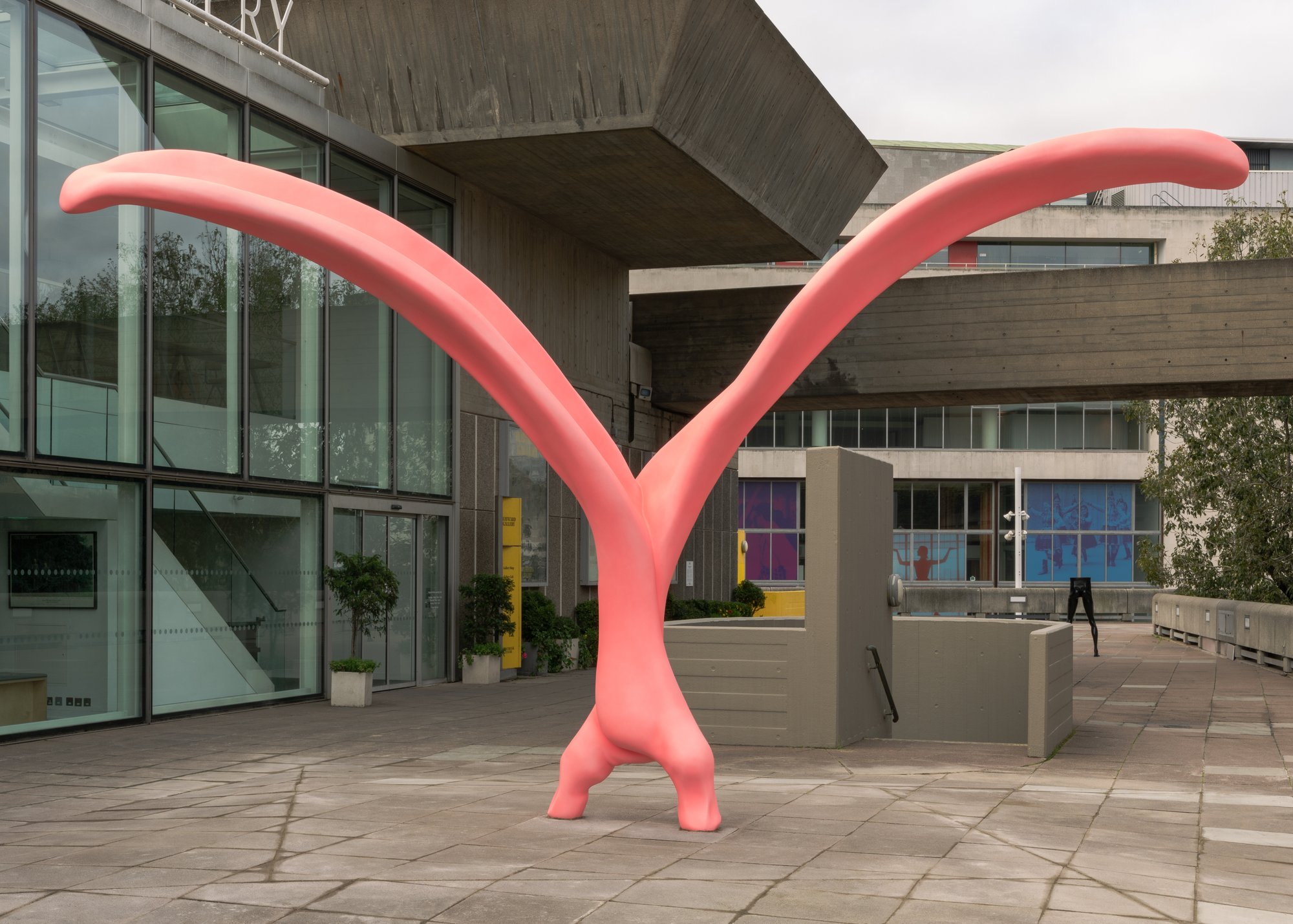
Teresa Solar Abboud Mother Tongue 2025
Teresa Solar Abboud, Mother Tongue, 2025. The large public sculpture grew from language, translation, family and the experience of one body hosting another. © Teresa Solar Abboud; courtesy the artist and Lehmann Maupin.

From language to geology

The current exhibition follows a period in which Solar Abboud’s work has moved across very different kinds of bodily metaphor. Her recent public commission Mother Tongue, shown outside Hayward Gallery, transformed two tongues into an intertwined sculptural form. The work grew from translation and assimilation within her Spanish-Egyptian family background and from her more recent experience of motherhood.

A tongue is both muscle and language. It belongs to the body while also standing for the systems through which bodies communicate. Solar Abboud’s subterranean sculptures operate similarly. A tunnel is both physical void and infrastructure; a boring machine is both tool and creature; geological material can look like tissue.

The continuity lies in refusing clean boundaries between internal and external systems.

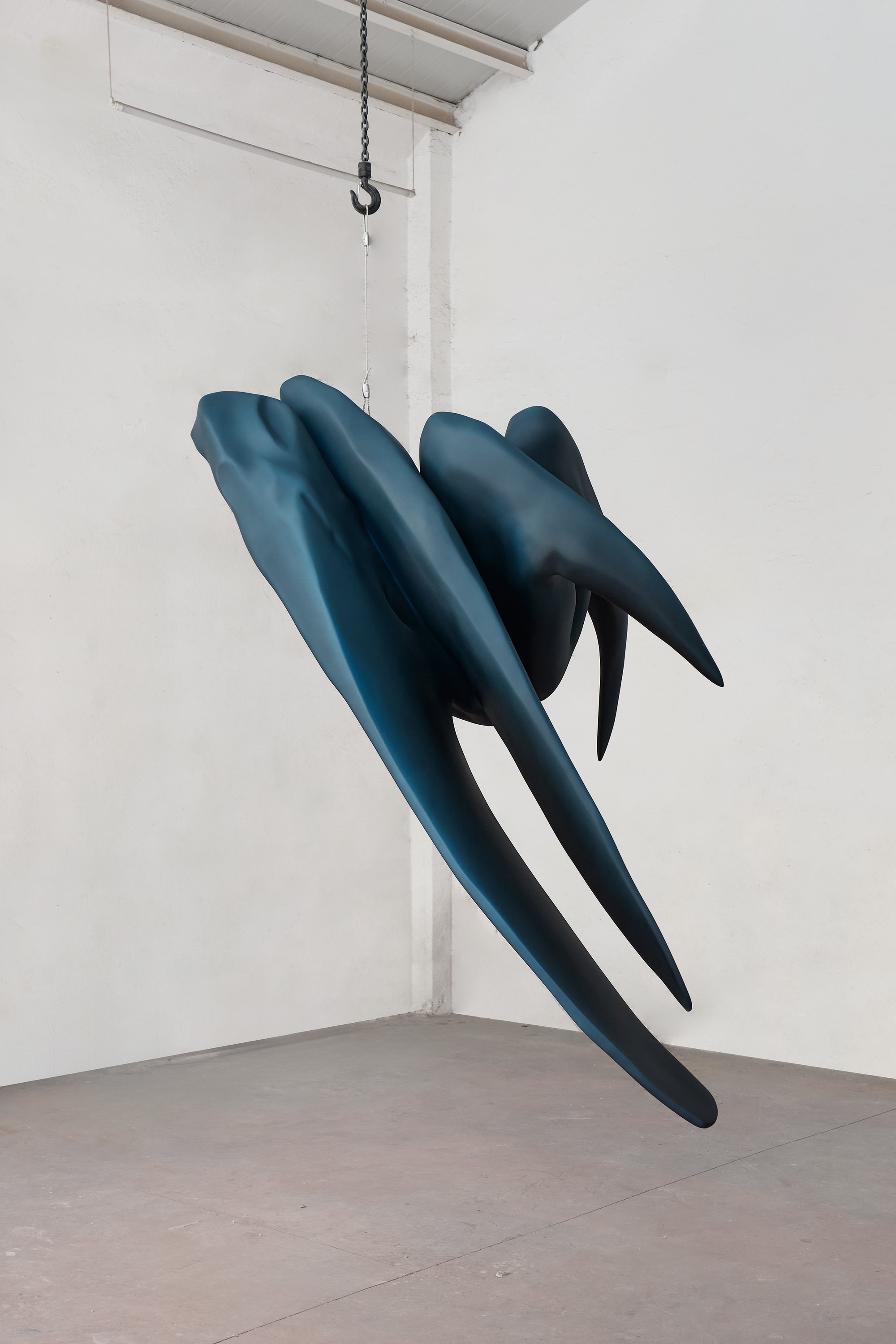
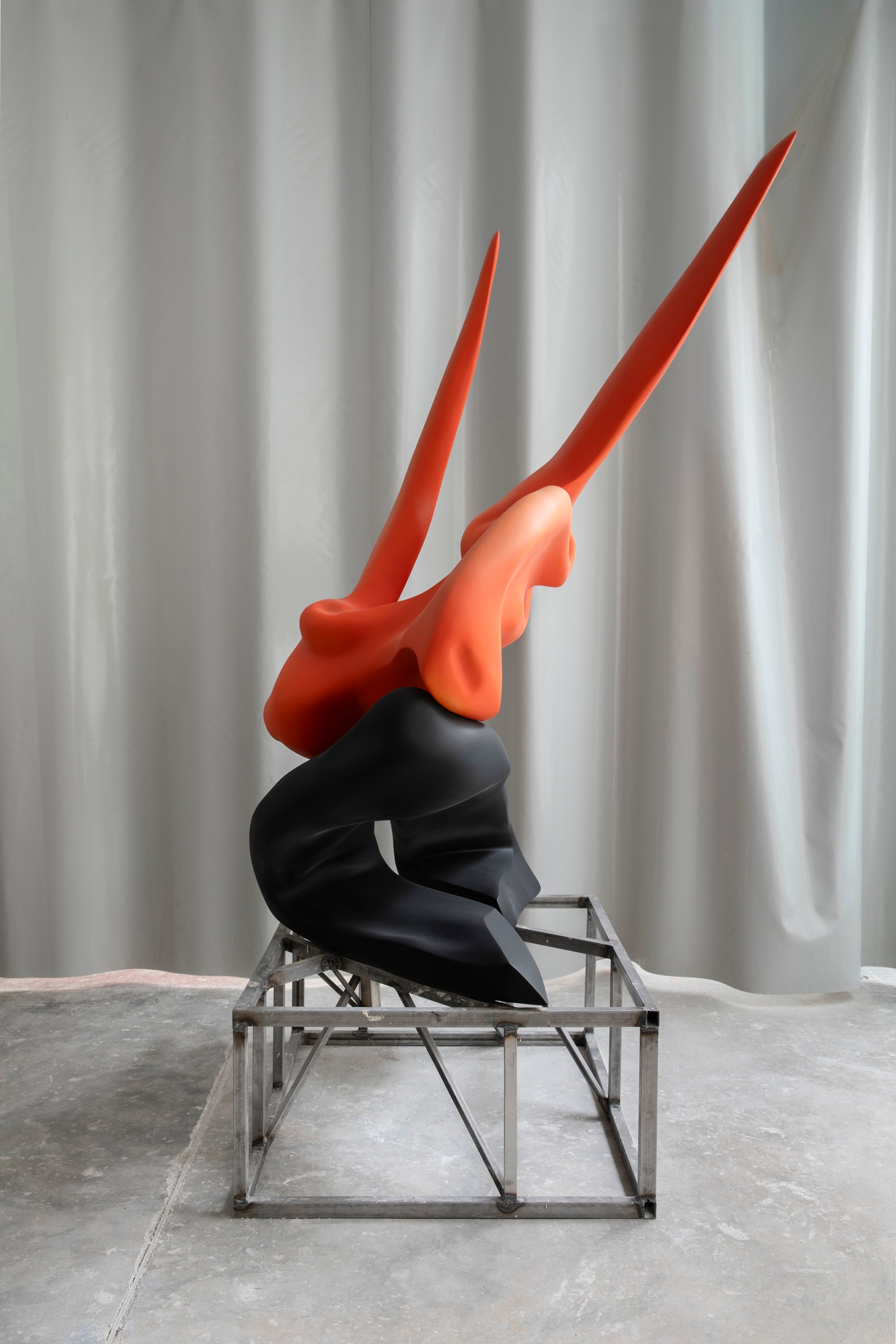
Teresa Solar Abboud Tunnel Boring Machine Atlantic Ridge Multiplicity 2025
Teresa Solar Abboud, Tunnel Boring Machine (Atlantic Ridge Multiplicity), 2025. Hand-worked clay meets highly finished synthetic elements in a recurring body of machine-organism hybrids. © Teresa Solar Abboud; courtesy the artist and Lehmann Maupin.

Why clay matters

Clay is central because it is unusually ambiguous. It is earth before it is sculpture, soft before it is fired, ancient in human use yet capable of appearing raw and contemporary. Solar Abboud keeps traces of manipulation visible, allowing pressure, touch and modelling to remain legible.

Resin and industrially finished elements do the opposite. They can appear seamless, manufactured and almost frictionless. Bringing those materials together sets up a tension between bodily labour and mechanical precision.

The strongest works make neither side dominant. The synthetic form can look strangely organic; the clay can look engineered. Instead of illustrating a conflict between nature and technology, the sculpture asks whether that distinction has become inadequate for the world we actually inhabit.

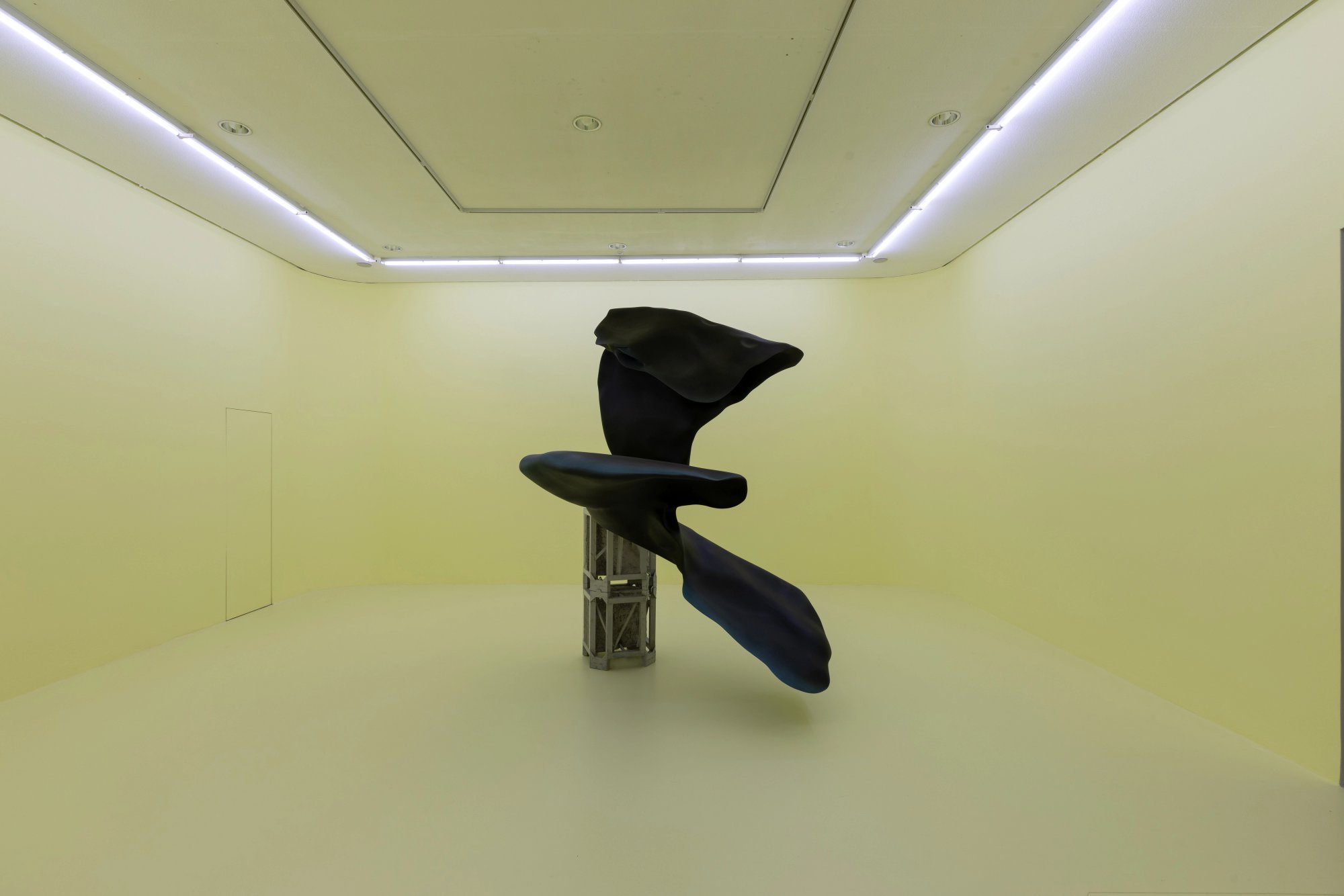
Teresa Solar Abboud Self-Portrait 2025
Teresa Solar Abboud, Self-Portrait, 2025. Solar Abboud’s sculptural vocabulary repeatedly collapses distinctions between body, geology and industrial form. © Teresa Solar Abboud; courtesy the artist and Lehmann Maupin.

Sculpture after the stable body

Solar Abboud belongs to a broader contemporary sculptural tendency in which bodies are treated as processes rather than closed forms. Digestion, pregnancy, metamorphosis, extraction and growth all undermine the idea that an organism is a stable object with a clear inside and outside.

Her sculptures extend that logic to infrastructure. A tunnel enters geology. A machine takes in rock and produces debris. A city’s interior systems depend on exchanges of air, water, waste, electricity and bodies. Industrial civilisation starts to resemble metabolism.

This is why the work can feel both futuristic and prehistoric. The forms suggest speculative creatures while remaining rooted in clay, strata and deep time.

Teresa Solar Abboud Undifferentiated Sexual State 2026
Teresa Solar Abboud, Undifferentiated Sexual State, 2026. The work extends the artist’s interest in bodies before stable categories have fully formed. © Teresa Solar Abboud; courtesy the artist and Lehmann Maupin.

What collectors should ask about mixed-material sculpture

The collector intelligence here is unusually practical. Solar Abboud’s work can combine clay, resin, metal, found material and specialised fabrication. Each component ages differently. Condition reporting should therefore be material-specific rather than treating the sculpture as one homogeneous object.

Ask which elements are hand-made by the artist, which are fabricated with specialist assistance and whether digital files, moulds or replacement protocols exist. For resin, establish expectations around colour stability and surface care. For ceramic or clay components, document firing method, intentional cracks or irregularities and any structurally vulnerable joins.

Installation instructions matter, especially for works that assemble multiple elements or require particular spatial relationships. Retain diagrams, hardware lists, photographs of approved installations and correspondence clarifying whether future replacements must involve the studio.

Scale should also be judged carefully. A monumental sculpture can dominate architecture, but a smaller work may communicate the material collision more intensely. The question is not simply which one is more spectacular, but whether the relationship between organic and synthetic form remains convincing at its chosen scale.

Why London is the right moment

Solar Abboud’s UK debut follows substantial institutional visibility: participation in the 59th Venice Biennale, recent solo exhibitions in Turin and Hannover, and the Mother Tongue commission at the Hayward Gallery. Frieze’s No.9 Cork Street programme places the exhibition within London’s autumn gallery season without turning it into a conventional fair presentation.

That timing matters because the artist’s work speaks directly to a culture newly conscious of hidden systems. Infrastructure is no longer easy to imagine as neutral background. Supply chains, data centres, energy grids, extraction and climate adaptation have made material systems politically and environmentally visible.

Solar Abboud approaches those subjects indirectly. There are no explanatory diagrams of infrastructure, no heroic portraits of machines. Instead, she gives us organisms that might be machines and machines that might already have become organisms.

The underground in these works is not simply beneath us. It is a model for everything modern life prefers to keep out of sight while depending on it completely.

Teresa Solar Abboud: Atlantic Ridge Multiplicity is at Lehmann Maupin, No.9 Cork Street, London, through 31 October 2026.

Date
Sep 24, 2026
Share

Latest Posts

September 24, 2026
Exhibitions
Exhibitions
Teresa Solar Abboud and the Sculptural Underground

Tunnel-boring machines become creatures and infrastructure starts to resemble metabolism in Teresa Solar Abboud’s first UK solo. We look at the hidden systems beneath the city—and what collectors need to know about her materially complex sculpture.

September 24, 2026
Articles
Articles
The Collector’s Apartment: How Jeanne-Marie de Broglie Lived with Dubuffet, Giacometti and Lalanne

Jeanne-Marie de Broglie spent four decades helping Christie’s establish itself in France while creating interiors that resisted the separation of modern art, historic furniture and daily life. Her Rue Washington apartment offers a model of the collector’s home as social space, personal archive and evolving composition.

September 23, 2026
Exhibitions
Exhibitions
Tala Madani’s Control X: Why Painting Needs Things to Go Wrong

Tala Madani’s new paintings and animations turn cutting, erasure and reconstruction into a language of power. Using fresh artist testimony alongside the exhibition material, we examine why the work is funniest when control starts to fail.