LATEST NEWS:
Jenny Holzer & Andy Goldsworthy win 2026 Praemium Imperiale • €9m Renoir museum heist in France • Dimitris Daskalopoulos donates 51 works to museums in Greece & Scotland • Artist Lucien Smith dies aged 37 • Faro Santander opens with 1,000-work collection • Argentina orders return of Nazi-looted Old Master • Greece rejects Parthenon Marbles loan request • Smithsonian chief Lonnie Bunch announces retirement
Go Back
Magazine

Tala Madani’s Control X: Why Painting Needs Things to Go Wrong

Tala Madani’s new paintings and animations turn cutting, erasure and reconstruction into a language of power. Using fresh artist testimony alongside the exhibition material, we examine why the work is funniest when control starts to fail.

Exhibitions
Exhibitions
Tala Madani’s Control X: Why Painting Needs Things to Go Wrong

Tala Madani’s paintings have always been funny in the dangerous sense of the word. The joke arrives first, often through a body doing something humiliating, obscene or impossible. Then the image keeps working after the laughter has finished. Power has shifted. A figure has exposed himself, literally or metaphorically. A monument has become ridiculous. A painting that looked like slapstick has turned into an argument about who gets to look, command, destroy or be remembered.

Control X, opening at David Kordansky Gallery in Los Angeles on 18 September, pushes that instability directly into the mechanics of making. New paintings and animations show figures and settings being broken down, reformed, erased and remade. The title itself is a keyboard command associated with cutting: an action that removes something from one place while holding open the possibility that it can be pasted somewhere else.

That is a useful way into Madani’s current work. Destruction is rarely final. Creation is rarely innocent. Painting becomes the place where one can watch the two procedures become indistinguishable.

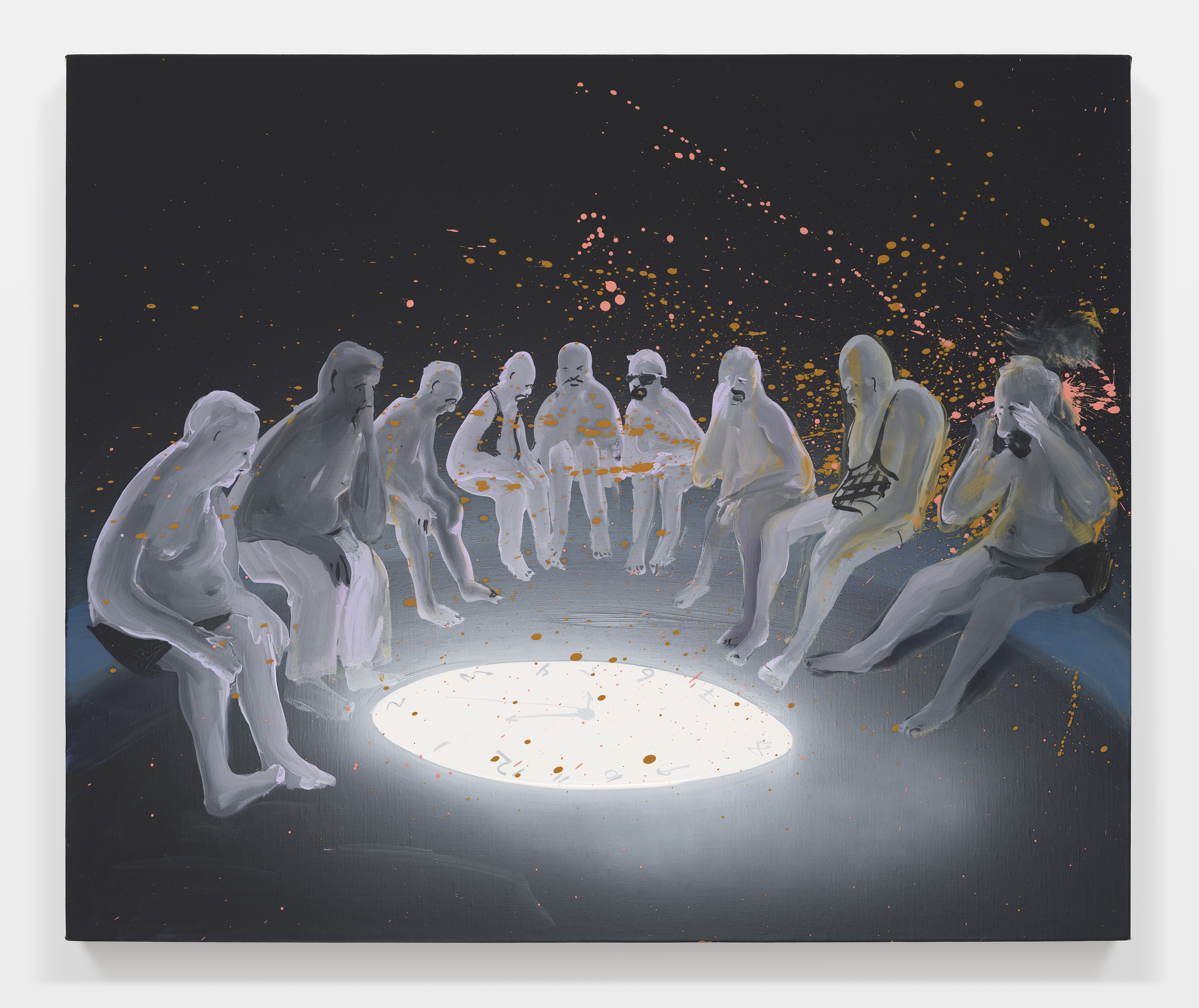
Tala Madani Watch Men 2024
Tala Madani, Watch Men, 2024, oil on linen. Madani’s recurring male figures turn watching, authority and spectatorship into unstable comic situations. © Tala Madani; courtesy the artist and David Kordansky Gallery.

Portraiture after the face fails

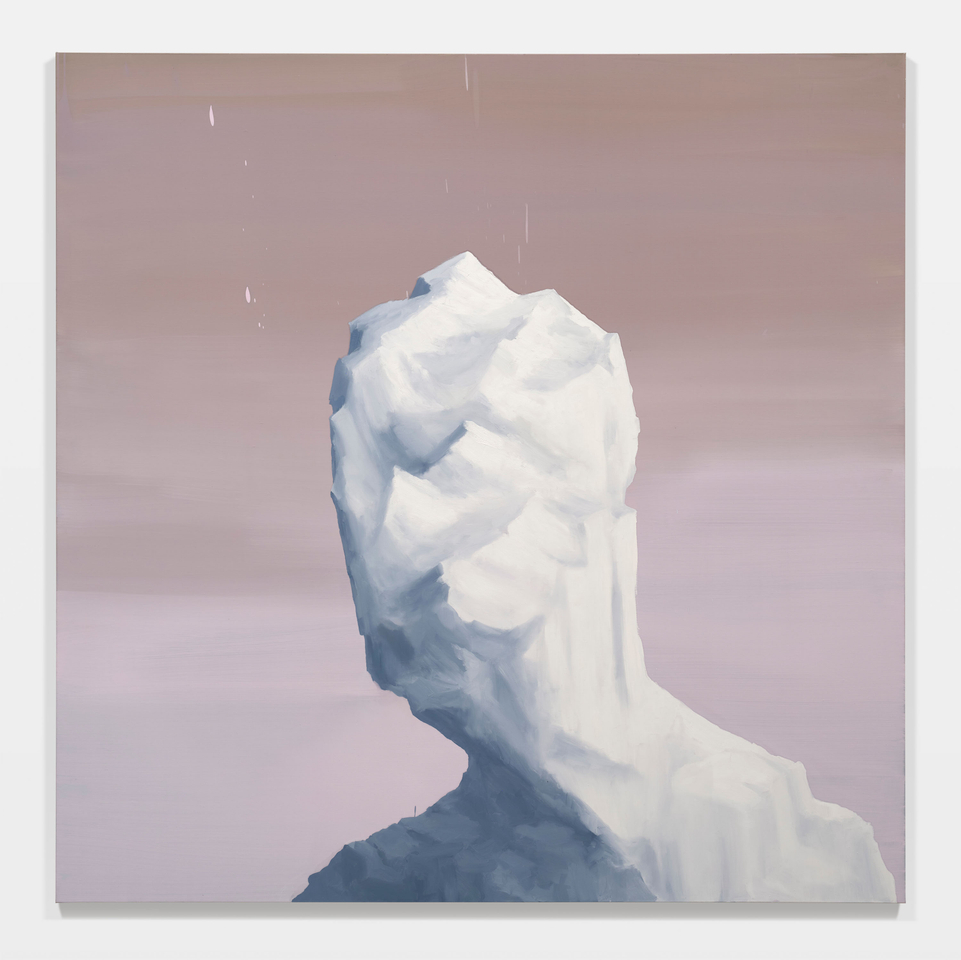
One of the most intriguing elements in the new exhibition is a body of what the gallery describes as mountain portraits. Madani has been thinking about portraiture precisely because of its limitations. In a recent conversation with painter and critic Andrew Paul Woolbright for The Brooklyn Rail, she discussed the problem of trying to make a face contain a person and the way caricature can sometimes reveal power more sharply than conventional likeness.

The mountain offers a strange solution. It can be monumental without being a monument to one identifiable individual. It can suggest authority, mass, permanence and grandeur, then be undermined by the behaviour Madani introduces around it. The language of heroic portraiture survives after the portrait subject has partly disappeared.

This matters in a moment saturated with faces. Political leaders, celebrities and private individuals circulate continuously through screens, but visual familiarity has not necessarily produced understanding. A face can become a logo for a position before it becomes evidence of a person. Madani’s paintings exploit that instability. They are less interested in psychological penetration than in the social theatre that accumulates around an image of authority.

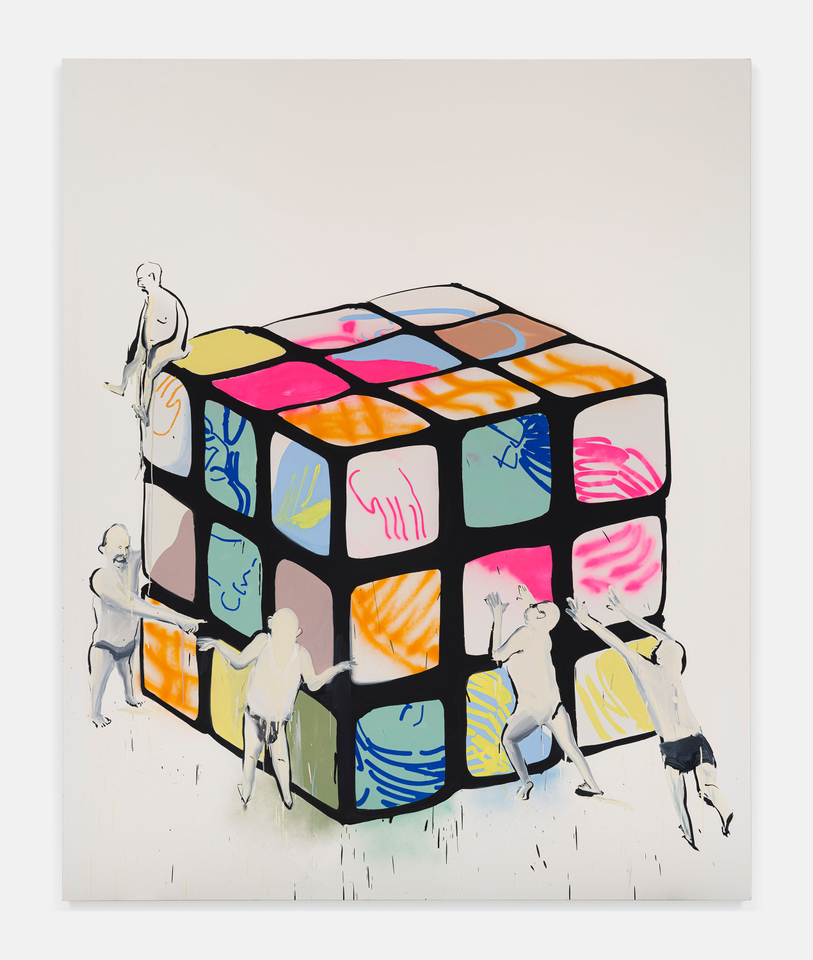
Tala Madani Puzzle Pussy 2023
Tala Madani, Puzzle Pussy, 2023, oil on linen. Bodies in Madani’s paintings repeatedly become fields of assembly, damage, embarrassment and reconstruction. © Tala Madani; courtesy the artist and David Kordansky Gallery.

Why shame keeps returning

Madani’s work has long been populated by badly behaved men. They soil themselves, expose themselves, worship foolish objects, attack images and appear absorbed by humiliating rituals. The recurrence is not simply a satirical attack on masculinity. It is a way of making power physically vulnerable.

Shame is unusually useful to painting because it makes the body visible to itself. A person becomes aware of being watched. The gap between private act and public image collapses. Madani repeatedly stages that moment, then complicates it with comedy so the viewer is never allowed the clean moral position of standing outside the scene.

Her figures can be cruel, pathetic and sympathetic within the same painting. That ambiguity is one reason the humour matters. Satire becomes dull when it tells us too quickly who deserves contempt. Madani’s images often refuse that stability. The aggressor can look ridiculous; the victim can become complicit; the viewer’s own appetite for humiliation becomes part of the scene.

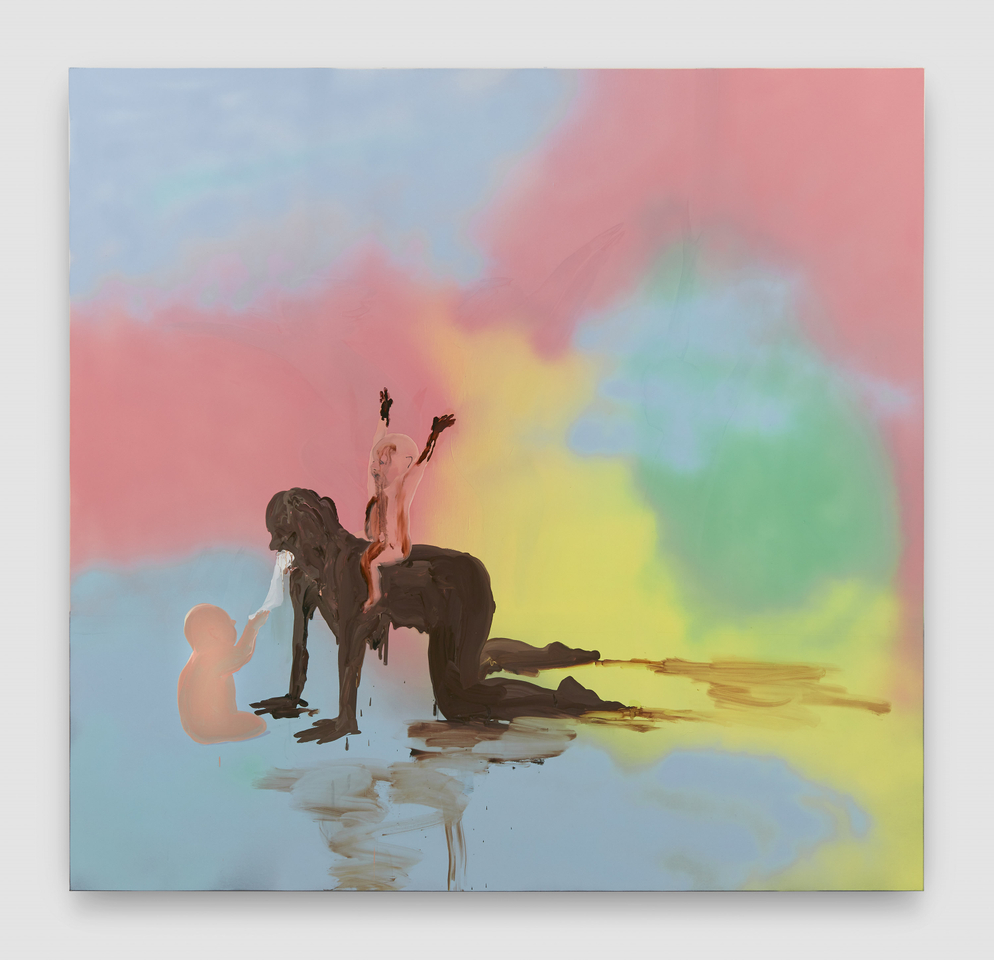
Tala Madani Shit Mom Dream Riders 2019
Tala Madani, Shit Mom (Dream Riders), 2019, oil on linen. The Shit Mom figure is one of the artist’s most unsettling inventions, combining maternal imagery with abjection, humour and formal transformation. © Tala Madani; courtesy the artist and David Kordansky Gallery.

Painting as an event rather than an illustration

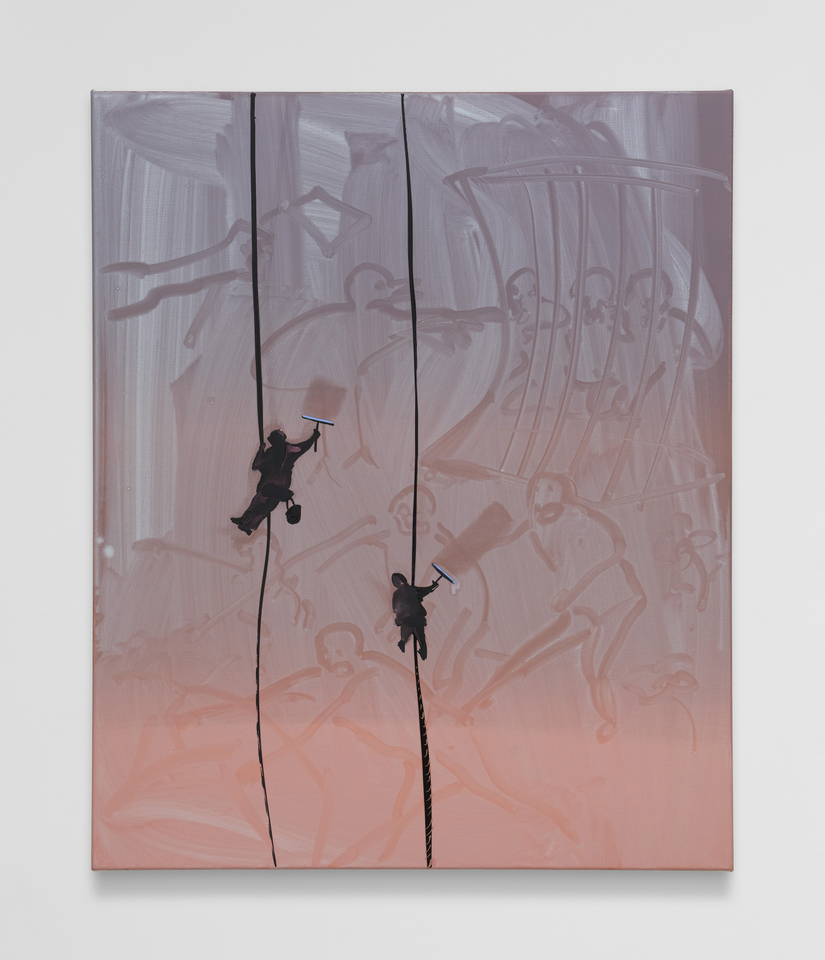
Madani is often discussed through her imagery, but the current exhibition makes the physical language of painting especially important. Squeegees, wipes, interruptions and passages of erasure are not merely techniques used to deliver a narrative. They become events within the image.

A scraped surface can read as an act performed on the figure. A smear can become bodily matter. A patch of exposed ground can imply disappearance. This is where her work separates itself from cartoons despite sharing caricature’s economy. The paint does not simply describe an action; it participates in it.

That relationship is crucial to Control X. Cutting, deleting, reconstructing and reforming occur simultaneously at the level of story and material. The joke may belong to the characters, but the instability belongs to the canvas.

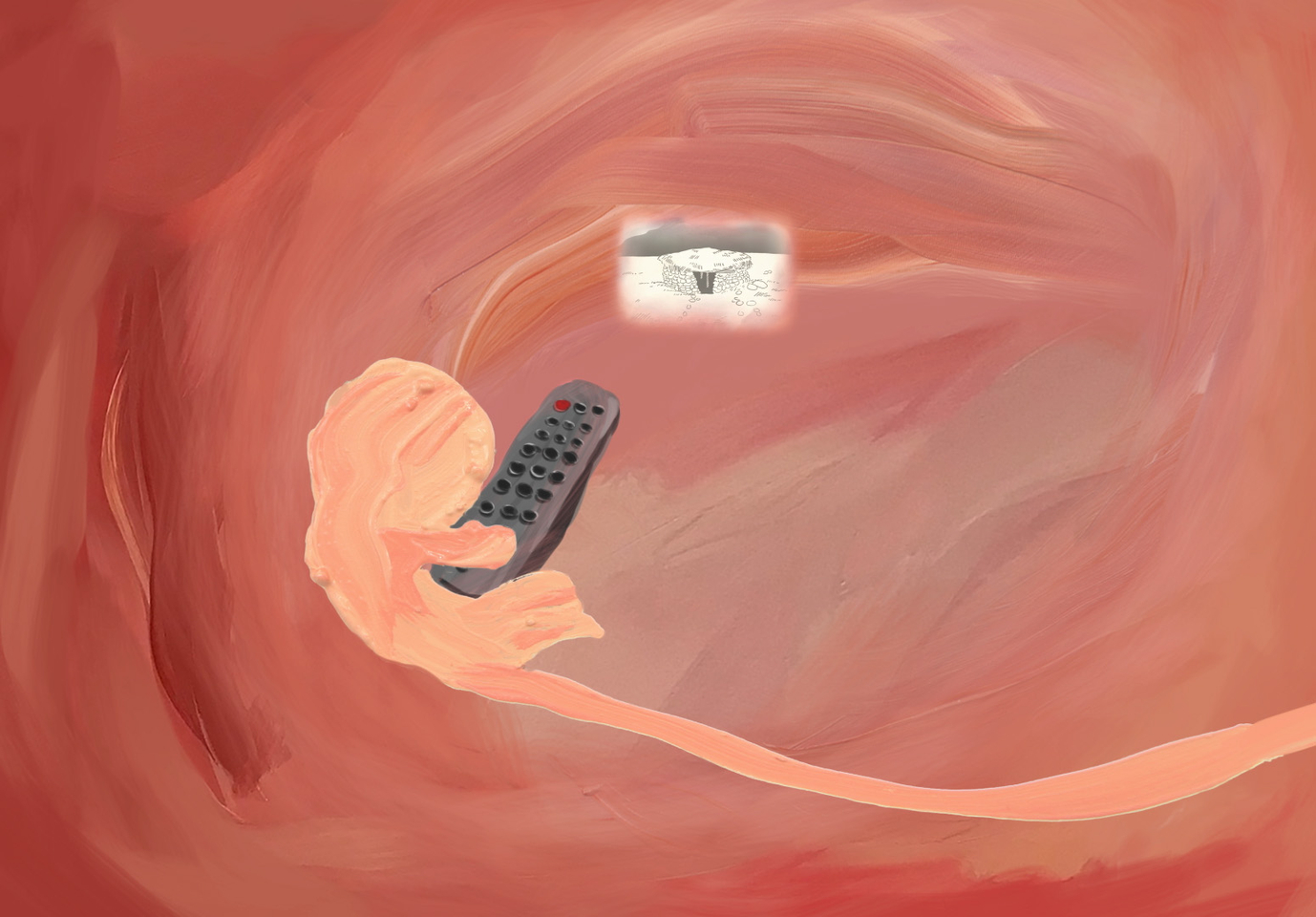
Tala Madani The Womb 2019 animation still
Tala Madani, The Womb, 2019, still from single-channel colour animation. Moving image allows Madani’s figures to undergo literal cycles of construction and destruction. © Tala Madani; courtesy the artist and David Kordansky Gallery.

Alphabet City and the problem of language

The exhibition also introduces Alphabet City, which the gallery describes as Madani’s longest and most complex moving-image work to date. Its premise is characteristically simple and unsettling: letters escape from books and begin to dominate human beings.

Language is one of civilisation’s great organising technologies. It stores law, history, instruction and memory. But symbols can also become authoritarian once their users forget they are conventions. A letter or word starts to feel natural rather than constructed; a slogan begins to replace thought; written history appears permanent because it has been printed.

Madani’s decision to animate letters as actors makes that abstraction bodily. Signs become forces. Humans confront the systems they created to represent the world. In the context of Control X, language becomes another medium capable of cutting and rearranging reality.

Tala Madani Two Squeegee Men 2025
Tala Madani, Two Squeegee Men, 2025, oil on linen. Scraping, erasure and mark-making become both subject and method. © Tala Madani; courtesy the artist and David Kordansky Gallery.

What collectors should look for

Madani’s market encompasses paintings, works on paper and moving-image works, and collectors should begin by understanding how materially different those categories are. In the paintings, condition is inseparable from technique: thin washes, scraped areas, exposed ground and deliberate abrasion should not be mistaken automatically for damage. A condition report needs to distinguish intentional instability from later alteration.

For animation, ownership involves a different set of questions: edition size, artist’s proofs, file format, display specifications, certificates, migration protocols and whether particular hardware is integral or replaceable. Documentation should be treated as part of the acquisition rather than administrative material to be gathered later.

More importantly, collectors should resist choosing the most immediately outrageous image. Madani’s strongest work often has a second mechanism beneath the provocation: a relationship between paint handling and action, between comedy and spectatorship, or between a recurring figure and a wider body of work. The picture should remain active once the punchline has been understood.

Why this exhibition matters now

Madani is not newly emerging. Her work has been shown extensively and is held in major museum collections. What makes Control X timely is the clarity with which it brings several long-running concerns together: caricature, masculinity, shame, historical power, the body and the instability of the image itself.

There is also something unusually contemporary about the exhibition’s central action. Digital culture has trained us to believe that images, sentences and identities can be cut, copied, deleted and restored without residue. Madani’s paintings insist on the opposite. Every intervention leaves a surface behind.

That may be painting’s advantage. It remembers the violence of revision. Control X turns that memory into both comedy and critique.

Tala Madani: Control X is at David Kordansky Gallery, Los Angeles, from 18 September to 24 October 2026.

Date
Sep 23, 2026
Share

Latest Posts

September 23, 2026
Exhibitions
Exhibitions
Tala Madani’s Control X: Why Painting Needs Things to Go Wrong

Tala Madani’s new paintings and animations turn cutting, erasure and reconstruction into a language of power. Using fresh artist testimony alongside the exhibition material, we examine why the work is funniest when control starts to fail.
September 23, 2026
Exhibitions
Exhibitions
Roy Lichtenstein: Why the First New York Retrospective in More Than 30 Years Matters to Collectors

The Whitney’s first Lichtenstein retrospective in New York in more than thirty years reunites his landmark 1962 Castelli debut and follows the artist across six decades. For collectors, it is a timely chance to look beyond the market’s early-Pop hierarchy and reconsider the full intelligence of the oeuvre.

September 22, 2026
Articles
Articles
Four Generations of Collecting: How the Thyssen Family Is Building a Museum for the 21st Century

Francesca Thyssen-Bornemisza and her heirs are transferring 186 TBA21 works into Spanish public ownership and lending 179 more. The deeper story is how four generations of one collecting family have repeatedly redefined what legacy can mean.