
November 7, 2026
Exhibitions
Exhibitions
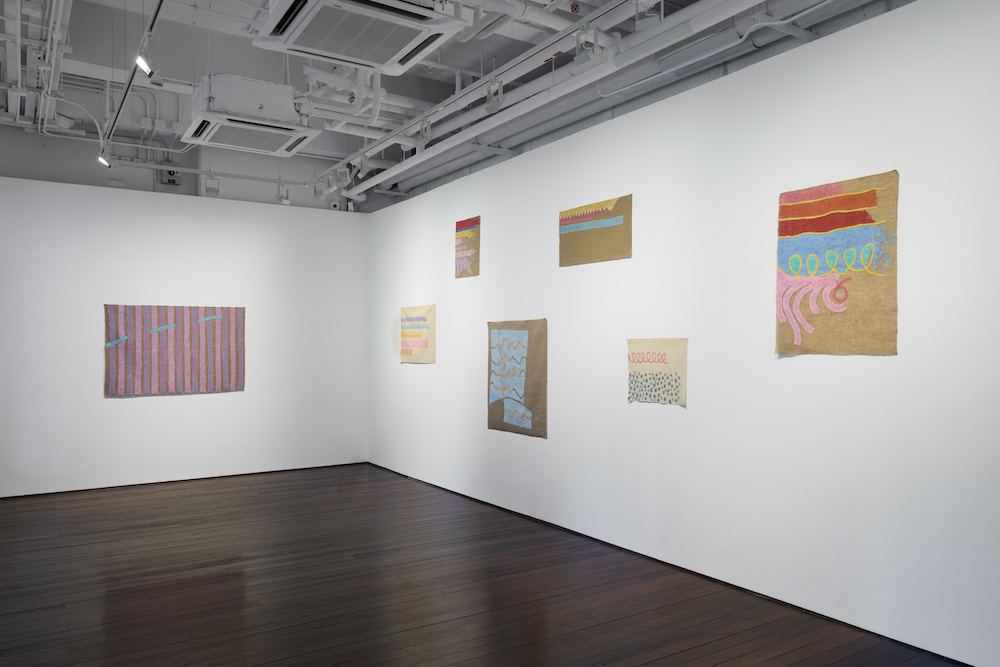
Seven confirmed Hong Kong exhibitions for November 2026, with artwork-specific photographs matched to M+, Tai Kwun, David Zwirner, White Cube, MASSIMODECARLO, Axel Vervoordt and Whitestone Gallery.
At Princeton, eleven paintings from 1984 reveal a Basquiat who copied, screened and revised his own images with exacting intent—complicating the myth of improvisational genius.
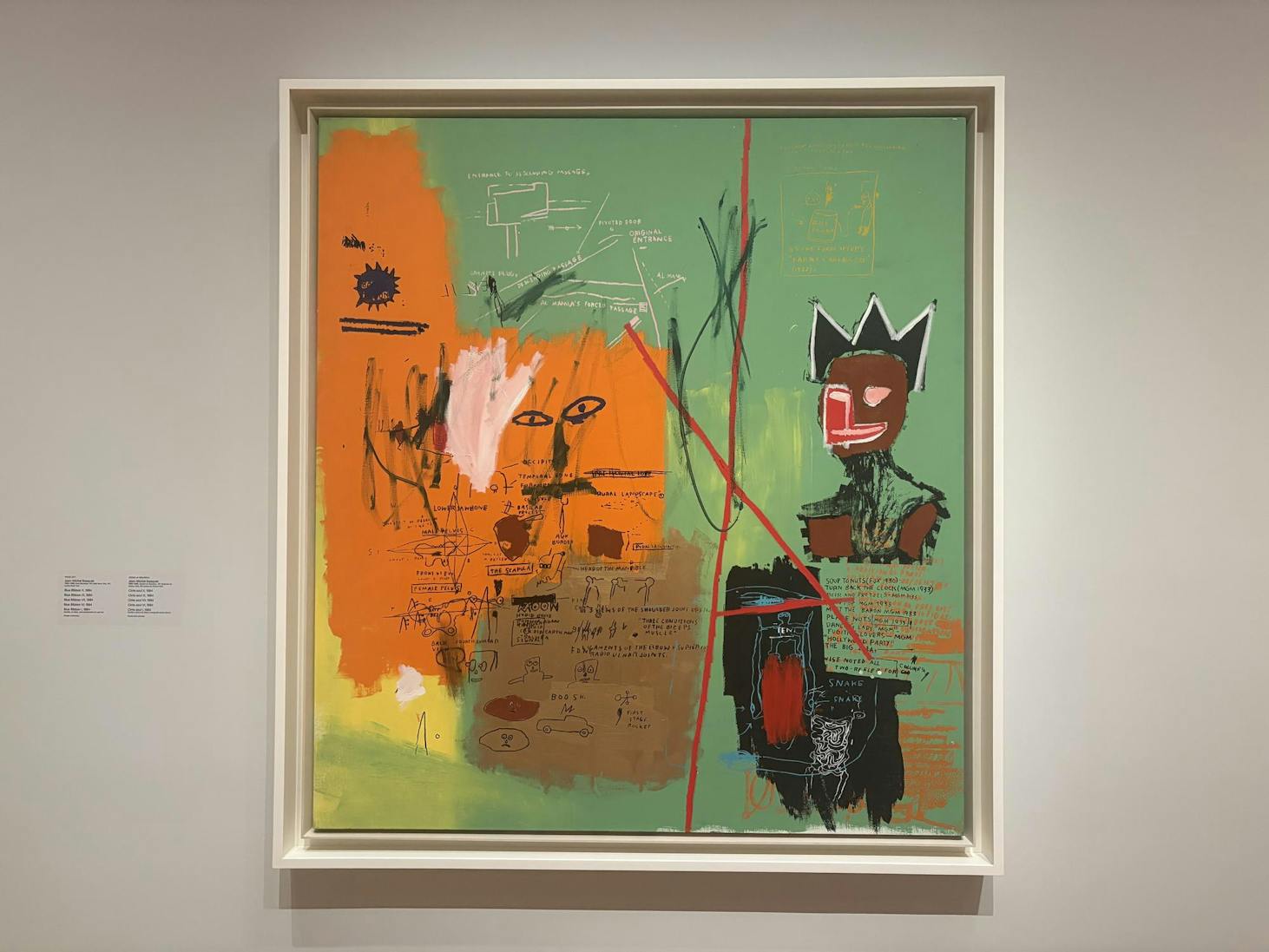
The easiest way to misread Jean-Michel Basquiat is to imagine that everything arrived at once. The widely circulated image of the artist—young, brilliant, ferociously productive, making marks as though the canvas had barely time to catch them—contains some truth, but it can obscure the disciplined decisions that enabled the work. At Princeton University Art Museum, a remarkable group of eleven paintings made in 1984 suggests a different story. Repetition, rather than pure spontaneity, becomes the engine of invention.
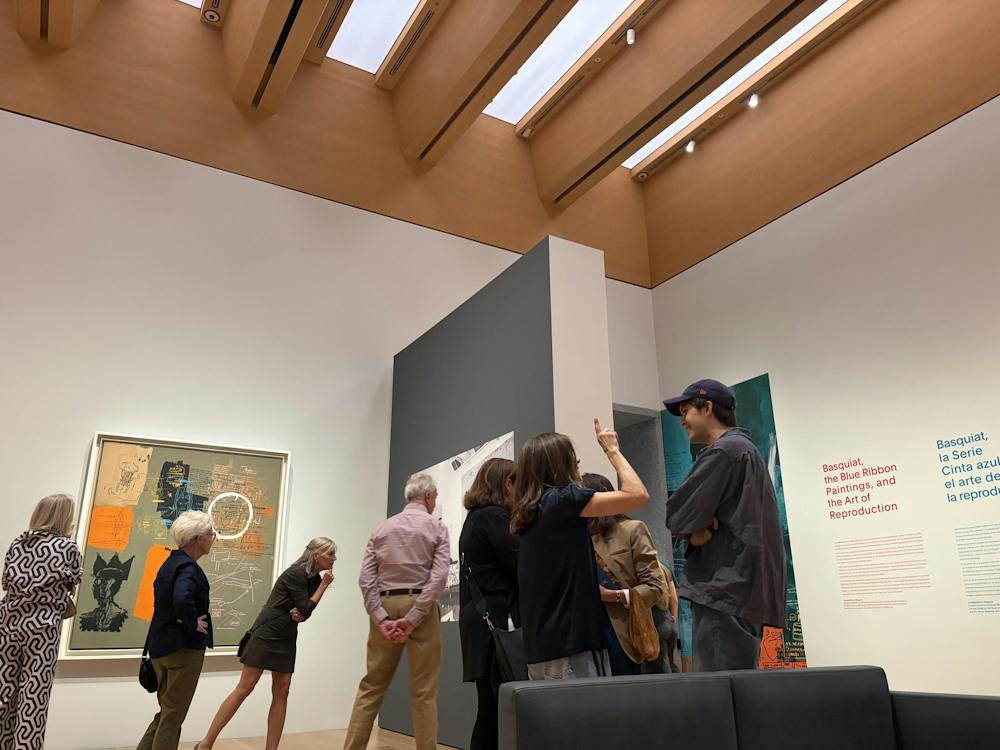
Basquiat, the Blue Ribbon Paintings, and the Art of Reproduction, on view from 4 October 2026 until 31 January 2027, brings together more than sixty works and objects. At its core is the Blue Ribbon sequence, shown together after more than three decades. The title refers partly to the familiar Pabst Blue Ribbon motif that recurs across the compositions. It is also a clue to the exhibition’s larger argument: commercial images and the systems that circulate them were neither background noise nor decorative additions in Basquiat’s work. They were tools with which to question what a society repeats, recognises and remembers.
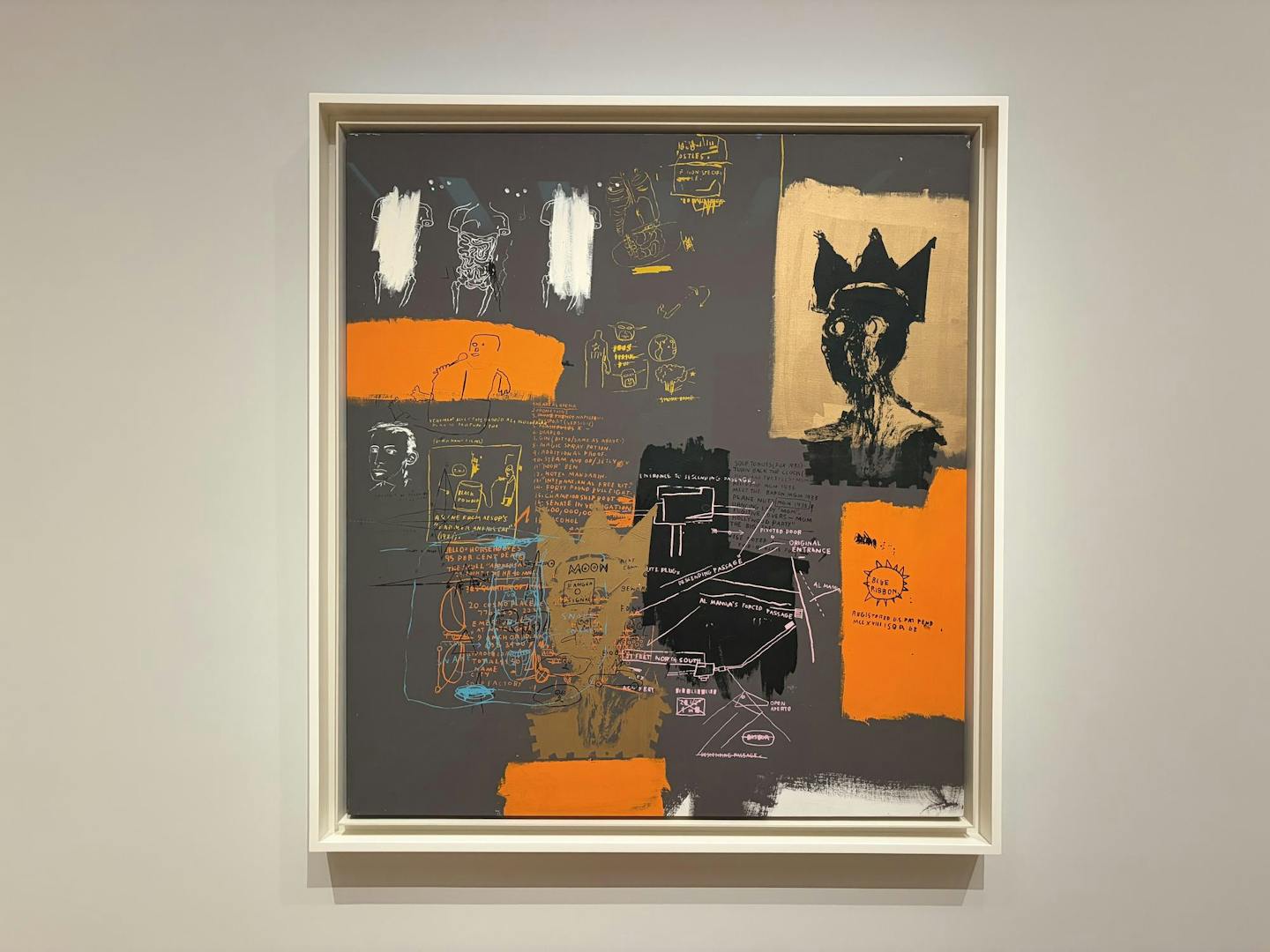
Look closely at Blue Ribbon V and Blue Ribbon VII. A crowned figure reappears; anatomical diagrams and fragments of language recur; marks seem to move from one canvas to another. Yet their placements, degrees of erasure and chromatic pressures continually change. The image is at once familiar and newly unstable. In one painting, dark grey and vivid orange create a compressed visual field. In another, the green ground and isolated crown make a figure feel both monumental and oddly exposed.
Basquiat combined acrylic, oil stick and screenprinting. A printed sign is capable of arriving on the canvas already burdened with associations, unlike a line that appears to be made for the first time. Once transferred, however, that sign could be buried, overwritten, interrupted or recontextualised. The supposedly mechanical element became material for an intensely personal argument. Reproduction was not opposed to originality; reproduction made a different kind of originality possible.
The Blue Ribbon works therefore resist the notion of a series as simple variation. They are closer to a laboratory, with images submitted to different pressures until they reveal unexpected meanings. A beer logo becomes a cultural artefact. A crown can be a shorthand for authority, a claim of dignity, a branding device or an anxious mask. The shifting ground prevents any of those readings from hardening into an easy emblem.
The exhibition has been organised by the art historian Jordana Moore Saggese, whose work on Basquiat has repeatedly complicated the seductive narrative of unmediated expression. Princeton’s thesis is material: understanding how the paintings were made changes how their imagery can be understood. That is why the presentation reaches beyond the eleven canvases to prints, photocopies, postcards and other experiments in replication.
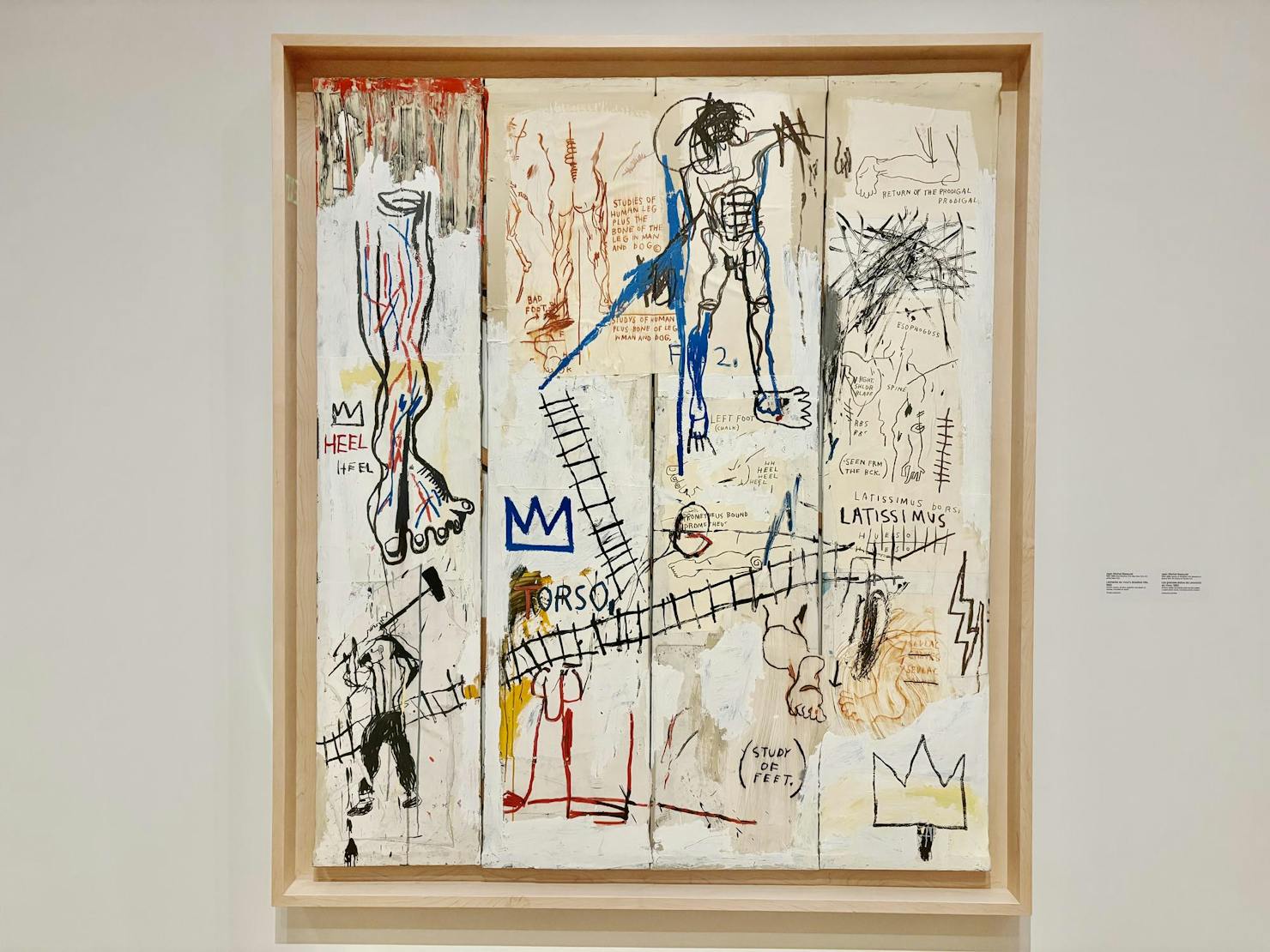
One recurring source of Basquiat’s fascination was anatomy. His engagement with Leonardo da Vinci and medical diagrams is visible in works such as Leonardo da Vinci’s Greatest Hits (1982) and Untitled (From Leonardo) (1983). These are not merely references to the prestige of the Renaissance. They also expose the authority that printed knowledge claims to possess. A diagram isolates, labels and classifies the human body. Basquiat brings such systems into contact with gestures that refuse tidy classification.
In the Leonardo-related works, paper and reproduced marks create a peculiar sense of distance. We encounter an image that may itself derive from another image, and what appeared to be a stable source begins to lose its certainty. This is a useful corrective to a reading of the artist only through graffiti and neo-expressionism. Basquiat’s relationship with the printed page, the copy machine and the circulation of information was every bit as consequential as his relationship with the street.
The show also positions him within a larger history of printmaking. Robert Rauschenberg and Robert Hamilton Blackburn enter the narrative, expanding it beyond the better-known friendship with Andy Warhol. Such connections matter because no artist’s technical language emerges in a vacuum. The equipment, skills and knowledge of printers belong to the story of modern art; a revisionist exhibition can give those collaborators and lineages their proper weight.
The art market has made Basquiat immediately recognisable: a crown, a skeletal head, a densely annotated surface can stand in for an entire artistic practice. Recognition brings attention, but it can also encourage a kind of shorthand collecting. An exhibition built around near-repeated motifs makes shorthand impossible. The viewer has to compare the differences; one work alone cannot explain the operation.
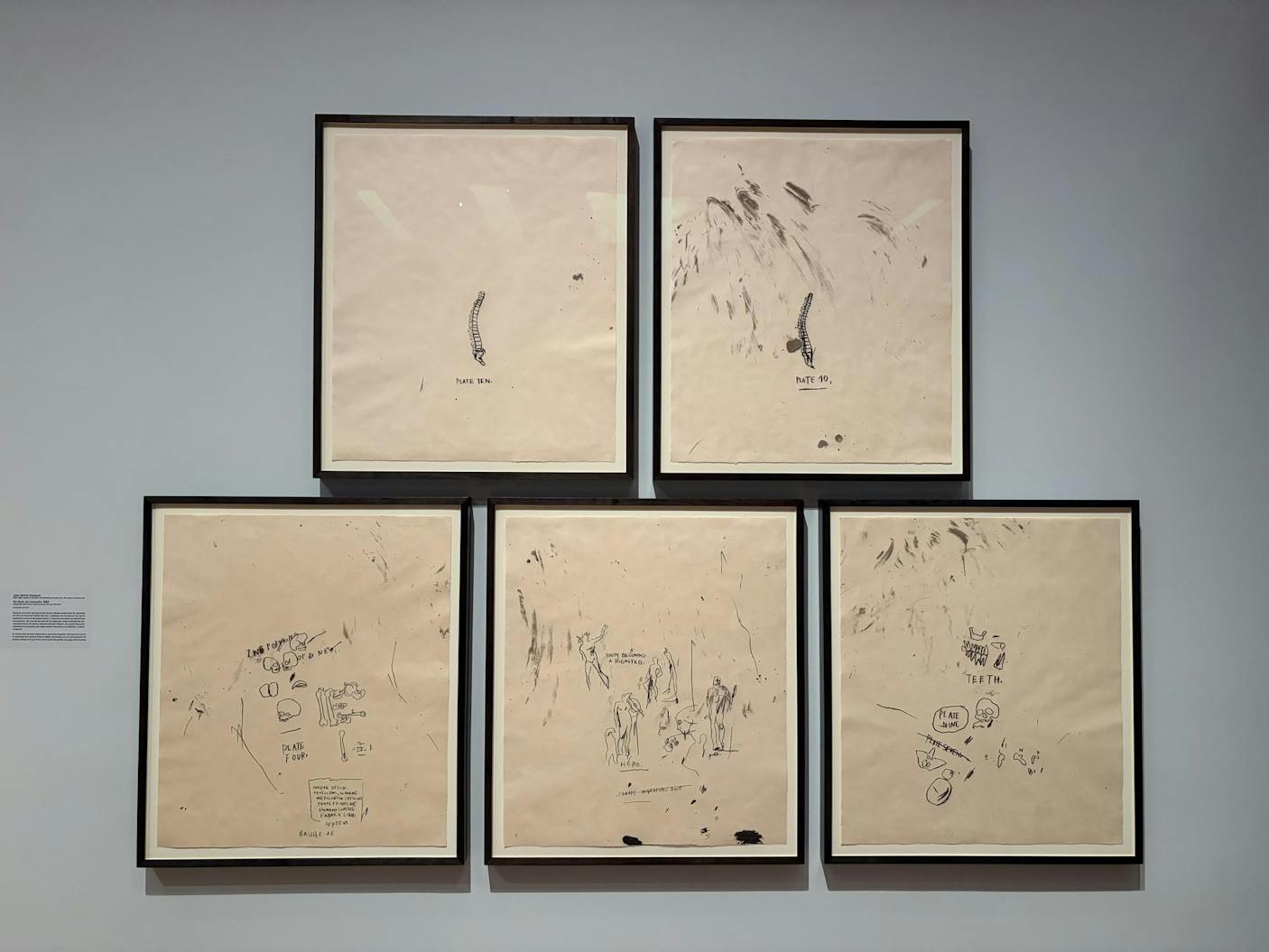
This matters for the way Basquiat is studied and collected. It encourages close examination of medium, support, printed layers and chronology, rather than reliance on iconography alone. A painting with an instantly recognisable head may be less revealing of a particular experiment than a modest print or photocopy. The point is not to reverse the hierarchy between major paintings and works on paper. It is to understand that they illuminate one another.
A collector encountering the Blue Ribbon group may ask how screenprinted elements differ from hand-applied marks, why an image has been obscured in one version and exposed in another, and how an individual work belongs to the wider sequence. For museums, those questions also sharpen conservation and display decisions. Different media carry different material vulnerabilities, and their relationships may be lost when works are presented in isolation.
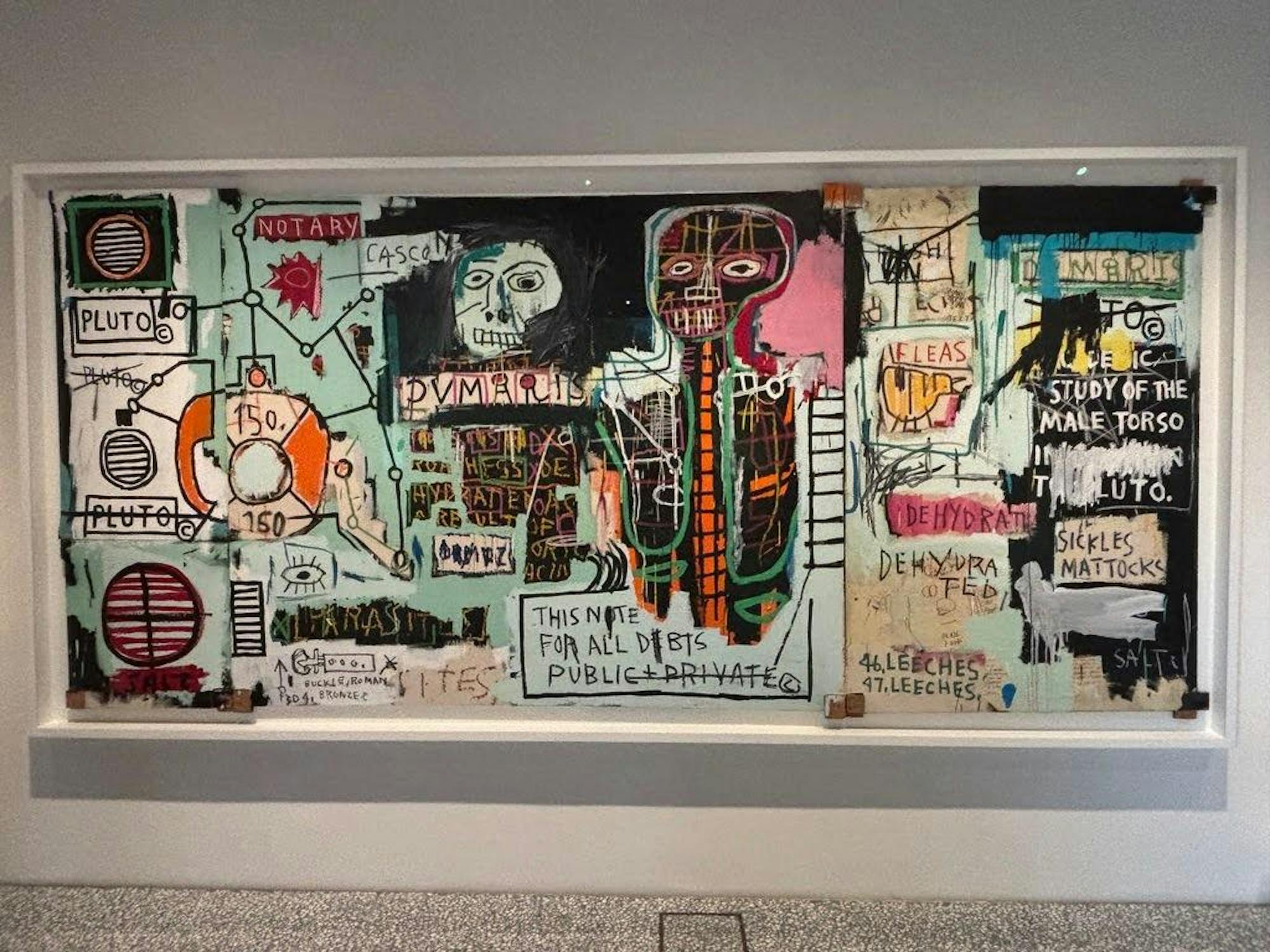
A striking quality of the Princeton presentation is its refusal to treat the artist’s biography as the automatic answer to every formal question. Basquiat’s engagement with race, visibility and cultural power remains essential; indeed, the recurring motifs can be understood as part of an investigation into whose images enter the visual archive. But close attention to the technique allows these concerns to unfold through the paintings rather than being imposed on them from outside.
His use of photocopying and screenprinting belongs to the same period’s wider debates over authorship, appropriation and mass culture, yet the result is unmistakably his own. Repeating an image can mean reinforcing an established order; altering a copy can become a way of resisting it. That tension—between being seen and being reduced to a symbol—is particularly compelling in an artist whose public image has itself been reproduced beyond measure.
The timing makes this exhibition more than an academic footnote. Basquiat continues to occupy an outsized position in museum programming, publishing and the secondary market. With that visibility comes the obligation to make space for new research rather than perpetuate the same small collection of anecdotes. The Blue Ribbon paintings offer rare evidence of process: they reveal decisions made in the studio and the sophistication of a visual system that could produce surprising outcomes from familiar fragments.
Princeton is the first stop of a travelling exhibition that will subsequently reach the High Museum of Art in Atlanta and the Frist Art Museum in Nashville in 2027. The wider itinerary makes the project unusually accessible across different American audiences, not only to those who follow the most visible museum circuits in New York or Los Angeles.
What, finally, does the visitor carry away? Perhaps a more demanding definition of creativity. Basquiat did not need to invent an entirely new image each time he entered the studio. He could take an existing form, move it by a fraction, surround it with new language, obliterate part of it, and discover that it now spoke differently. In the Blue Ribbon paintings, the act of returning becomes a way of seeing further. Their achievement is not simply that they revise a familiar picture of Basquiat. They remind us how much painting can happen between one image and the next.
Seven confirmed Hong Kong exhibitions for November 2026, with artwork-specific photographs matched to M+, Tai Kwun, David Zwirner, White Cube, MASSIMODECARLO, Axel Vervoordt and Whitestone Gallery.
At Princeton, eleven paintings from 1984 reveal a Basquiat who copied, screened and revised his own images with exacting intent—complicating the myth of improvisational genius.
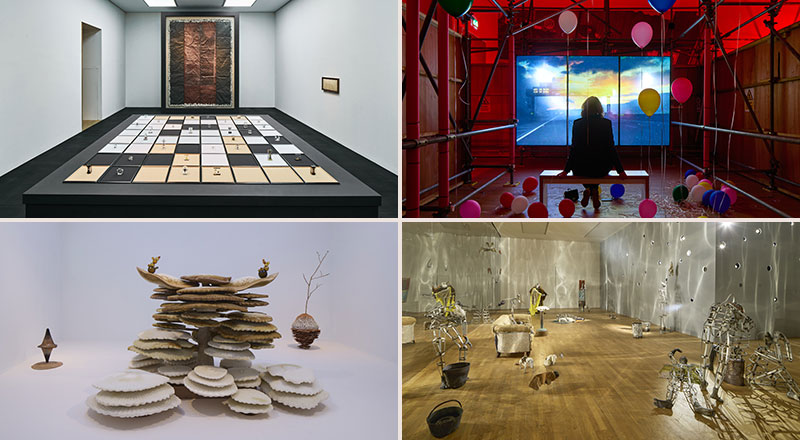
The Turner Prize can be most interesting when its four finalists refuse to represent a single trend. At Middlesbrough Institute of Modern Art, the 2026 exhibition brings together Simeon Barclay, Kira Freije, Marguerite Humeau and Tanoa Sasraku. Their presentations differ sharply in scale, material and temperament, yet all ask how contemporary life becomes embedded in the things we make, transport, inhabit or consume. The exhibition opened on 26 September and continues until 29 March 2027; the winner is due to be announced on 10 December 2026.