
November 5, 2026
Articles
Articles
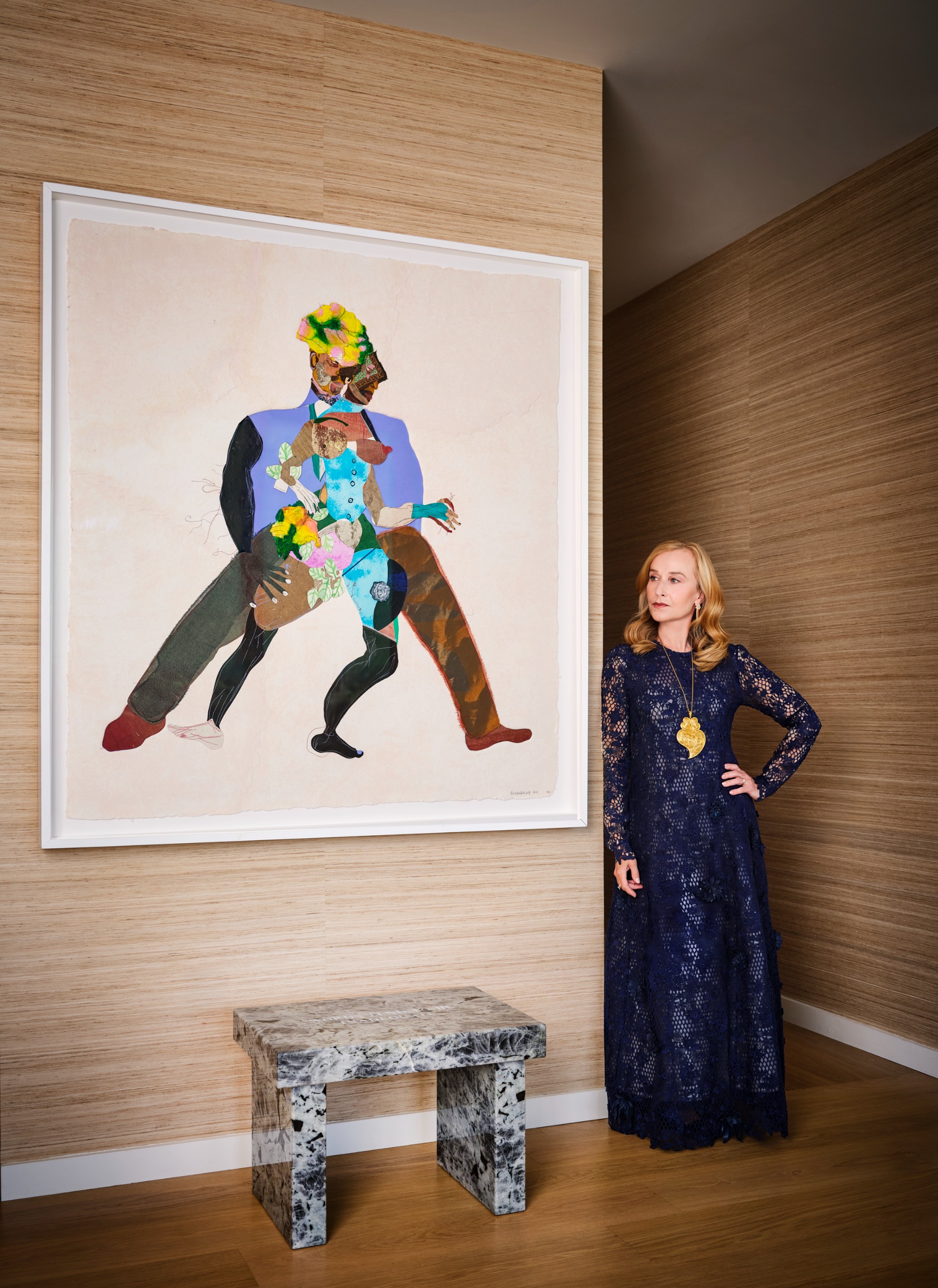
Kelly Behun’s West Chelsea apartment for former US ambassador Randi Charno Levine shows how a serious contemporary collection can grow from relationships, patronage and a new Joana Vasconcelos commission.
The Turner Prize can be most interesting when its four finalists refuse to represent a single trend. At Middlesbrough Institute of Modern Art, the 2026 exhibition brings together Simeon Barclay, Kira Freije, Marguerite Humeau and Tanoa Sasraku. Their presentations differ sharply in scale, material and temperament, yet all ask how contemporary life becomes embedded in the things we make, transport, inhabit or consume. The exhibition opened on 26 September and continues until 29 March 2027; the winner is due to be announced on 10 December 2026. A
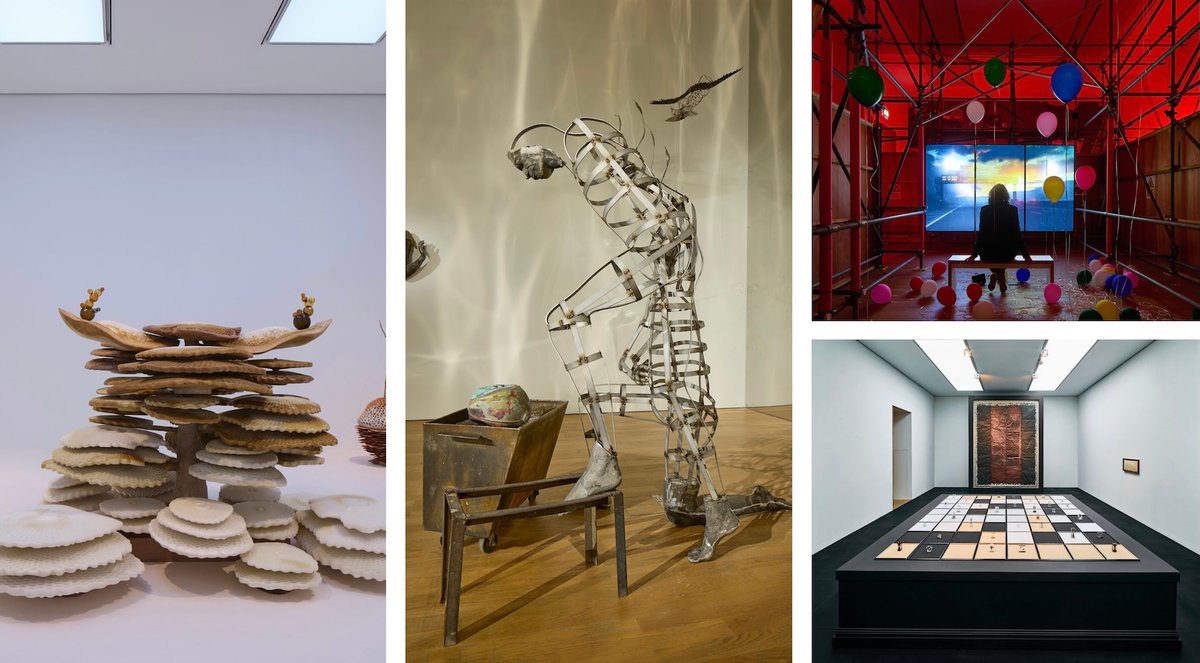
In Middlesbrough, the 2026 Turner Prize exhibition puts industrial memory, sculptural empathy, ecological futures and extractive power into unusually direct conversation.
The Turner Prize can be most interesting when its four finalists refuse to represent a single trend. At Middlesbrough Institute of Modern Art, the 2026 exhibition brings together Simeon Barclay, Kira Freije, Marguerite Humeau and Tanoa Sasraku. Their presentations differ sharply in scale, material and temperament, yet all ask how contemporary life becomes embedded in the things we make, transport, inhabit or consume.
The exhibition opened on 26 September and continues until 29 March 2027; the winner is due to be announced on 10 December 2026. A prize is inevitably a mechanism of selection, but the exhibition asks a broader question. What can an artwork reveal about power and human connection when it works through scaffolding, welded steel, imagined biological forms or industrial substances rather than a conventional pictorial narrative?
The location matters. MIMA, part of Teesside University, sits in a region whose industrial history can still be read in its architecture, its landscape and its social memory. To encounter new work about extractive systems, infrastructure and labour here is different from reading the same concerns as abstract themes in a distant metropolitan gallery. It does not mean every work should be forced into a local interpretation. It means that the setting adds another scale of reference.
The prize’s periodic movement beyond London can be understood not merely as a touring policy but as a challenge to assumptions about where contemporary art should be experienced. Middlesbrough is not presented as a decorative backdrop. The museum has its own publics, collections, educational networks and histories. A national exhibition can be judged partly by the depth of the encounter it creates with those communities, rather than only by the media spectacle that surrounds the eventual winner.

Simeon Barclay’s The Ruin draws on his earlier performance and on the story of the M62 motorway, a vast infrastructure project that altered how communities in northern England understood mobility and connection. At MIMA, scaffolding and a recorded spoken-word element translate the live work into an environment. The structure evokes something still being built—or perhaps something never entirely finished. Its provisional quality is central to the experience.
For Barclay, the motorway is neither simply progress nor simply destruction. It can mean escape and possibility while carrying histories of class, masculine identity, family and regional change. That ambivalence gives the work its force. A road may look neutral from a map, but it is lived differently from a childhood house, a bus, a factory or a field it cuts across. The artist uses the physical language of construction to make those overlapping experiences perceptible.

Kira Freije’s Unspeak the Chorus occupies another emotional register. Her figures are made from slender welded steel strips, with cast aluminium faces, hands and feet. Rather than enclosing an idealised human form, the open armatures allow air, light and the surrounding room to enter the sculptures. Glass, found textiles and other materials contribute a sense of lives already lived. They can appear fragile without being mechanically insubstantial.
Light and a gentle mist further complicate the installation. Neither is merely an atmospheric effect. Both alter the way figures become visible, obscured and relational as visitors move. The grouped bodies suggest care, hesitation, grief and companionship, yet they do not deliver a fixed plot. There is generosity in that incompletion: Freije gives the viewer enough gesture to recognise a human situation, but leaves its specific emotional history unresolved.

Marguerite Humeau’s Torches enters the territory of speculative ecology. The artist builds an environment populated by biological-seeming sculptural forms and the possibility of nonhuman intelligence. The materials cited around the project are themselves unusual: beeswax, old walnut, ancient yeast and cultivated organic substances. These are not neutral ingredients; their age and physical behaviour suggest life developing across timescales far larger than an individual human life.
What makes Humeau’s work compelling is that it refuses to remain simply an illustration of environmental anxiety. Its shapes may recall fungi, animal remains or imagined organisms without settling into an exact species. The installation proposes a different kind of empathy, one that begins with recognising how little human beings know about the forms of life with which they coexist. The imaginative leap is supported by an intense attention to physical substance.

Tanoa Sasraku’s Morale Patch deals with the systems that make natural resources available as commodities. Industrial motifs, crude oil and the visual grammar of power become elements in a carefully controlled presentation. The work connects the physical properties of materials with the political arrangements that bring them to market. Its title carries the connotations of military insignia, group belonging and institutional loyalty.
There is a particular sophistication in making the subject feel at once materially immediate and structurally distant. Oil can be held in a small object, yet its social consequences spread across continents; a familiar insignia can condense systems of command and allegiance. Sasraku examines that compression. The installation does not offer easy moral relief or the illusion that a visual symbol explains a global economy. Instead, it asks viewers to pay attention to how such symbols gain their authority.

Taken together, the finalists offer an unusually broad picture of sculptural and installation practice. Barclay works through public infrastructure and personal memory; Freije builds a theatre of tenderness and uncertainty; Humeau extends the imagination beyond the human; Sasraku studies extraction and the apparatus of control. These are not four solutions to a shared problem. They are four ways of establishing why contemporary art still needs different materials, different audiences and different forms of encounter.
For collectors, the exhibition also demonstrates why an installation should be understood beyond its photograph. Light programmes, sound, industrial structures, organic materials and architectural space each raise questions about editioning, documentation and long-term stewardship. A powerful gallery presentation may depend on elements that cannot be neatly translated into a domestic setting. Collecting such work responsibly means considering that complexity from the outset.

The temptation with any annual prize is to let the result retrospectively organise the exhibition: winner, near-winners, the rest. That reading is particularly inadequate here. A jury’s decision will reflect a particular set of arguments at a particular moment. It will not settle the long-term importance of any of these four practices, nor will it exhaust the meanings viewers find in their installations.
MIMA’s exhibition deserves to be considered on its own terms before 10 December. It places artists with different kinds of ambition side by side, without smoothing out their differences. What lingers is a shared sense that materials remember. Scaffolding, steel, wax and oil each arrive with a history, and each can be made to speak about the future. That is a far more substantial proposition than the annual question of who might win.
The exhibition makes an especially persuasive case for examining what, precisely, constitutes a work of installation art. A museum may show objects alongside sound, an architectural armature and a controlled pattern of light. Some elements are unique; others can be remade or adjusted according to the artist’s specifications. A collector approaching such work should distinguish the physical components being acquired from the instructions that determine their presentation. That difference can affect loan agreements, insurance, future exhibition costs and the ability to honour the artist’s intentions decades later.
There are also subtler questions. The sound of a voice occupying a large temporary structure has a different impact from the same recording played in an intimate room. The meaning of a work built around a particular material may change if the original substance ages, becomes unavailable or is replaced. Neither issue makes ambitious contemporary art uncollectible. They make collaboration with artists, estates, conservators and institutions essential to responsible stewardship.
This is why the exhibition should not be reduced to a catalogue of photogenic rooms. Its strongest works make atmosphere inseparable from thought. The more the audience is asked to become physically involved, the more carefully a future owner must consider what can be preserved, what can be re-created and what should remain specific to the place and occasion of the original presentation.
Teesside University: Turner Prize 2026 opens at MIMA
Kelly Behun’s West Chelsea apartment for former US ambassador Randi Charno Levine shows how a serious contemporary collection can grow from relationships, patronage and a new Joana Vasconcelos commission.

The new Dasha Shenkman Focus Fund has placed three Okiki Akinfe works into Abbot Hall. Its real significance is a model of private patronage that creates public institutional value early.
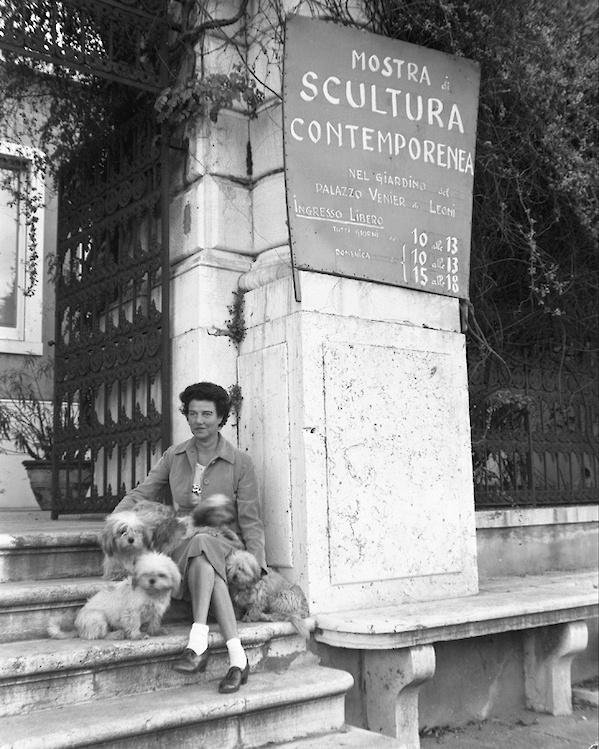
At Palazzo Venier dei Leoni in Venice, Peggy Guggenheim made modern art part of daily life—and left a model for the home as a living collection.