
September 4, 2026
Articles
Articles
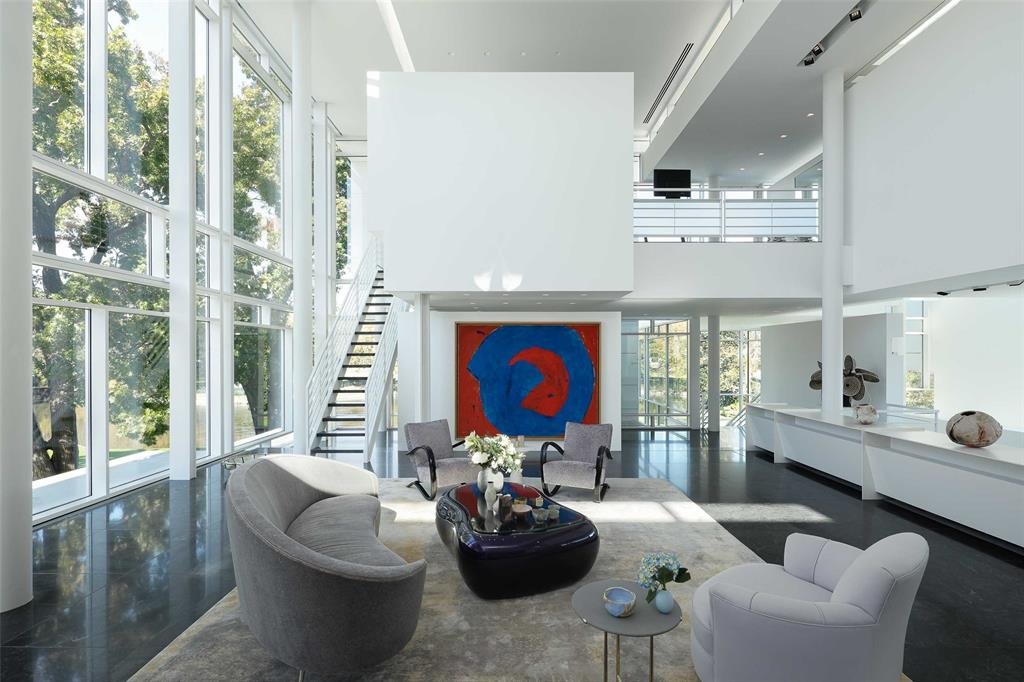
With Richard Meier’s Rachofsky House entering a new chapter, its most revealing legacy is the way Cindy and Howard Rachofsky used architecture to keep a major contemporary collection in motion.
With Richard Meier’s Rachofsky House entering a new chapter, its most revealing legacy is the way Cindy and Howard Rachofsky used architecture to keep a major contemporary collection in motion.
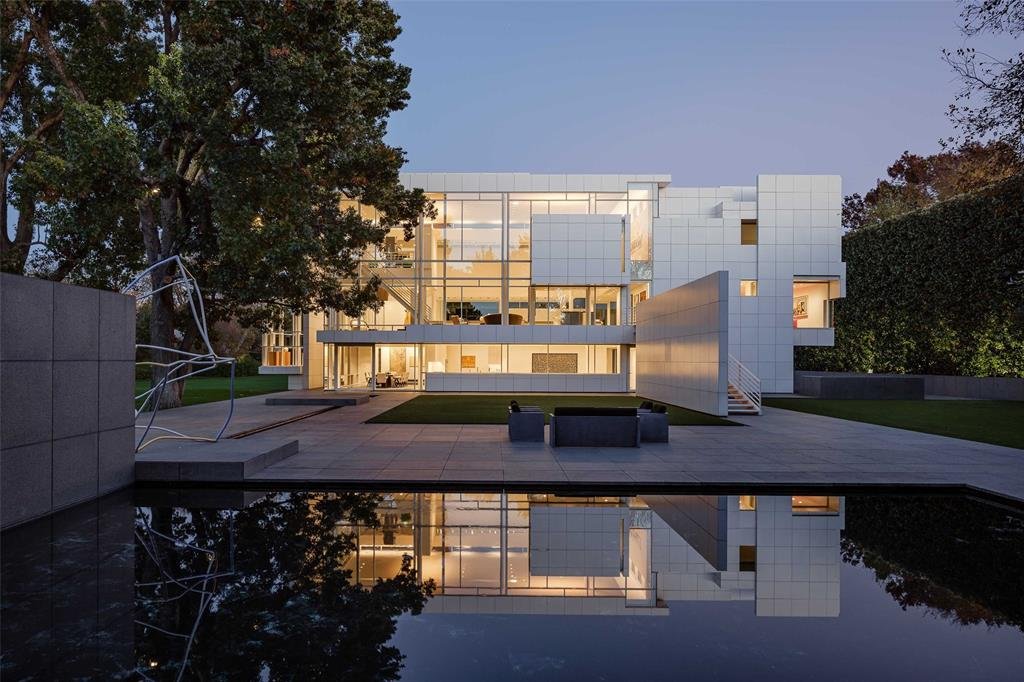
Richard Meier’s Rachofsky House has long been one of the clearest demonstrations of what happens when architecture is asked to do more than accommodate a collection. With the Dallas landmark now entering a new chapter, its most valuable lesson is not about real estate at all. It is about the way a serious collector can use a home to keep seeing art differently.
Some houses contain collections. A rarer few become part of the collection’s intellectual history. The Rachofsky House belongs to the second group. Completed in 1996 for Howard Rachofsky and later shared with Cindy Rachofsky, Richard Meier’s white, glass-and-metal residence in Preston Hollow became a private home, an exhibition setting and, eventually, one of the defining sites of Dallas collector culture.
The timing makes the house newly visible. It entered the public market at $23 million in 2025 and, according to the latest widely reported pricing, was reduced to $17.5 million in May 2026. The 9,062-square-foot property can therefore be discussed as a piece of exceptional real estate. But that is the least interesting way to understand it. For three decades, its greater significance came from what happened inside: changing installations, repeated reconsideration of the collection, encounters between postwar European and American art, and a willingness to treat domestic space as an active curatorial instrument.
The Rachofsky Collection itself now numbers roughly 800 works. Its official description identifies two broad currents: global Minimalism and related postwar abstraction, and a second strand concerned with identity and representation. Those apparently different interests are exactly what made the house so productive. Meier supplied an architecture of extreme clarity; the collection repeatedly introduced friction, psychology, vulnerability, material excess and historical complication.
Meier’s architecture is often reduced to its visual signatures: white panels, black granite, glass, strict geometry and a disciplined relationship between solid and void. Yet the Rachofsky House is more persuasive when understood as a sequence. Movement through it matters. The double-height living room, the suspended study, the staircases, the changing elevation above the lawn and the constant presence of the pond and mature oak trees produce a succession of viewpoints rather than a single ideal room.
That distinction matters to collectors. A blank wall is useful, but it is passive. A carefully proportioned house can do something more demanding. It can alter scale, reveal a work from several distances, make daylight part of the encounter and force one object to coexist with the architecture, the landscape and the ordinary activity of a home.
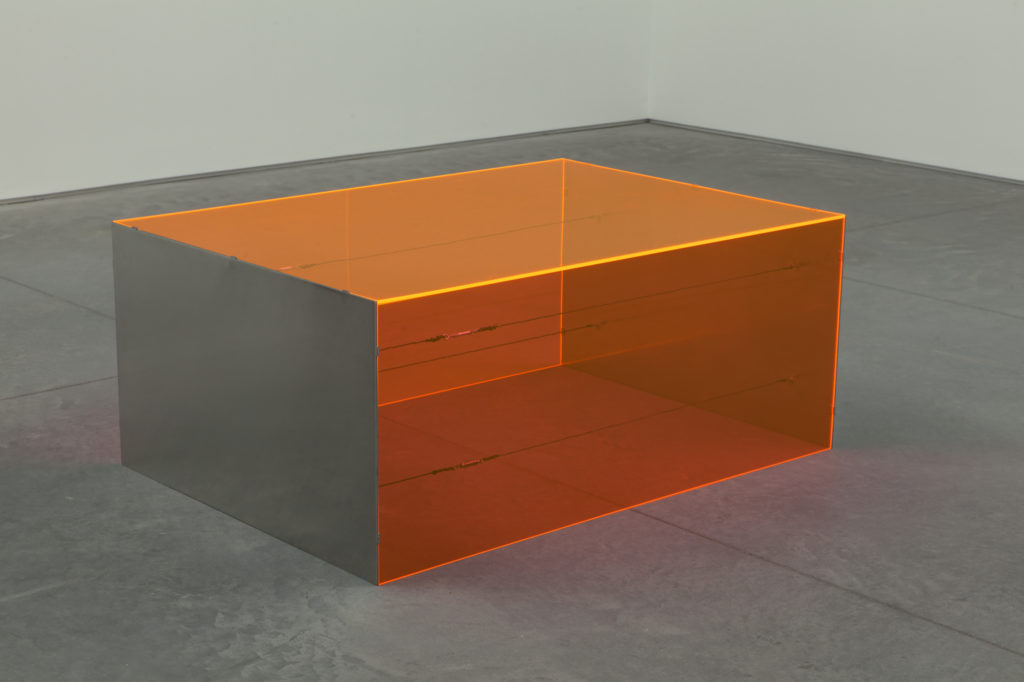
Donald Judd is one of the clearest examples. The collection includes important works spanning his career, and the official Rachofsky archive records that the 2003–04 installation Thinking about Sculpture began with the desire to place five Judd sculptures together. That gesture is revealing. The goal was not to make one Judd look perfect in one room. It was to create conditions for comparison: different materials, colours, proportions and decades sharing the same architectural field.
The Rachofsky House was most compelling when it behaved less like a finished museum and more like a machine for changing one’s mind.
If Judd seems almost naturally at home in Meier’s formal precision, Mario Merz makes the opposite point. The Rachofsky Collection is particularly strong in Italian postwar art, especially Arte Povera, and Merz’s Vento preistorico dalle montagne gelate of 1967 is one of its most historically important works.
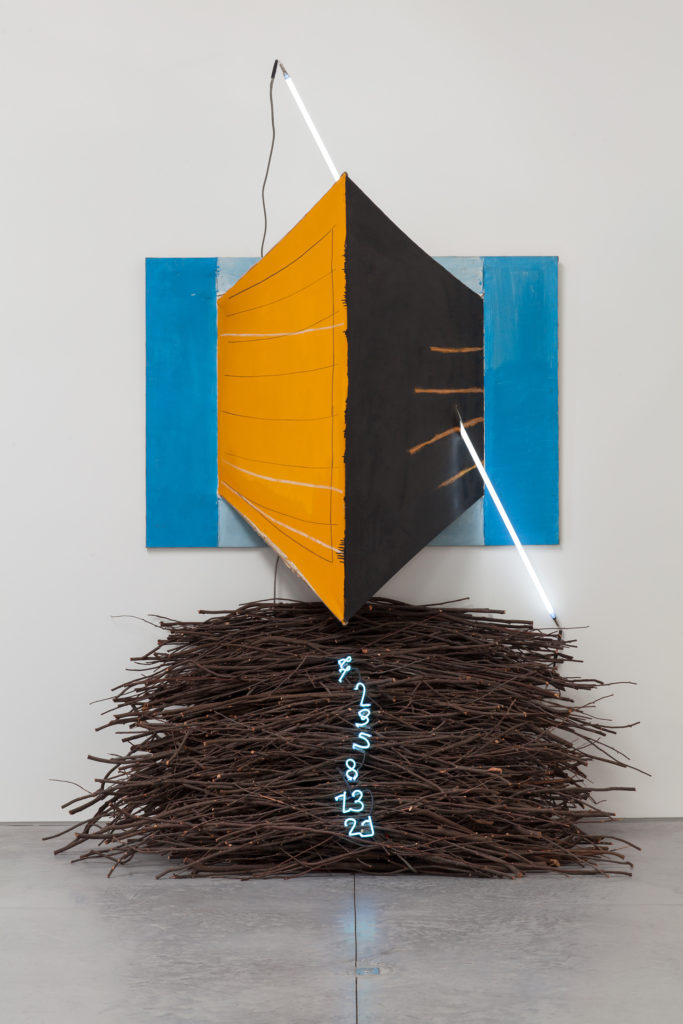
The work is made from mixed media on canvas, neon tubes and twigs. It refuses to remain a picture. Branches and light push outward into real space, making the viewer negotiate the work physically rather than simply observe it frontally. In the 2008–09 exhibition A Rachofsky Collection Primer, the Rachofskys presented it among a group of historical anchors that also included Judd, Robert Irwin, Richard Serra and Laurie Anderson.
That juxtaposition says more about collecting than any perfectly coordinated interior ever could. Merz does not aesthetically “match” the Rachofsky House. The organic materials, visible irregularity and Arte Povera refusal of polish intensify the building’s precision by contradicting it. The architecture becomes sharper because the artwork is unruly; the work becomes more physical because the room is so controlled.
For ARTCOLLECTORHOMES, this is one of the most useful lessons of the house. Living well with art is not the same as styling around it. Strong collections often improve when rooms allow incompatibility. A collector’s home should be capable of absorbing arguments.
Piero Manzoni extends that argument in another direction. The Rachofsky Collection includes several of his Achrome works, including a 1958 kaolin-on-canvas example. Stripped of conventional colour, the Achromes are often described as white paintings, but that phrase underestimates them. Their subject is not whiteness as decoration. It is material itself: folds, crusts, texture and the refusal of expressive colour as the organising principle of painting.
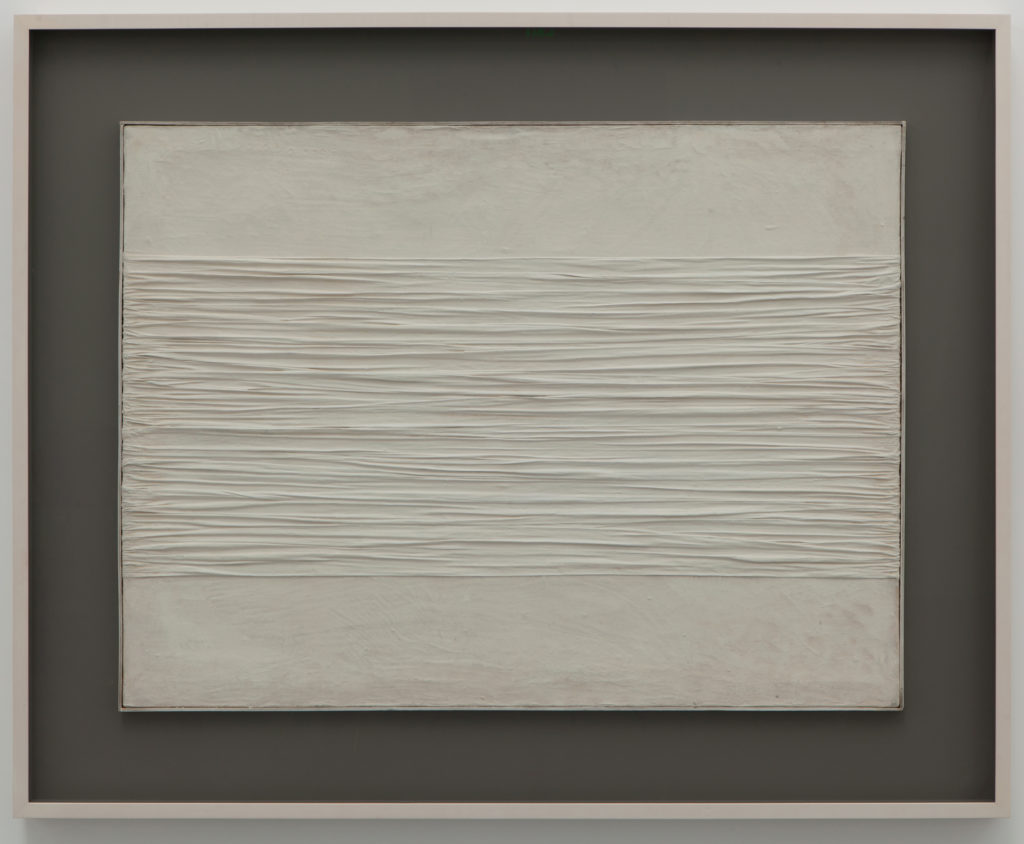
In a Meier house, a Manzoni Achrome could superficially look inevitable: white art in white architecture. Yet the real relationship is more interesting. Meier’s white surfaces are part of an architectural system of precision, light and geometry. Manzoni’s whites are deliberately unstable, anti-compositional and materially insistent. One seeks order through design; the other asks whether painting can escape design altogether.
This is why the Rachofskys’ collection cannot be understood simply as a taste for Minimalism. The collection’s historical core is full of artists who questioned the stability of the modern art object. Lucio Fontana cut or pierced the picture plane. Merz pushed it into lived space. Manzoni removed conventional colour and authorship from painting. Judd rejected sculpture’s dependence on traditional composition. The house provided these different positions with an unusually lucid arena in which to confront one another.
The second major current in the Rachofsky Collection is identity. That strand prevents the house from becoming a shrine to cool geometry. Artists including Felix Gonzalez-Torres, Robert Gober and Do Ho Suh introduce memory, the body, sexuality, social structures and personal history into a setting whose architecture can initially seem almost abstract.
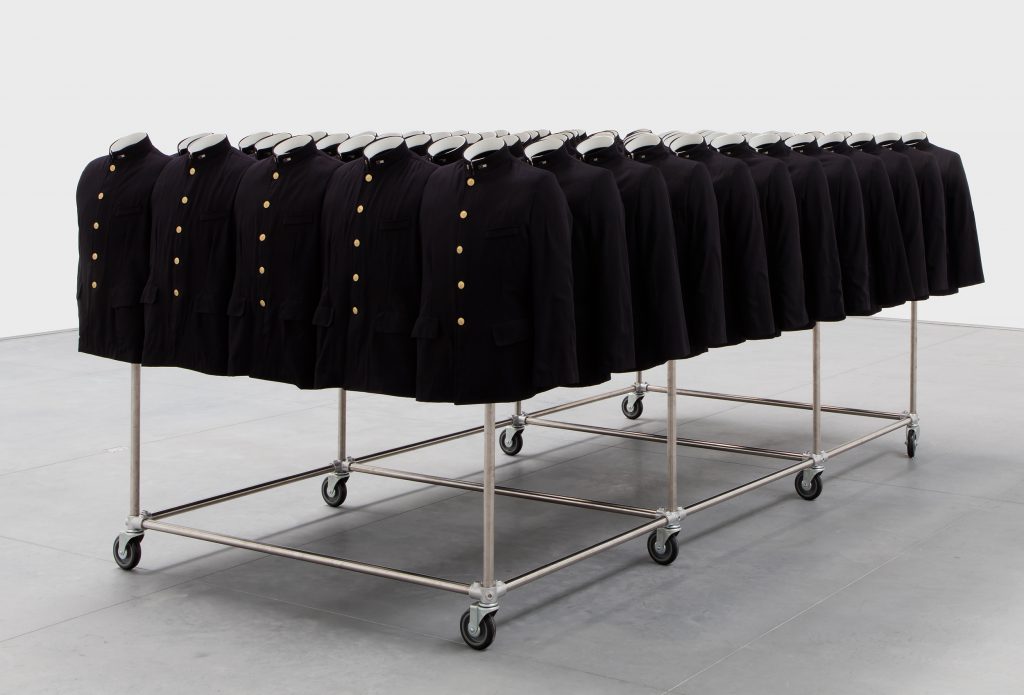
Suh’s High School Uni-Form, 1996, is an especially telling example. The repeated fabric uniforms create an immediate formal rhythm, but the work is not fundamentally about pattern. It is about institutions, conformity, individuality and the body imagined through what it is required to wear. In the context of the Rachofsky Collection, Suh provides a bridge between the visual discipline associated with Minimalism and the lived experience that later generations brought into postwar sculptural language.
The official archive makes that connection explicit. Thinking about Sculpture placed work by Gonzalez-Torres, Gober, Marc Quinn and Suh around the Judd group precisely to ask how younger artists had reinterpreted Minimalism’s abstract language through identity and the self. That is a far richer collector proposition than simply accumulating canonical names. The collection becomes a sequence of questions passed from one generation to another.
One of the most striking features of the Rachofsky archive is how often the house changed. There was no definitive hang. Italian Art in the Rachofsky Collection focused on the transatlantic relationship between American Minimalism and Arte Povera. New Acquisitions in 2006–07 was deliberately described as a “rough draft,” an opportunity to see what recently acquired work looked like together before deciding what it meant. Later installations reconsidered sculpture, identity, process and historical anchors.
This openness is particularly valuable for collectors because permanence can become a trap. Once an installation feels “finished,” a house can begin to function as a photograph of itself. Works become inseparable from one wall; furniture and art settle into habits; the collector stops testing why one object belongs beside another.
The Rachofsky model suggests the opposite. Reinstallation is not disruption for its own sake. It is a form of scholarship conducted through possession. Moving a work can expose scale that was previously hidden. A new neighbour can change its historical reading. A room once devoted to one generation can become a conversation across decades.
That philosophy also explains why the house became culturally significant beyond private ownership. Before The Warehouse opened in 2012 as a larger exhibition venue for works from the Rachofsky and related collections, the Preston Road residence itself functioned as an important site for looking, conversation and philanthropic art-world activity. It demonstrated that a collector home can remain domestic while also contributing to a city’s cultural ecosystem.
The current sale therefore raises a question more subtle than the asking price. The collection is not part of the real-estate transaction. The artworks, their provenance and the institutional relationships around them remain separate. Yet the house has acquired its own history through those works.
Installation photographs matter. So do records of how particular objects were positioned, which artists visited, which exhibitions occupied which rooms and how the grounds were used for sculpture. The official house still describes the experience through the combination of Meier’s building, rotating interior installations and outdoor works, many of them site-specific. That history cannot be transferred as neatly as a title deed, but neither can it simply be erased.
For collectors planning important homes now, the lesson is practical. Document the domestic life of the collection. Photograph installations properly. Keep floor plans and lighting records. Note when architecture was altered for a specific work. Record why an object moved. If an artist contributed to a placement or site-specific decision, preserve that correspondence. These details can later become part of a collection’s scholarly value.
The best collector homes do not look like museums because a museum is not their highest ambition. Their advantage is intimacy, repetition and time. A collector can see the same work in morning and evening light, move past it every day, change its neighbours, live with irritation and return months later with a different judgment.
The Rachofsky House amplified those possibilities because its architecture was rigorous enough to make each change visible. It gave the collection a strong frame without asking the art to become uniform. Judd, Merz, Manzoni and Suh could occupy the same collecting story precisely because they did not agree with one another.
Whatever happens to the property next, that idea is worth preserving. The deepest achievement of the Rachofsky House was never that it provided an immaculate backdrop for valuable art. It showed how a home can become part of the intellectual work of collecting — not by overpowering the collection, but by giving it room to keep changing.
With Richard Meier’s Rachofsky House entering a new chapter, its most revealing legacy is the way Cindy and Howard Rachofsky used architecture to keep a major contemporary collection in motion.

Before Art Basel Paris arrives in October, September brings a concentrated Paris season spanning Kerry James Marshall, Cezanne, Christian Marclay, Paris Design Week, Fine Arts Paris and a gallery-history exhibition in the Marais.
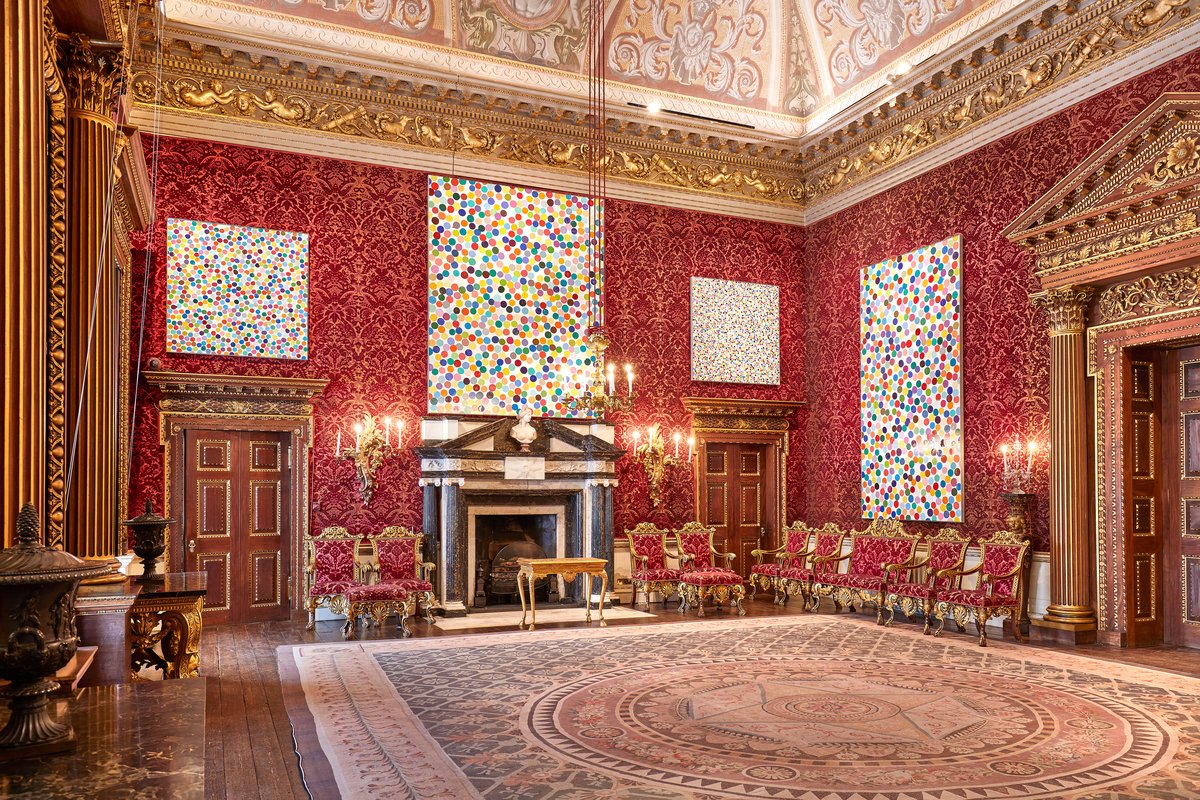
Gagosian’s Damien Hirst solo booth at Frieze Seoul is less a comeback than a compact map of a highly segmented market—placing Spots, Spins, cabinets, Colour Space, Secret Gardens and Treasures side by side for collectors.