
October 23, 2026
Exhibitions
Exhibitions

From Faye Toogood and Kate Malone to textile art, post-war furniture and new material-led designers, PAD London showed why serious collector homes are built beyond the frame.
From Faye Toogood and Kate Malone to textile art, post-war furniture and new material-led designers, PAD London showed why serious collector homes are built beyond the frame.
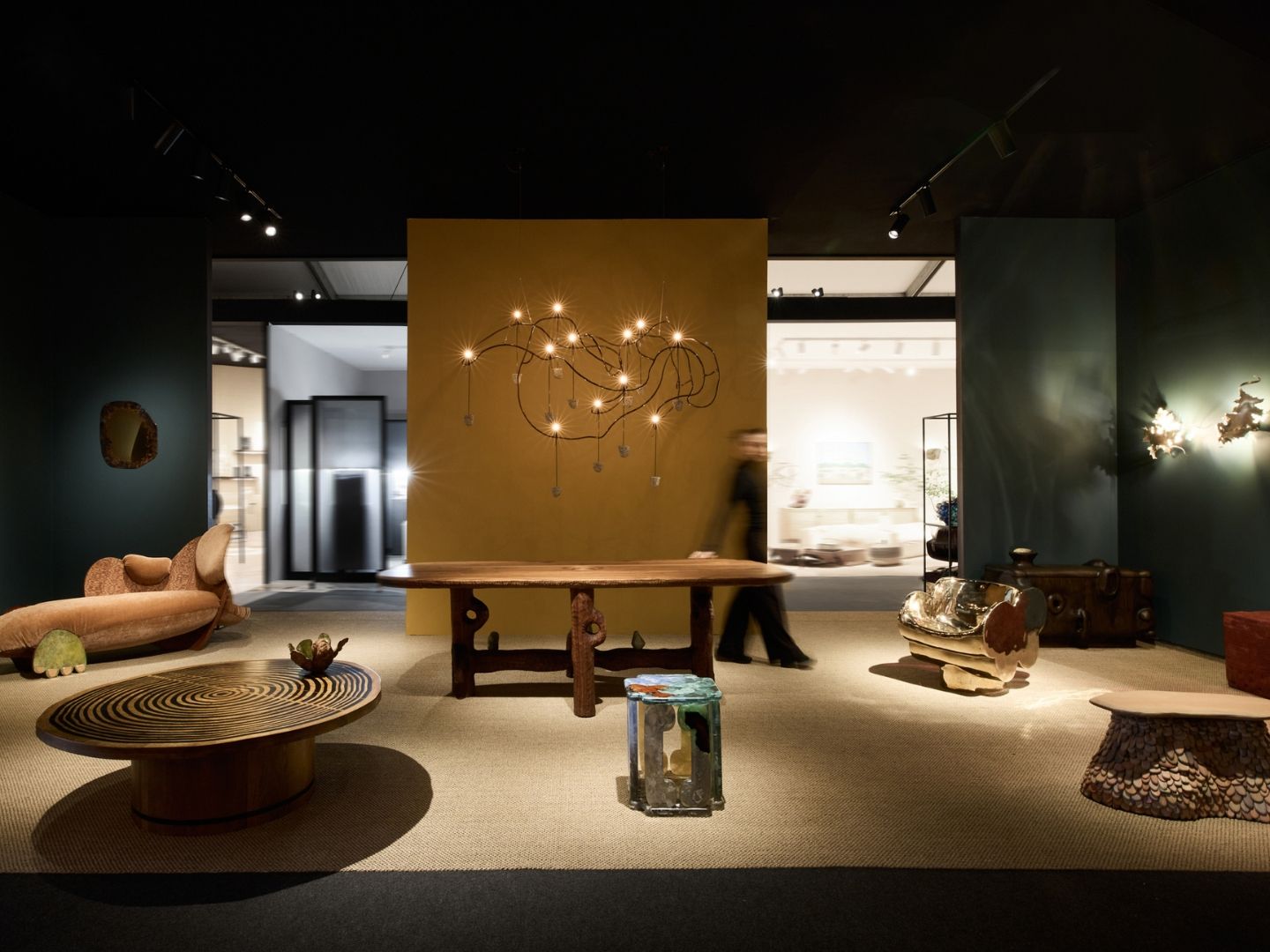
PAD London has always understood something that art fairs sometimes forget: collectors eventually have to live somewhere.
Its 18th edition, running 13–18 October in Berkeley Square with 67 galleries, was strongest when it treated collectible design not as sculpture with a practical excuse, but as a way of shaping daily space. Historic furniture, contemporary ceramics, textiles, experimental materials and jewellery were shown in booths that often resembled compact interiors rather than trade stands.
For ARTCOLLECTORHOMES, that makes PAD an unusually useful fair. The question is not simply what deserves to be collected. It is what happens when an important object leaves the booth and enters a room with art, books, architecture, children, dinner guests and daylight.
Across the week, the most persuasive work tended to make its material intelligence visible. Carved timber showed the hand that cut it. Ceramics embraced glaze, weight and irregularity. Textiles moved off the wall and into relief. Resin and metal were allowed to look engineered rather than disguised.
That does not mean a return to rustic craft. It means that collectors increasingly want to understand how a piece came into being. In an era of frictionless digital rendering, evidence of process has become part of luxury.
Faye Toogood’s Cairn chair is a useful example. Carved from solid oak, it has the frontal presence of a primitive throne and the irregular surface of something excavated rather than manufactured. The chair is functional, but its visual weight changes the room around it.
Collectors should think about this kind of object spatially. A sculptural chair needs air; pushed into a furniture group, it can lose the silhouette that makes it significant. One strong piece often benefits from less company, not more.

Hungarian artist Rebeka Rácz’s The Watcher coffee table uses hand-painted ceramic tiles to turn a low domestic surface into an image. The work is particularly relevant to collector interiors because it occupies the zone where design often becomes visually submissive. A coffee table is expected to serve the room; Rácz asks it to participate.
That creates productive tension beside paintings and sculpture. The lesson is not that every surface should compete. It is that a room becomes more personal when one refuses the assumption that furniture must be neutral.

Kate Malone’s Mega Magma turns glaze into spectacle. Geometric growths cluster around the vessel like minerals forming under pressure, while the crystalline surface makes colour behave as a material rather than a coating.
For collectors, ambitious ceramics require the same seriousness as sculpture. Ask about firing history, restoration, structural vulnerabilities and installation. Large ceramic works can be surprisingly durable, but their weak points are specific and should be documented before transport.
One of PAD’s clearest strengths was the confidence of textile work. Alfhild Külper’s Night Garden combines tufting with three-dimensional embroidery, creating a surface that pushes toward sculpture. Ptolemy Mann’s Yellow Violet Dynamics uses hand-dyed and woven colour fields with enough optical authority to hold a wall on its own.


For collector homes, textiles can solve several problems at once: acoustic softness, scale, warmth and colour. More importantly, they allow collectors to introduce materially rich work without defaulting to another framed rectangle.
PAD’s historic material remained essential to the fair’s character. The official Historical Design Prize went to Meubles et Lumières for Flemming Agger’s 1967 Sofa Kronen, a work that demonstrates how convincing post-war furniture can feel when form, proportion and construction are intact.
Lafanour / Galerie Downtown sold a Pierre Jeanneret Chandigarh console on the opening day. Such pieces remain highly desirable, but collectors should be wary of buying an icon only because the silhouette is familiar. Chandigarh material in particular rewards close attention to provenance, restoration and whether replacement components have altered the object’s integrity.
The Contemporary Design Prize went to Jousse Entreprise for Marc Newson’s Chop Top Table, around 2006, in polished and lacquered aluminium with glass. Newson’s best work makes industrial fabrication feel liquid: hard material behaves as if it has been inflated, stretched or poured.

In a home with major contemporary art, highly finished design can either create a compelling counterpoint or push the room toward showroom perfection. The difference is usually editing. Pairing one polished object with rougher, older or handmade material gives both more presence.
PAD’s emerging field broadened the fair beyond established collectible-design brands. London-based Japanese ceramicist Noe Kuremoto draws on folklore and ancestral forms; Mexican designer Manuel Bano works directly with metal; Adriana Meunié transforms Mallorcan weaving traditions into large tactile forms; Seungjin Yang’s balloon-based furniture freezes apparent fragility in epoxy; Lukas Wegwerth and Corinna Dehn’s Armadillo furniture uses shingle-like skins and vernacular construction.
The key collector question with younger designers is not whether a piece photographs well. It is whether the maker has a language capable of developing over years. Look at several bodies of work, ask about fabrication capacity, edition practices and whether the gallery documents prototypes and changes properly.
The fair is most useful when visitors ignore category boundaries. A ceramic work can sit beside a modernist cabinet; a contemporary textile can soften a room of post-war painting; jewellery can be understood as small-scale sculpture. PAD’s own language emphasises how historical and contemporary design interact to create individual interiors, and this year the strongest booths demonstrated exactly that.
Collector homes become generic when every object comes from the same decade, price bracket and visual language. Cross-collecting introduces friction. The trick is not eclecticism for its own sake, but finding a common intelligence — material, colour, humour, geometry, history — that links unlike things.
For contemporary design, request edition number, artist/designer certificate, fabrication details, material-care instructions and replacement protocols. If a work includes upholstery, lighting or electrical components, establish what can be replaced without affecting authenticity.
For historical design, condition and restoration can determine both value and character. Ask which surfaces are original, whether veneers or finishes have been replaced, and whether structural interventions are reversible. A beautiful restoration can make an object usable; an undocumented one can make it difficult to assess.
And measure the room. This sounds banal, but fairs distort scale. A console seen across a six-metre booth can dominate a London hallway; a chair that looks monumental under spotlights can disappear in a high-ceilinged drawing room.
PAD London 2026 was strongest when it stopped asking design to prove that it was art. The best objects did not need that promotion. They were furniture, vessels, textiles and lights with enough formal and material intelligence to shape how a room is experienced.
For ARTCOLLECTORHOMES, that is the central value of the fair. Collecting does not end at the frame. A serious interior is built from the relationships between art and everything around it — the chair you sit in, the table that holds a book, the textile that changes the acoustics, the light that makes a painting visible.
PAD London 2026
Berkeley Square, London
13–18 October 2026.
From Faye Toogood and Kate Malone to textile art, post-war furniture and new material-led designers, PAD London showed why serious collector homes are built beyond the frame.
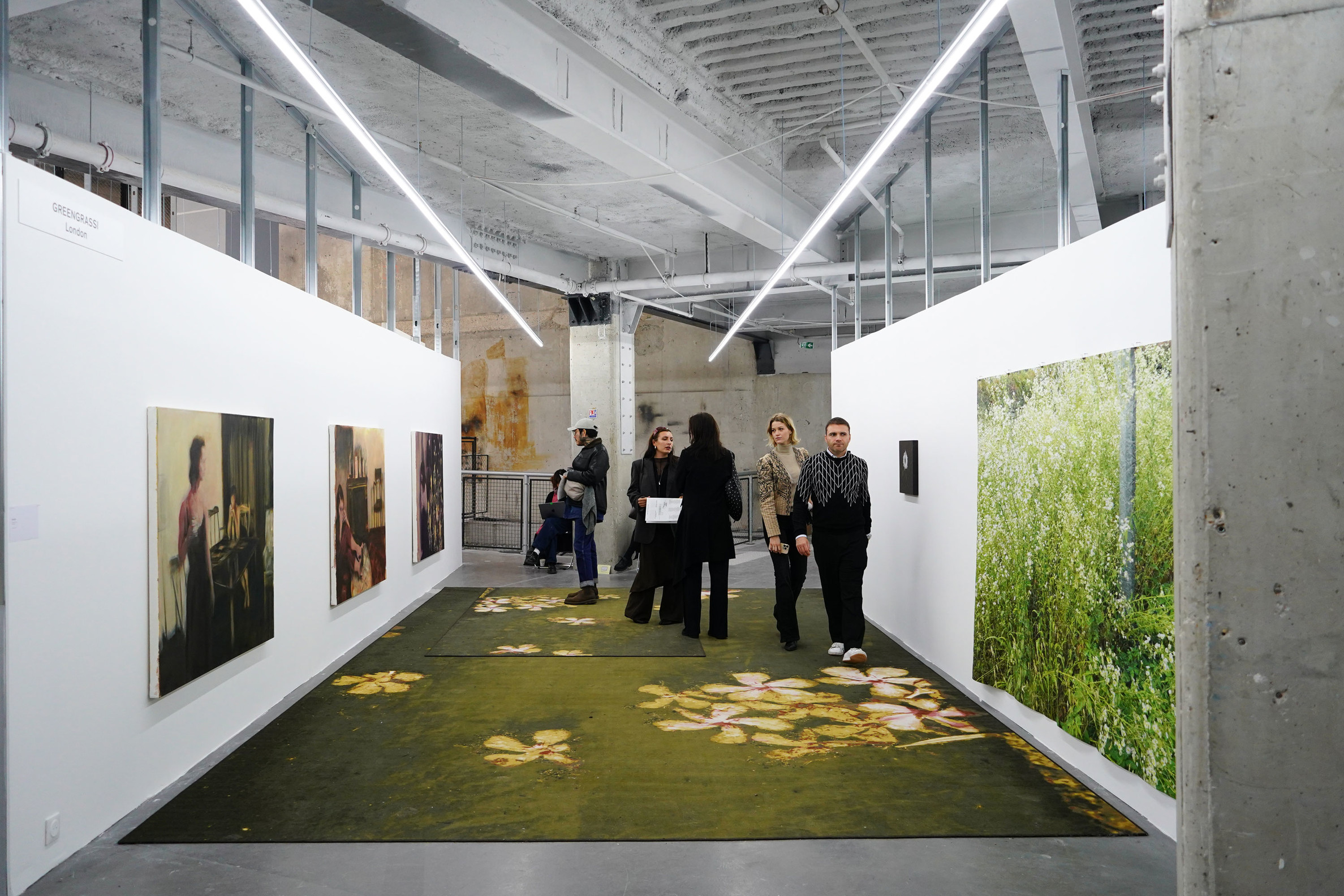
Paris Internationale returns with 56 galleries, a new Canal Saint-Martin venue and a model built around discovery. Here is how collectors should use it.
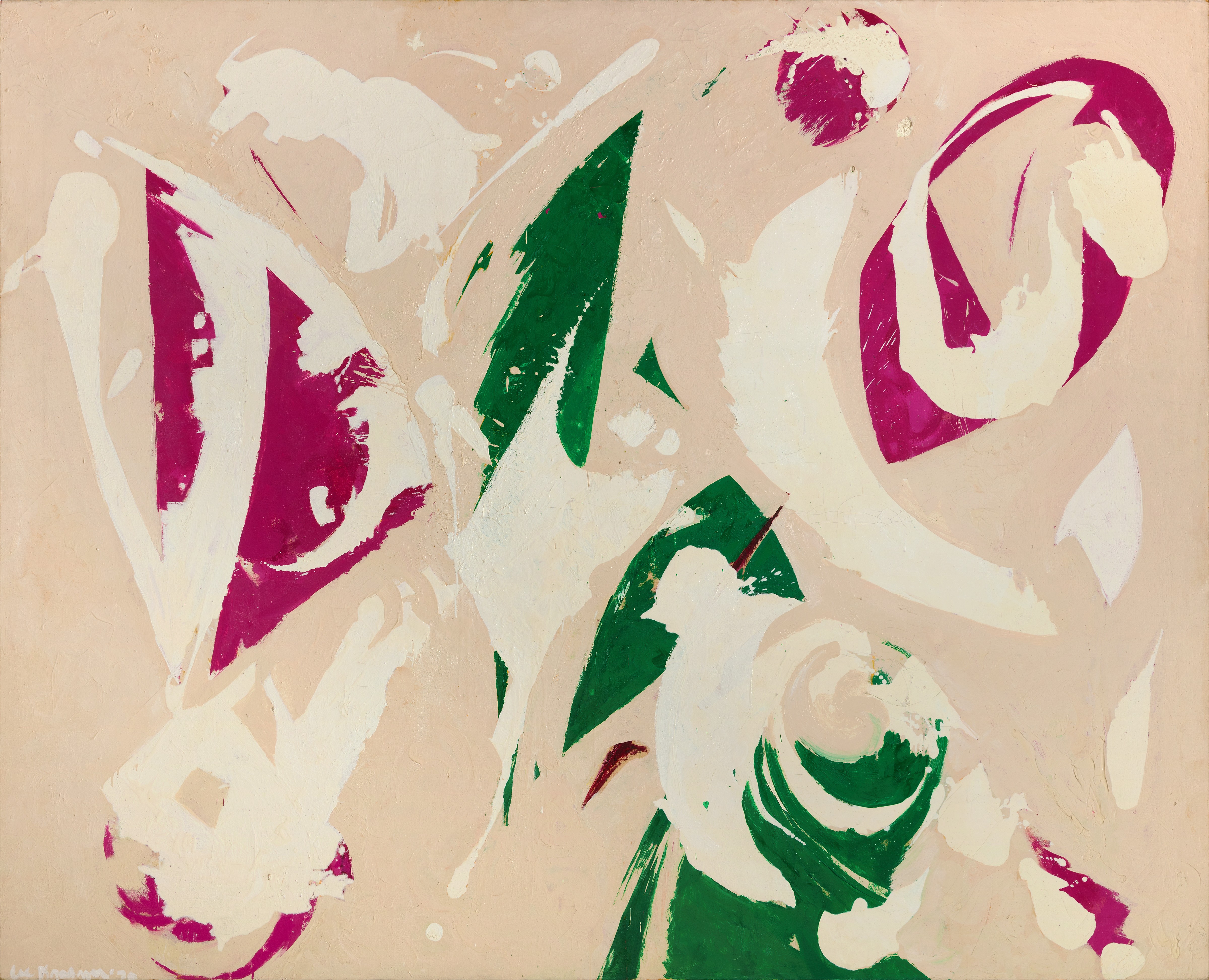
Ibrahim Mahama, Lee Krasner, Oscar Murillo, Tracey Emin and more: the exhibitions that turn Art Basel Paris week into something larger than a fair.