
October 25, 2026
Exhibitions
Exhibitions
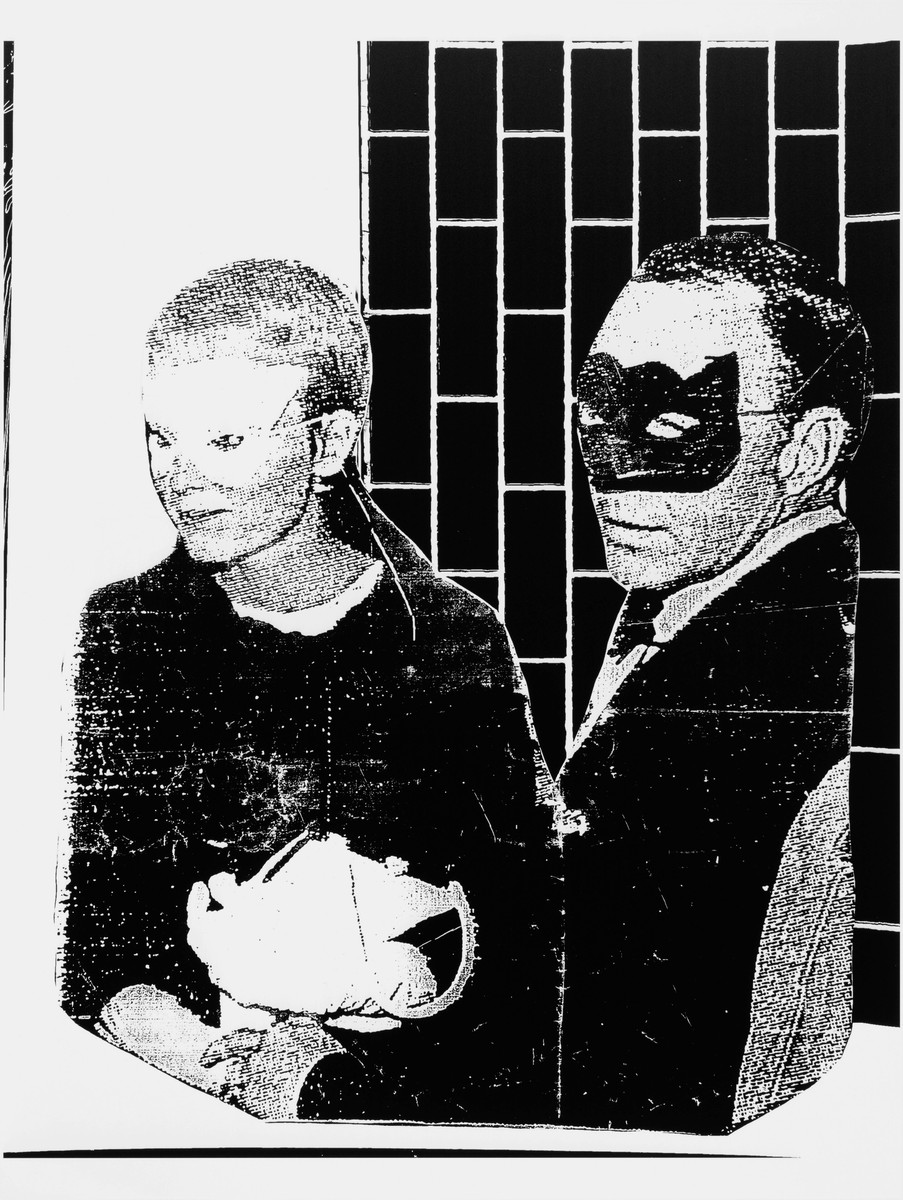
A rare London exhibition of new works and historical material returns us to Cady Noland’s uncomfortable vision of American spectacle, power and the ordinary object.
A rare London exhibition of new works and historical material returns us to Cady Noland’s uncomfortable vision of American spectacle, power and the ordinary object.
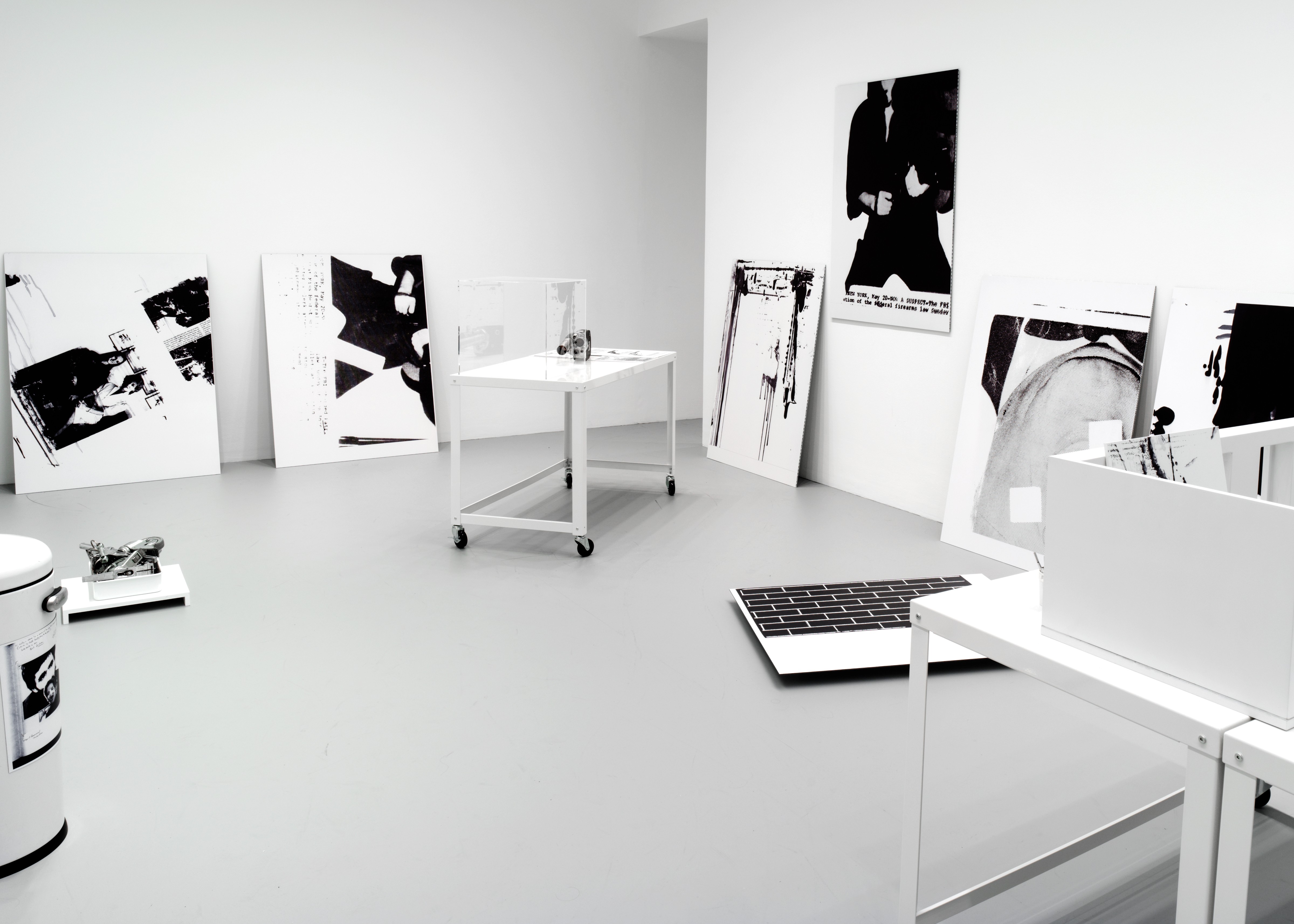
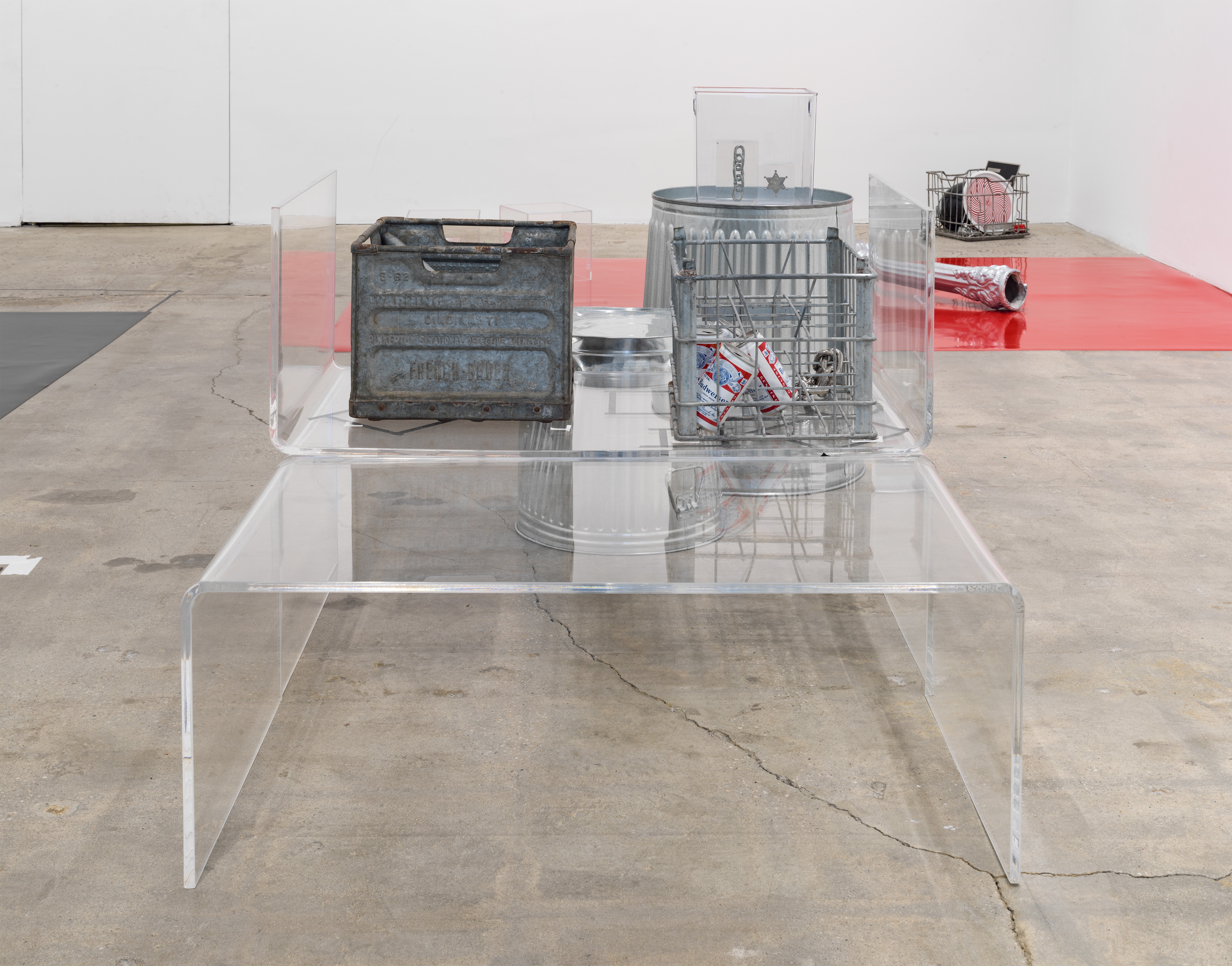
Cady Noland’s work has long made a compelling problem of American visual culture: the apparently casual object can disclose the systems of power that surround it. At Gagosian’s Davies Street space in London, her October–December 2026 presentation is significant not because it promises a familiar greatest-hits display but because it places newly made works alongside the precision of an artistic vocabulary that has remained unusually resistant to simplification.
National myth, mass communication, threat, celebrity and institutional control run through Noland’s practice. The work often denies viewers the consolations of traditional sculpture. Surfaces and objects look as though they have arrived with their meanings already worn down by circulation. Her visual language is cool, direct and deliberately resistant to the romance of expressive touch.
The gallery identifies new untitled works made with ultraviolet printing on honeycomb aluminium. The choice of support is important. Industrial aluminium carries associations of signage, transport and fabrication, while UV-printed imagery introduces the visual economy of reproduction. The image is not merely attached to the sculpture; the mechanical means of its production becomes part of the subject.
A separate 2026 work employs a refrigerator with UV printing on magnets. Such materials invite questions about domestic familiarity, visibility and the possibility of rearrangement. A magnet is not a monumental sculptural device. But within Noland’s logic it can become a charged fragment of the ordinary, implicated in the culture of messages, possession and surface.
Noland’s reputation includes a famously vigilant relationship to the authentication, fabrication and presentation of her art. For collectors, this is not colourful biography to be separated from the objects. It bears directly on the obligations of ownership. Condition, changes in components, authorised presentation and the circumstances of exhibition may all matter in ways that go beyond familiar market expectations.
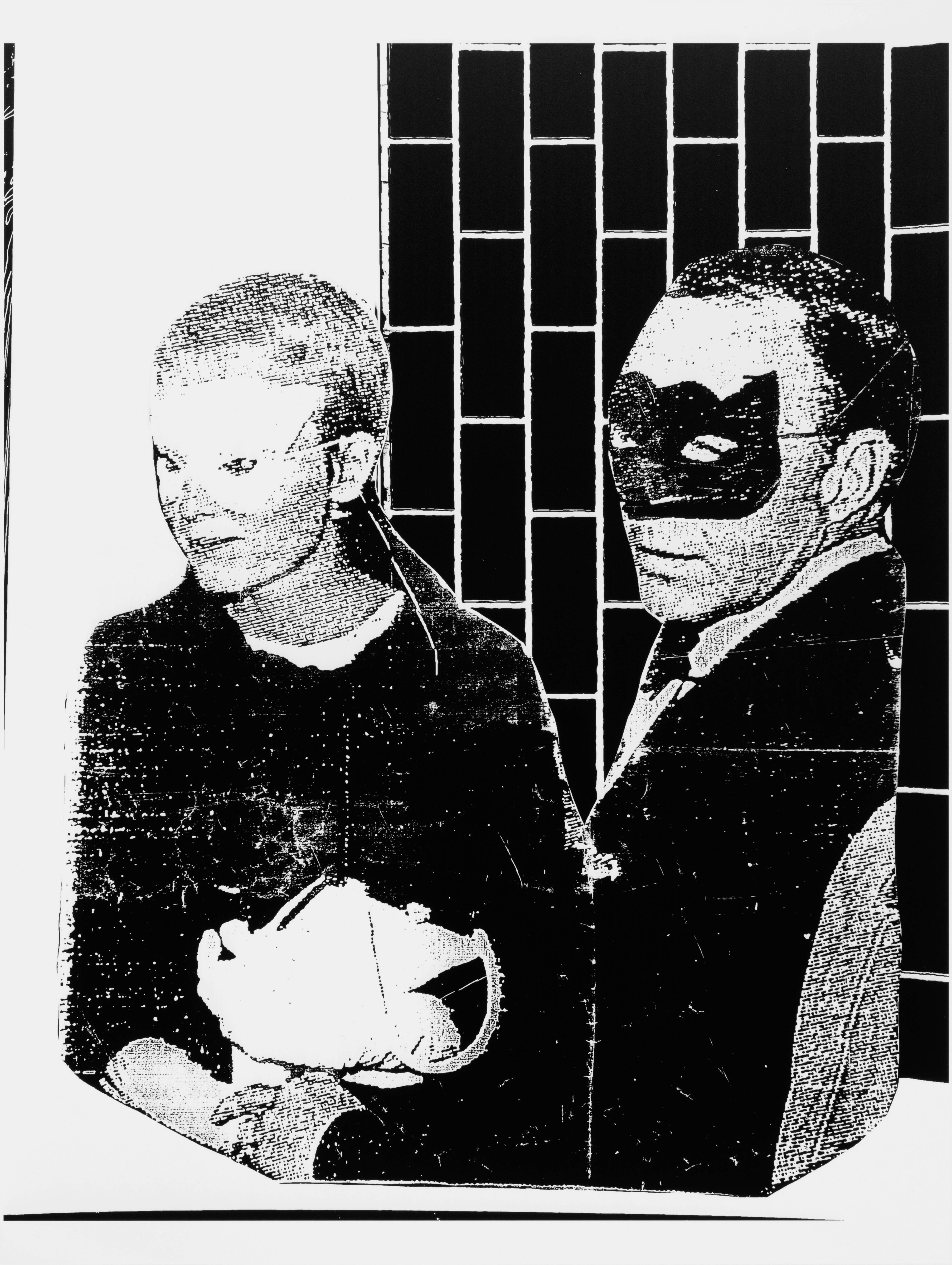
This is especially pertinent when the materials appear replaceable. An industrial object may resemble something one could buy at a hardware store, but that does not give an owner a licence to recreate or modify it. The seemingly impersonal appearance of the object often conceals a highly exacting relationship between artist, context and display.
An exhibition of new work by Noland invites viewers to ask whether the cultural machinery of her earlier work has really changed. Public images now circulate faster, at lower cost and under increasingly opaque forms of ownership and manipulation. Her treatment of reproduction therefore belongs to the present without requiring topical slogans. What matters is the unsettling distance between recognition and understanding.
Unlike shows that use America as a vague atmospheric theme, Noland’s work asks how objects acquire authority. Look carefully at the means of printing, the edges of supports and the difference between a thing used in daily life and the same thing isolated under the conditions of display. Those small distinctions carry the exhibition’s political pressure.
The exhibition offers a reminder that material simplicity should never be mistaken for conceptual simplicity. A Noland is not made important solely because it belongs to an influential name; it is important because its technical and contextual decisions cannot easily be exchanged without loss. Ask how the work was produced, recorded, stored and installed, and what obligations follow the object to a new owner.
Cady Noland is at Gagosian, Davies Street, London, from 12 October to 19 December 2026. The discussion above is based on the gallery’s documented current installation and works; it is not a claim of an independent first-hand gallery visit.
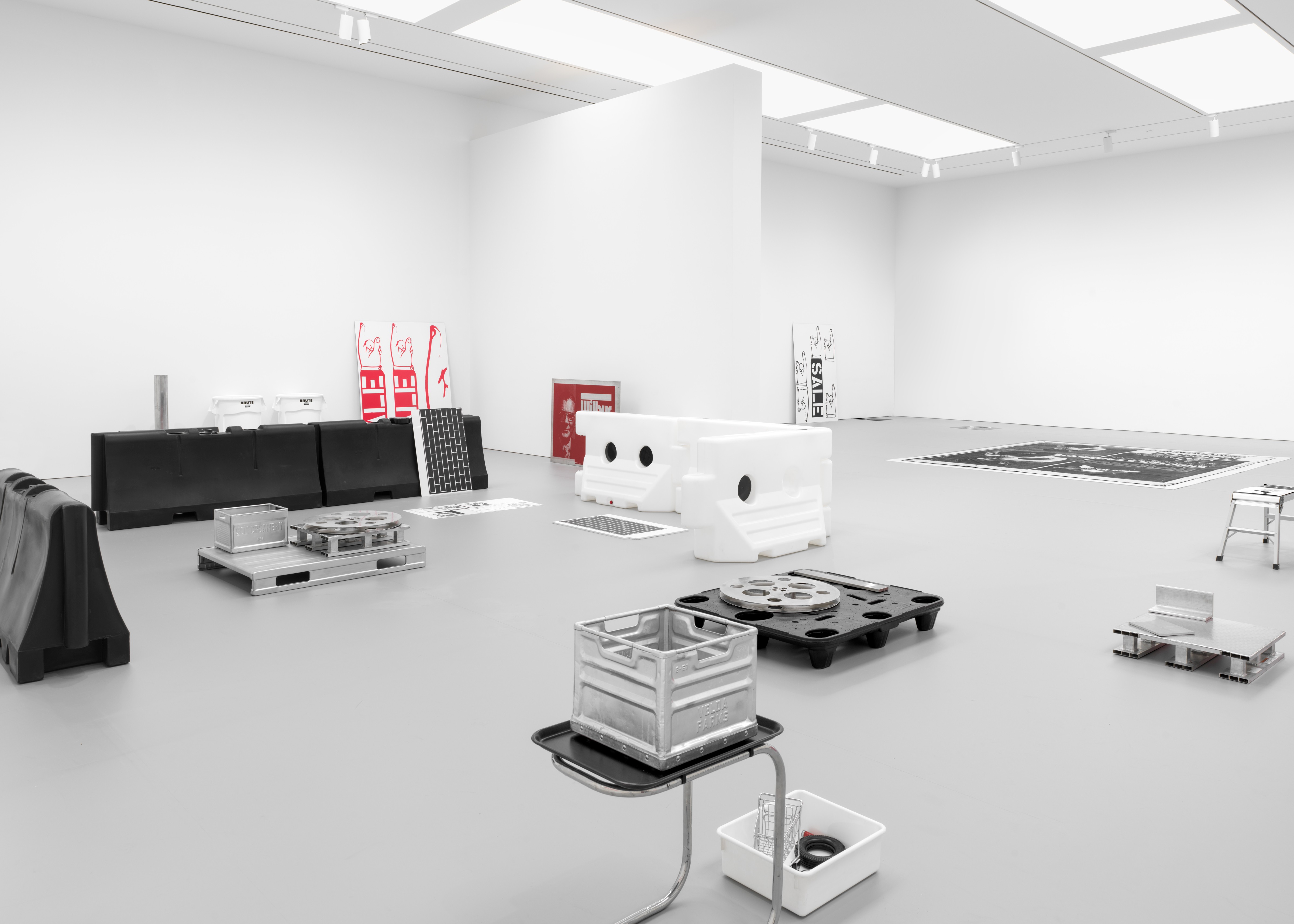
There is an important difference between a picture used to communicate information and a picture employed to demonstrate how information is controlled. Noland’s printed metal panels sit in that gap. Their industrial fabrication is not simply a contemporary finish; it draws attention to the way images are mounted, circulated and treated as apparently objective evidence. In the internet age, viewers are accustomed to an image arriving detached from its original circumstances. Noland’s works insist that this detachment has a material and political history.
It would be tempting to present these new objects as direct commentary on a single election, policy or media controversy. That would narrow their reach. Her art has always scrutinised the structures beneath spectacular incidents: the relation between celebrity and coercion, the seductions of national identity, the commercial packaging of violence. What looks unexpressive on the surface can be an unusually exacting form of criticism.
The relaunch of The Clip-On Method, originally published in 2021, makes the London exhibition more than an encounter with new objects. Conceived, edited and designed by Noland herself, the two-volume publication runs to about 600 pages. It assembles photographic documentation, texts by the artist and historical material in an intentionally nonlinear form. One of the included texts is Noland’s 1989 essay Towards a Metalanguage of Evil. The title suggests how consistently her work has examined the mechanism by which images and objects naturalise a culture’s assumptions.
As a collecting proposition, the book also complicates conventional hierarchies. Documentation is sometimes treated as subordinate to an artwork, a reference to be placed in a library after the important acquisition. For an artist who is intensely concerned with the exact conditions of visibility, a publication can be a highly deliberate part of the work’s intellectual architecture. The encounter begins with learning how she wants the archive constructed.
Collectors of sculpture built from recognisable manufactured components should distinguish between ownership of the object and authority to alter it. Confirm how each element was fabricated and installed, what was specified by the artist, and what constitutes an acceptable replacement. Obtain the fullest possible records of past installations. A detailed condition report can document visible scratches or wear, but it may not capture an essential conceptual decision, such as the precise placement of a seemingly casual object.
For a Noland acquisition, the more useful question is not whether the object seems instantly iconic. It is whether the relationship between image, support and surrounding space remains as taut as the artist intended. The London exhibition gives collectors a current reference point for that judgment, while the newly relaunched volumes provide a deeper historical one.
Dates: 12 October–19 December 2026. Location: London, UK.
Research and official information: gagosian.com
A rare London exhibition of new works and historical material returns us to Cady Noland’s uncomfortable vision of American spectacle, power and the ordinary object.

A gallerist’s Clinton Hill apartment reveals how painting, sculptural furniture, family history and unorthodox choices can make a home feel genuinely collected.
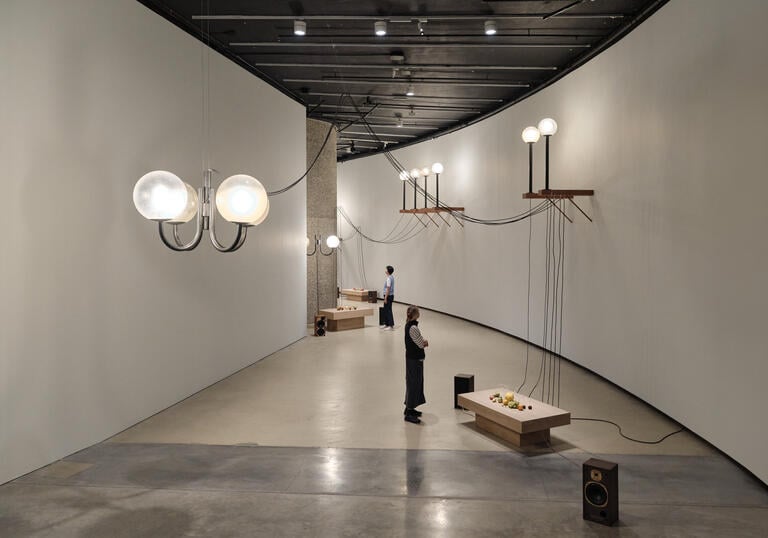
With light, sound, fruit and kinetic systems, Yuko Mohri makes the Barbican’s Curve into an argument for attending to what does not quite work as expected.