Ahead of the global premiere of William Kentridge’s twelfth Drawings for Projection film at Goodman Gallery London, we look at why charcoal, erasure and revision remain central to the artist — and what collectors should understand across drawings, prints, film and sculpture.
William Kentridge and the City That Cannot Stop Being Erased
Ahead of the global premiere of William Kentridge’s twelfth Drawings for Projection film at Goodman Gallery London, we look at why charcoal, erasure and revision remain central to the artist — and what collectors should understand across drawings, prints, film and sculpture.

William Kentridge has spent almost four decades proving that an image can become more powerful by refusing to stay fixed. On 24 September, Goodman Gallery London opens A Nicely Built City, a major solo exhibition centred on the global premiere of A Nicely Built City (Never Resists Destruction), the twelfth film in Kentridge’s Drawings for Projection cycle. Begun in 1989, the series has become one of the defining bodies of moving-image work in contemporary art.
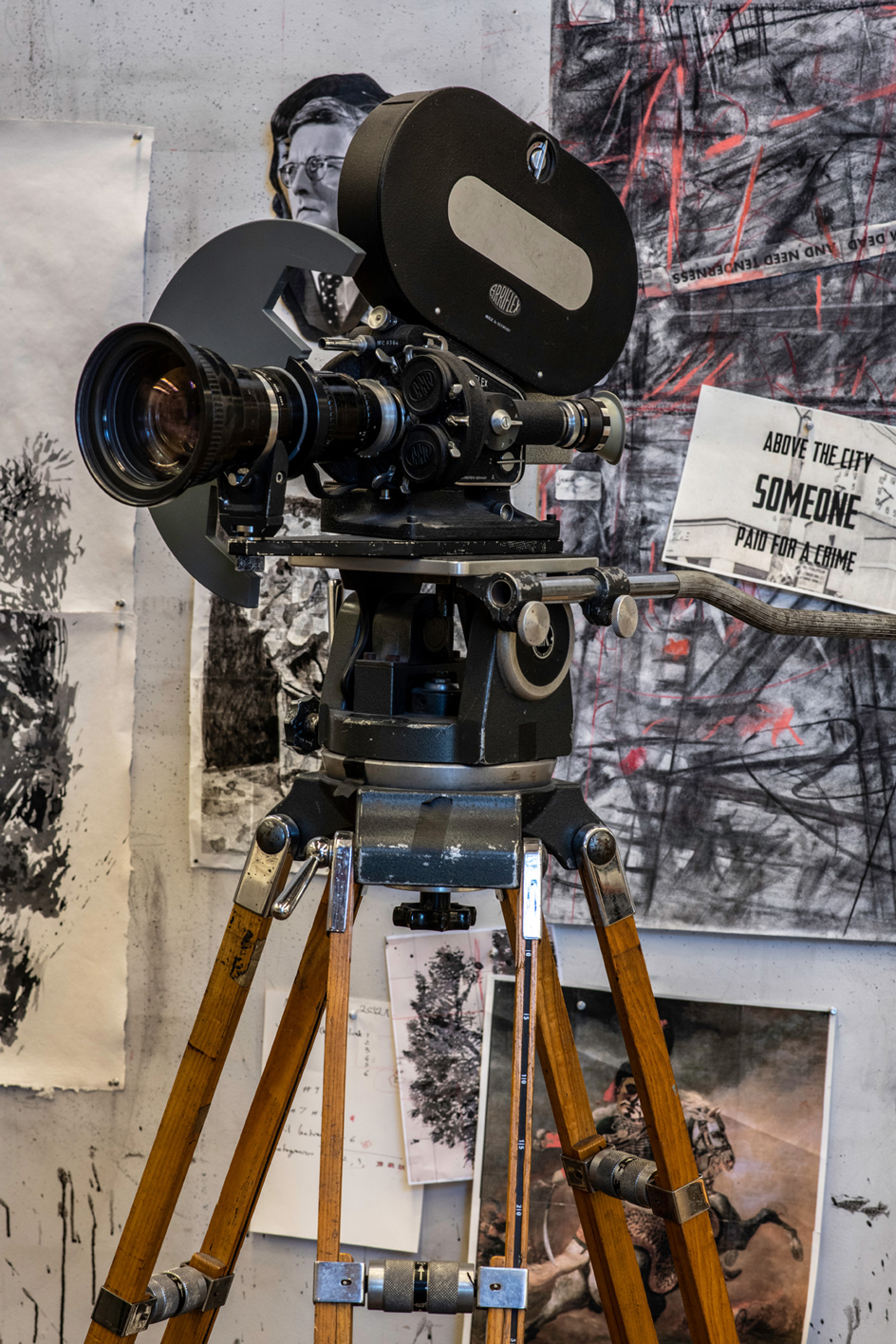
The new film arrives alongside drawings, sculptures and editioned works on paper. Yet the most revealing fact is not the exhibition’s range. It is that Kentridge has returned again to an elementary operation: make a charcoal drawing, photograph it, alter or erase it, photograph it again, and allow the imperfect remains of the previous state to stay visible. In an era in which images are increasingly frictionless, his practice continues to insist on residue.
For collectors, the exhibition is useful precisely because it makes the relationships between Kentridge’s media unusually clear. Film, drawing, printmaking, sculpture, theatre and text are not separate departments of the practice. They are different ways of testing how an image changes over time — and how history persists even after someone attempts to rub it away.
The city as an image that refuses a clean erasure
Kentridge’s Johannesburg has never behaved like a neutral backdrop. Across Drawings for Projection, the city functions as memory, political landscape, industrial system and psychological stage. Soho Eckstein — the pin-striped mining magnate who recurs through the cycle — belongs to a world shaped by extraction, property, labour and the moral debris of apartheid. Kentridge has repeatedly resisted turning that world into tidy allegory. His characters and places accumulate contradictions rather than resolving them.

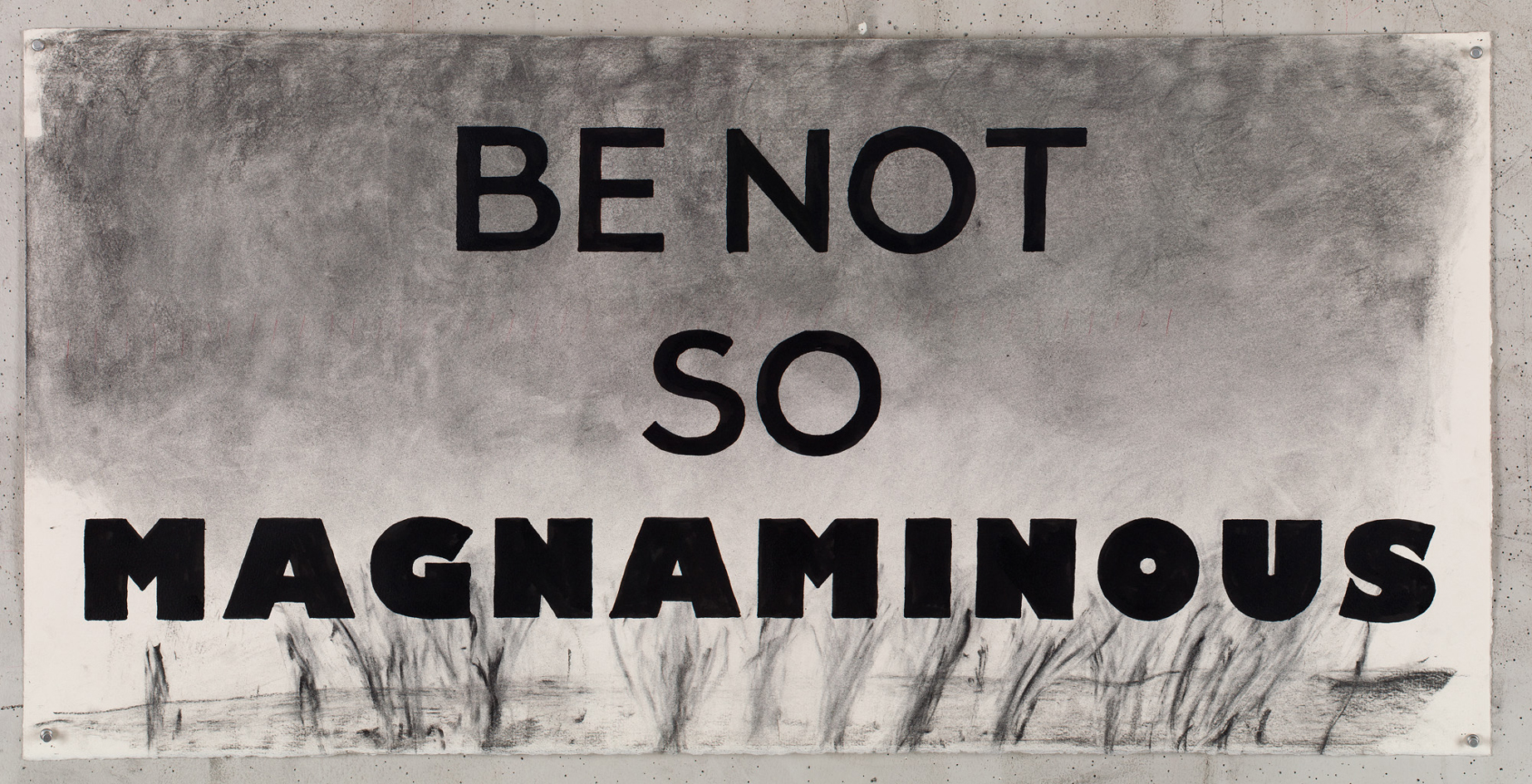
The title A Nicely Built City (Never Resists Destruction) also reaches backward within Kentridge’s own work. In 1995 he made an etching, aquatint and drypoint titled A Nicely Built City Never Resists Destruction, now in the collection of the National Gallery of Art in Washington. Three decades later, the sentence has migrated into a new moving-image work. The return is characteristic: Kentridge’s studio is a place where phrases, silhouettes, gestures and discarded images can re-enter circulation years later with altered meaning.
This is one reason the current exhibition matters beyond its opening week. Kentridge is not unveiling a new visual identity. He is testing whether an artistic language can remain intellectually alive after sustained international recognition. The answer depends on revision. The image survives by being changed.
Drawings for Projection enters a fourth decade
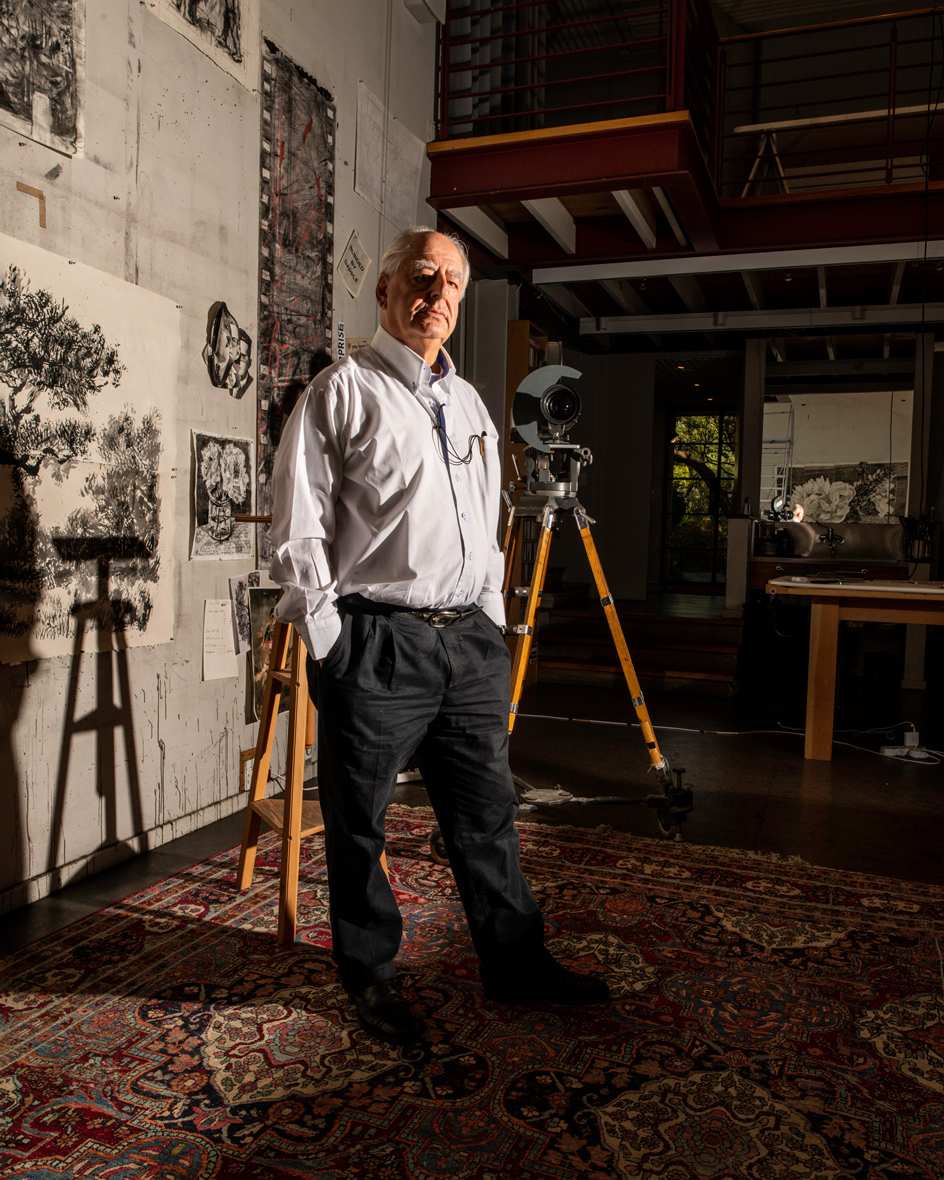
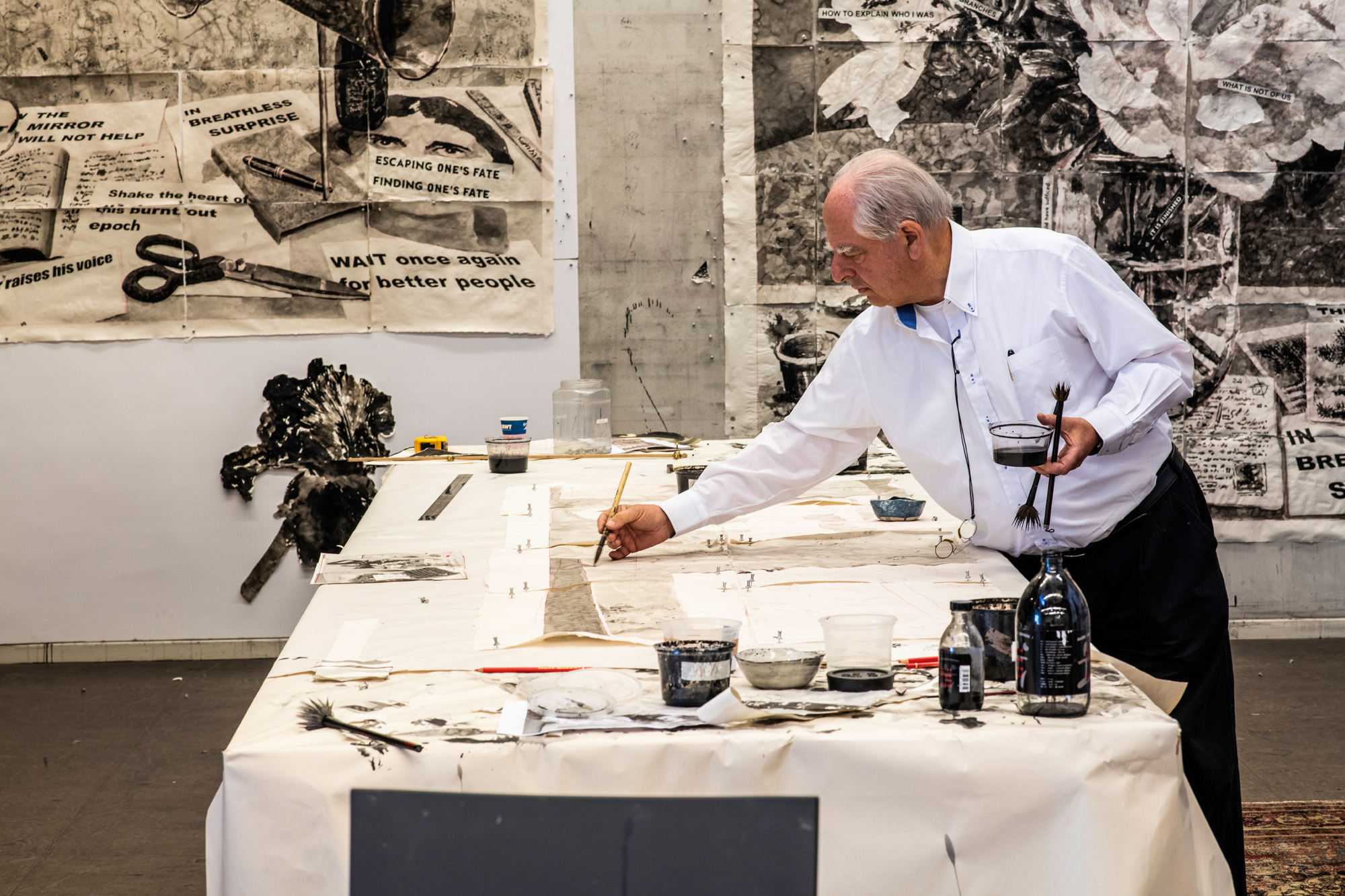
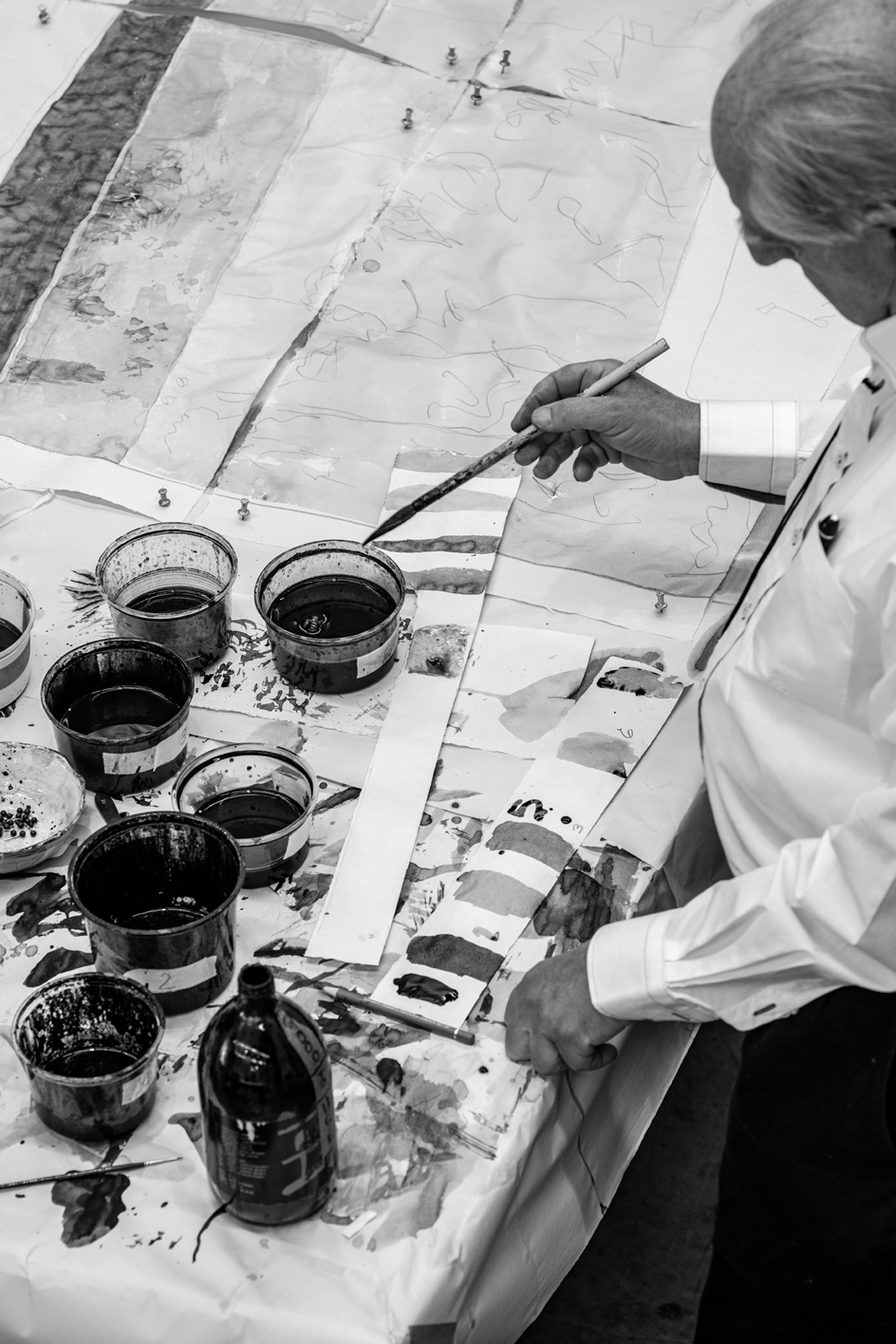
Kentridge’s own studio describes the films as having been made according to a deliberately open principle: no conventional script and no storyboard determining the finished result in advance. The film is discovered through making it. Each alteration produces the next possibility; erasures become both physical marks and records of time.

That method explains why the drawings connected to the films should not be dismissed as production material. A single sheet may carry several temporal states at once. A removed figure leaves a grey trace. A building shifts position but never disappears completely. The drawing contains the archaeology of the animation.
For collectors, that distinction is important. A drawing associated with a film can be an autonomous object while also belonging to a larger cinematic sequence. Its significance may depend on subject, date, relationship to a particular film and the degree to which it embodies the transformations central to the artist’s method. Documentation therefore matters: exhibition history, studio records, catalogue references and a clear connection to a major project can add intellectual context that a generic description of “charcoal on paper” cannot convey.
Why charcoal still matters
It is tempting to cast Kentridge’s continued use of charcoal as an analogue rebuke to digital culture. That is too simple. His work has long involved cameras, editing, projection, mechanised objects and sophisticated theatrical production. The important opposition is not analogue versus digital. It is between an image that conceals its decision-making and one that exposes it.

Charcoal is unusually good at exposing thought. It can be dense and decisive, but it can also be pushed, smeared, lifted and partially erased. A sheet records hesitation. Kentridge’s animation turns those qualities into duration: the viewer does not simply see what the artist decided, but the evidence of what changed along the way.
That physical instability also complicates collecting. Works on paper demand serious attention to light exposure, framing, glazing, humidity and condition. Kentridge’s charcoal surfaces can be materially delicate, while collage and found-paper works may contain components with different conservation needs. A collector considering a major drawing should look beyond image appeal to the support, media, mounting history and any condition notes, especially where the sheet’s smudges and abrasions form part of the intended visual language.
Language, theatre and the moving image
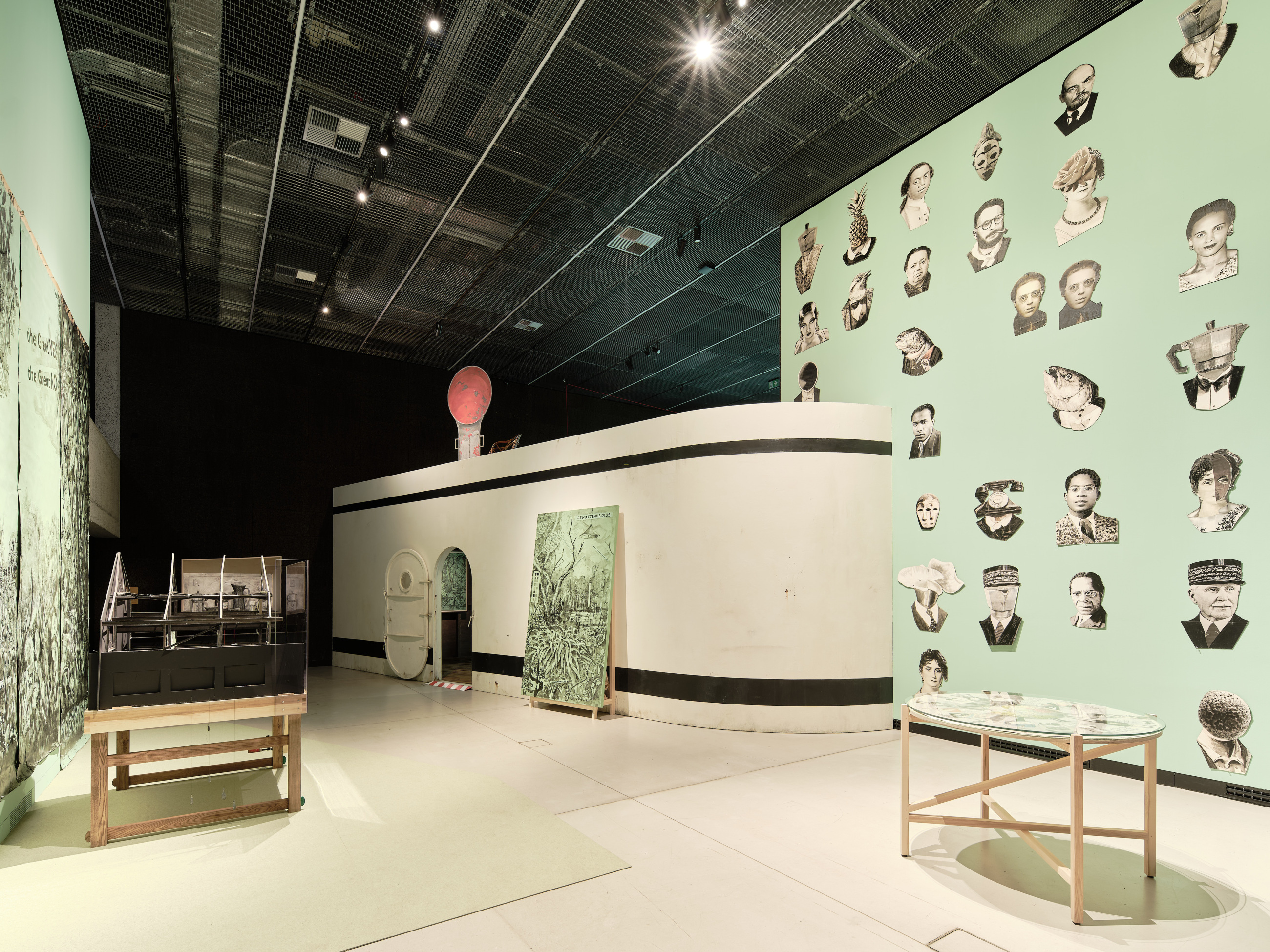
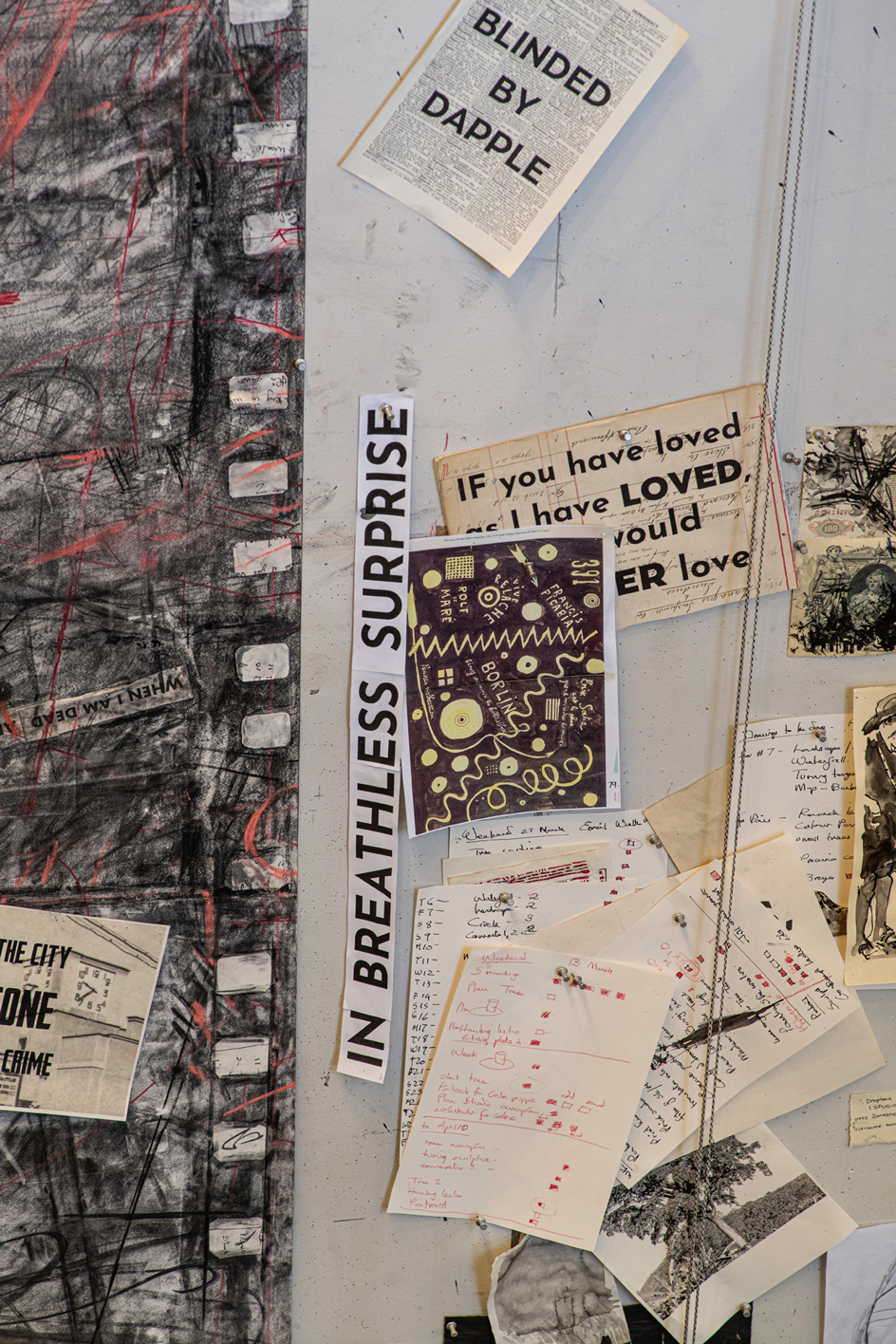
The new Goodman exhibition is wider than a single film. It brings together material linked to Kentridge’s recent theatrical and operatic projects as well as sculpture and editioned work. This breadth can initially make the market look fragmented. In fact, the same concerns recur: reversal, shadow, procession, language, the unstable silhouette, and the translation of a two-dimensional mark into physical or theatrical space.

Text is particularly important. Kentridge’s phrases often behave less like captions than objects. They can interrupt an image, contradict it or make the viewer aware of the gap between what language promises and what history delivers. A sentence such as “a nicely built city never resists destruction” is memorable because it sounds almost proverbial while refusing to settle into one meaning. Is it fatalistic, absurd, political, architectural, personal? Kentridge leaves the instability active.
The same openness governs his theatre. Sets, projections, shadows, music and performers rarely exist as decoration around a fixed narrative. They operate as simultaneous systems. Collectors who encounter a print, small sculpture or edition can therefore understand it more fully by asking what larger project or working method it touches. Scale and price may change; the grammar often does not.
How collectors should read the Kentridge market
Kentridge’s practice offers multiple entry points, but they are not interchangeable. Unique charcoal drawings sit differently from editioned prints; small bronzes differently from monumental public sculpture; flipbooks and artist books differently from film editions. The useful question is not simply which medium is “best”, but whether a work condenses the qualities that make the practice distinctive.
For unique works on paper, collectors should pay attention to date, subject, project association and the physical evidence of revision. For prints, Kentridge’s long engagement with etching, lithography, photogravure and other processes makes printmaking central rather than secondary. Edition size, publisher or workshop, signature, numbering and condition are essential. For sculpture and other editioned objects, casting information, artist’s proofs, fabrication records and a complete provenance trail deserve the same scrutiny.
Moving-image work requires a different kind of due diligence. The edition certificate, authorised display format, master file or playback specifications, rights granted with the acquisition and long-term migration or conservation arrangements should be understood before purchase. A film is not merely a file on a drive. Its ownership structure and preservation requirements are part of the work.

Across all media, provenance is especially valuable when it protects the relationship between an object and Kentridge’s larger projects. Studio documentation, gallery invoices, exhibition labels, catalogues and correspondence are not administrative clutter. They preserve context, and context is unusually important for an artist whose ideas continually migrate between drawing, performance, film and sculpture.
A mature artist who still allows the image to change
Kentridge’s institutional position is firmly established. His work is held by major museums internationally; his 2022 Royal Academy exhibition was his largest UK survey to that point; Yorkshire Sculpture Park devoted a museum presentation to his sculpture in 2025–26; and Kunsthalle Praha presented his first major Czech exhibition in 2026. That level of recognition can tempt an artist to administer an established style.
A Nicely Built City is interesting because it points in the opposite direction. The twelfth Drawings for Projection film returns to the conditions that made the cycle compelling in the first place: uncertainty, revision, accident and the willingness to let the act of making alter the destination.
For collectors, there is a larger lesson here. Mature practices are not necessarily most compelling when they become more polished or monumental. Sometimes the strongest signal is an artist returning to a method that still contains risk. In Kentridge’s case, charcoal remains alive because it cannot quite forget what was there before.
William Kentridge: A Nicely Built City is at Goodman Gallery, 26 Cork Street, London, from 24 September to 7 November 2026. The exhibition includes the global premiere of A Nicely Built City (Never Resists Destruction), the twelfth film in Drawings for Projection, together with new drawings, sculptures and editioned works on paper.
Frieze Sculpture 2026 turns The Regent’s Park into a live test of scale, material, siting and weather. For collectors, the strongest lesson is not which work 'wins' — but what outdoor presentation reveals that the white cube can hide.
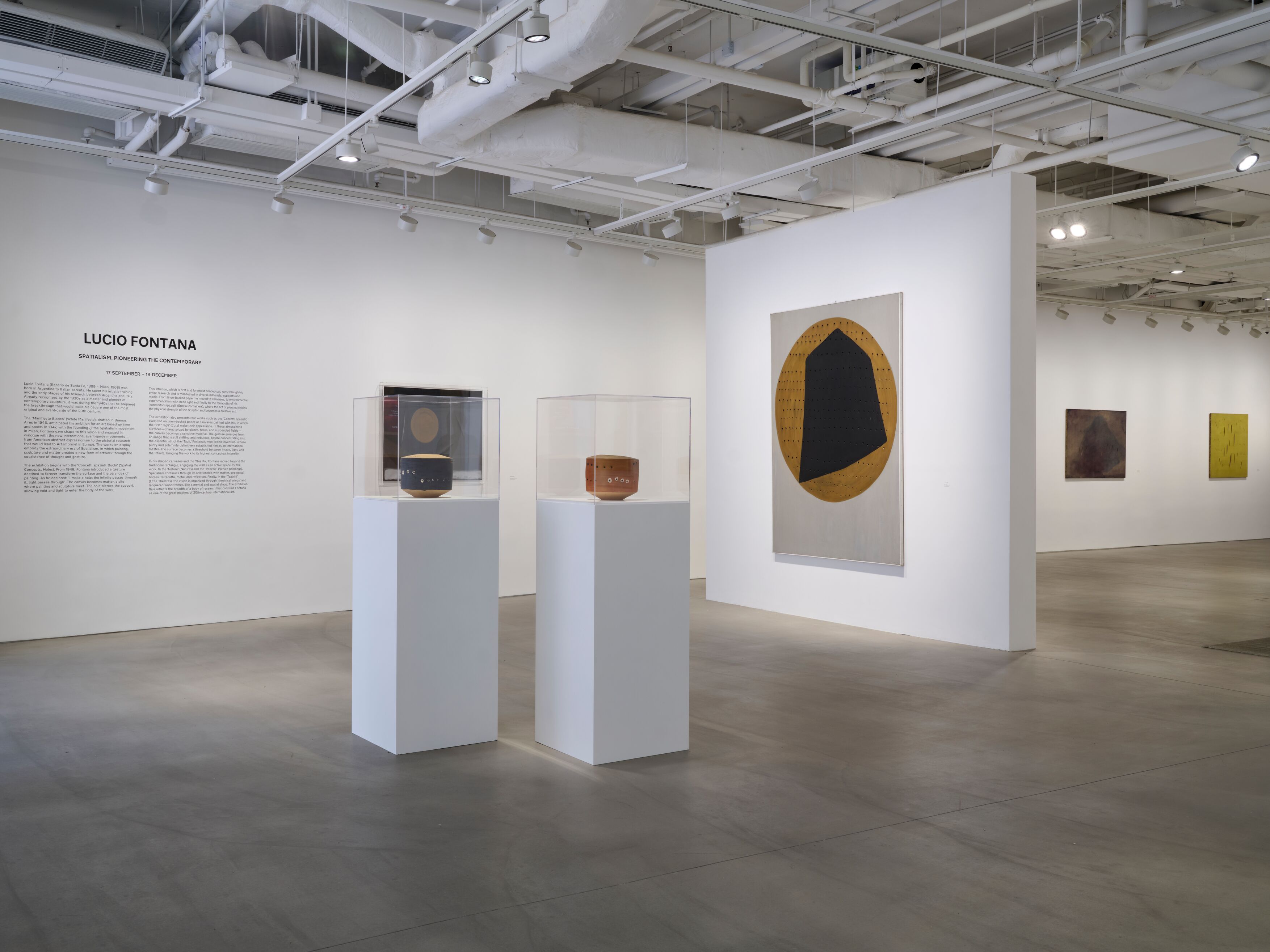
Lucio Fontana’s slash became one of post-war art’s most recognisable gestures. A major Hong Kong exhibition restores the holes, shaped canvases, bronzes and spatial thinking that make one cut very different from another.