
September 19, 2026
Exhibitions
Exhibitions
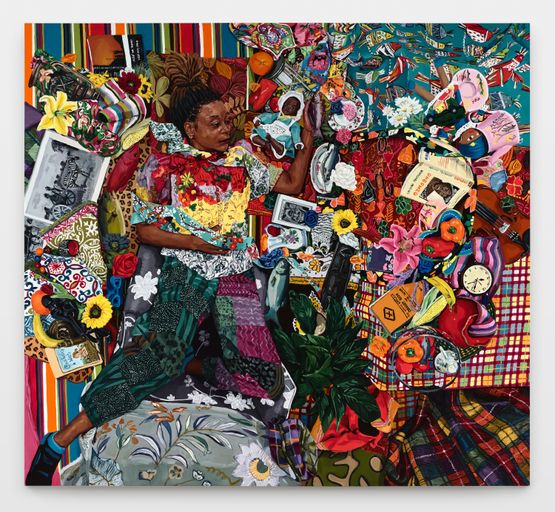
Wangari Mathenge’s first solo exhibition with Lévy Gorvy Dayan expands her Re-membering series into sculpture, turning books, objects and domestic space into a layered inquiry into Kenyan cultural memory.
Wangari Mathenge’s first solo exhibition with Lévy Gorvy Dayan expands her Re-membering series into sculpture, turning books, objects and domestic space into a layered inquiry into Kenyan cultural memory.
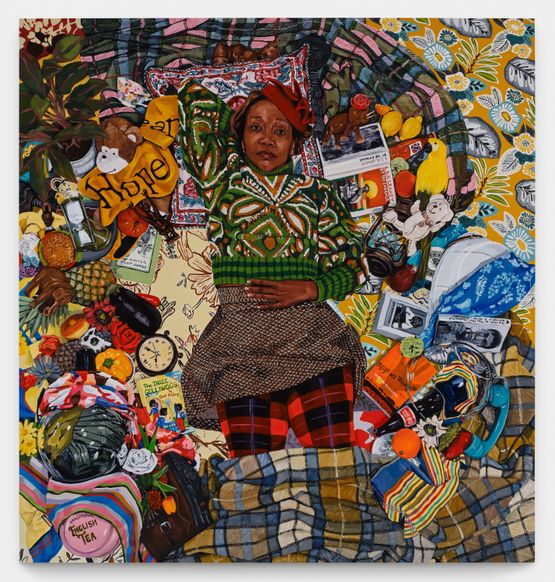
Wangari Mathenge’s paintings have long understood the interior as more than a backdrop. A room can hold books, textiles, inherited habits, private rituals and the residue of political history at the same time. In Re-membering, opening at Lévy Gorvy Dayan in New York on 17 September, that idea expands into an overtly research-driven project about what colonialism interrupts—and what acts of attention can put back into circulation.
The exhibition is Mathenge’s first solo presentation with the gallery and, importantly, the first public exhibition of her sculpture. Five new paintings are shown alongside the sculptural work. That makes the show useful not only as an introduction to a new body of work, but as a moment in which a painter with a rapidly maturing institutional profile tests how her subject can move off the canvas.
Mathenge began the Re-membering series in 2024. Its title and intellectual framework take impetus from Ngũgĩ wa Thiong’o’s Something Torn and New: An African Renaissance, a book concerned with language, memory and the psychic consequences of colonial rule. Mathenge’s own research has concentrated on Kenyan cultural objects, literature and histories from the colonial period through independence in 1963.
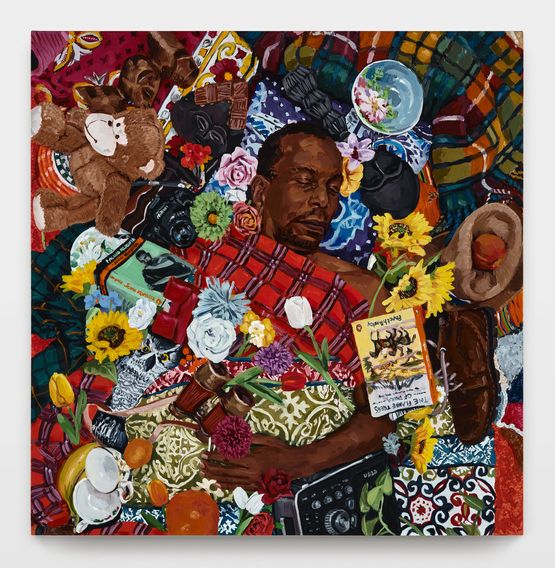
In the first cycle of Re-membering, the figure is frequently seen from above, surrounded by books, objects and patterned surfaces. These are not decorative props. They function more like evidence. The paintings make the process of learning visible: the viewer encounters a person in the middle of reconstructing a cultural vocabulary that was never simply absent, but was fragmented, displaced or mediated through colonial structures.
This changes the way collectors should look at the work. Mathenge’s pictures remain immediately compelling as paintings—controlled colour, compressed perspective, strong silhouettes—but the research is not an explanatory layer applied afterwards. It is built into the composition. A title, a book placed near a figure, a textile or an object may carry as much conceptual weight as a face.
The method also complicates the market tendency to group contemporary figurative painters primarily by style. Mathenge’s figures belong to a larger intellectual architecture. The important comparison is not merely whether one canvas is more visually seductive than another, but how the work participates in the evolving logic of the series.
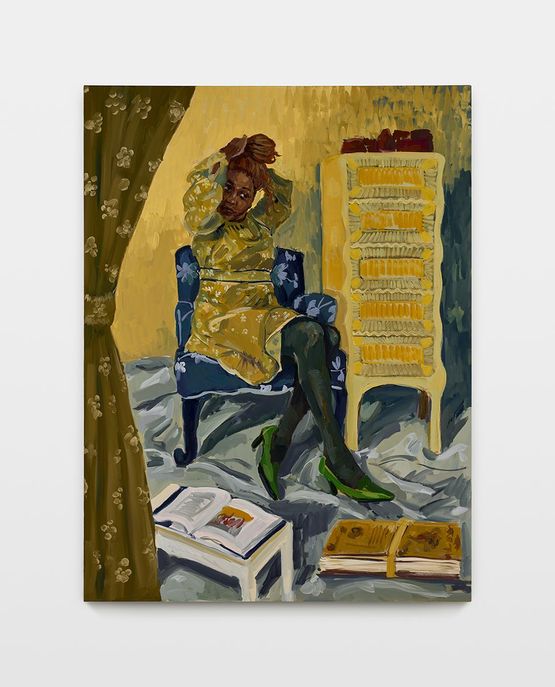
The debut of sculpture is consequential because Re-membering is already about objects and their ability to carry memory. Once those objects leave the represented interior and occupy the viewer’s space, the relationship between archive, body and material changes. A painted book can signify research; a sculptural object can insist on physical presence, scale and encounter.
That transition is especially interesting in the context of Mathenge’s biography. Born in Nairobi in 1973, she trained first in law before completing an MFA at the School of the Art Institute of Chicago. Her career has moved between different systems of knowledge—legal, academic, diasporic and artistic—without treating any one of them as a total explanation.
Her work is now represented in a substantial group of public collections, including the Dallas Museum of Art, Detroit Institute of Arts, High Museum of Art, Hirshhorn Museum and Sculpture Garden, Nasher Museum of Art, Fondazione Sandretto Re Rebaudengo and others. That institutional accumulation matters because it reduces the temptation to understand the current exhibition merely as a market arrival.
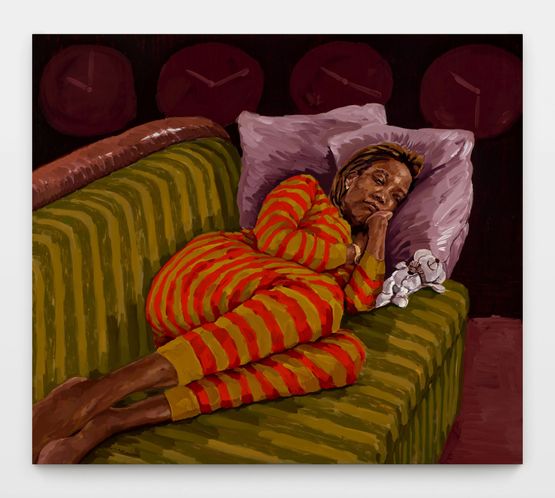
For collectors following Mathenge, the most useful exercise is to read across the series rather than hunt for a single emblematic image. The strongest works are likely to be those in which formal clarity and research remain inseparable—where the interior, figure and objects create an argument rather than a checklist of motifs.
That matters particularly after the intense demand that has surrounded figurative painting in recent years. A recognisable visual language can become market shorthand very quickly. Re-membering moves in the opposite direction: it asks the viewer to slow down, read, identify references and accept that understanding may remain incomplete.
The title is precise. To re-member is not simply to remember. It suggests assembling parts again. Mathenge’s new work treats cultural memory as something active and constructed: not nostalgia for an intact past, but the difficult labour of making connections visible in the present.
Mathenge’s recurring interiors are particularly important because they resist the old opposition between private life and public history. The room is where books are read, languages are spoken, habits are inherited and objects accumulate. It is therefore also where large historical forces become ordinary. A colonial archive may seem distant until its effects are encountered through education, naming, language or the absence of an object that should have been familiar.
That is why the paintings can reward slow looking in a way that is relevant to collectors. The temptation with figurative painting is to privilege the central figure and treat everything around it as atmosphere. In Mathenge’s work, the surrounding objects often carry the argument. A book, textile, chair or arrangement of domestic space can locate the painting within a history of reading and self-formation. Collecting the work therefore means collecting a field of references, not only an image of a person.
Mathenge’s work is now represented across a substantial group of institutional collections, while Re-membering arrives after sustained museum exposure for contemporary African and diasporic figuration. That context matters because it makes a simplistic 'discovery' narrative increasingly unhelpful. The more interesting question is how her practice is differentiating itself within a field that the market has often grouped too broadly.
The answer is partly methodological. Mathenge is increasingly building bodies of work around research structures rather than treating each painting as a self-contained scene. For collectors, that creates a useful hierarchy of questions: where does a particular work sit within the sequence; which references are specific to that canvas; how does the treatment of perspective change across the group; and does the painting deepen the series or merely repeat its most recognisable vocabulary?
The debut of sculpture also deserves more attention than the usual language of an artist 'expanding into three dimensions'. In a project concerned with cultural objects, archives and memory, sculpture changes the status of the object itself. What had previously appeared as a represented thing inside a painted room can now share physical space with the viewer. That shift makes material, scale, surface and bodily encounter part of the project’s meaning.
For a collector already following Mathenge’s paintings, the sculptures may eventually become useful markers of this moment in the practice. Their importance will depend on how closely they participate in the conceptual structure of Re-membering, but the exhibition is significant precisely because it allows those relationships to be judged together rather than in isolation.
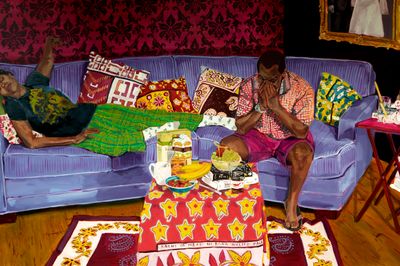
Wangari Mathenge: Re-membering is on view at Lévy Gorvy Dayan, New York, from 17 September to 24 October 2026.
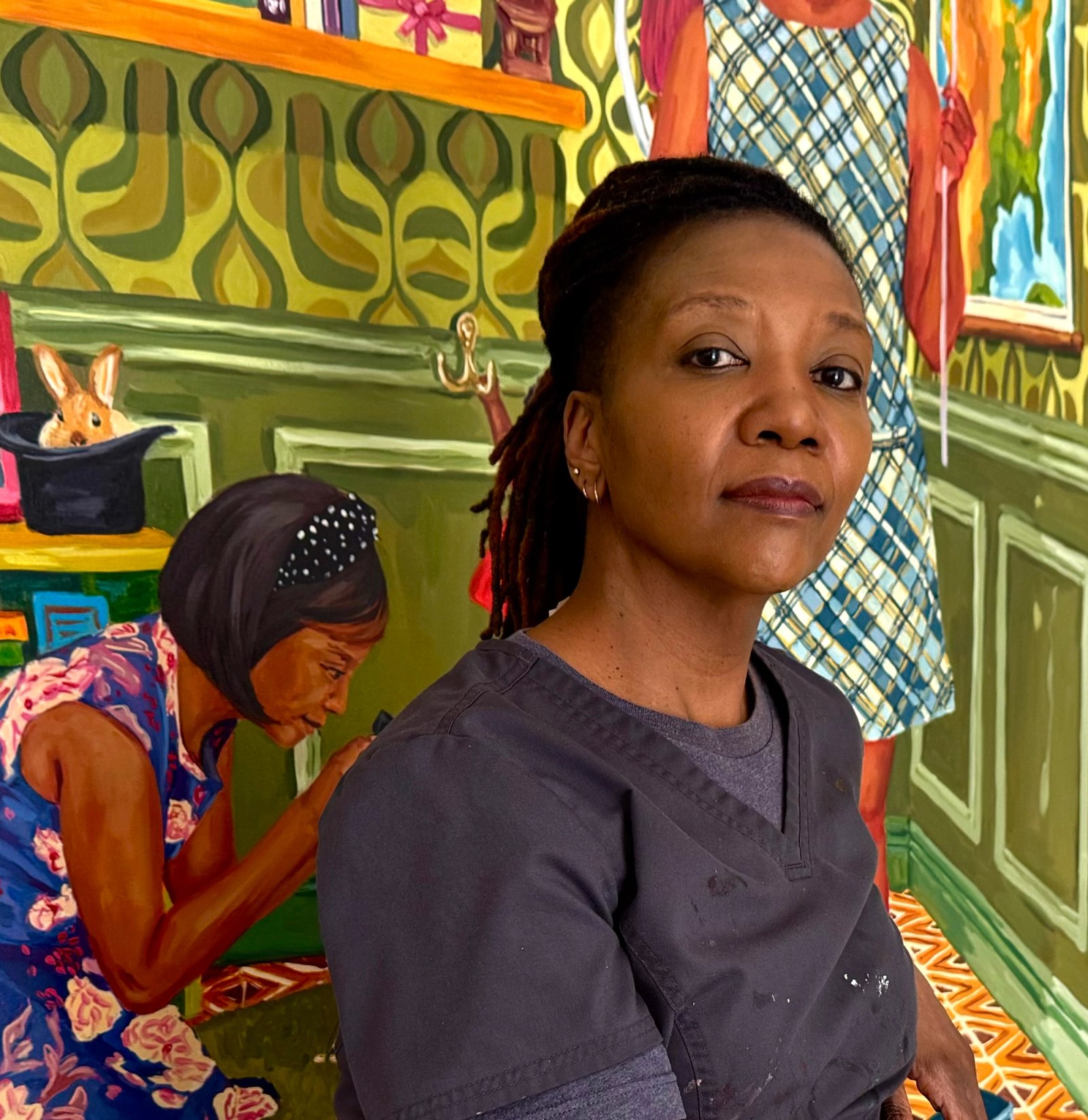
Wangari Mathenge’s first solo exhibition with Lévy Gorvy Dayan expands her Re-membering series into sculpture, turning books, objects and domestic space into a layered inquiry into Kenyan cultural memory.
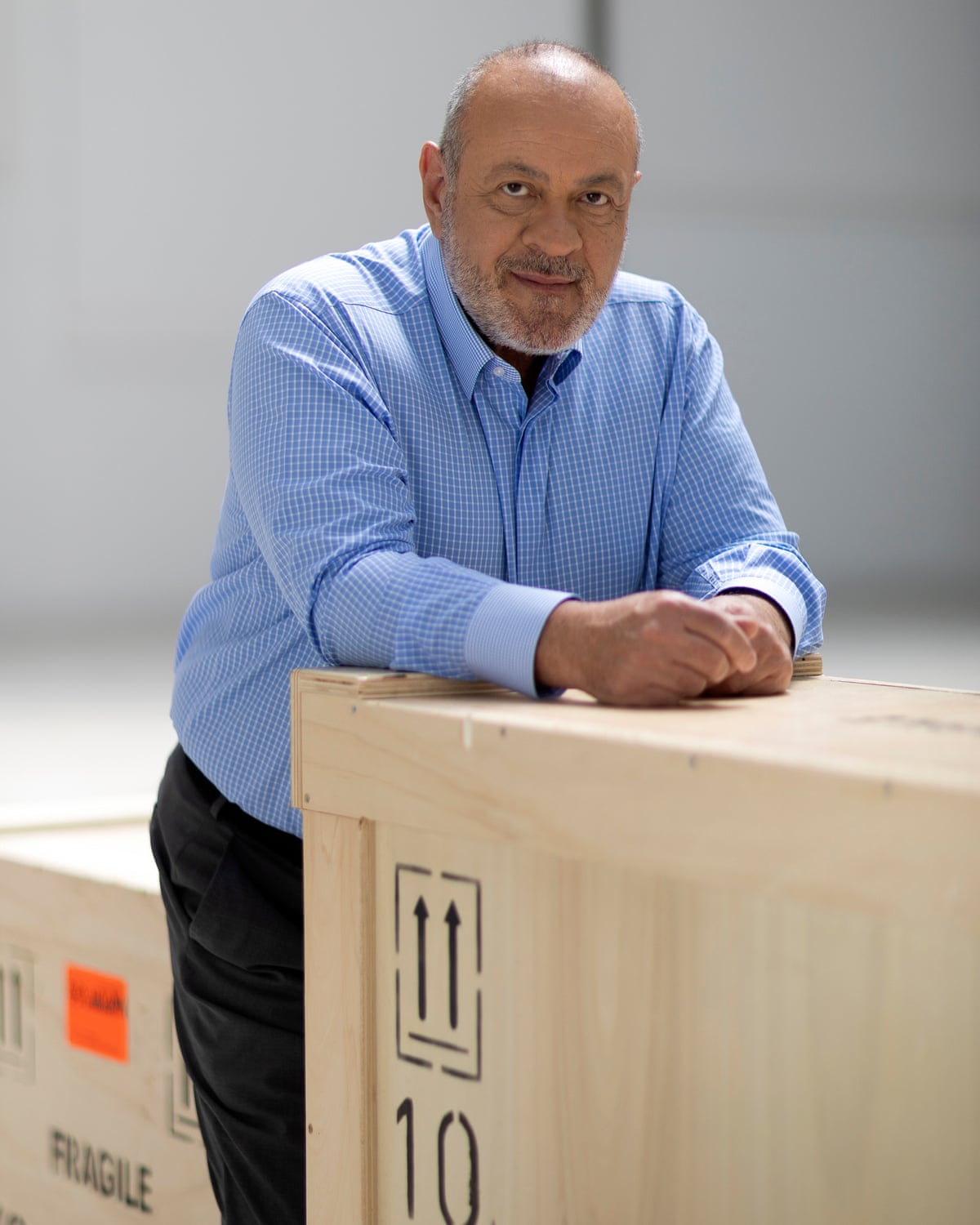
Dimitris Daskalopoulos has added 51 works to one of the most consequential museum-gifting programmes of the contemporary era. The real story is not generosity alone, but a collector’s unusually coherent answer to the problem of legacy.
Peter Simon’s collection is large enough to read as a survey of modern and contemporary art, but its more useful story for collectors is personal: how a commercial eye trained on textiles, colour and pattern became an art-collecting instinct — and why conviction still matters when markets move against you.