LATEST NEWS:
Jenny Holzer & Andy Goldsworthy win 2026 Praemium Imperiale • €9m Renoir museum heist in France • Dimitris Daskalopoulos donates 51 works to museums in Greece & Scotland • Artist Lucien Smith dies aged 37 • Faro Santander opens with 1,000-work collection • Argentina orders return of Nazi-looted Old Master • Greece rejects Parthenon Marbles loan request • Smithsonian chief Lonnie Bunch announces retirement
Go Back
Magazine

Taking Back Our Space at MoMA: Who Gets to Occupy the Frame?

MoMA’s new photography exhibition begins with Marianne Wex’s radical archive of gendered body language and expands the question through seven contemporary artists. The result is a sharp study of bodies, space, archives and who controls representation.

Exhibitions
Exhibitions
Taking Back Our Space at MoMA: Who Gets to Occupy the Frame?

Before photography records what a body looks like, it records what a body is permitted to do.

That proposition sits at the centre of Taking Back Our Space: Photographic Perspectives, opening at the Museum of Modern Art on 20 September 2026. The exhibition begins with Marianne Wex’s vast 1977 project Let’s Take Back Our Space: “Female” and “Male” Body Language as a Result of Patriarchal Structures and brings it into dialogue with seven contemporary artists: Nona Faustine, Martine Gutierrez, K8 Hardy, Yuki Kihara, Joiri Minaya, Paulina Ołowska and Wendy Red Star.

The pairing is unusually sharp. Wex treated body language as a social archive: how people sit, stand, occupy seats, open their legs, hold their arms and claim public territory. The younger artists expand that question across race, indigeneity, sexuality, gender performance, colonial history and the politics of self-representation.

For collectors, the exhibition is also a reminder that contemporary photography is no longer best understood through the narrow hierarchy of “beautiful image” versus documentary record. The medium can function as archive, performance, sculpture, self-portrait, historical correction and conceptual system — sometimes all at once.

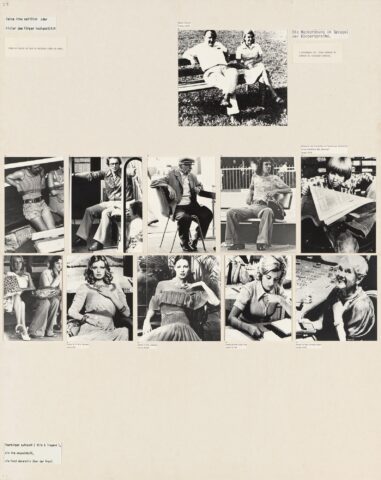
Marianne Wex Taking Back Our Space panel
Marianne Wex, panel from Let’s Take Back Our Space: ‘Female’ and ‘Male’ Body Language as a Result of Patriarchal Structures, 1977. The Museum of Modern Art, New York. © Marianne Wex Estate.

Marianne Wex and the politics hidden in ordinary posture

Beginning in 1972, Wex photographed people in Hamburg and gathered images from advertising, newspapers, television, art history and popular culture. She organised them into hundreds of panels comparing the spatial behaviour of men and women. The project’s power lies in accumulation. Any one pose can be dismissed as individual habit; hundreds begin to reveal a social grammar.

MoMA acquired the project in its entirety in 2018, and the exhibition gives it a central role rather than treating it as archival background. That decision matters because Wex’s work supplies the method through which the rest of the exhibition can be read: the body is not only represented by culture; it is trained by culture.

For collectors, large archival projects such as Wex’s raise important questions of completeness. Individual components may have aesthetic power, but the intellectual force often resides in the system. When acquiring serial or modular work, understanding whether a piece is autonomous, part of a larger set or dependent on a specific sequence is essential.

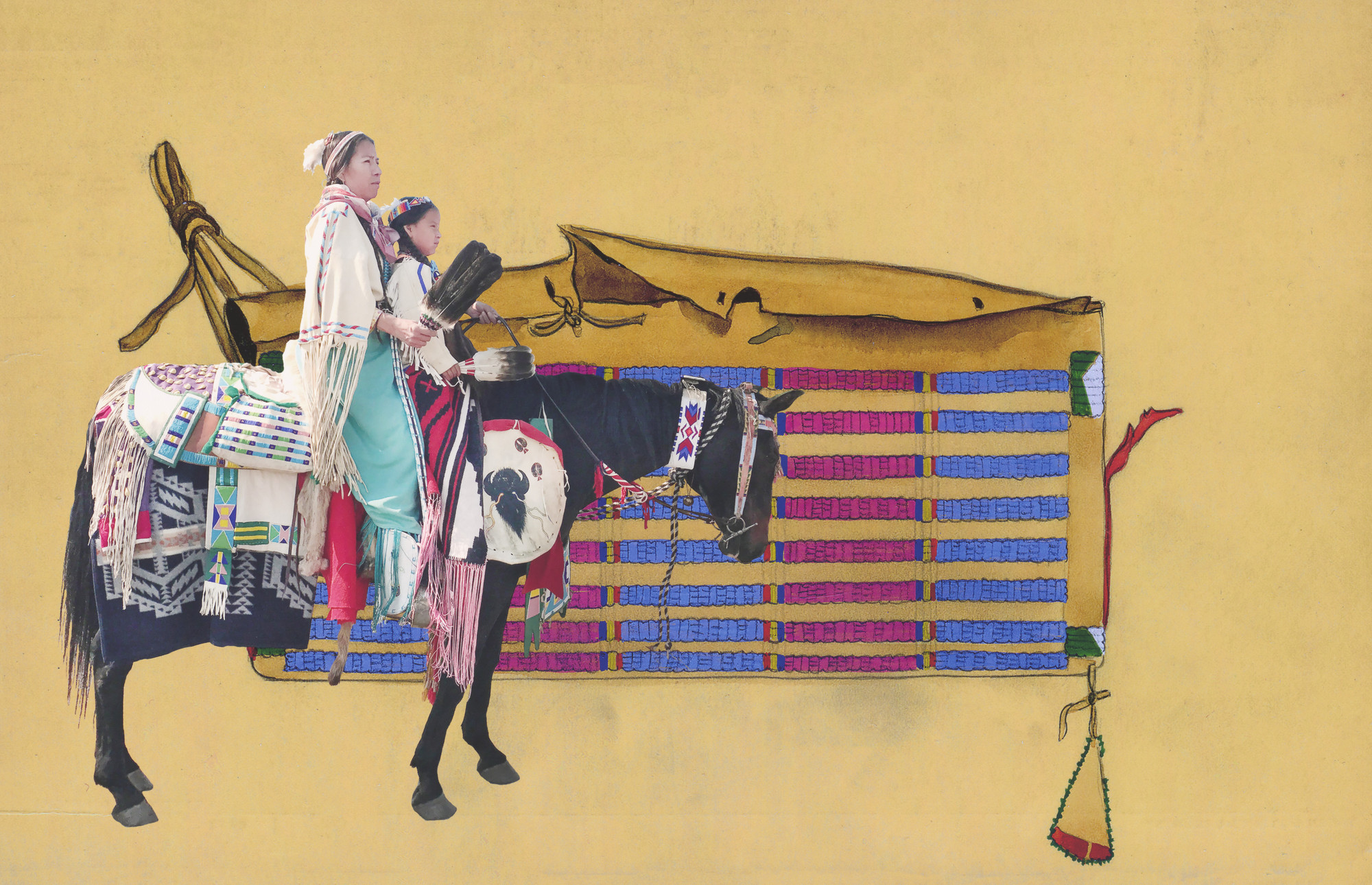
Wendy Red Star Catalogue Number 1944.26
Wendy Red Star, Catalogue Number 1944.26, 2019, from the series Accession. The Museum of Modern Art, New York. © 2026 Wendy Red Star.

Wendy Red Star: the archive answers back

Wendy Red Star’s Accession series works through historical photographs and museum systems to address how Indigenous people have been catalogued, represented and converted into ethnographic knowledge. The series does not simply recover an image from the archive. It changes who controls the frame.

That shift is central to Taking Back Our Space. Space here includes the museum database, the photographic archive and the historical caption as much as physical territory. To reclaim representation is also to reclaim the terms under which an image is described and preserved.

Collectors of contemporary photography should pay close attention to this expanded role of archival practice. Provenance is no longer merely a chain of ownership attached to the art object. In work such as Red Star’s, archival provenance may be part of the subject itself.

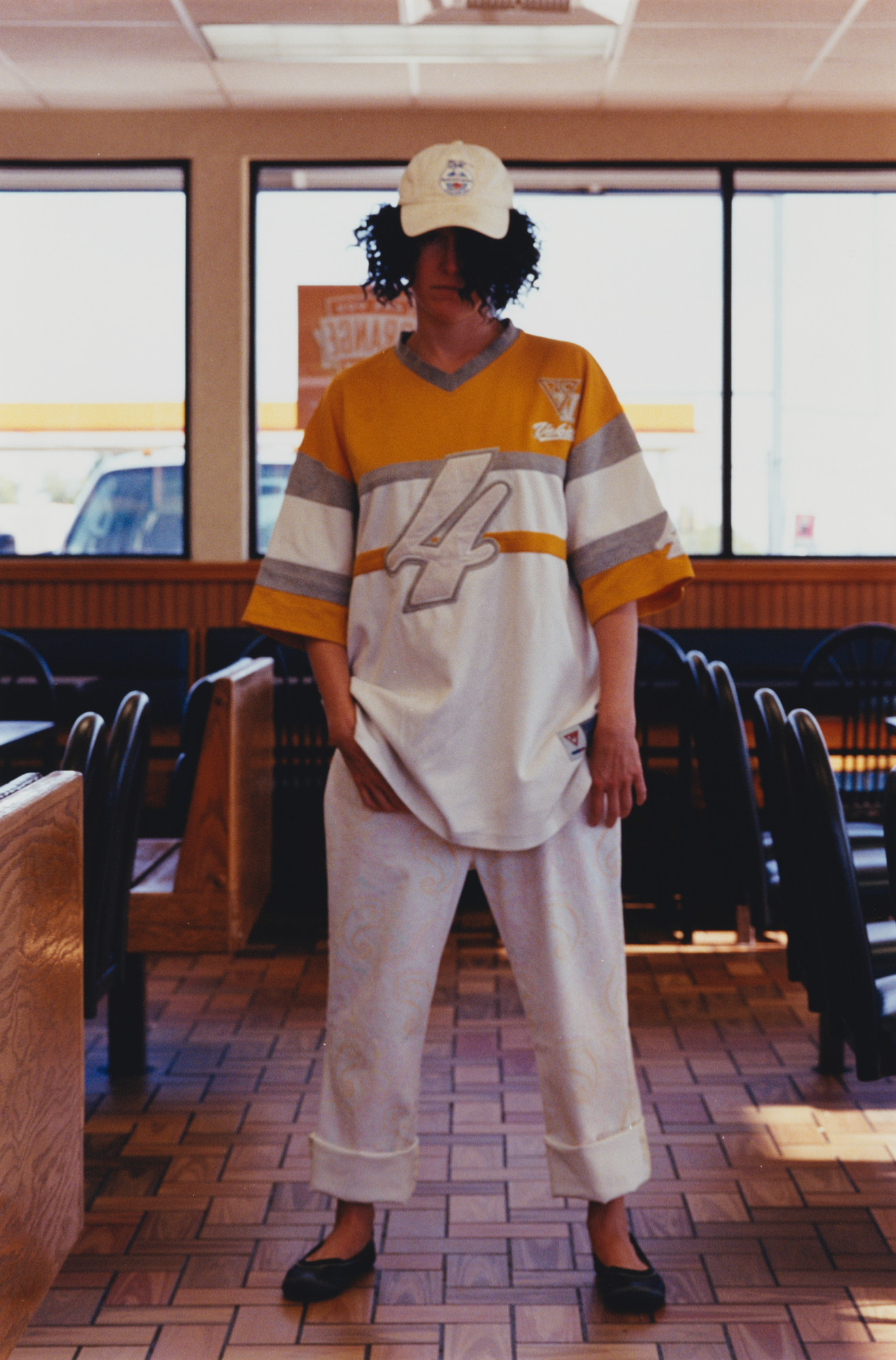
K8 Hardy Position Series
K8 Hardy, work from Position Series, 2007–12, printed 2017. The Museum of Modern Art, New York. © K8 Hardy, courtesy the artist.

K8 Hardy and the instability of looking

K8 Hardy’s Position Series turns fashion, pose and self-presentation into a field of disruption. Across fifty chromogenic prints, identity refuses to settle into a stable image. Clothing, gesture and photographic convention keep changing the terms under which the body is read.

The series is especially relevant in a culture saturated with curated self-images. Social media has made the pose nearly universal, but Hardy’s practice exposes the construction behind the supposedly spontaneous self. The image is a performance before it becomes a record.

This is one reason series-based photography can be undervalued when collectors focus too narrowly on a single “iconic” frame. A sequence may contain the argument more fully than any individual image. The collector should understand whether the work was conceived serially and how the artist expects individual prints to circulate.

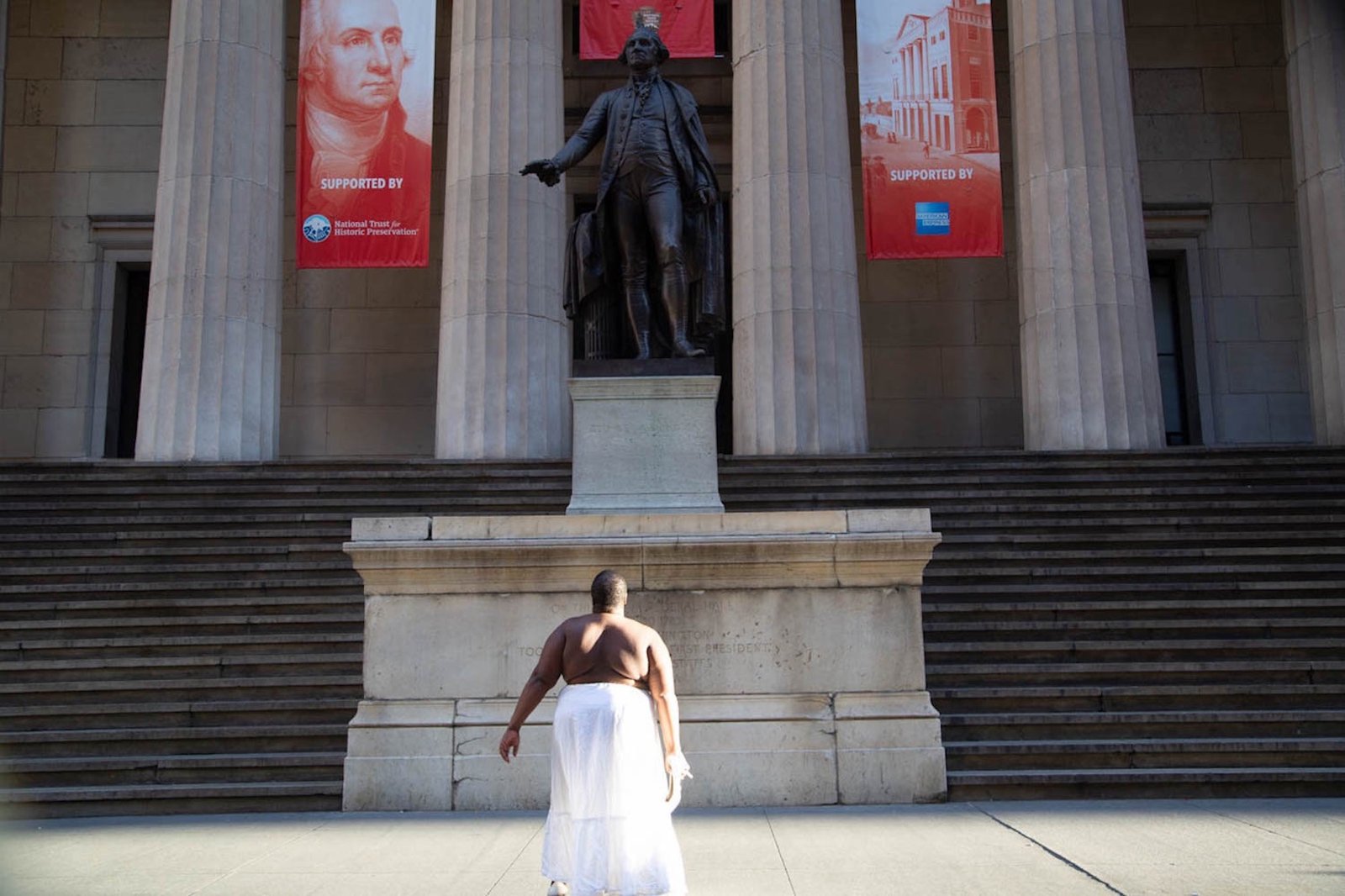
Nona Faustine White Shoes
Nona Faustine, from the White Shoes project, in which the artist places her own body at New York sites shaped by histories of slavery. © Nona Faustine Estate.

Nona Faustine: the body as historical counter-monument

Nona Faustine’s photography uses the artist’s own body to make buried histories physically unavoidable. In the White Shoes project, Faustine photographed herself at New York locations linked to slavery and the trade in enslaved people, placing a living Black body where civic architecture and public memory had often obscured that history.

The method is neither documentary in the conventional sense nor symbolic self-portraiture alone. The body becomes a counter-monument: temporary, vulnerable and insistently present against architecture designed to communicate permanence.

In a collecting context, Faustine’s work demonstrates why exhibition history and scholarship matter particularly for politically engaged photography. The image may appear direct, but its meaning depends on identifying the site and the history being confronted.

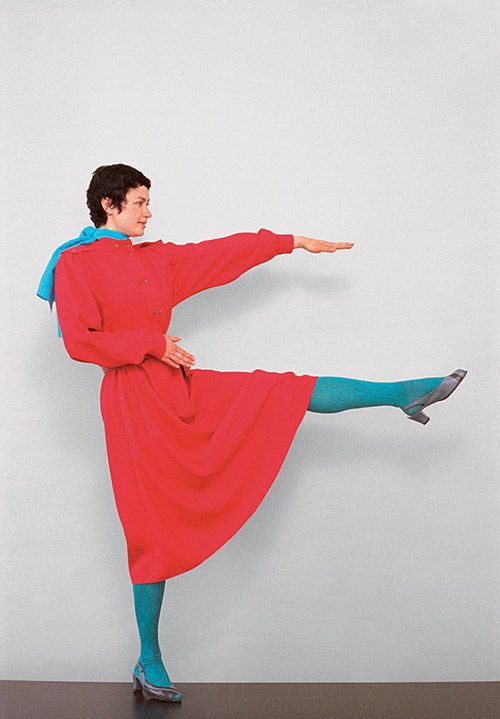
Paulina Olowska Alphabet
Paulina Ołowska, from the artist’s Alphabet project. The body becomes both image and language in a practice that repeatedly examines how gestures are learned and represented.

Paulina Ołowska and the learned alphabet of movement

Paulina Ołowska’s work often moves between photography, collage, painting, design and performance. Her interest in the body as a learned visual language makes her a natural counterpart to Wex. Gesture becomes alphabetic: something culturally legible because it has been rehearsed, taught and repeated.

The exhibition’s inclusion of Ołowska alongside artists such as Martine Gutierrez, Joiri Minaya and Yuki Kihara also prevents the show from collapsing into a binary comparison of male and female posture. The contemporary works ask how gender intersects with colonial histories, race, indigeneity, fashion, desire and the authority of the photographer.

Photography beyond the print

One of the strongest collector lessons in Taking Back Our Space is that the medium “photography” now describes a wide range of objects. Inkjet prints sit beside chromogenic works, collaged images, performance documents and multi-part installations. Framing, sequence, scale and exhibition configuration can be as important as the photographic exposure itself.

Collectors should therefore treat technical descriptions seriously. Confirm whether a work is editioned, whether the frame is artist-designed or integral, whether it can be reprinted, who controls replacement prints, what paper or process is authorised and whether a work must be shown as part of a group.

For contemporary photography, conservation also begins earlier than many buyers assume. Colour processes can shift; mounting methods matter; artist-designed frames may contain specialist surfaces; large prints can be vulnerable to handling. A certificate and full production information are not administrative extras — they are part of responsible ownership.

Why this exhibition matters now

The strength of Taking Back Our Space lies in its refusal to treat representation as merely an issue of who appears in a picture. It asks who occupies space, who controls the camera, who names the archive and who has the authority to turn another person’s body into cultural evidence.

That makes the exhibition timely without making it temporary. Wex’s 1977 project is almost fifty years old, yet the physical codes she documented remain legible. The contemporary artists do not simply update her thesis; they complicate it.

For collectors, this is exactly what a museum exhibition should do. It creates relationships that change how individual works are seen. A Wendy Red Star print, a K8 Hardy sequence or a Martine Gutierrez self-fashioning project gains further resonance when placed beside the earlier archive of learned gesture.

Taking Back Our Space: Photographic Perspectives opens at MoMA on 20 September 2026 and runs through 2 May 2027, with member previews from 17–19 September. It is one of September’s strongest photography exhibitions because it begins with a basic fact that is easy to overlook: every photograph of a body is also a photograph of the space that body has been allowed — or has decided — to claim.

Date
Sep 17, 2026
Share

Latest Posts

September 17, 2026
Exhibitions
Exhibitions
Taking Back Our Space at MoMA: Who Gets to Occupy the Frame?

MoMA’s new photography exhibition begins with Marianne Wex’s radical archive of gendered body language and expands the question through seven contemporary artists. The result is a sharp study of bodies, space, archives and who controls representation.
September 15, 2026
Exhibitions
Exhibitions
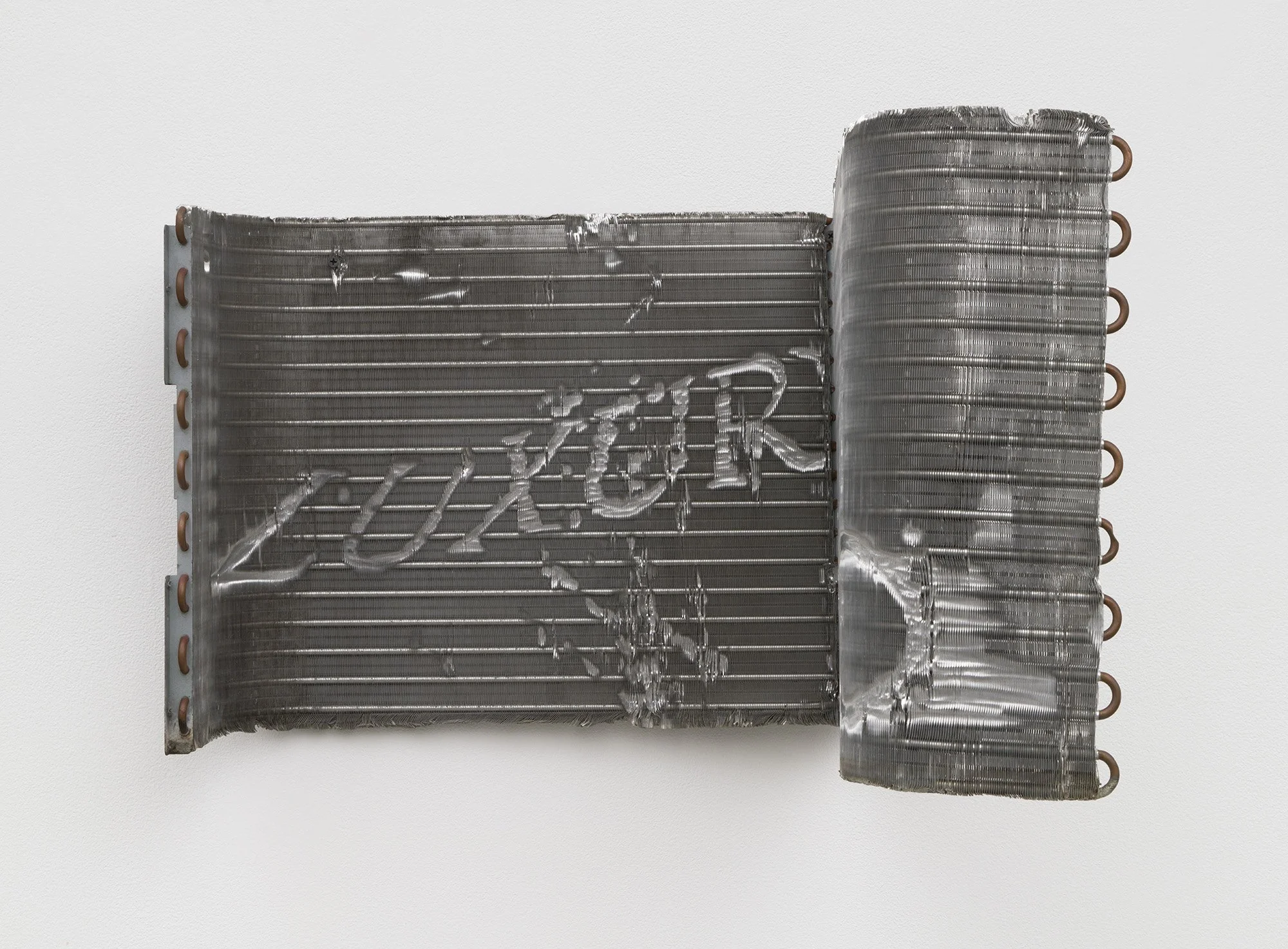
The Monument Outside Your Window: Alix Vernet Turns Air Conditioners into Ruins

Alix Vernet sees the backs of New York air conditioners as archives: fragile aluminum surfaces that record weather, maintenance, touch and heat exchange. LANDMARKS turns overlooked infrastructure into some of the city’s strangest new monuments.

September 15, 2026
Exhibitions
Exhibitions
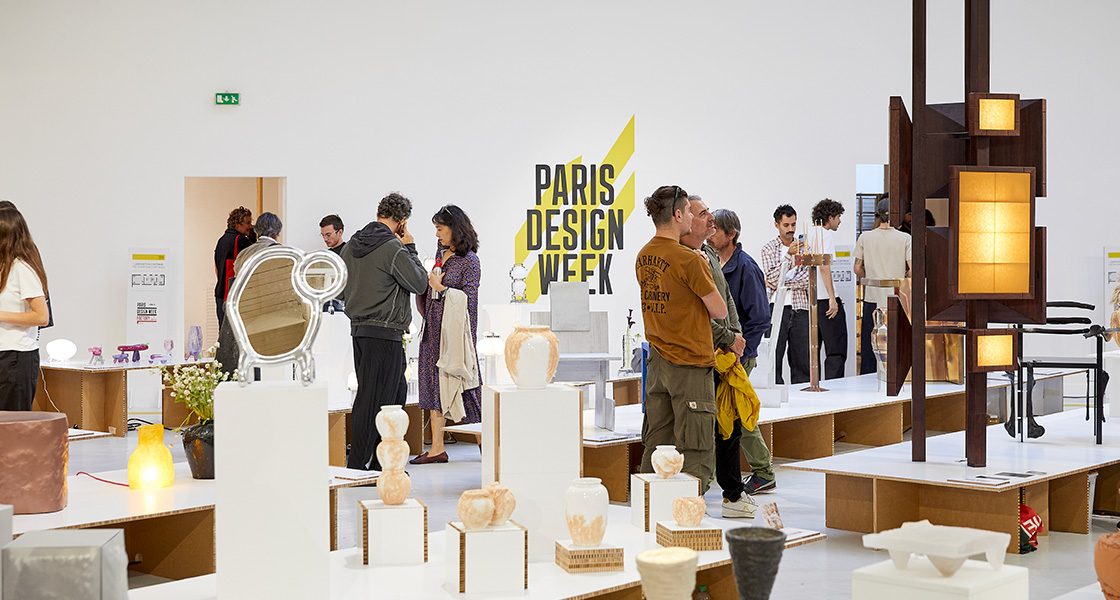
Paris Design Week 2026: The Collector’s Edit

Paris Design Week is too large for a checklist. Our collector’s edit focuses on the places where collectible design, exceptional craft and historic interiors create the strongest opportunities for serious looking and collecting.