Red flags, endless swiping and the fear of choosing wrong: ON REPEAT brings together works by Marc-Aurèle Debut examine the romantic consequences of living in an age of infinite options. Through a series of visually striking installations and sculptures, the exhibition transforms the habits of digital culture into a sophisticated meditation on desire, vulnerability and the increasingly elusive search for connection.
ON REPEAT: Desire in the Age of Endless Choice
Red flags, endless swiping and the fear of choosing wrong: ON REPEAT brings together works by Marc-Aurèle Debut examine the romantic consequences of living in an age of infinite options. Through a series of visually striking installations and sculptures, the exhibition transforms the habits of digital culture into a sophisticated meditation on desire, vulnerability and the increasingly elusive search for connection.

What happens when desire starts behaving like online shopping?
ON REPEAT, Marc-Aurèle Debut's Solo show at Gathering takes this question as its point of departure, exploring a culture in which intimacy is increasingly organised through endless choice, comparison, and replacement. Across sculpture, installation, and sound, repeated forms and circulating materials create a world where nothing quite arrives and everything returns, capturing the strange paradox of contemporary romance: unprecedented access to others alongside a persistent fear of attachment.
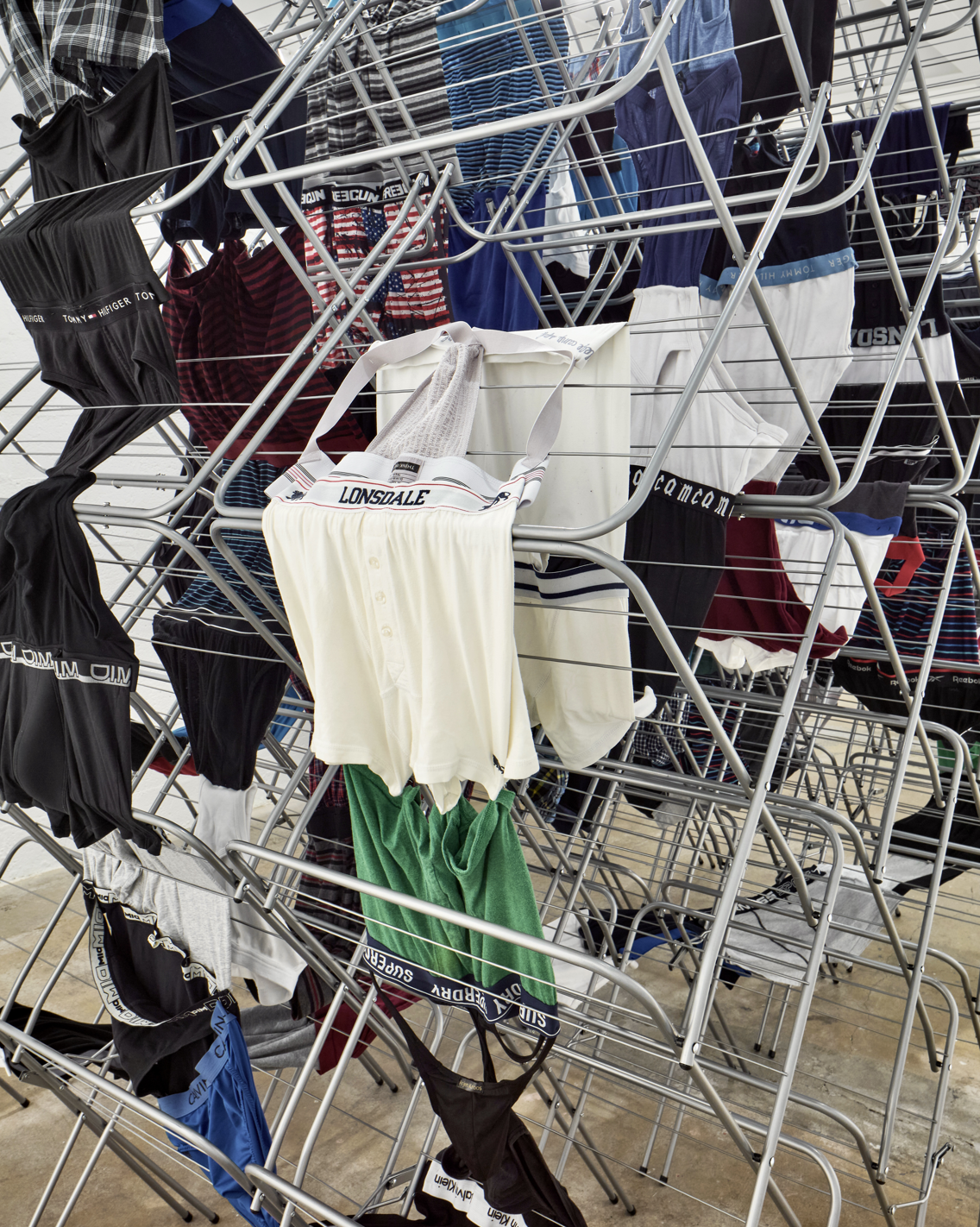
The exhibition's centrepiece is a monumental installation of industrial drying racks densely packed with men's underwear. Suspended somewhere between a laundry system and warehouse storage, the work transforms a familiar intimate object into a mechanism of circulation. Individual garments hint at private encounters, yet in their overwhelming accumulation they become inventory—anonymous, interchangeable, and endlessly replaceable.

The work balances with with a sharp awareness of the social structures that shape contemporary desire. Underwear, traditionally associated with intimacy and desire, is stripped of individuality through repetition. What initially reads as playful gradually reveals itself as a pointed reflection on contemporary dating culture, where bodies risk becoming products in an economy of perpetual browsing.
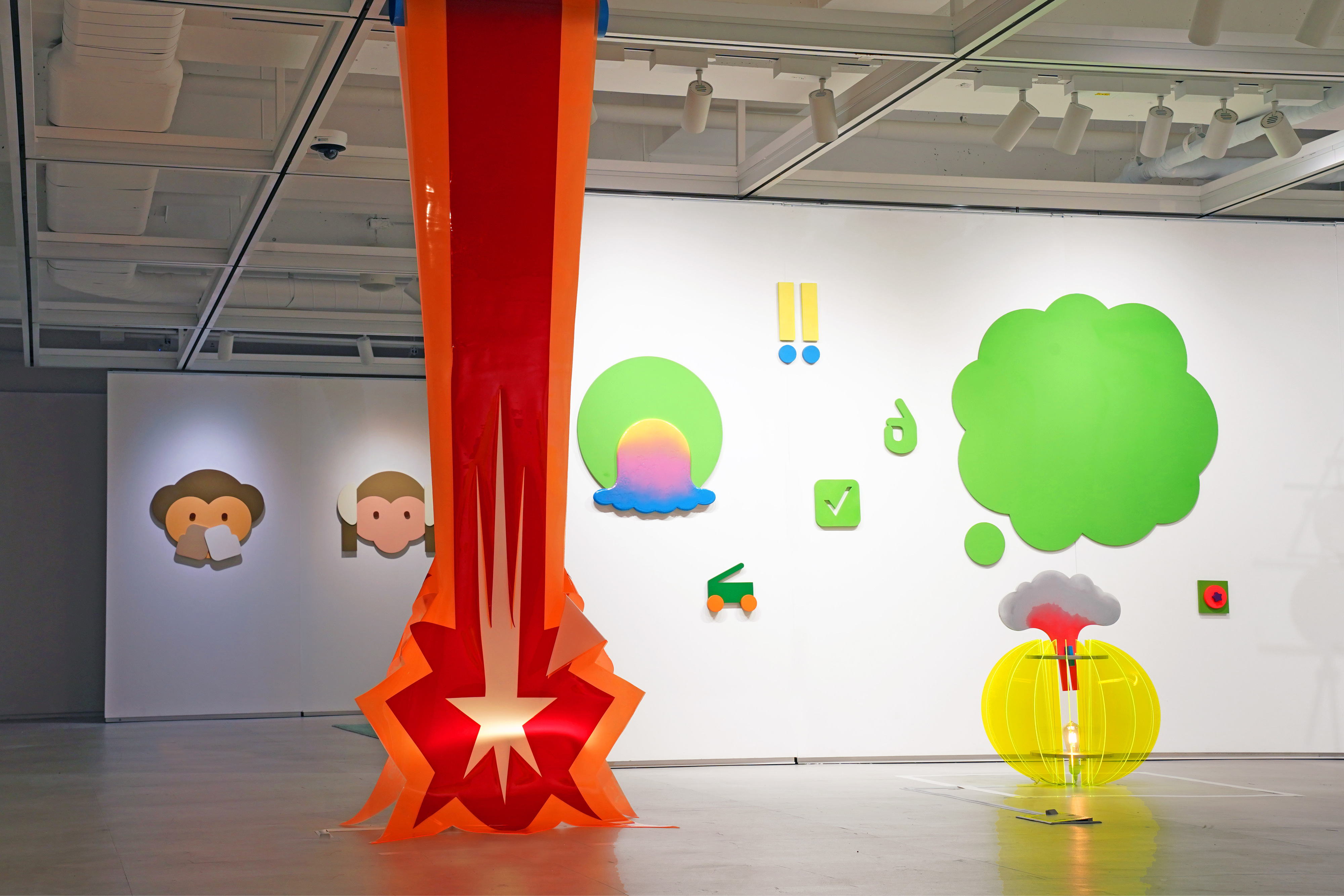
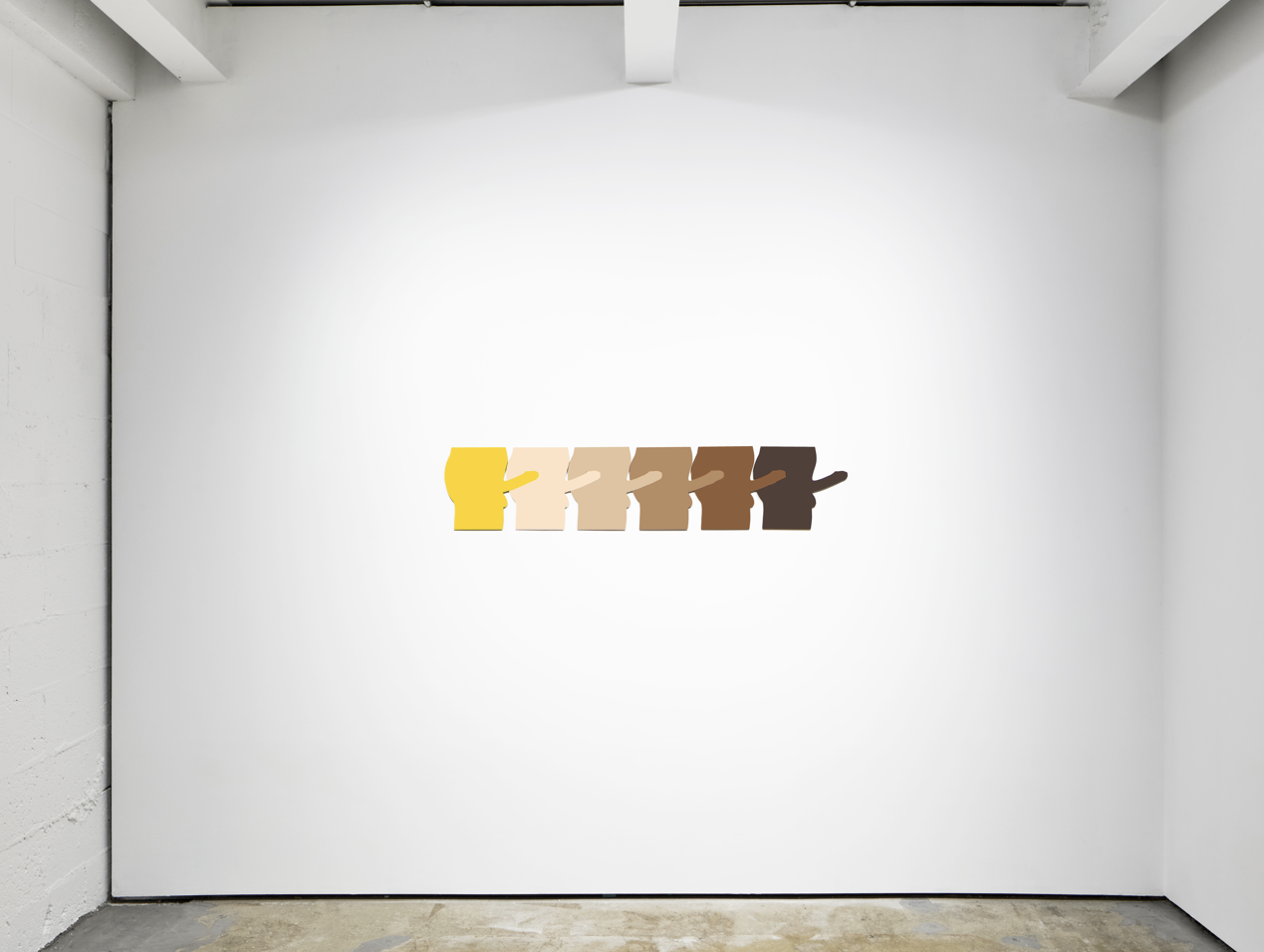
Among the exhibition’s most compelling works is Emo(r)ji (2026), a painted aluminium sculpture composed of interlocking emoji-like bodies whose entwined forms suggest sexual innuendo. Suspended between the visual language of digital culture and the excesses of the orgy, the work examines how contemporary platforms, shaped by capitalist logics of extraction and consumption, standardise, categorise, and circulate desire.
Within the economies of dating apps and social media, bodies become interfaces to be browsed, compared, and consumed. Debut compresses identity into legible signs, while intimacy is reorganised through regimes of endless repetition, visibility, and choice. By translating these fleeting digital symbols into aluminium, Emo(r)ji materialises the industrialisation of desire, revealing how contemporary platforms transform bodies into standardised commodities circulating within an economy of perpetual selection.

By enlarging a symbol typically consumed in a fraction of a second, Debut renders visible the ideological structures embedded within everyday systems of digital communication, exposing the ways in which desire is mediated, commodified, and disciplined through digital exchange.
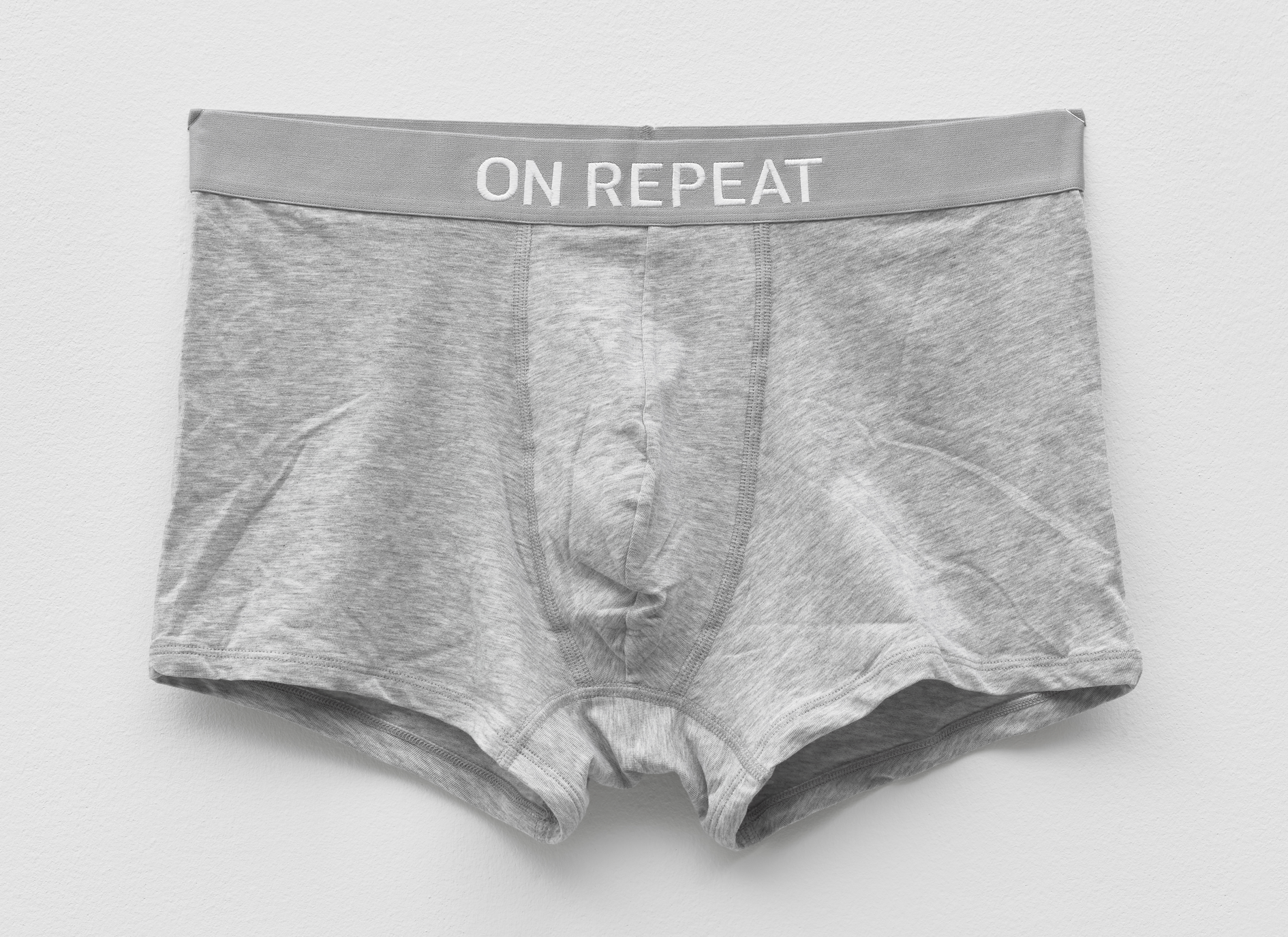
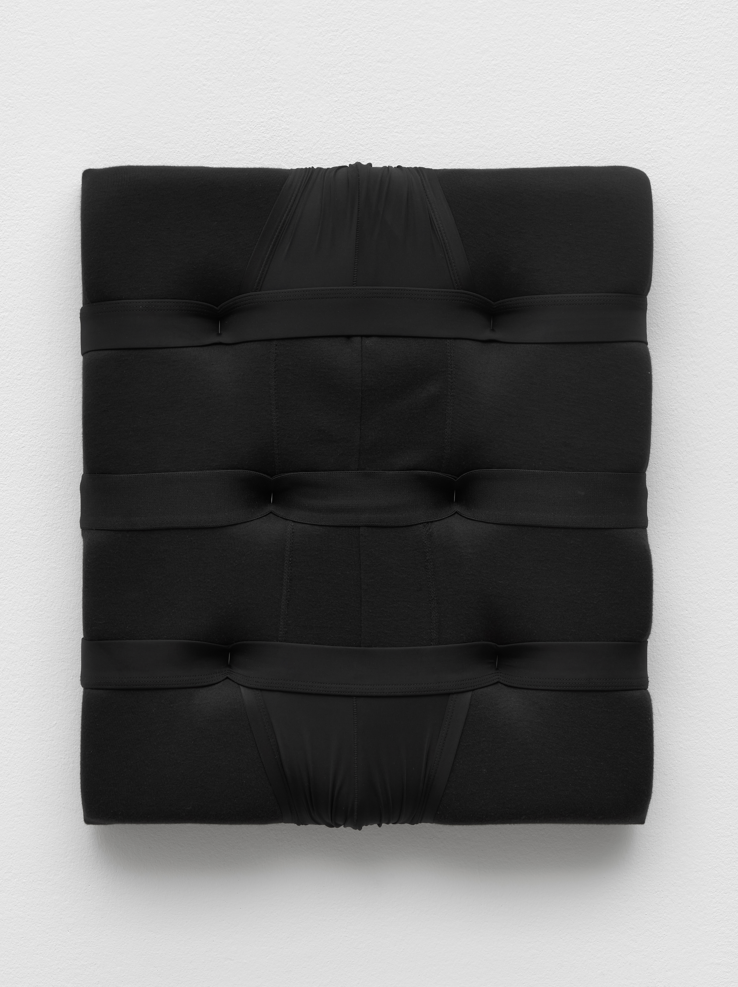
Elsewhere, a pair of white boxer briefs bearing the exhibition title functions as both object and diagnosis. Displayed with the slick clarity of commercial advertising, the garment evokes the repetitive cycles of contemporary desire: searching, selecting, evaluating, and moving on. Nearby, a tightly folded black textile work compresses underwear into a minimalist geometric form, reducing an object designed for the body to a rigid abstraction. In both cases, intimacy is subjected to systems of organisation and display.
What makes ON REPEAT compelling is its refusal to moralise. The exhibition does not lament the decline of romance or oppose casual sex to authentic connection. Instead, it observes a cultural shift in which physical exposure often feels easier than emotional vulnerability. The works suggest that contemporary subjects have become increasingly adept at managing risk—screening for red flags, avoiding discomfort, and anticipating disappointment before attachment has the chance to take hold.

Importantly, Marc-Aurèle Debut avoids the obvious imagery of digital culture. There are no glowing screens or endless grids of dating profiles. Instead, repetition itself becomes the medium. Garments, gestures, and symbols circulate through the gallery like thoughts caught in a loop, creating an atmosphere that feels familiar, restless, and unresolved.
By the exhibition's conclusion, the question is no longer whether contemporary intimacy is failing, but whether failure has become one of its organising principles. In a culture driven by optimisation and endless possibility, attachment can begin to feel like a risk rather than a reward. We keep searching, keep comparing, keep moving—always convinced that something better may be waiting just beyond the next swipe.
ON REPEAT captures this condition with intelligence, humour, and remarkable formal clarity. At a time when desire is increasingly shaped by the logic of circulation rather than commitment. An exhibition that feels both acutely contemporary and uncomfortably recognisable. Nothing arrives. Everything returns. And that, the exhibition suggests, may be precisely the point.

London's Tate Modern has opened one of the year's most anticipated exhibitions, presenting the work of Cuban-American artist Ana Mendieta in a major survey spanning her ground-breaking performances, sculptures, photography and films. The exhibition highlights Mendieta's enduring exploration of identity, landscape and the human body—subjects that continue to resonate with collectors and institutions alike. On view at Tate Modern, London : 15 July 2026- 17 January 2027
Theo Triantafyllidis has been named the recipient of the 2026 Frieze London Artist Award, where he will present Feral Metaverse (Spider), a new participatory installation co-commissioned by Frieze, Forma and, for the first time, Google Arts & Culture.