
September 19, 2026
Exhibitions
Exhibitions
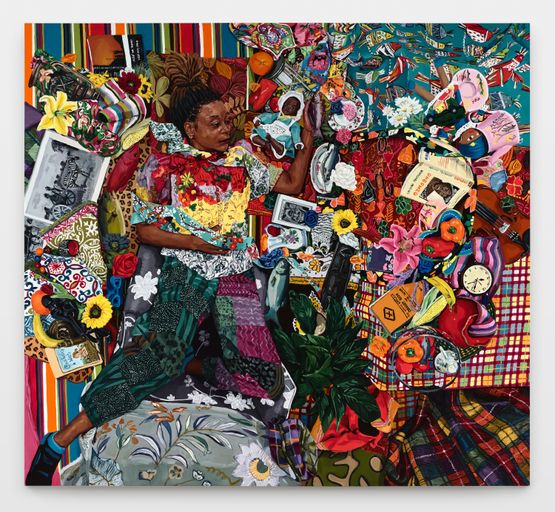
Wangari Mathenge’s first solo exhibition with Lévy Gorvy Dayan expands her Re-membering series into sculpture, turning books, objects and domestic space into a layered inquiry into Kenyan cultural memory.
Frieze Seoul’s strongest signal was not a single million-dollar sale but the breadth beneath it: Korean modernists, international blue chip, museum acquisitions, emerging artists and genuinely accessible entry points all found buyers.
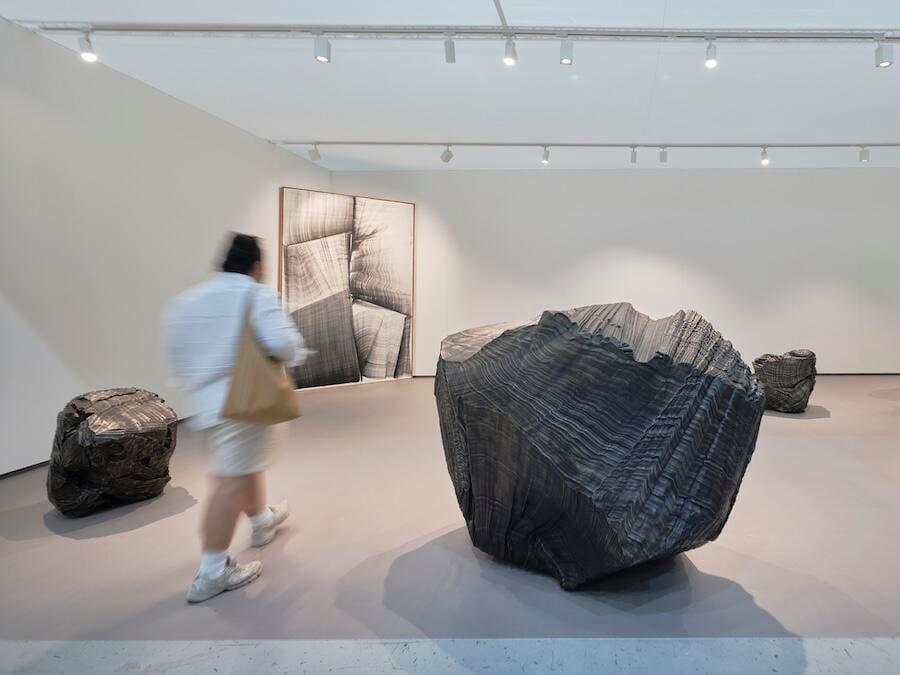
Art fairs like to advertise breadth. Frieze Seoul 2026 actually produced it.
The fifth edition closed on 5 September after welcoming more than 70,000 visitors from 54 countries and regions, with representatives from 178 museums and institutions across 25 countries — the fair’s highest institutional attendance to date. More revealing than the footfall, however, was the shape of the reported sales. At one end, Kukje Gallery placed a 1971 painting by Yoo Youngkuk for approximately KRW 2.2–2.5 billion, around US$1.6–1.8 million, the highest price reported for a Korean artist in the fair’s five-year history. At the other, Whistle sold hundreds of small paintings by dpgp78 at an accessible entry price.
Between those poles sat a surprisingly broad market: Korean post-war masters, international blue-chip names, emerging painters, ceramics, furniture and institutional acquisitions. For collectors trying to understand where Asia’s market is moving, the useful story is not whether Frieze Seoul was “strong” or “soft.” It is that the collector base is becoming more layered.
The most important high-value result belonged to Yoo Youngkuk. Kukje Gallery’s sale confirms what museum programming has also been signalling: Korean modernism is increasingly being understood within global twentieth-century art rather than treated as a specialist regional category.
That matters because collector demand is being reinforced by institutional context. Yoo’s retrospective at Seoul Museum of Art and concurrent attention to figures such as Lee Bae, Park Seo-Bo, Kim Tschang-yeul and Lee Kang So give buyers a broader art-historical framework in which to judge quality.
Gallery Hyundai reported more than $2.3 million in sales, including works by Kim Tschang-yeul reaching $1.1 million and Seung-taek Lee up to $700,000. Pace sold another Yoo Youngkuk for $1.1 million. These are not isolated headline transactions; they indicate sustained demand around artists whose international museum narratives have deepened considerably.

BB&M sold out its Lee Bul works at prices reported between $195,000 and $290,000. That result is particularly instructive because Lee is simultaneously in the middle of an unusually strong institutional and gallery cycle: a major touring survey, recent museum presentations, the Met façade commission and a new Hauser & Wirth exhibition in New York.
For collectors, this is the moment to distinguish momentum from hype. Momentum is supported by decades of practice, museum scholarship and work across several bodies of material. Hype depends primarily on velocity. Lee’s current position looks much closer to the former.
The broader lesson is that fairs should be read alongside museums. A sale becomes more meaningful when institutional attention explains why a particular artist is being re-seen.
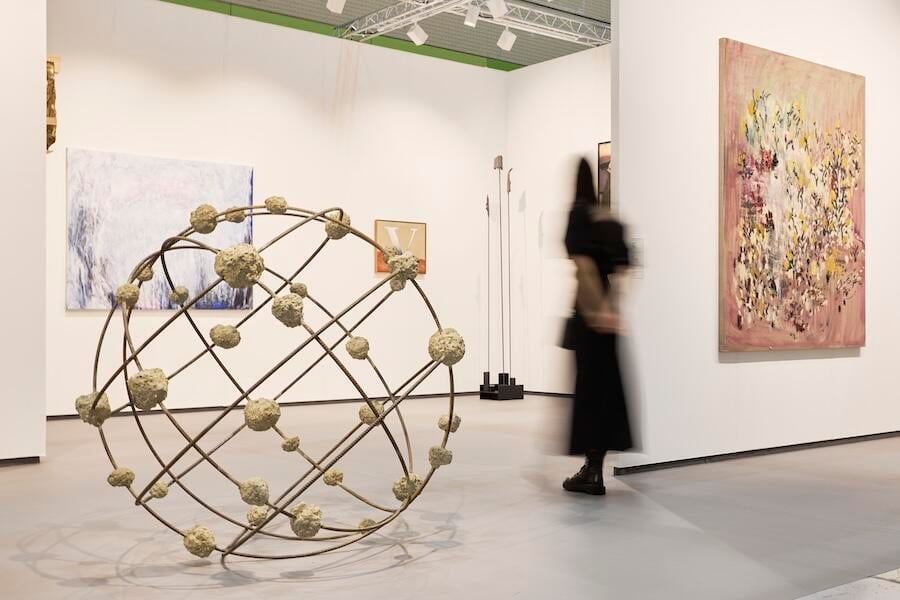
The international galleries reported substantial transactions. Hauser & Wirth placed Rashid Johnson’s Soul Painting “Interiors” with a Korean institution for $1.2 million and reported sales of Louise Bourgeois, Avery Singer, Lorna Simpson and Jeffrey Gibson. White Cube placed works by Georg Baselitz, Gerhard Richter, Mona Hatoum and Antony Gormley. Almine Rech reported Lee Ufan and George Condo works at up to $1.5 million. Thaddaeus Ropac sold works by Adrian Ghenie and Antony Gormley around the million-dollar level.
The significance is not simply that Asian buyers purchase Western art. That framing is increasingly outdated. Seoul now functions as a point of exchange in which Korean collectors buy international art, international collectors buy Korean artists and museums participate actively in both directions.
David Zwirner noted strong familiarity among Korean collectors with Western artists, often requiring little introduction. The fair’s mature phase will depend less on novelty and more on depth of knowledge.

One of the most encouraging details was the number of museum placements. Alongside the Rashid Johnson acquisition, Lehmann Maupin placed a Kim Yun Shin painting with a prominent Korean museum and David Zwirner placed two Mamma Andersson paintings with a South Korean institution.
Institutional participation matters for private collectors because it changes the ecology around artists. Museum acquisitions do not guarantee market appreciation, and they should never be treated as investment signals in isolation. But they strengthen scholarship, exhibition history and public visibility — the forms of attention that help an artist’s work remain culturally legible beyond a fair cycle.
Frieze’s Focus, Spotlight and Material Practice sections showed another side of the market. Pipe Gallery placed work at $23,000; N/A sold works by Muyeong Kim above $24,000; Marta sold a 27-panel work by Myoung-Ae Lee for $34,000, a record for the artist; Soluna Fine Art reported sales from $6,000 to $40,000. Whistle’s dpgp78 presentation created an unusually low entry point and sold more than 400 works.
The temptation is to dismiss these figures beside million-dollar transactions. For market health, however, they may be more important. A sustainable ecosystem needs first-time buyers, mid-level collectors and institutions, not only top-end clients competing for scarce blue-chip inventory.

The Material Practice section was particularly relevant for collectors whose interests cross art, design and craft. Korean furniture, ceramics and materially driven work sat comfortably inside the fair rather than being separated into a decorative category. This reflects a wider change we are also seeing through ARTCOLLECTORHOMES: serious collectors increasingly organise homes around relationships between painting, sculpture, design and craft rather than inherited market departments.
That is not just aesthetic. It changes where value can emerge. A materially sophisticated piece by a maker with limited production may offer far more distinctiveness than a minor example by a globally familiar name.
First, Korean post-war art deserves to be researched artist by artist rather than bought under a single “Dansaekhwa” label. Yoo Youngkuk, Kim Tschang-yeul, Park Seo-Bo and Lee Ufan have distinct histories, bodies of work and market structures. Period, provenance and exhibition history matter.
Second, institutional momentum should be read over years, not weeks. The strongest cases at Seoul connected fair activity with museum programmes already underway.
Third, do not ignore emerging and materially driven sections. The most useful art fair is not the one where a collector merely confirms what is already expensive. It is the one where different price levels can be compared inside the same cultural ecosystem.
Frieze Seoul 2026 did not produce a simple narrative of a booming or contracting market. It produced something more credible: evidence of a collector base broad enough to sustain $1.8 million modernists, six-figure contemporary placements, institutional acquisitions and accessible first purchases at the same event. That breadth is the story.
Wangari Mathenge’s first solo exhibition with Lévy Gorvy Dayan expands her Re-membering series into sculpture, turning books, objects and domestic space into a layered inquiry into Kenyan cultural memory.
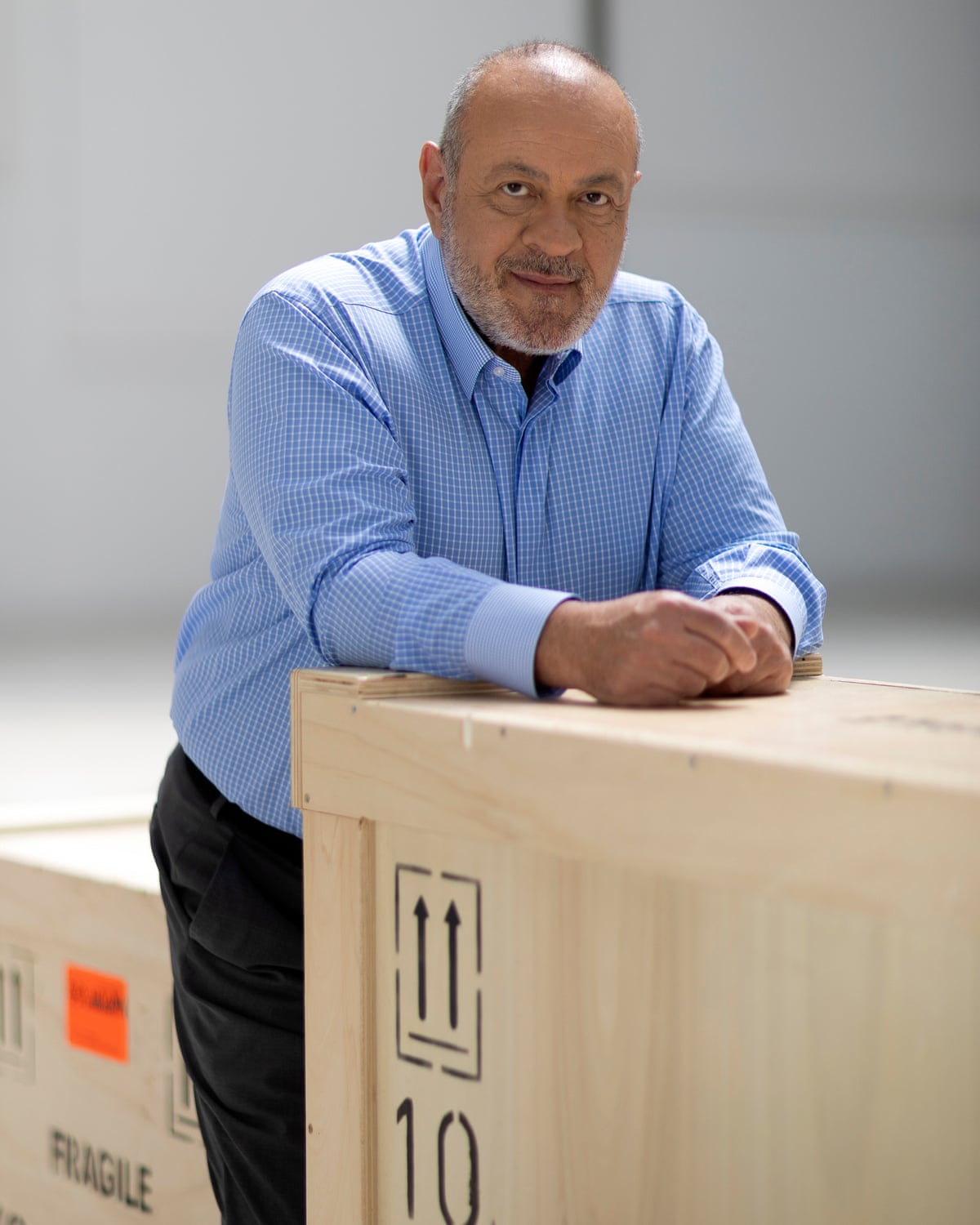
Dimitris Daskalopoulos has added 51 works to one of the most consequential museum-gifting programmes of the contemporary era. The real story is not generosity alone, but a collector’s unusually coherent answer to the problem of legacy.
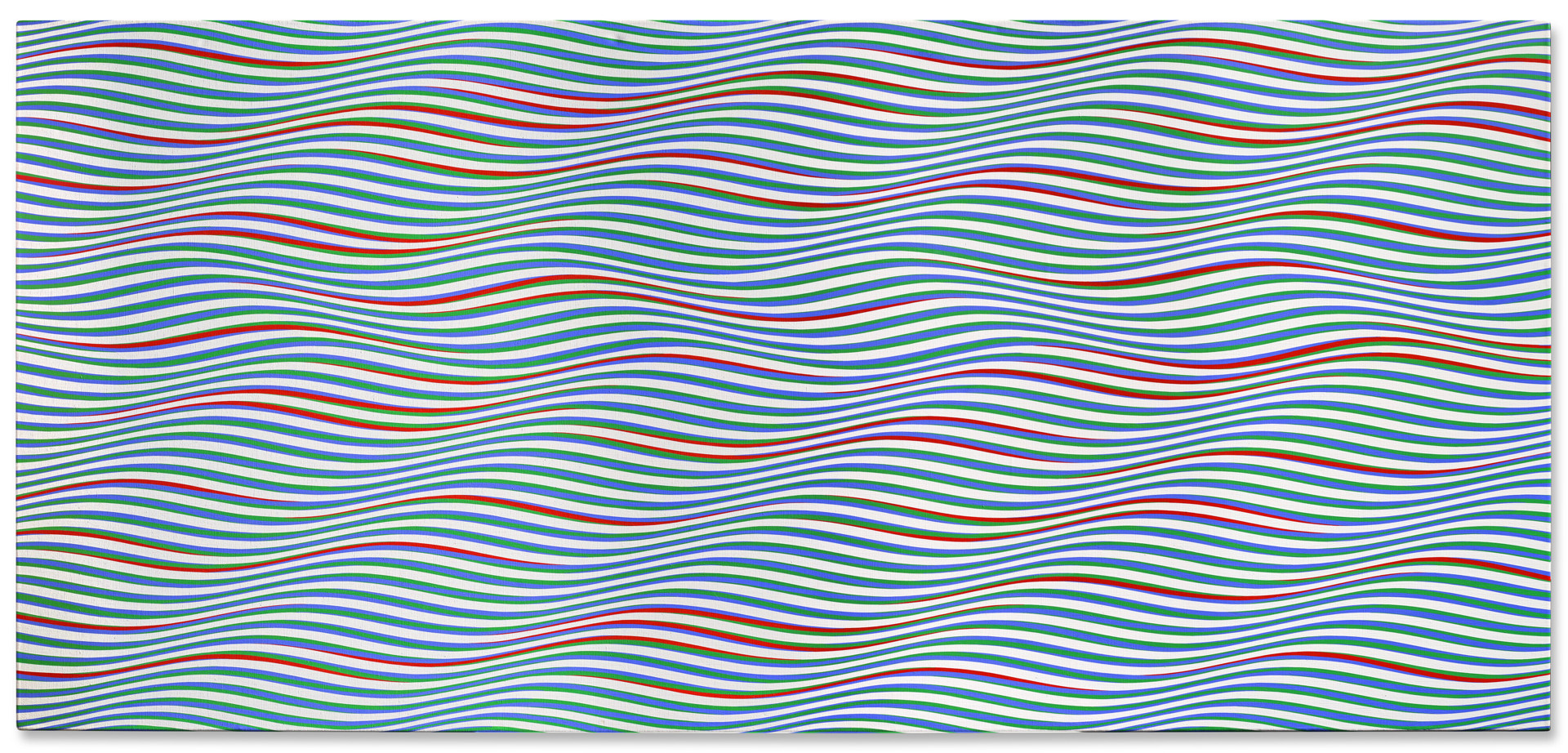
Peter Simon’s collection is large enough to read as a survey of modern and contemporary art, but its more useful story for collectors is personal: how a commercial eye trained on textiles, colour and pattern became an art-collecting instinct — and why conviction still matters when markets move against you.