
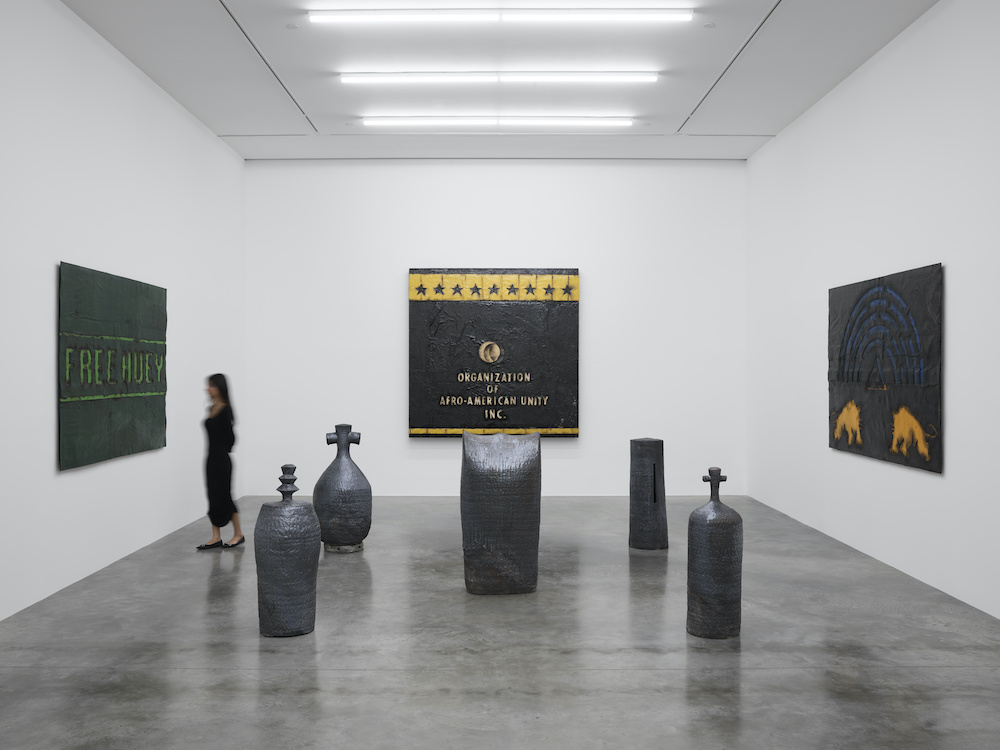
Christine Sun Kim and Theaster Gates lead a Seoul route that also tests Pam Evelyn’s momentum and highlights Yuichi Hirako, Jenny Holzer and Heejoon Lee.
Emma Kunz occupies an unusual place in the history of twentieth-century abstraction. Born in Switzerland in 1892, she made intricate drawings on graph paper using coloured pencil and methods associated with her spiritual and healing practice. She did not primarily understand herself as an artist. Today, her drawings are shown in major exhibition spaces, discussed alongside modernist abstraction and studied as works of exceptional visual intelligence. Hauser & Wirth Somerset presents an exhibition dedicated to Kunz from 7 November 2026 to 4 Apri
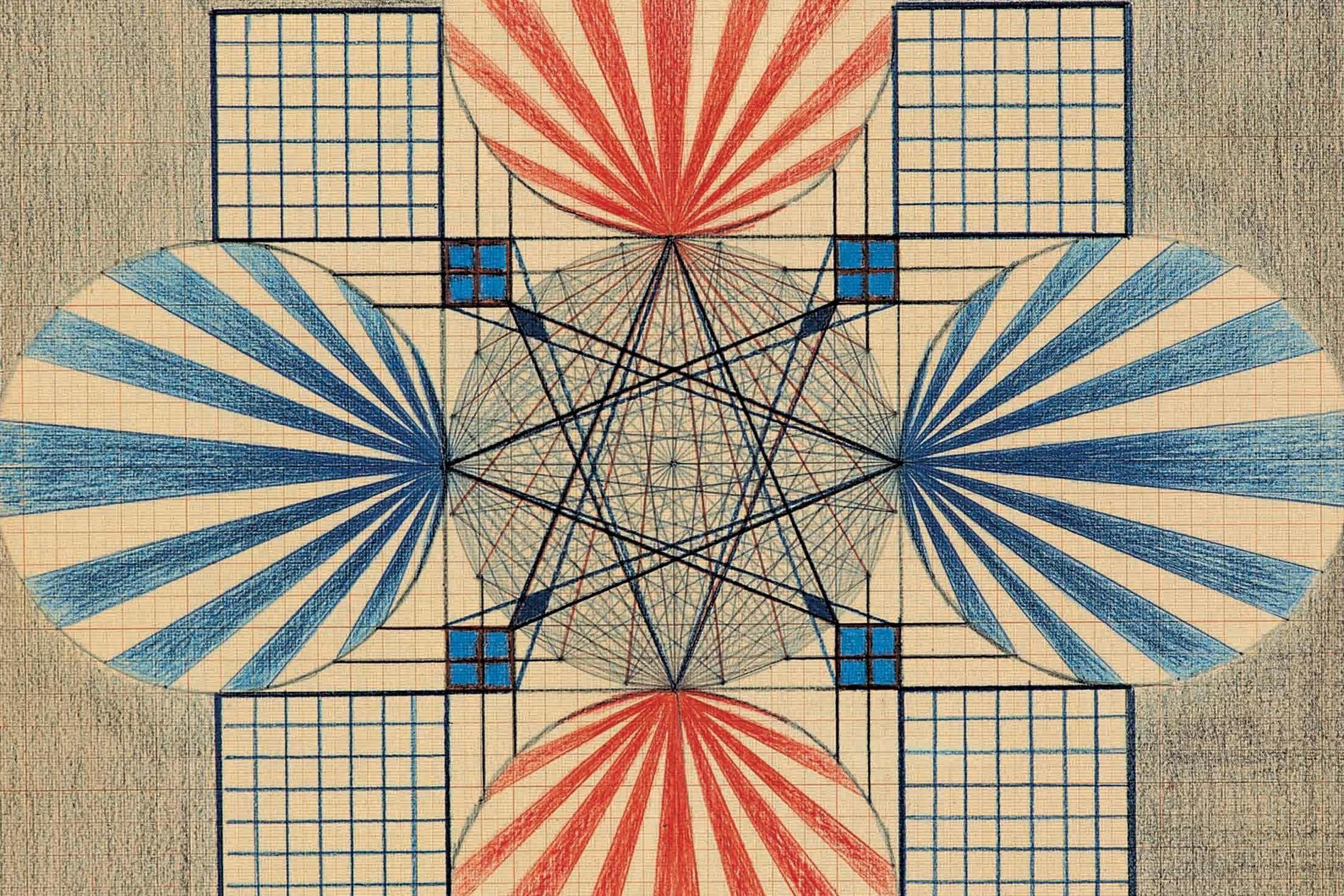
Emma Kunz’s extraordinary geometric drawings return to the British public at Hauser & Wirth Somerset, prompting questions about authorship, the history of abstraction and how to look at art created for a different purpose.
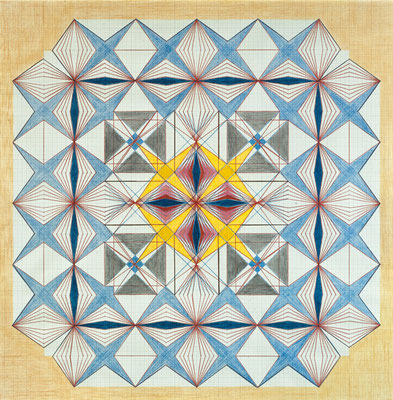
Emma Kunz occupies an unusual place in the history of twentieth-century abstraction. Born in Switzerland in 1892, she made intricate drawings on graph paper using coloured pencil and methods associated with her spiritual and healing practice. She did not primarily understand herself as an artist. Today, her drawings are shown in major exhibition spaces, discussed alongside modernist abstraction and studied as works of exceptional visual intelligence.
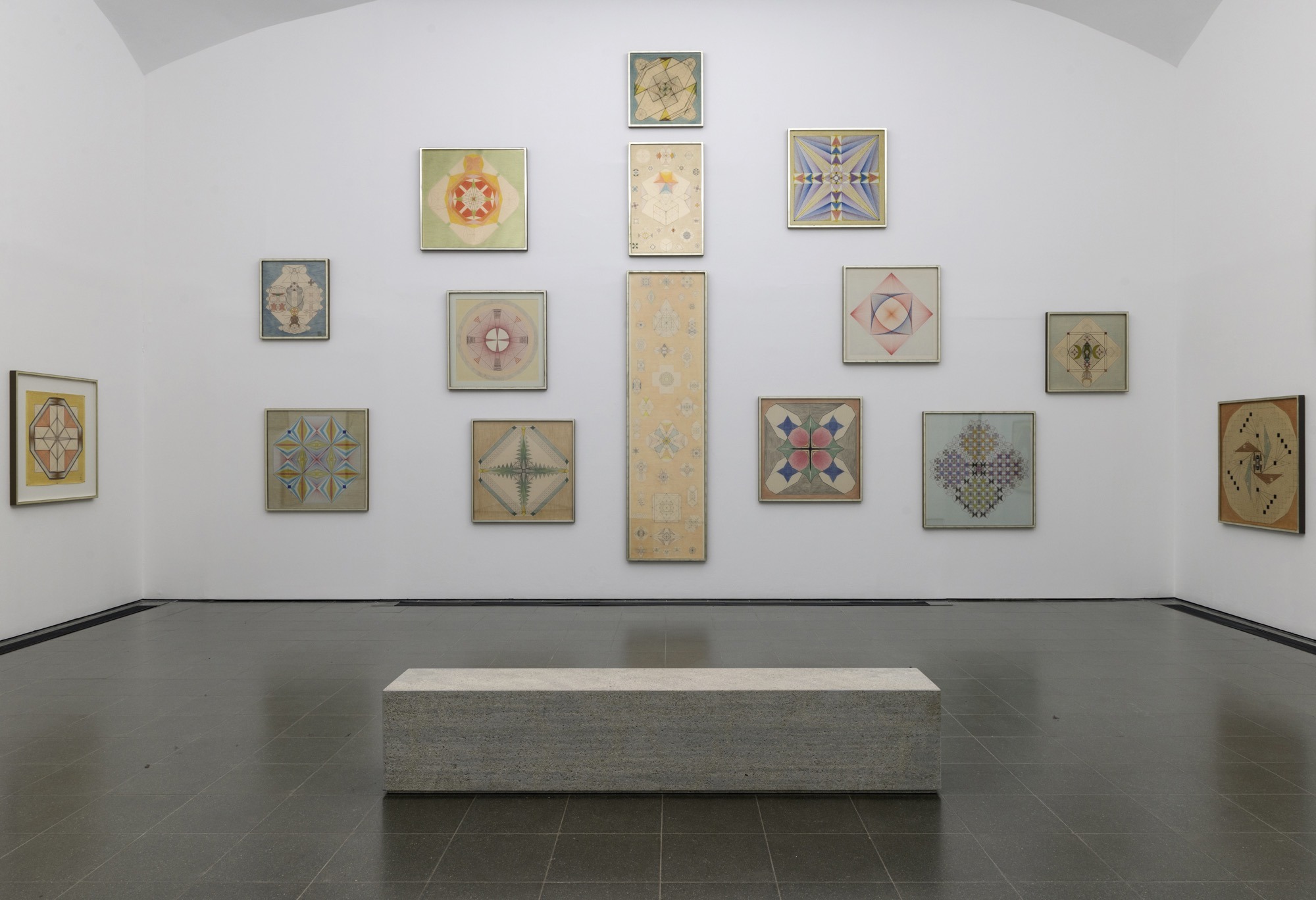
Hauser & Wirth Somerset presents an exhibition dedicated to Kunz from 7 November 2026 to 4 April 2027, in collaboration with the Emma Kunz Foundation. The presentation offers a timely opportunity to examine a tension that should not be too easily resolved. What happens when works conceived as instruments of inquiry are encountered as autonomous artworks? A drawing can be both formally absorbing and historically specific, but the history of how it was made remains essential to understanding it.
Kunz worked outside the conventions that shaped many of her painter contemporaries. She described her practice in terms of research, intuition and the interaction of forces that she believed could be represented or addressed through geometry. Her drawings were produced with carefully organised lines and colour relationships, often building radiating fields of triangles, polygons, crossings and symmetries. They are controlled without appearing mechanical, and dazzling without requiring illusionistic depth.
It is tempting to describe the works as anticipating Op art or aspects of later conceptual practice. There are visual affinities, but those comparisons can conceal as much as they reveal. Kunz was not simply a precursor who happened to arrive early at someone else’s aesthetic. She pursued her own purposes in a particular social and intellectual environment. The drawings ask viewers to hold their aesthetic power together with that difference.
Graph paper is usually an unobtrusive support for measurement, planning or calculation. Kunz makes it the visible basis of an elaborate spatial order. The underlying grid stabilises a network of diagonals and interlocking forms. Fine lines accumulate into larger arrangements that seem to pulse or turn as the eye changes its focus. A work may read as a single emblem from a distance, then unfold into countless individual decisions close up.
This oscillation between total image and exact detail is central to the drawings’ effect. Their structure is often symmetrical, but not monotonous. Variations in colour, pressure and the spacing of lines create a subtle sense of movement. To look carefully is to notice that balance does not mean stillness. The apparent precision of the image can contain a lively, almost musical rhythm of repetition and interruption.
Kunz’s method incorporated a pendulum and a system of beliefs about forces, energy and human wellbeing. That background deserves to be presented accurately, neither dismissed as mere eccentricity nor treated as scientific evidence of a healing effect. The claims that motivated an artist and the effectiveness of a medical intervention are different questions. A responsible exhibition can describe the first without pretending to have settled the second.
This distinction makes the drawings more interesting rather than less. Their maker sought a form of knowledge outside mainstream scientific and artistic institutions; the images that resulted have powerful formal coherence. A viewer does not have to adopt Kunz’s beliefs to recognise that her working process generated demanding, original visual constructions. The question becomes how intention shapes an artwork without exhausting the possible experiences of it.
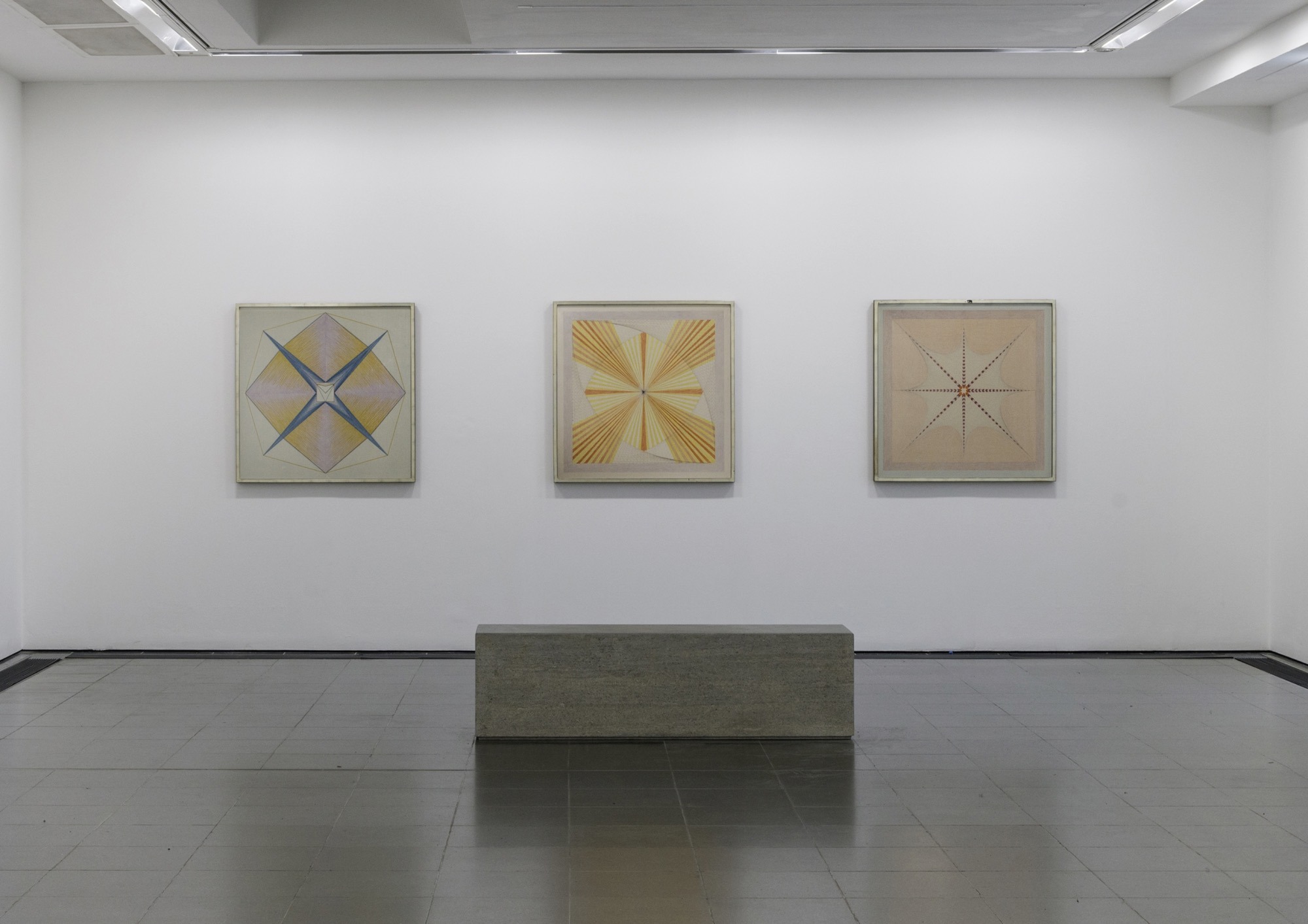
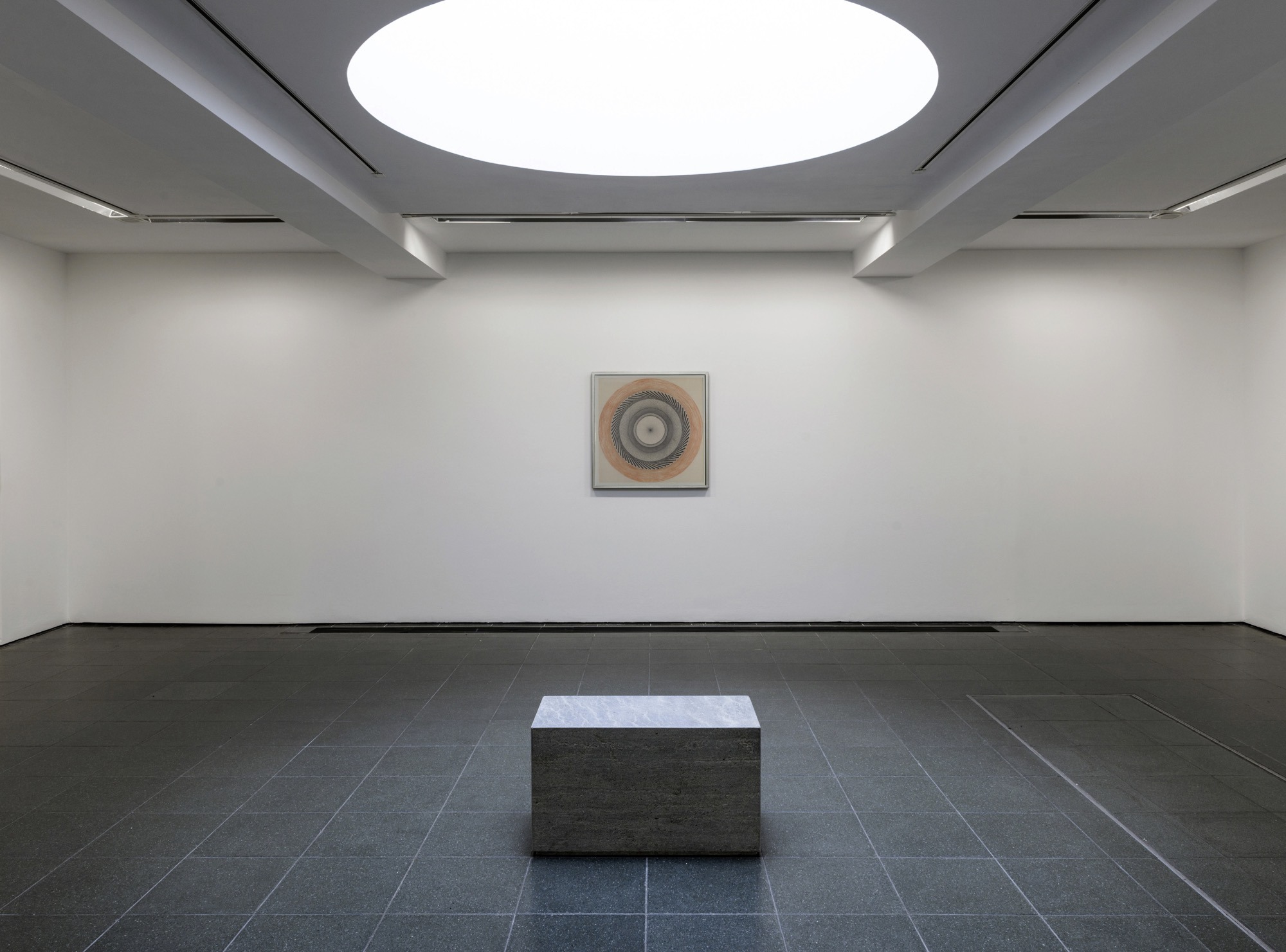
The growing international attention to Kunz did not begin with Somerset. Serpentine Galleries presented Emma Kunz: Visionary Drawings in London in 2019, followed by significant presentations including Emma Kunz Cosmos at Aargauer Kunsthaus in 2021. These exhibitions helped introduce her to audiences accustomed to thinking about abstraction through established schools and movements rather than through a practice that did not seek conventional artistic recognition.
The Emma Kunz Foundation and Emma Kunz Center in Würenlos are central to this story. They preserve the drawings and support research into the circumstances of their making. The present collaboration reminds us that an estate or foundation does more than manage access to images. It provides continuity of record, provenance and interpretation—especially important for an artist whose lifetime priorities differed so markedly from those of the contemporary art market.

The art world has become fond of “rediscovering” figures who stood outside the dominant narrative. Such attention can be valuable, but the word risks suggesting that artists did not exist until institutional approval arrived. In Kunz’s case, the more thoughtful approach is to ask how her works circulated, were preserved and were understood before museums and galleries placed them in a different frame.
Her visual language also complicates the categories often used for non-academic or spiritual work. The drawings possess extraordinary technical discipline; to call them intuitive is not to imply that they lack design. Equally, to celebrate their mathematical appearance is not to turn them into diagrams of established science. The best interpretation allows aesthetic invention and personal cosmology to remain in productive tension.
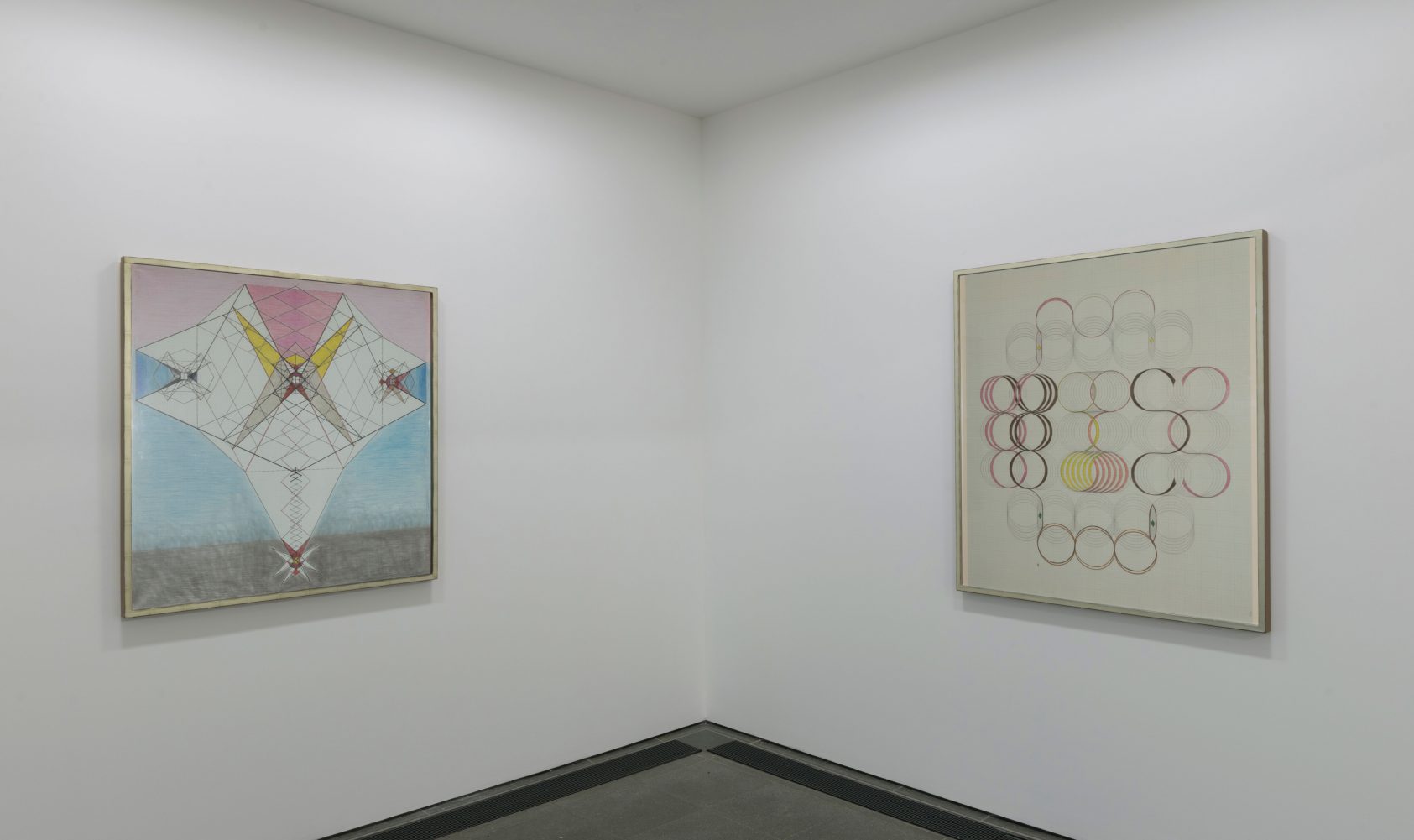
Kunz’s work offers a valuable lesson in the care required when collecting drawings. Paper, pigments, exposure to light and the conditions of storage can have an unusually direct effect on the future life of a work. The fine lines and pale colours of a complex geometric composition should not be judged from a thumbnail alone. Condition, surface, original dimensions and the integrity of the support are fundamental to evaluation.
Documentation deserves equally close attention. Numbering and titles may reflect an estate’s cataloguing process, rather than a title supplied by the artist. Collectors should establish how a particular work is recorded by the relevant foundation and whether its history is traceable. Such questions are not bureaucratic obstacles to appreciation. They are what allow the life of an artwork to remain legible beyond its present owner or exhibition.
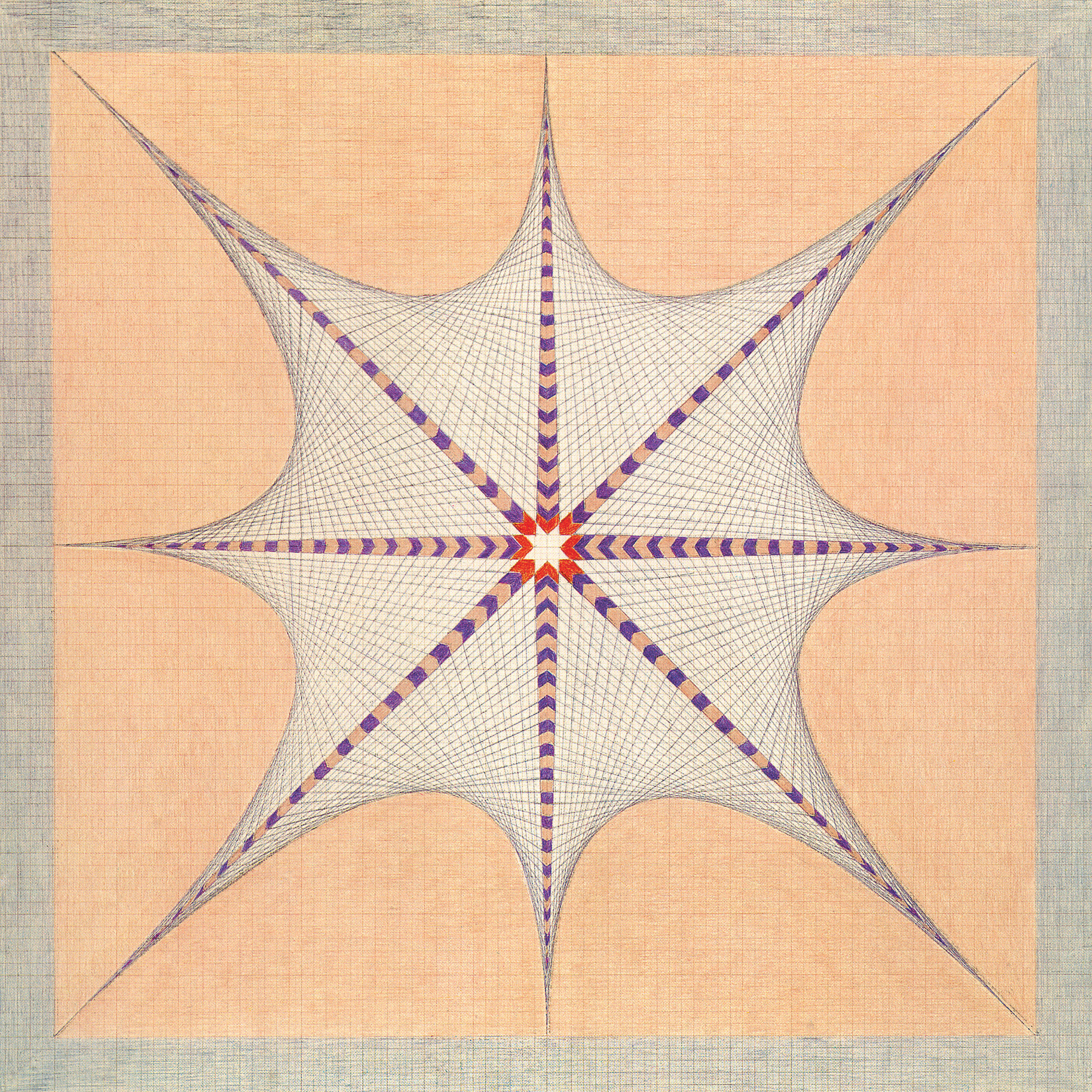
Somerset’s rural setting may lend Kunz’s images an atmosphere of calm, but it would be reductive to treat them as soothing decorations. They are intense, demanding works of thought, created under a set of convictions that do not map neatly onto modern art’s usual chronology. Their balance can be unsettling; their intricacy has the capacity to overwhelm. The eye is offered both order and a sense of something not entirely decipherable.
The exhibition invites an unusual exercise in attention: looking first at the remarkable graphic constructions, then questioning the assumptions we bring to their making. Kunz reminds us that art history is not only the story of self-declared artists seeking exhibition space. Sometimes its most challenging objects come from people asking different questions altogether—and drawing answers that continue to resist easy explanation.
A reproduction of a Kunz drawing can give the impression of a perfectly uniform system. In person, the marks belong to a hand, a particular pencil and a particular sheet of paper. Pressure varies. The crossing of lines can produce changes in density and tone that are flattened by screens. It is worth resisting the temptation to regard each drawing as a diagram whose meaning can be captured by reducing it to a small image. The experience of its physical surface is part of the work.
The movement of the eye is also important. Some passages seem to rotate or deepen without any literal illusionistic perspective. Others begin as a stable central pattern before their peripheral relationships become apparent. Close looking can turn an apparently rigid geometry into an event that unfolds over time. That tension between calculated structure and changing sensation helps explain why the drawings continue to speak to contemporary artistic concerns without needing to be absorbed into a conventional school.
An exhibition also provides a chance to compare differences within the practice. The vocabulary may recur—diamonds, circles, intersecting lines, coloured fields—but each configuration produces a distinct emotional and spatial pressure. The value of seeing several together is that the viewer can move beyond the immediate surprise of the technique towards an understanding of its range. That is a more enduring basis for appreciation than the simple idea of an artist suddenly rediscovered.
Christine Sun Kim and Theaster Gates lead a Seoul route that also tests Pam Evelyn’s momentum and highlights Yuichi Hirako, Jenny Holzer and Heejoon Lee.
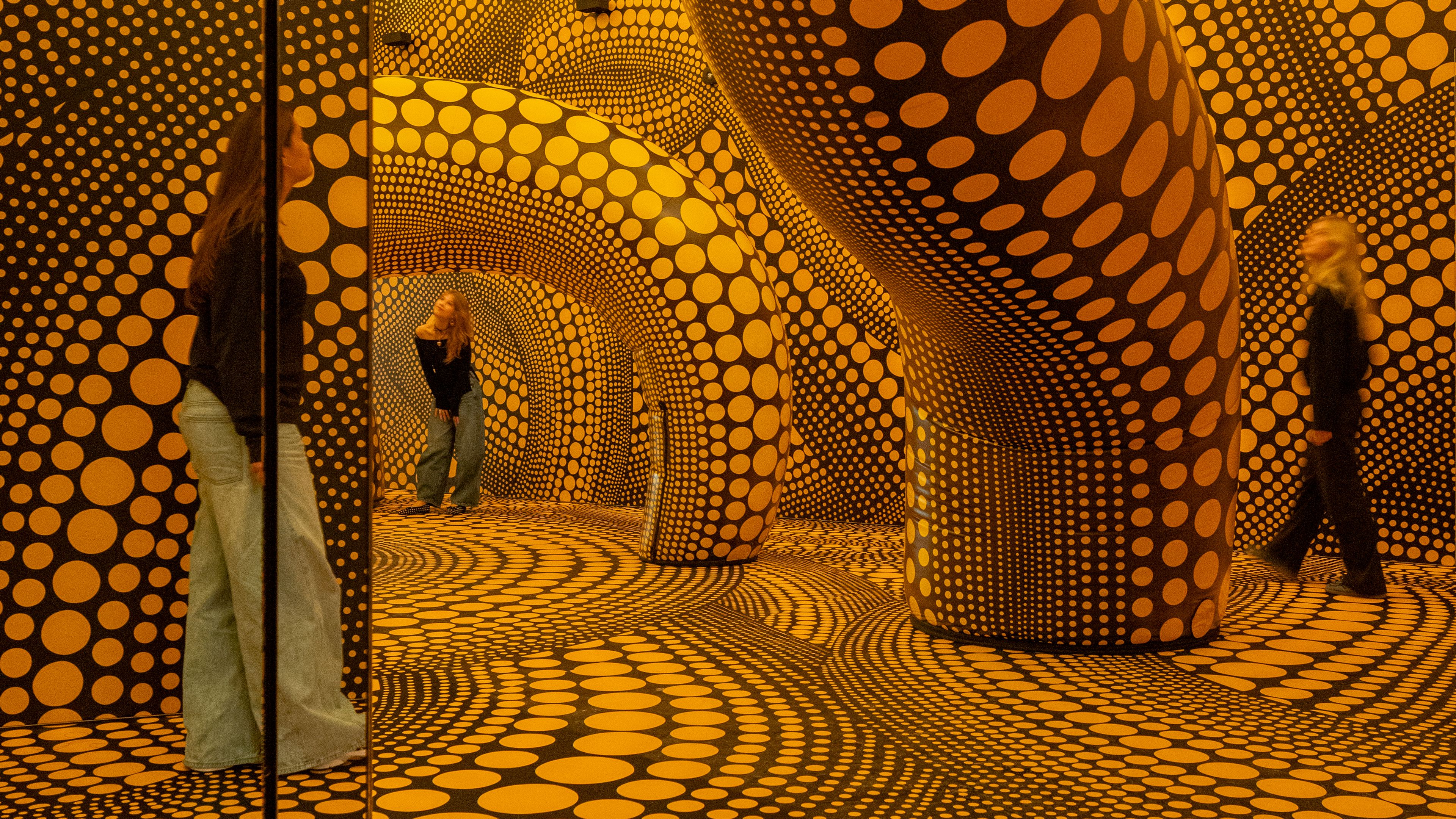
Amsterdam’s major Kusama retrospective, planned during the artist’s lifetime, has become a poignant opportunity to look beyond the mirrored rooms to seven decades of experimentation.
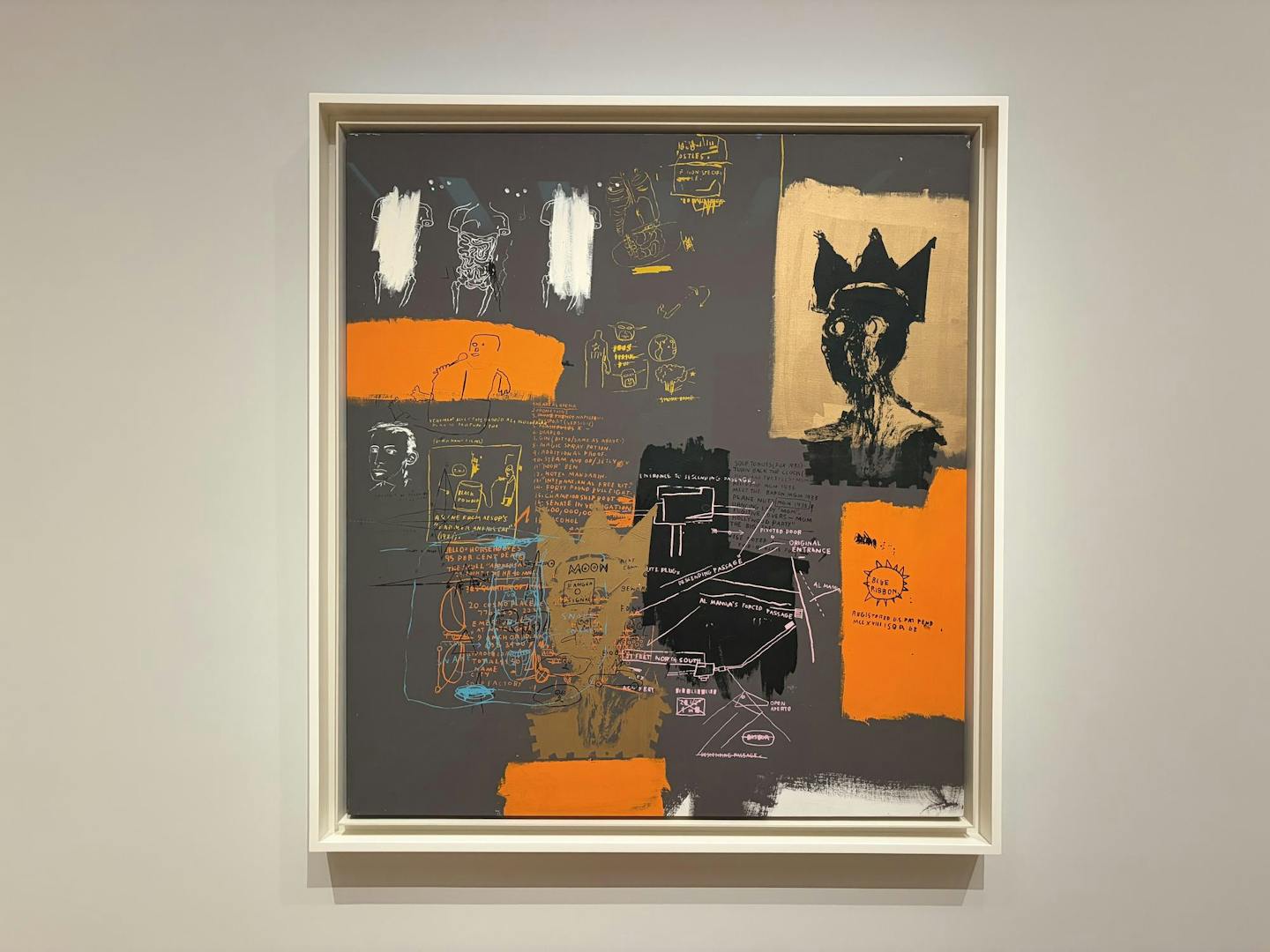
At Princeton, eleven paintings from 1984 reveal a Basquiat who copied, screened and revised his own images with exacting intent—complicating the myth of improvisational genius.
Emma Kunz occupies an unusual place in the history of twentieth-century abstraction. Born in Switzerland in 1892, she made intricate drawings on graph paper using coloured pencil and methods associated with her spiritual and healing practice. She did not primarily understand herself as an artist. Today, her drawings are shown in major exhibition spaces, discussed alongside modernist abstraction and studied as works of exceptional visual intelligence. Hauser & Wirth Somerset presents an exhibition dedicated to Kunz from 7 November 2026 to 4 Apri