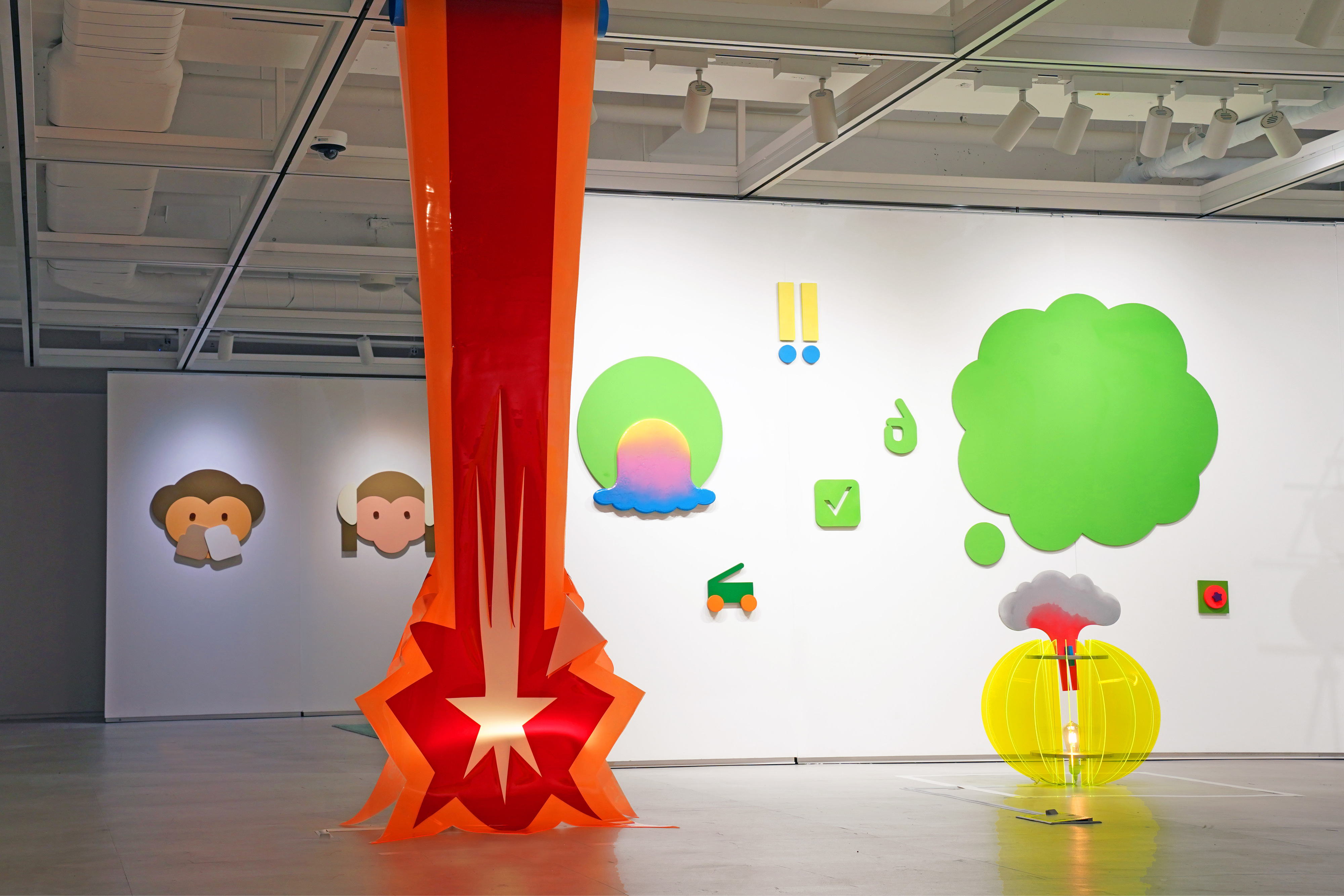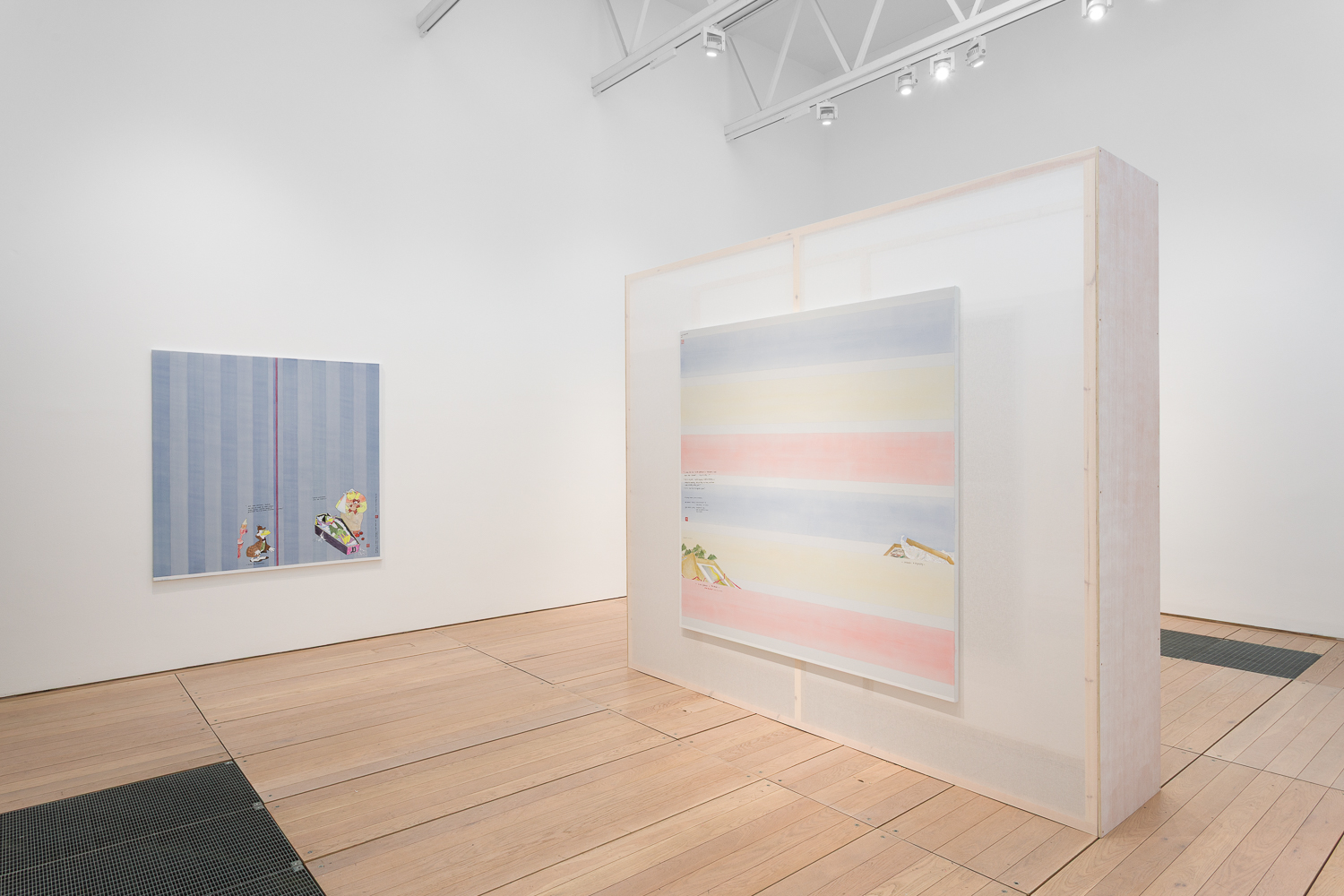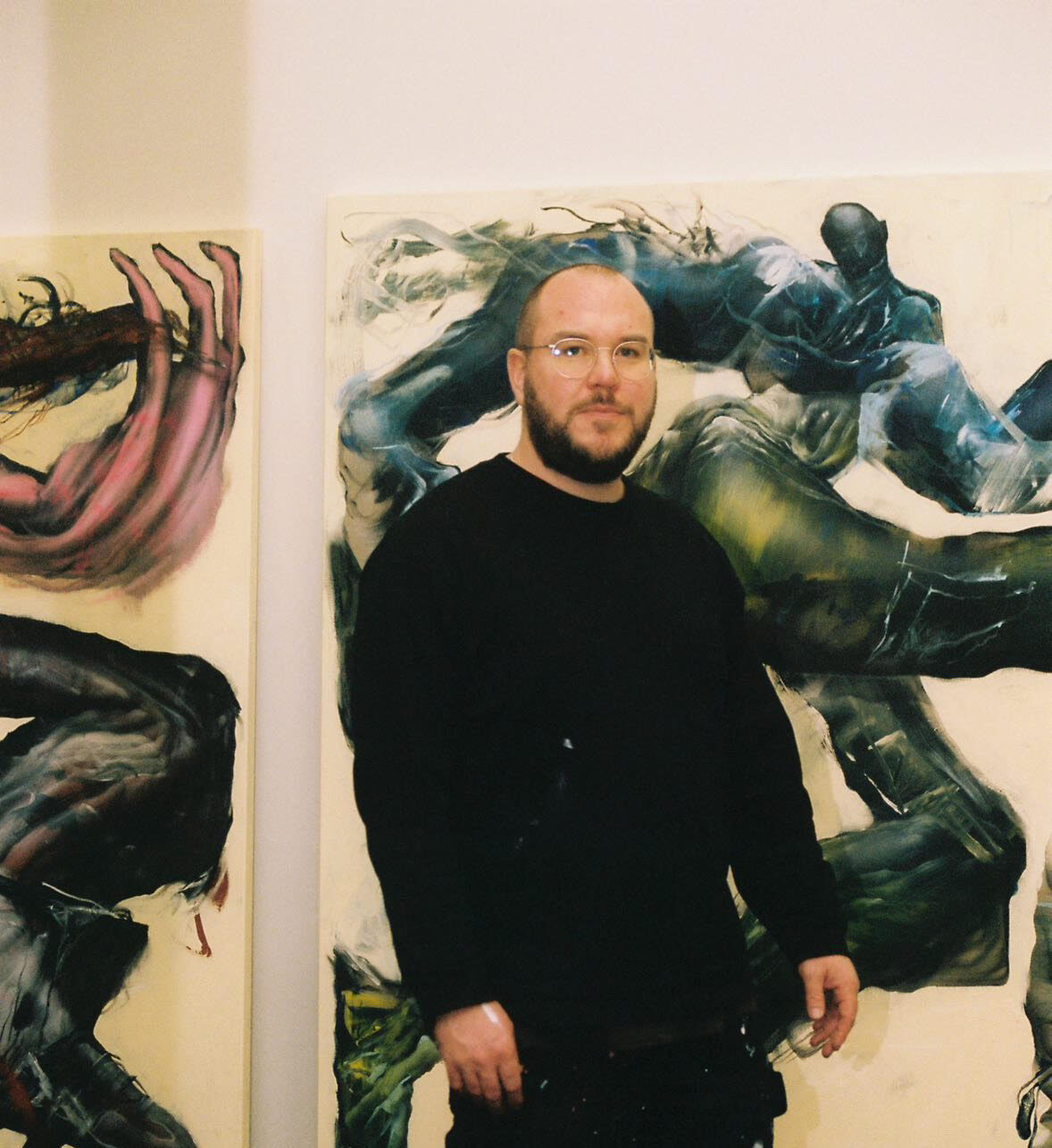
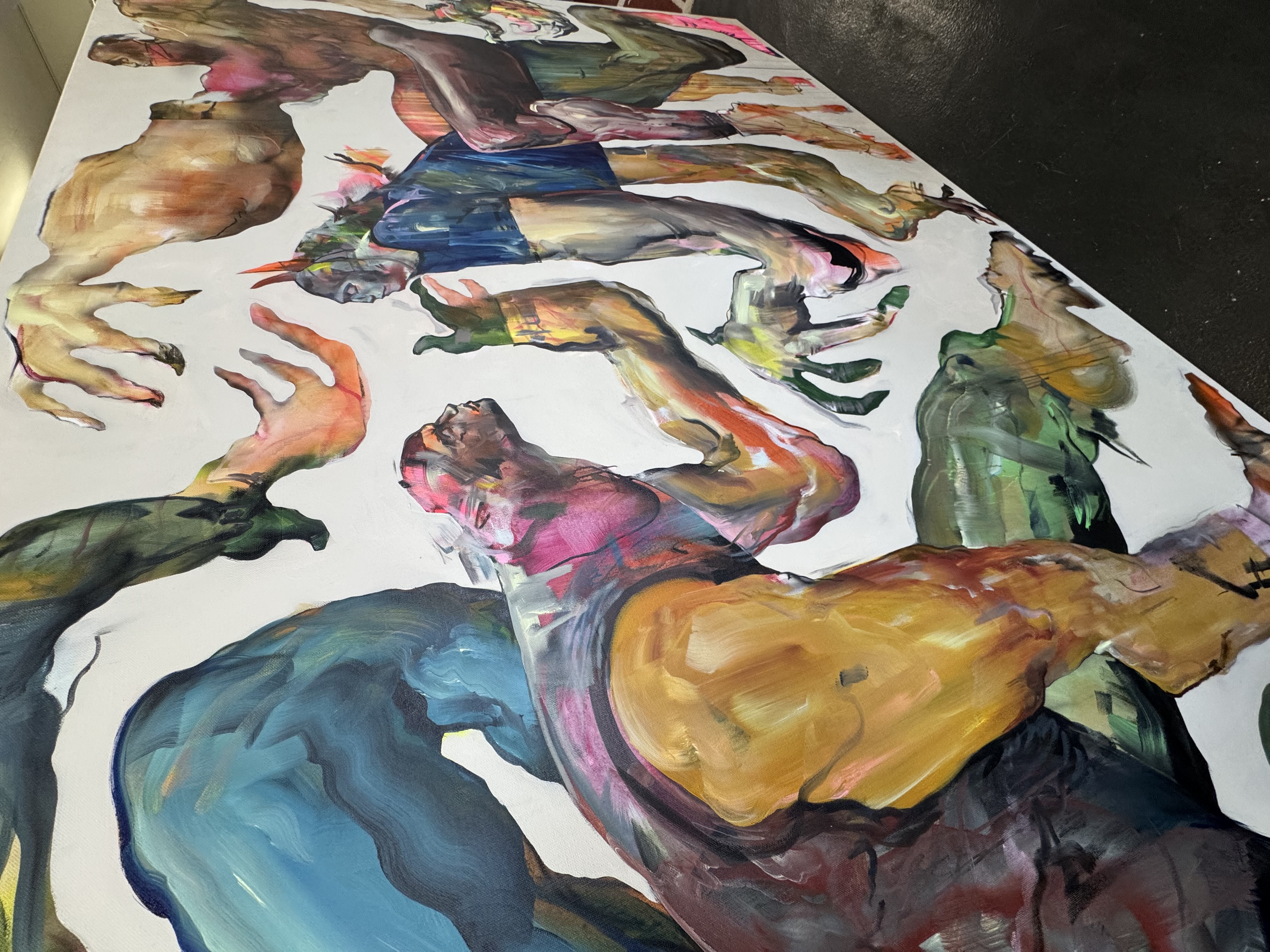
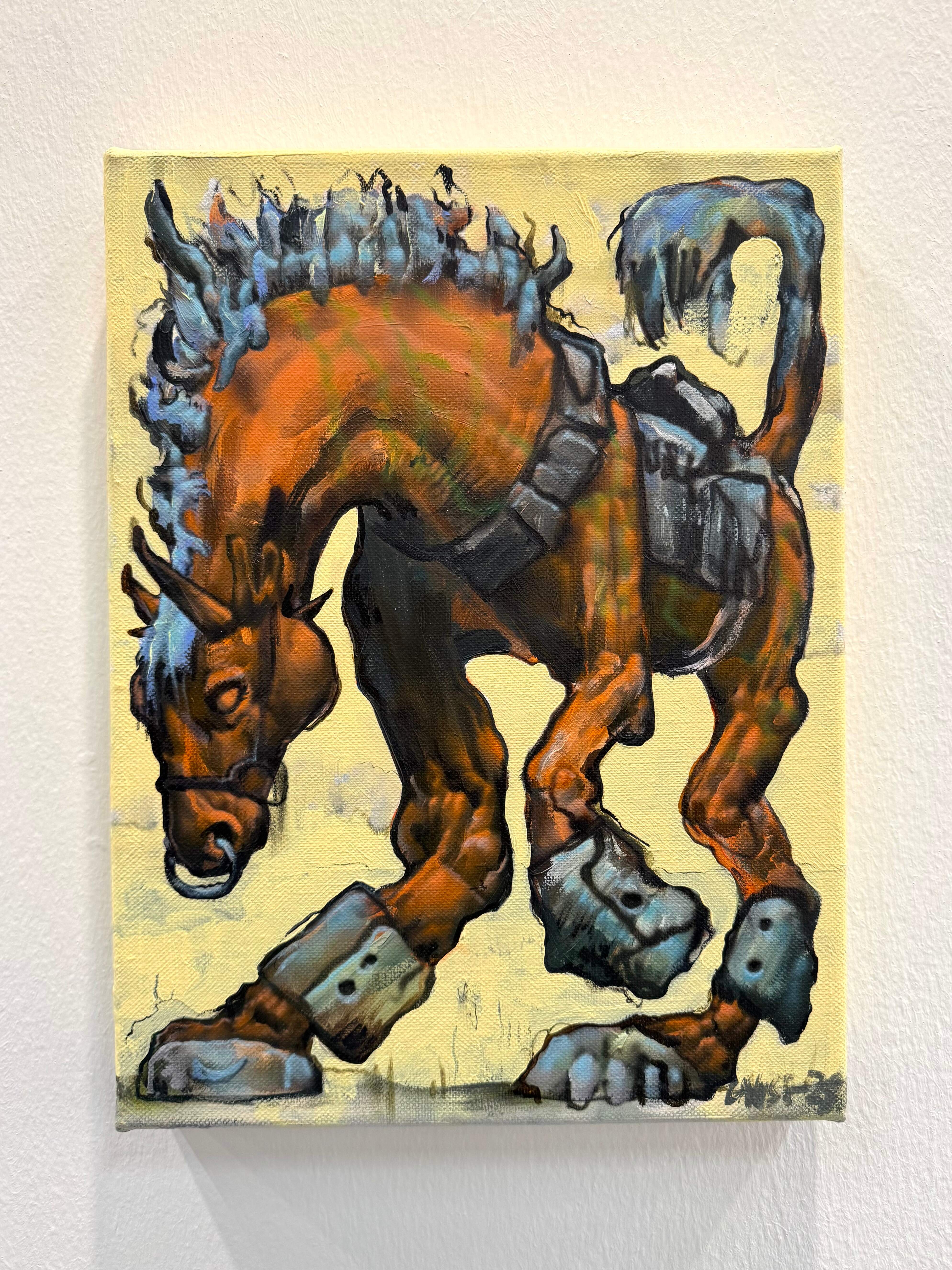
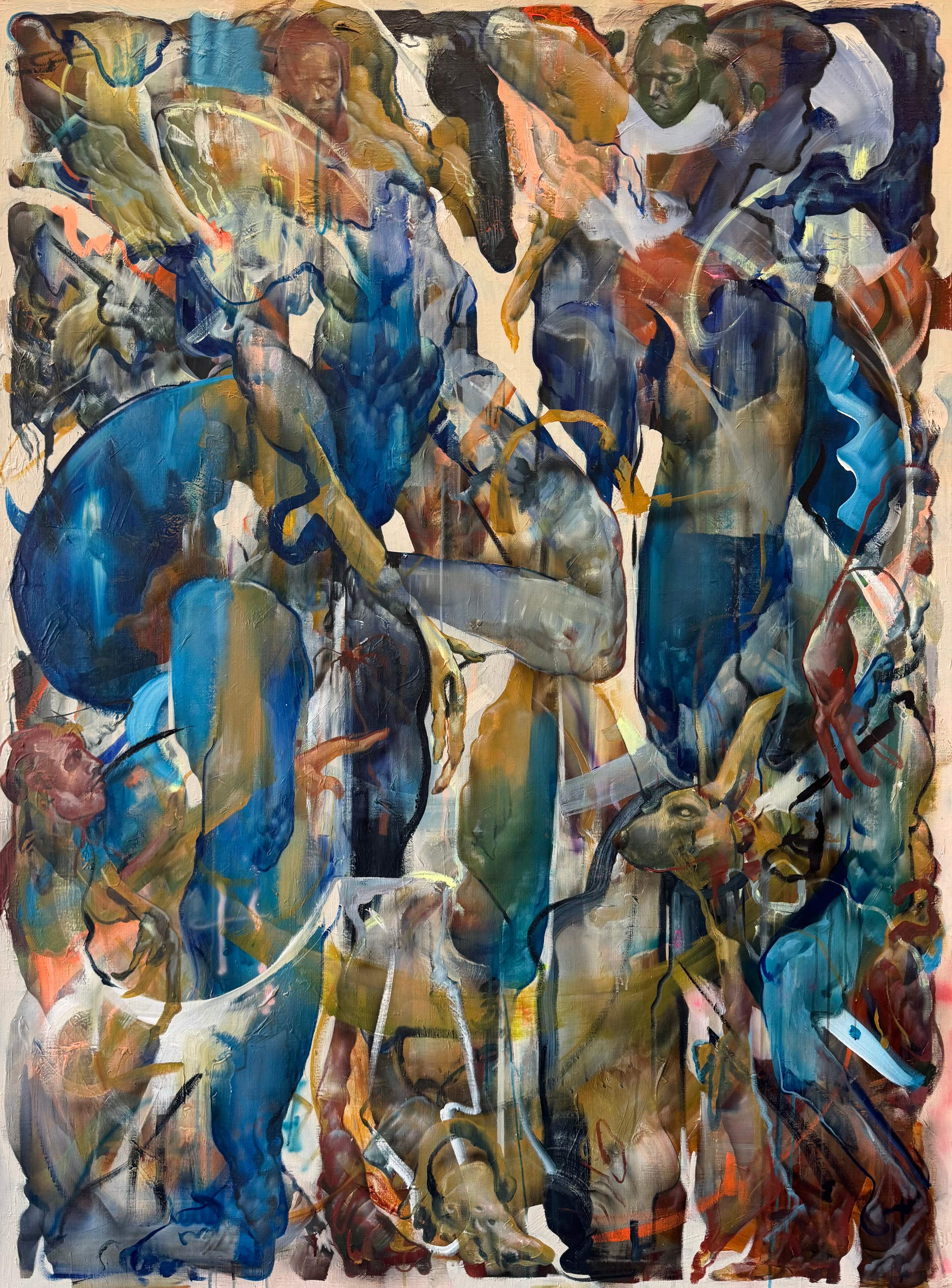
Danish artist Laust Højgaard explores the tension between strength, vulnerability, and identity through paintings and sculptures populated by symbolic characters and surreal situations. Drawing inspiration from classical mythology, architecture, and contemporary pop culture, his work investigates how individuals navigate societal structures while negotiating their own instincts and inner conflicts. Based on the small island of Thurø near Svendborg in southern Denmark, Højgaard works across painting and sculpture, often combining expressive figuration with raw, intuitive processes. His work frequently reflects on humanity’s relationship with nature, control, and the systems that shape modern life.
Artist Interview with Laust Højgaard
Danish artist Laust Højgaard explores the tension between strength, vulnerability, and identity through paintings and sculptures populated by symbolic characters and surreal situations. Drawing inspiration from classical mythology, architecture, and contemporary pop culture, his work investigates how individuals navigate societal structures while negotiating their own instincts and inner conflicts. Based on the small island of Thurø near Svendborg in southern Denmark, Højgaard works across painting and sculpture, often combining expressive figuration with raw, intuitive processes. His work frequently reflects on humanity’s relationship with nature, control, and the systems that shape modern life.

ARTCOLLECTORNEWS: Please tell us a bit about yourself and your artwork?
My name is Laust Højgaard, and I’m a Danish artist based in the southern part of Funen. I live on the small island of Thurø just outside Svendborg, where I also have my studio.
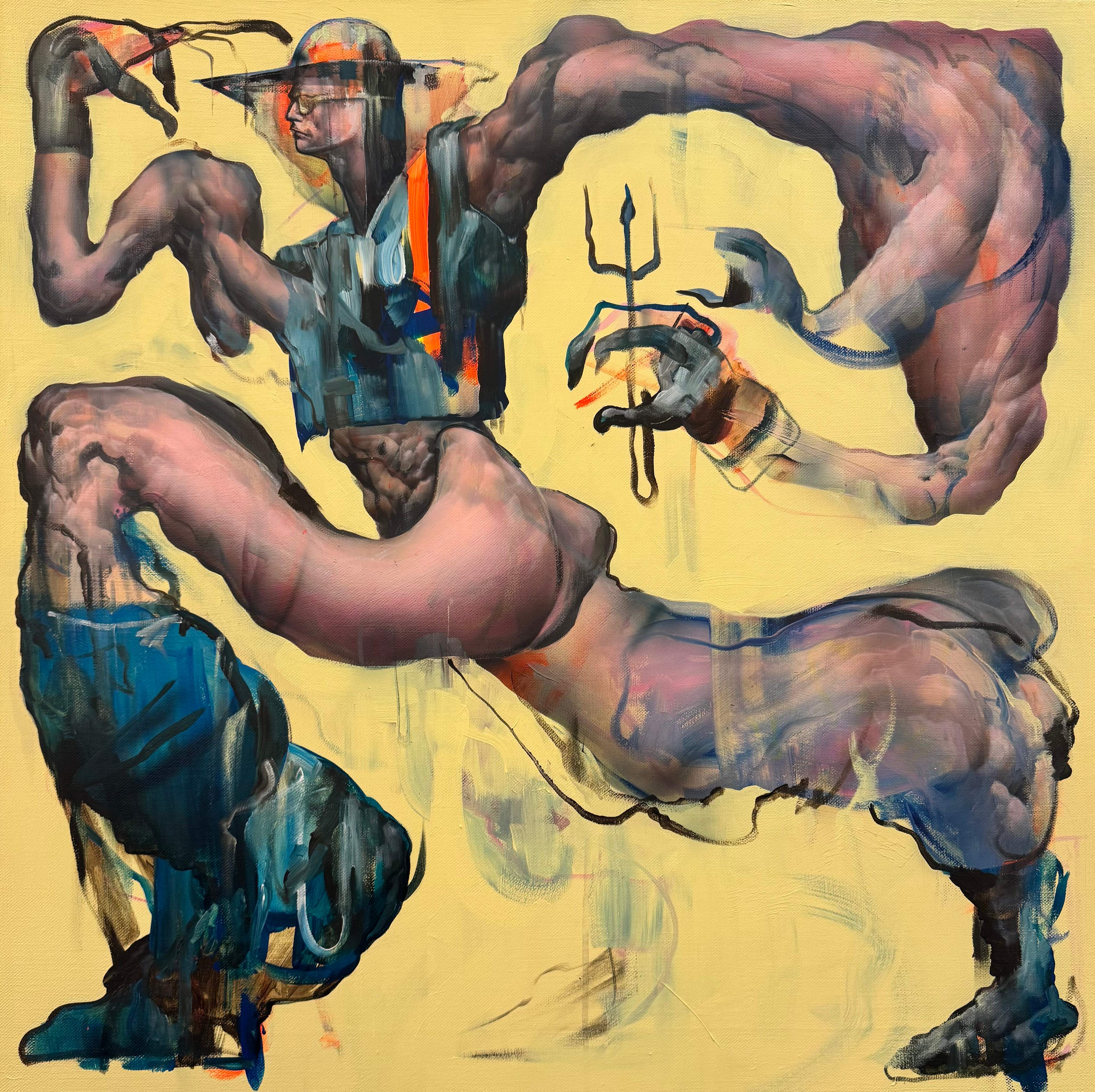
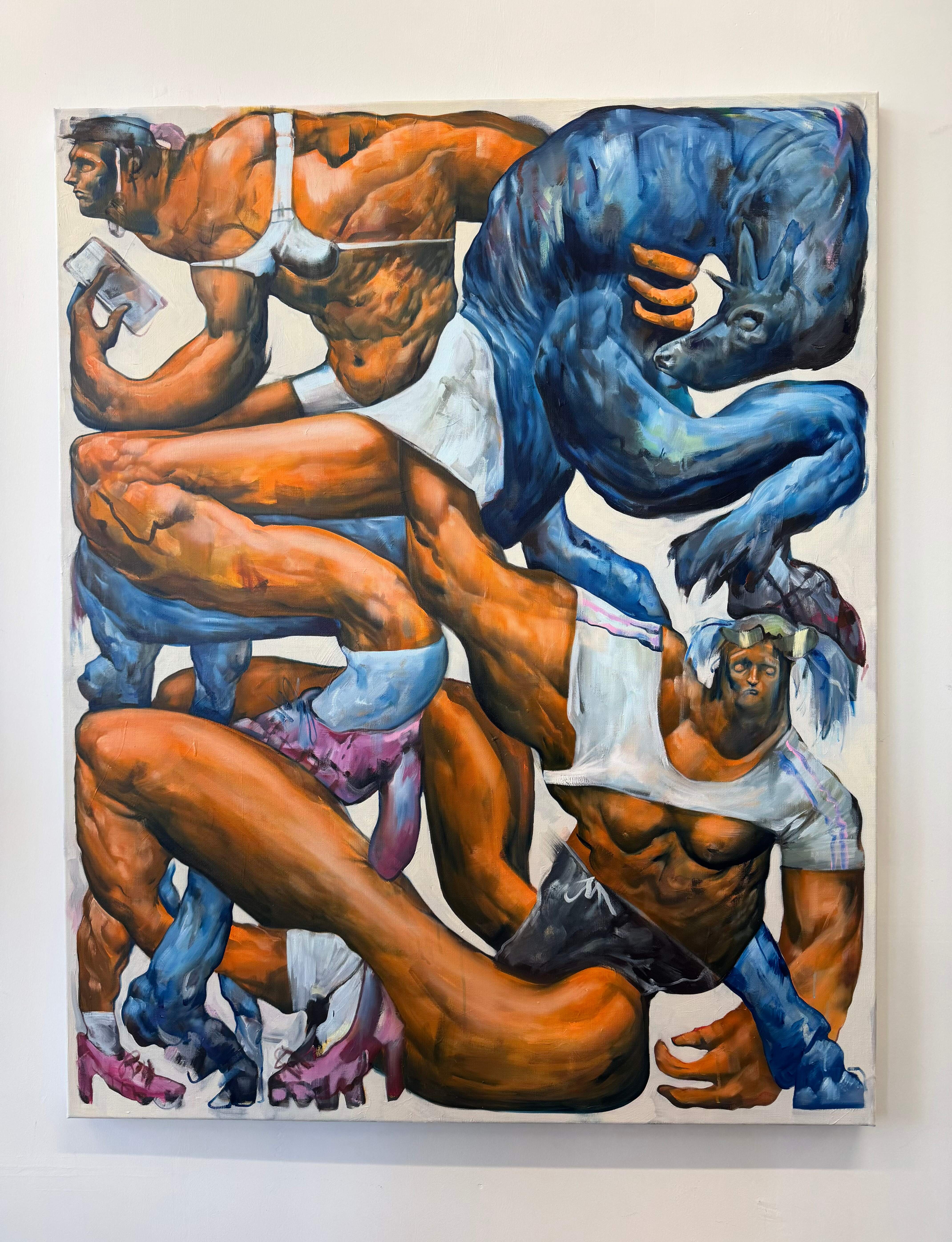
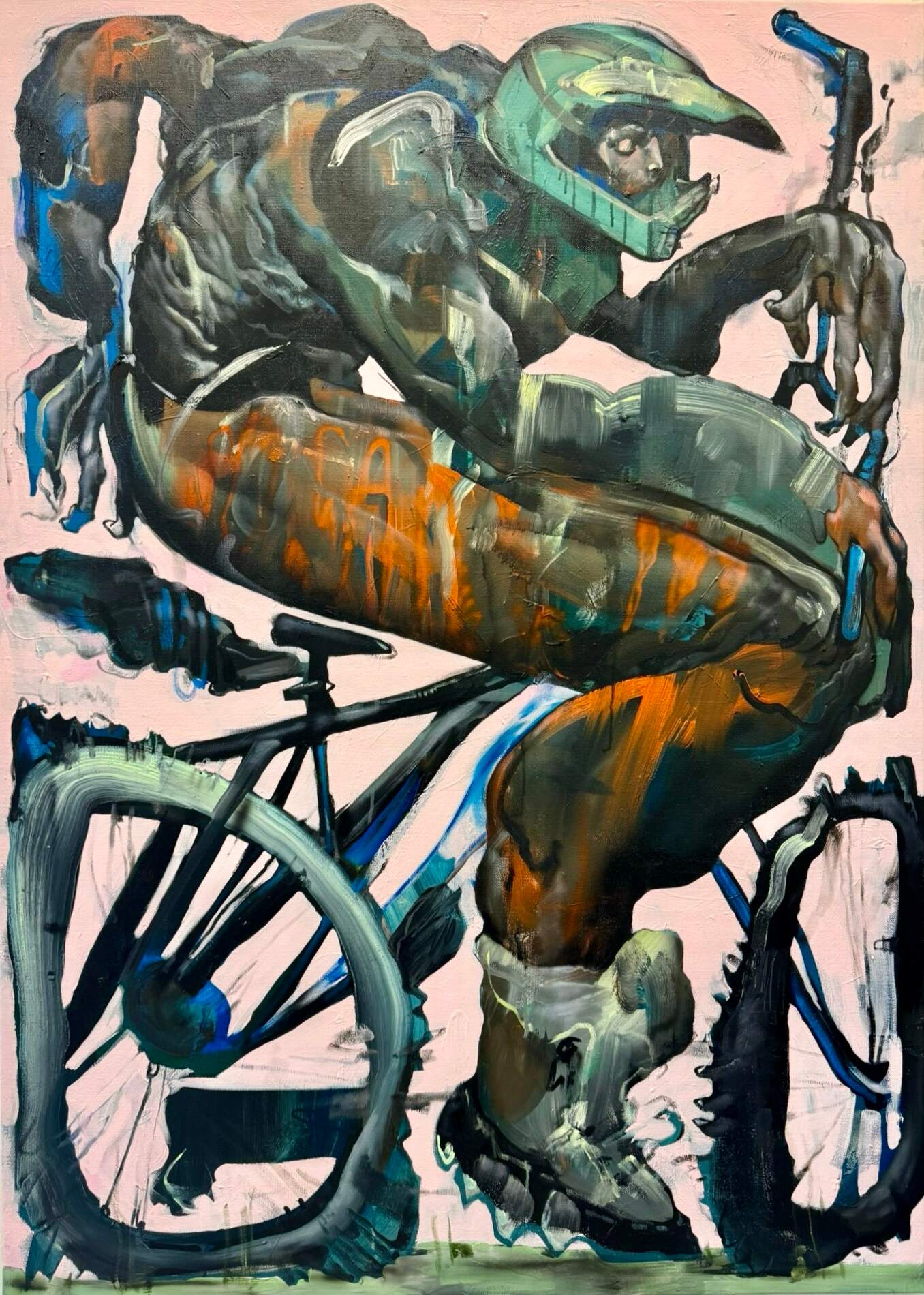
My work moves between painting and sculpture and often revolves around characters that exist in a kind of tension between strength and vulnerability. I’m interested in how people try to navigate the structures and expectations that surround us, and how that struggle shapes our identity and behaviour.

ARTCOLLECTORNEWS: What inspired you to become an artist?
It’s hard to point to one specific thing that inspired me to become an artist. I’ve always had a strong need to express myself visually.
When I was a kid, I actually thought I was going to make cartoons, because that was the world I knew. I didn’t know anything about the art world at the time, but I was always drawing and building things. What fascinated me was the idea that you could create entire worlds with just a few simple tools.
ARTCOLLECTORNEWS: How has your background shaped your artistic practice?
From quite early on I was very focused on technique — things like form, colour, and how images are constructed. I spent a lot of time studying and practicing these things, especially during my younger years. That foundation gave me a strong creative backbone and the tools to develop my ideas.
I also went through a period where I was deeply engaged in 3D modelling and digital environments while at the same time studying the human body through classical drawing. That combination of digital structure and traditional observation has influenced the way I approach images today.
It was only later that I became aware that what I was making also came from a more personal place — that the work reflected how I felt and how I experienced the world around me.

ARTCOLLECTORNEWS: How has your creative process changed over the years?
Over time my focus has shifted more toward storytelling within the images I create. Today I’m more aware of how a work can carry a narrative through the characters and the situations they inhabit.
The process itself has also become very important to me. The curiosity and intuition I rely on while working are essential parts of how the characters develop their personality. It’s not about making them look realistic. What matters more is how they are built and shaped, because that ultimately defines their character and the atmosphere of the work.
ARTCOLLECTORNEWS: How has your artwork evolved since you first started making art?
Over time my work has become more alive in a way. The narratives have become both more defined and more open at the same time, and a certain rawness has developed in the work.
As I’ve matured, I feel that the work has matured with me. The characters have evolved, the stories have grown deeper, and the universe surrounding them has expanded.
I’ve also become more interested in spending time with the work — letting it settle, returning to it, and gradually digging deeper into the ideas within it.

ARTCOLLECTORNEWS: Are there any particular artists or movements that have greatly influenced your work?
There isn’t one specific artist or movement that has influenced me directly. I’m more drawn to certain qualities and atmospheres.
I’m inspired by a raw and sometimes brutal aesthetic — architecture, darker and more obscure moods, and the combination of darkness and humour. I’m especially interested in the tension that can arise between static, architectural forms and more organic elements.
My inspirations also reach back to things like Greek mythology and the classical depiction of the human body — strength, heroism, and symbolism — but at the same time I’m strongly influenced by modern pop culture. For me those worlds naturally blend together.
ARTCOLLECTORNEWS: How did you arrive at your style?
I often think of my practice as moving along a main path, but while I’m on that path I’m constantly zigzagging.
I’ve always tried to stay open and avoid locking myself into one fixed style, because that can easily stop the development of the work. There are periods where I make very abstract work as a way of accessing certain emotions and training my intuition, while at the same time working on pieces that are much more structured and controlled.
Every now and then something falls into place that clearly belongs on that main path. In the end it all exists within the same universe — just expressed through different forms.
ARTCOLLECTORNEWS: How do you select your themes?
I’m fascinated by the idea of symbols and how much meaning we project onto people when we try to interpret them. In many ways people can almost appear as symbols themselves.
I’m particularly interested in the tension between what we show on the surface and what we carry internally. Many of my characters exist in that space — caught between the need to adapt to their surroundings and the desire to remain true to something more natural within themselves.
In that sense the body often becomes a visual expression of that inner conflict.

ARTCOLLECTORNEWS: What has been the most rewarding part of your career as a studio artist?
The most rewarding part is simply being able to do this and make a living from it.
For me it’s not just a job — it’s something I genuinely need to do. Being able to sustain a life through my work feels like a constant confirmation that what I’m doing resonates with people.
The fact that I can truly call myself an artist is something I’m very grateful for.
ARTCOLLECTORNEWS: Please tell us about your latest body of work.
My current body of work is titled Bend to Belong. It revolves around the idea of how we adapt to society and the compromises we sometimes make with our own nature in order to fit in.
In many ways it touches on the concept of social structures and expectations — the idea that in order to be recognized as something, you often have to fit into a certain mold.
The work explores the tension between adapting to those structures and staying true to something more instinctive within yourself.
ARTCOLLECTORNEWS: Do you have any upcoming exhibitions or projects that you are excited about?
In the coming months I’ll be showing new work with Galerie Droste during Gallery Weekend Berlin and at Art Düsseldorf.
The presentation will likely include both paintings and sculptures that I’ve been working on recently.
ARTCOLLECTORNEWS: What do you think is the most important aspect of creating successful artwork?
I can’t really speak about it in general terms, but for me personally the most important thing is staying curious and following my intuition.
I tend to work best without too many fixed plans. Instead I try to enter a state where the process feels playful and intuitive.
That’s usually where the strongest works emerge. I also think viewers can sense when an artist is genuinely curious during the process.
ARTCOLLECTORNEWS: Describe your process of creating a new artwork.
Many people would probably be surprised to see how I start a painting because the process often begins in a very abstract way.
At that stage you probably wouldn’t recognize my style at all. I’m essentially shaping and building forms without a clear goal in mind. As I work, certain characters or structures begin to appear, and I start following them.
Sometimes it’s still too early and I’ll paint over everything again, because the work still needs more energy before it becomes defined. Even later in the process I might introduce new elements or restart parts of the painting entirely if something stops working.
ARTCOLLECTORNEWS: What is your favourite medium to work with?
At the moment I primarily work with oil paint. It has a richness and depth that adds life to the image, and it’s also a very organic and sensual material to work with.
For now it’s definitely the medium that best supports the atmosphere and intensity I’m trying to create in my work.

ARTCOLLECTORNEWS: Are there any techniques you consistently use?
I’m drawn to materials and processes that are slightly unpredictable. That applies to both my paintings and my sculptures.
I like the feeling that the work pushes back a little — that you almost have to wrestle with it during the process.
That resistance often creates unexpected situations where new ideas emerge. I might start with a sketch or a rough concept, but the work almost never ends up exactly there.
ARTCOLLECTORNEWS: What has been the most memorable artwork you have created?
I can’t point to one specific artwork, but I remember a moment in my practice that felt like a turning point.
After exploring many different styles, I suddenly woke up one day with a strong sense that something had fallen into place. I hadn’t even started the painting yet, but I felt very clearly that this was the direction I needed to pursue.
It was more about discovering certain elements that felt true to myself and realizing that this was the language I needed to develop.
ARTCOLLECTORNEWS: What was the most challenging piece you have ever created?
One of the most challenging pieces was a large painting I created for Collaborations that was shown at Enter Art Fair a few years ago.
The challenge was in keeping the painting open for as long as possible without defining it too early. Even when certain motifs started to appear, I resisted letting them take control.
Instead I kept building around them and layering new elements into the work. Looking back, that piece feels like an important breakthrough in my process.
ARTCOLLECTORNEWS: Are there specific works you are particularly proud of?
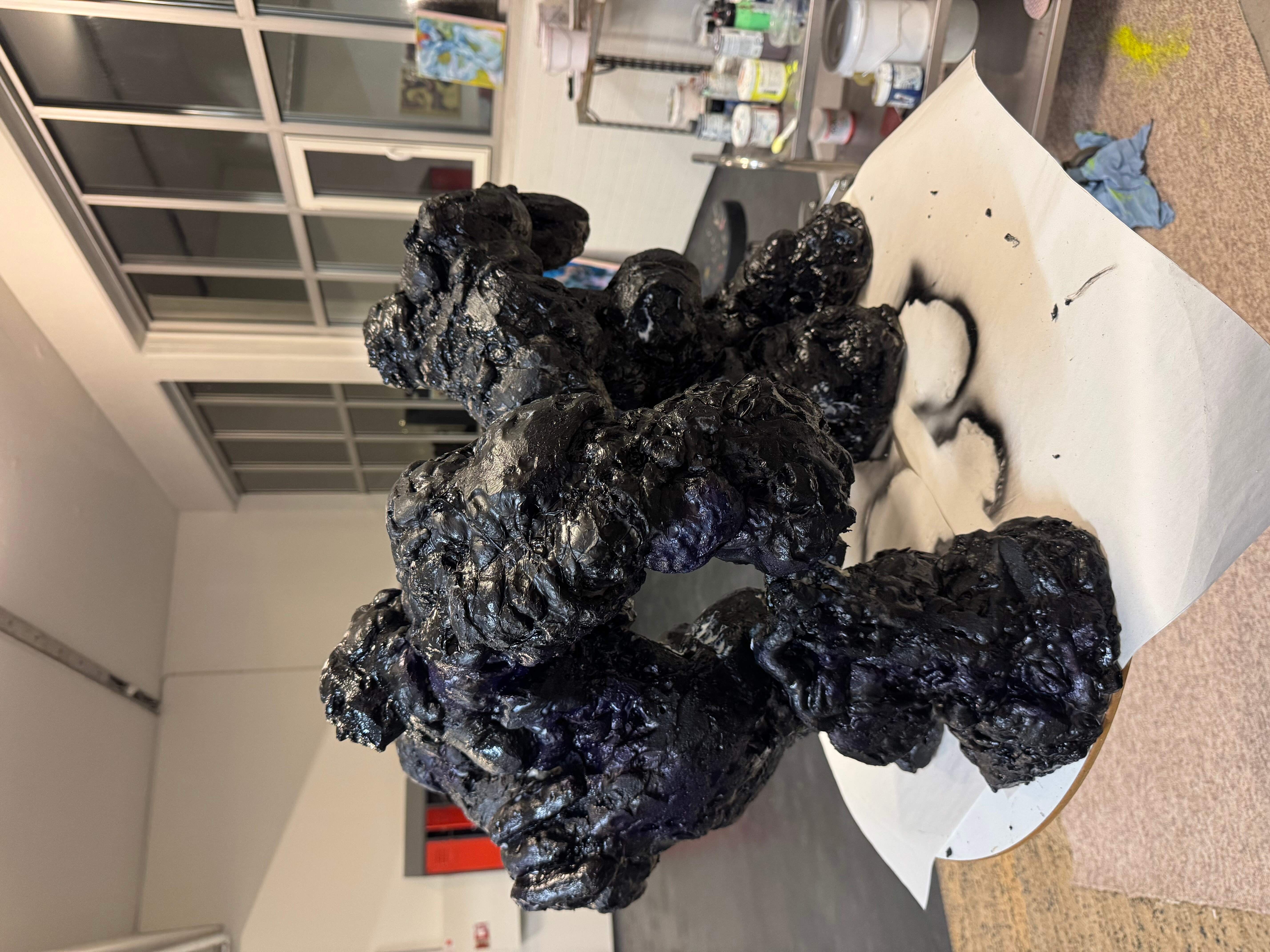
I’m very proud of a new sculpture I recently created.
What makes it special is that I handled the entire process myself from start to finish. Some of my earlier bronze sculptures were more collaborative projects, where others also influenced the creative process.
That was interesting in its own way, but having full control over this piece made it feel much more personal and closely connected to my own voice.
ARTCOLLECTORNEWS: Please tell us about the materials you use.
As mentioned earlier, I currently work primarily with oil paint.
The material itself feels very alive, and that quality often leads to unexpected moments in the process. Certain reflections, forms, or objects suddenly emerge in the painting, and those are the elements I enjoy following and developing.
That unpredictability keeps the work dynamic and keeps me curious.

ARTCOLLECTORNEWS: Are there materials you would like to explore further?
I definitely plan to continue working with both painting and sculpture. In sculpture I’m interested in exploring materials like resin and bronze further.
At the moment I mainly work with resin. There’s something fascinating about creating forms that feel monumental and almost ancient, while the material itself is synthetic and artificial.
That contrast creates an interesting narrative tension in the work.
ARTCOLLECTORNEWS: What themes are you exploring in your current work?
A central theme in my work is the relationship between humans, nature, and the environments we shape.
I’m interested in how our constant need to control and structure the world around us eventually begins to shape us in return.
The horse appears as a recurring symbol in my work because of its historical role in human civilization. It once played a crucial role as a working animal but today often exists more as a cultural symbol.
There’s something striking about how a wild animal from nature has been shaped and bred so intensely that it almost becomes a tool or an object for us.

ARTCOLLECTORNEWS: What themes would you like to explore in the future?
Right now I’m focusing on reducing my narratives as much as possible while still keeping them complex.
It’s a delicate balance that I continue to explore. Much of the storytelling happens through the characters themselves rather than through elaborate surroundings.
I’m interested in how much meaning and emotion can exist within very minimal situations.
ARTCOLLECTORNEWS: What is the most important skill a studio artist should have?
For me the most important skill is staying true to your own instincts.
Of course the work will eventually meet an audience, but during the process it’s important not to think too much about where the work will end up or who will be looking at it.
Trusting your own intuition is essential.
ARTCOLLECTORNEWS: What has been the biggest challenge in your career?
One of the biggest challenges is balancing your own artistic integrity with the presence of an audience.
There are many different opinions and expectations surrounding any artist’s work. The challenge is acknowledging that those voices exist without allowing them to influence the work too strongly.
Finding that balance is something I’m still navigating.
ARTCOLLECTORNEWS: What advice would you give to aspiring artists?
Pay attention to the things that genuinely excite you in your own practice.
If something sparks your curiosity or creates a strong inner response, don’t ignore it — follow it.
You are the only person who can truly feel that instinct. When something gives you that sense of excitement, pursue it and see where it leads.
Frieze Los Angeles 2026 closed with a surge of energy, attracting over 32,000 visitors and strong institutional participation. Blue-chip galleries like David Zwirner, Gagosian, and Hauser & Wirth reported multi-million-dollar sales, while emerging artists in the Focus section sold out their presentations. The fair combined high-profile acquisitions, site-specific installations, and performances, reinforcing Los Angeles as a global hub for contemporary art and collector engagement.
At Saatchi Yates, Slawn redefined the conventional exhibition model by transforming the gallery into a functioning studio environment. Rather than presenting a static display of completed works, Slawn’s Studio invited audiences into the active process of art-making — where paintings evolved in real time and the boundaries between production, performance, and presentation dissolved.


.jpg)