LATEST NEWS:
CHRISTIE’S UNVEILS LANDMARK HIROSHIGE COLLECTION AHEAD OF SEPTEMBER AUCTION • MONET LEADS 62-WORK DURAND-RUEL COLLECTION COMING TO CHRISTIE’S PARIS • FRIEZE LONDON 2026 REVEALS EXPANDED ARTIST PROGRAMME • FRIEZE SEOUL RETURNS WITH 125+ INTERNATIONAL GALLERIES • THE ARMORY SHOW RETURNS TO NEW YORK WITH AROUND 230 GALLERIES • FRIEZE SCULPTURE RETURNS TO REGENT’S PARK THIS SEPTEMBER • WATTEAU AND FRAGONARD LEAD MAJOR PRIVATE COLLECTION HEADING TO PARIS • GLENN LIGON OPENS FIRST SOLO EXHIBITION IN SOUTH KOREA • LANDMARK RENOIR EXHIBITION BRINGS 50+ MASTERWORKS TO LONDON • CHRISTIE’S H1 AUCTION SALES RISE 71%
Go Back
Magazine

What to See in New York in September 2026: The Collector’s Guide

From Roy Lichtenstein’s final year and Taryn Simon’s Guggenheim rotunda to Brice Marden, Torkwase Dyson, Thomas Ruff and Independent 20th Century at the Breuer: the exhibitions collectors should prioritise in New York this September.

Articles
Articles
What to See in New York in September 2026: The Collector’s Guide

September in New York is when the art world switches the lights back on.

The summer pause ends almost abruptly: Chelsea reopens in clusters, museum calendars begin their autumn cycle, Upper East Side dealers return to full strength and collectors find themselves facing the familiar logistical problem of trying to see several months’ worth of ambition in a few weeks.

For September 2026, the strongest itinerary is not necessarily the longest. The month ranges from Roy Lichtenstein’s late experiments and a museum-filling Taryn Simon project to Brice Marden’s first comprehensive New York painting survey in two decades, a concentrated group of Pace exhibitions and Independent 20th Century’s debut inside the Breuer building.

This is ARTCOLLECTORNEWS’s September selection: not everything that is open, but the exhibitions most likely to reward a serious visit.

Whitney Museum: Roy Lichtenstein, 1997

Opens 5 September

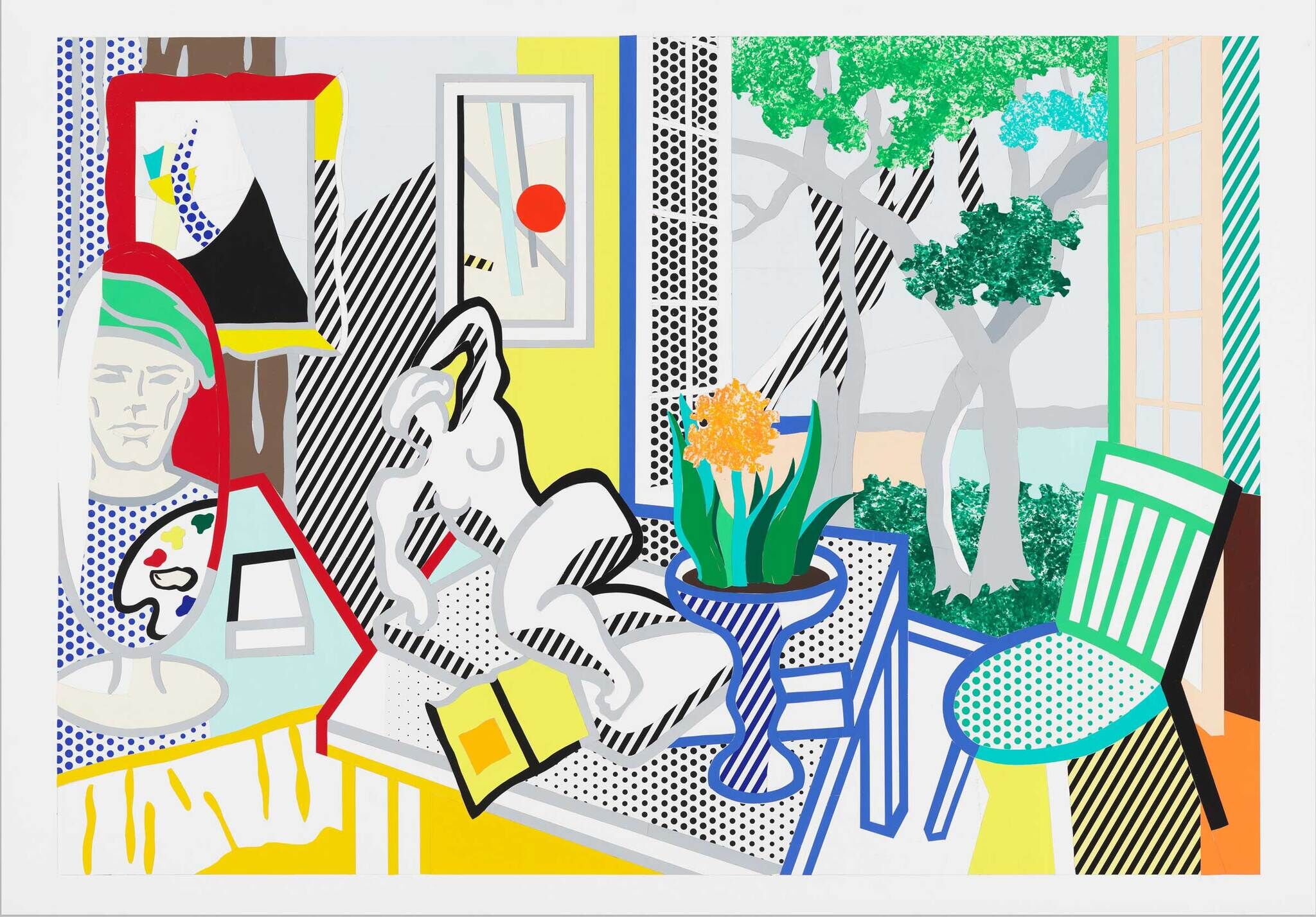
There is an important distinction to make before arriving at the Whitney. The museum’s major retrospective Roy Lichtenstein: Like New does not open until 11 October. September instead brings a smaller, potentially more revealing exhibition focused on the final year of Lichtenstein’s life.

Roy Lichtenstein: 1997 gathers rarely seen works including prints, photographs, sculptural maquettes, drawings and collage studies for unrealised projects. The premise is valuable precisely because Lichtenstein’s public image remains dominated by the comic-strip paintings of the 1960s. A late-career exhibition asks whether familiarity has simplified an artist who continued experimenting until his death.

The Whitney notes the importance of Lichtenstein’s response to the emerging digital age. That makes the show especially timely. His entire practice revolved around mediation: how mechanically reproduced imagery moves between popular culture, printing technologies and painting. By 1997, the technological landscape underlying those questions was changing radically.

Collector’s reason to go: late periods are frequently where market shorthand and artistic reality diverge. This is a useful reminder to look beyond an artist’s canonical decade.

Guggenheim: Taryn Simon — Father Country I Do Love You

Opens 18 September

Taryn Simon has been given one of New York’s most demanding exhibition spaces: the entire Guggenheim rotunda.

The new project combines previously unseen photography, text, video and sculpture in an interactive installation spiralling through Frank Lloyd Wright’s building. The exhibition coincides with the 250th anniversary of the United States, a context that matters for an artist whose practice has repeatedly examined the systems—administrative, political, archival and psychological—that organise what societies are permitted to see.

Simon’s best work often begins with apparently neutral structures and reveals the authority embedded inside them. Her earlier projects have examined hidden sites, bloodlines, image archives and ceremonial mechanisms. The rotunda offers the opportunity to transform research into physical movement: visitors choose routes through a “constellation” rather than reading a single linear argument.

Collector’s reason to go: Simon sits at an important junction of photography, conceptual art, research practice and installation. For collectors of lens-based work, the exhibition should demonstrate how far the medium has moved beyond the framed photograph.

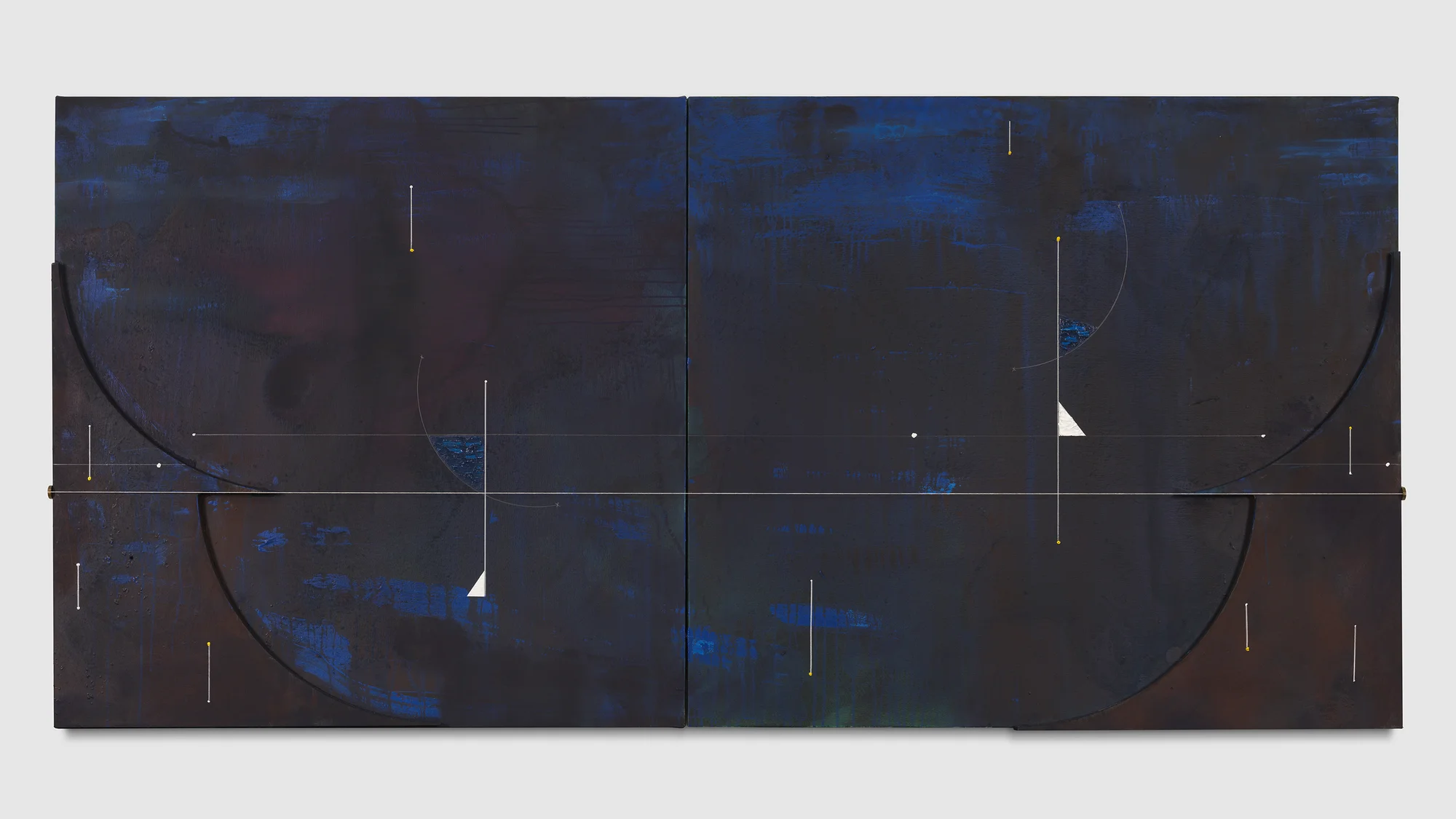
Torkwase Dyson, Interbeing Blue, 2026, a large dark blue abstract painting.
Torkwase Dyson, Interbeing Blue, 2026, from Seeing in Blue at Pace Gallery. © Torkwase Dyson. Courtesy Pace Gallery.

Pace: Torkwase Dyson — Seeing in Blue

11 September – 24 October

Torkwase Dyson’s new paintings emerge from more than a decade of swimming and diving and from her wider investigation of ecology, architecture and Black spatial histories.

Seeing in Blue is informed by sensory experience underwater: pressure, distance, light, buoyancy, infrastructure and the strange coexistence of natural systems with pipelines, military installations, drilling equipment and artificial reefs. The resulting paintings are not marine landscapes. They are closer to diagrams of perception.

Dyson begins with translucent washes laid on canvases on the floor before introducing geometric constructions, shaped panels, strings and hardware. The tension between accident and engineered structure mirrors the exhibition’s ecological subject: fluid systems intersecting with built ones.

This is a particularly good moment to see Dyson in depth. Her large-scale installation Tougaloo remains on view at the Venice Biennale, while further solo presentations follow in Toronto and Bregenz.

Collector’s reason to go: the paintings consolidate themes that have developed across sculpture, architecture and installation while remaining physically collectable. They are likely to be important markers in Dyson’s evolving institutional trajectory.

Pace: Lynda Benglis and Arlene Shechet

11 September – 24 October

Pace effectively turns West 25th Street into a short sculpture itinerary this September.

Lynda Benglis’s KNOTTING, TYING, FOLDING continues a career built around making apparently solid materials behave as though they were in motion. Benglis has spent decades destabilising the relationship between sculpture and gesture, taking procedures associated with pouring, knotting or folding and translating them into objects whose surfaces retain the memory of action.

Nearby, Arlene Shechet’s She Said She Said brings monumental metal sculpture together with intimate ceramic work. The metal works extend the language of her acclaimed Girl Group presentation at Storm King, while a new group in terra sigillata returns attention to clay and the visible traces of making.

The pairing is useful. Both artists occupy positions that art history once treated as peripheral to the heroic sculptural canon: Benglis through bodily process and materials associated with anti-form; Shechet through ceramics and the long hierarchy separating “craft” from fine art. Both now look increasingly central to the story.

Gagosian: Brice Marden — I Am Plane Image

15 September – 12 December

If there is one Chelsea exhibition collectors should build time around this month, it is likely to be Brice Marden’s I Am Plane Image.

The exhibition is the first comprehensive survey of Marden’s paintings in New York in twenty years. Spanning six decades, it includes institutional loans from the Art Institute of Chicago, Whitney Museum and elsewhere, works from the Estate and significant private loans—some rarely or never previously exhibited.

The timing is more than commemorative. Gagosian is simultaneously publishing the catalogue raisonné of Marden’s paintings, edited by Tiffany Bell, documenting nearly 500 works made between 1961 and 2023, including almost ninety previously unpublished paintings and more than seventy never exhibited.

That combination—major survey, estate collaboration and catalogue raisonné—is exactly the kind of moment collectors should notice. It tends to sharpen scholarship, clarify chronology, expose overlooked works and influence how the market differentiates periods.

Marden’s trajectory also rewards seeing in person. Early monochrome panels can appear severe in reproduction, while their wax-infused surfaces become materially complex at close range. Later calligraphic paintings loosen the structure without abandoning the plane. The exhibition’s title comes from Marden’s belief that modern painting progressively tightened the relationship between image and surface.

Collector’s reason to go: this is both an exhibition and a market-information event. Catalogue raisonné publication can materially improve provenance research and attribution confidence across an artist’s market.

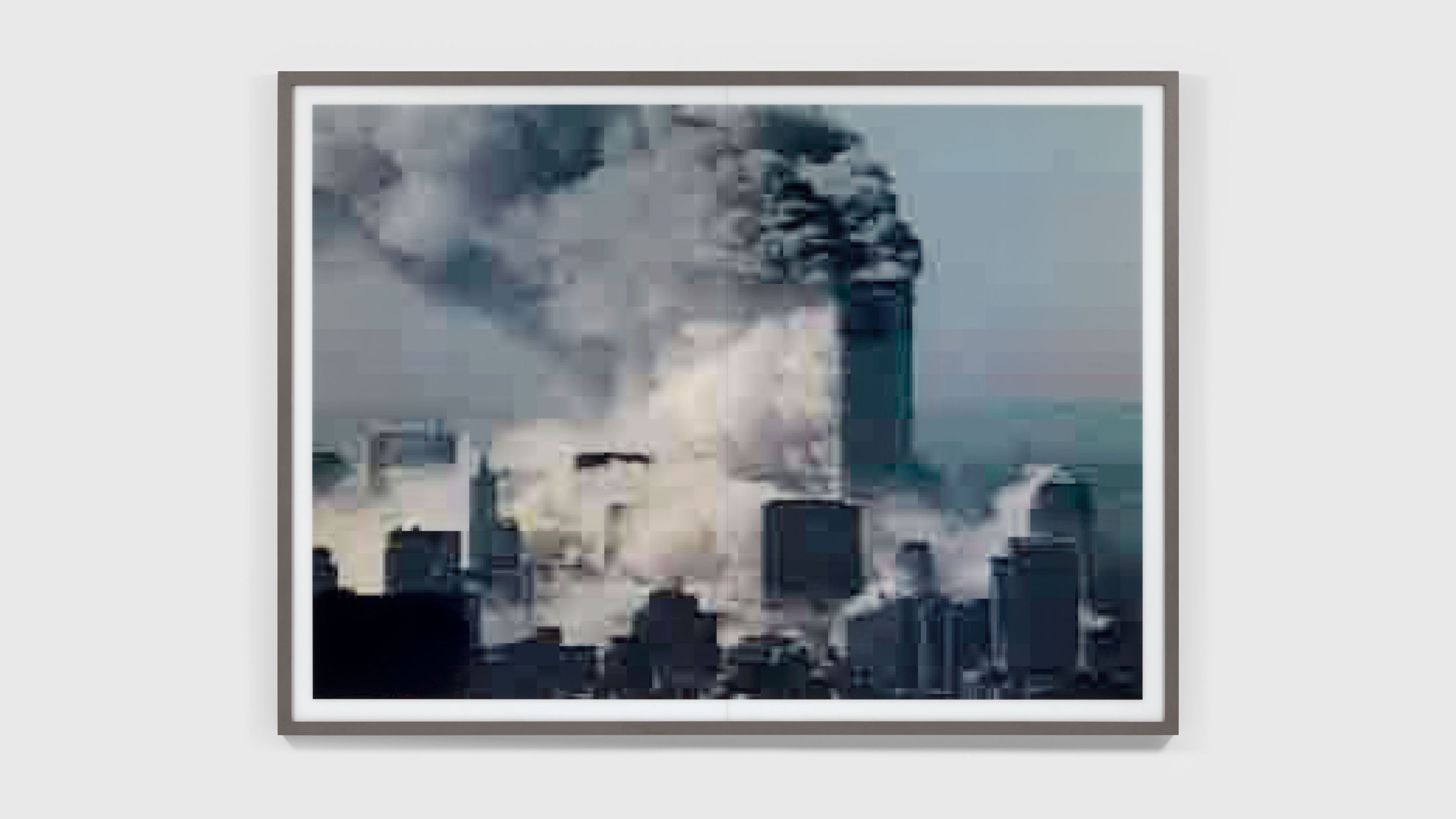
Thomas Ruff's jpeg ny02, 2004, showing a pixelated image of the World Trade Center attacks.
Thomas Ruff, jpeg ny02, 2004, from jpegs ny at David Zwirner. Courtesy David Zwirner.

David Zwirner: Thomas Ruff — jpegs ny

10 September – 17 October

Thomas Ruff’s twelve monumental jpegs ny return to New York at a charged historical moment: the 25th anniversary of the September 11 attacks.

Ruff’s JPEG works enlarge low-resolution internet images until the pixel grid becomes physically visible. The series asks a question that has only grown more urgent since he began making it: when does an image cease to be evidence and become data?

The 9/11 photographs occupy a particularly complicated place in collective memory. Millions of people remember images of the attacks more vividly than they remember their original sources. Repetition detached photographs from authorship; compression reduced visual information while increasing symbolic force.

In 2026—amid AI image generation, deepfakes and platform-driven visual circulation—Ruff’s deliberately degraded JPEGs look less like a technological experiment than a prehistory of our present.

Brice Marden, Only, 2009 to 2011.
Brice Marden, Only, 2009–11, included in I Am Plane Image at Gagosian. © 2026 Estate of Brice Marden / ARS, New York. Photo: Maris Hutchinson. Courtesy Gagosian.

Independent 20th Century at the Breuer

24–27 September

September ends with an art fair that deliberately does not want to feel like an art fair.

Independent 20th Century moves this year to Sotheby’s at the Breuer, Marcel Breuer’s 1966 building on Madison Avenue. The venue has served as the Whitney, the Met Breuer and the temporary home of the Frick; it is now Sotheby’s global headquarters after an adaptation by Herzog & de Meuron with PBDW Architects.

The 2026 edition brings 57 exhibitors and work by more than 130 artists, with roughly 80% of presentations organised as solo or two-person exhibitions. That curatorial concentration matters. Independent’s premise is reassessment: twentieth-century artists and movements that sit outside the most rehearsed market narratives.

The architecture adds another layer. Temporary white-booth fairs often flatten difference. Breuer’s eccentric rooms, material surfaces and changing ceiling heights should make comparison harder—and potentially more memorable.

Collector’s reason to go: this is where scholarship and market rediscovery are most likely to intersect. The strongest opportunities may not be the names already trading at trophy level, but artists undergoing institutional reassessment.

How to Plan September

Early month: begin at the Whitney for Roy Lichtenstein: 1997 and allow time for the Biennial, still partially on view into October.

10–15 September: make Chelsea the priority. Zwirner opens Thomas Ruff on the 10th; Pace’s Benglis, Dyson and Shechet exhibitions begin on the 11th; Marden opens at Gagosian on the 15th.

18 September onward: add Taryn Simon at the Guggenheim and use the Upper East Side visit to reconnect with the Breuer before Independent 20th Century later in the month.

24–27 September: Independent 20th Century becomes the anchor, particularly for collectors interested in overlooked modernism, historic photography, self-taught practices and revisionist twentieth-century narratives.

Plan Your Visit

Whitney Museum: 99 Gansevoort Street; Roy Lichtenstein: 1997 opens 5 September.
Pace Gallery: 508–540 West 25th Street; major September exhibitions open 11 September.
David Zwirner: 519–537 West 19th/20th Streets; Thomas Ruff opens 10 September.
Gagosian: 522 West 21st Street; Brice Marden opens 15 September.
Guggenheim: 1071 Fifth Avenue; Taryn Simon opens 18 September.
Independent 20th Century: Sotheby’s at The Breuer, 945 Madison Avenue; 24–27 September.

Date
Aug 31, 2026
Share

Latest Posts

August 31, 2026
Articles
Articles

What to See in New York in September 2026: The Collector’s Guide

From Roy Lichtenstein’s final year and Taryn Simon’s Guggenheim rotunda to Brice Marden, Torkwase Dyson, Thomas Ruff and Independent 20th Century at the Breuer: the exhibitions collectors should prioritise in New York this September.
August 31, 2026
Articles
Articles
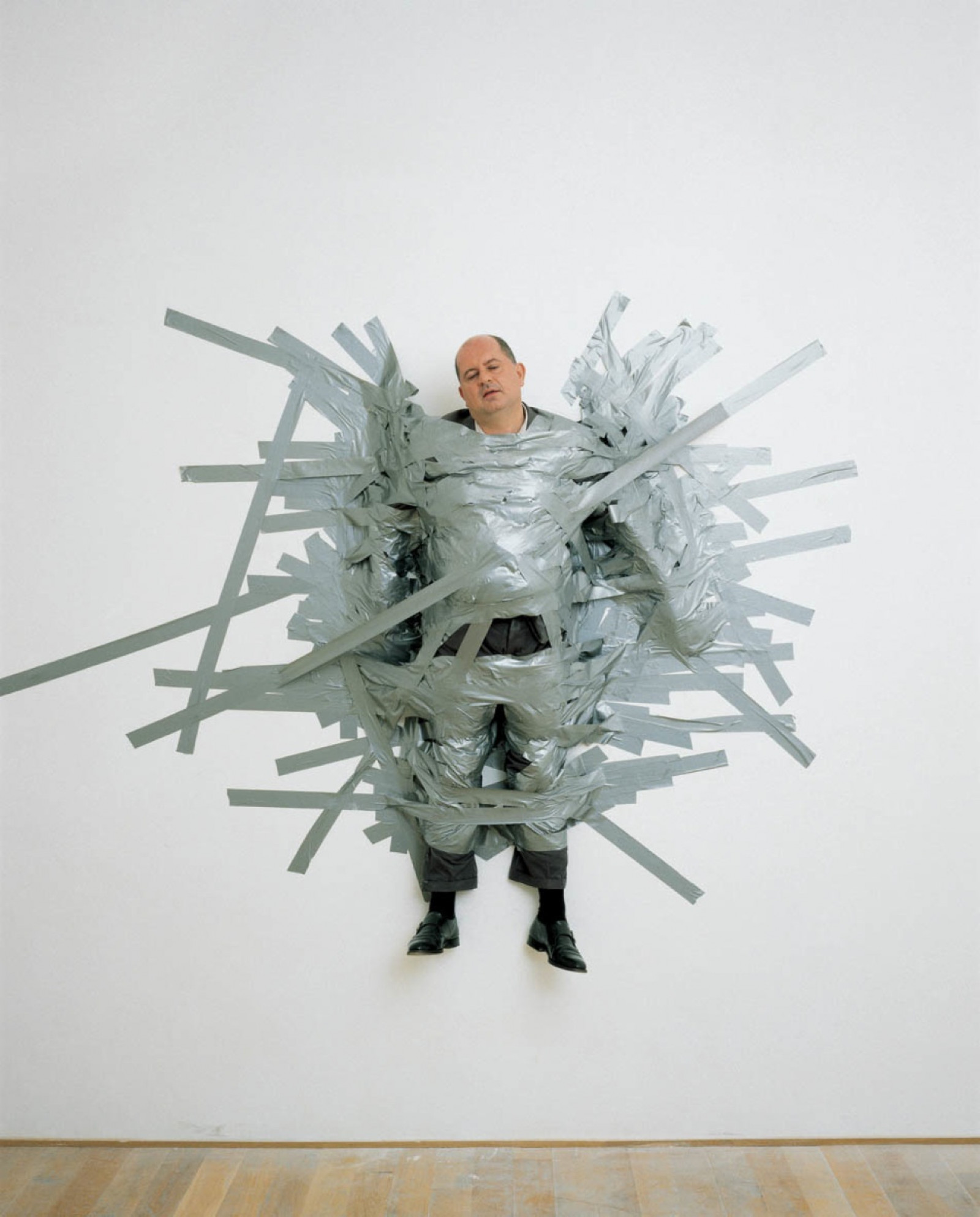
Maurizio Cattelan After the Banana: Why NIGHT May Be His Most Important Exhibition in Years

Maurizio Cattelan’s first major solo exhibition in Germany places historical works and new commissions inside Mies van der Rohe’s Neue Nationalgalerie. Has the spectacle surrounding the banana obscured how serious—and how unresolved—his art actually is?

August 29, 2026
Articles
Articles
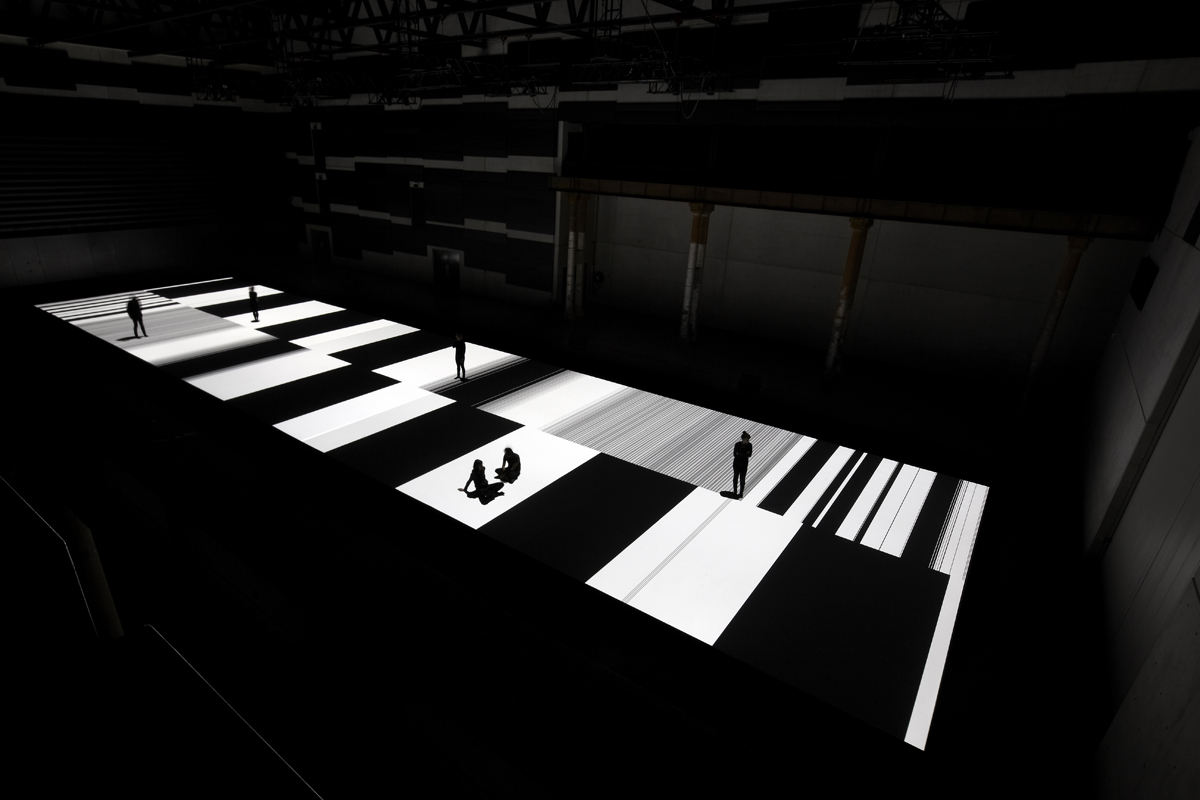
Ryoji Ikeda Wins the 2026 Nam June Paik Prize

The Japanese composer and media artist has received one of the field's significant international distinctions, recognising a practice that has transformed data, mathematics, light and sound into immersive artistic experiences.