Following Clive Davis’s death in June 2026, Christie’s dispersal of his collection offers more than a celebrity-provenance story. It reveals how one of music’s great talent-spotters lived with post-war and contemporary art — and how friendship, intuition and domestic space shaped what he bought.
Teresa Margolles at MoMA PS1: When Evidence Becomes Memorial
Teresa Margolles’s first large-scale US museum exhibition turns rubble, residue and forensic thinking into a radical form of memorial. For collectors, it is also a masterclass in why context and conservation can be part of the medium.

There are artists who represent violence, and there are artists who work with what violence leaves behind. Teresa Margolles belongs decisively to the second category. For more than three decades she has developed an art of residue: water, dust, rubble, cloth, sound, architecture and documentation become evidence of lives altered or erased by systems that often prefer not to look directly at their consequences.
On 24 September, MoMA PS1 opens Teresa Margolles: En el lugar de los hechos (At the Scene), the artist’s first large-scale museum exhibition in the United States. It occupies the museum’s expansive third floor with room-sized installations, sculpture, photography, video and a new commission, while a concurrent focused presentation at the Museum of Modern Art begins on 17 September.
For collectors, the exhibition is significant for a reason that goes beyond institutional recognition. Margolles tests what it means to own, preserve and exhibit work whose material content is inseparable from ethical context. Her art is not difficult because it is formally obscure. It is difficult because the object may function as testimony.

The promise inside the rubble
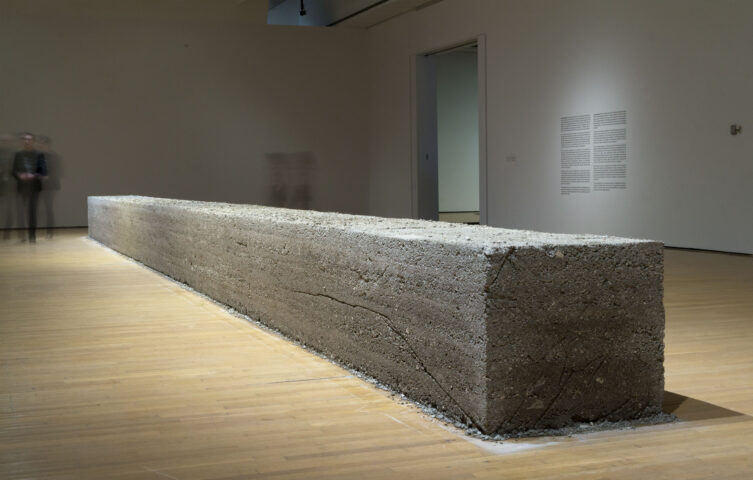
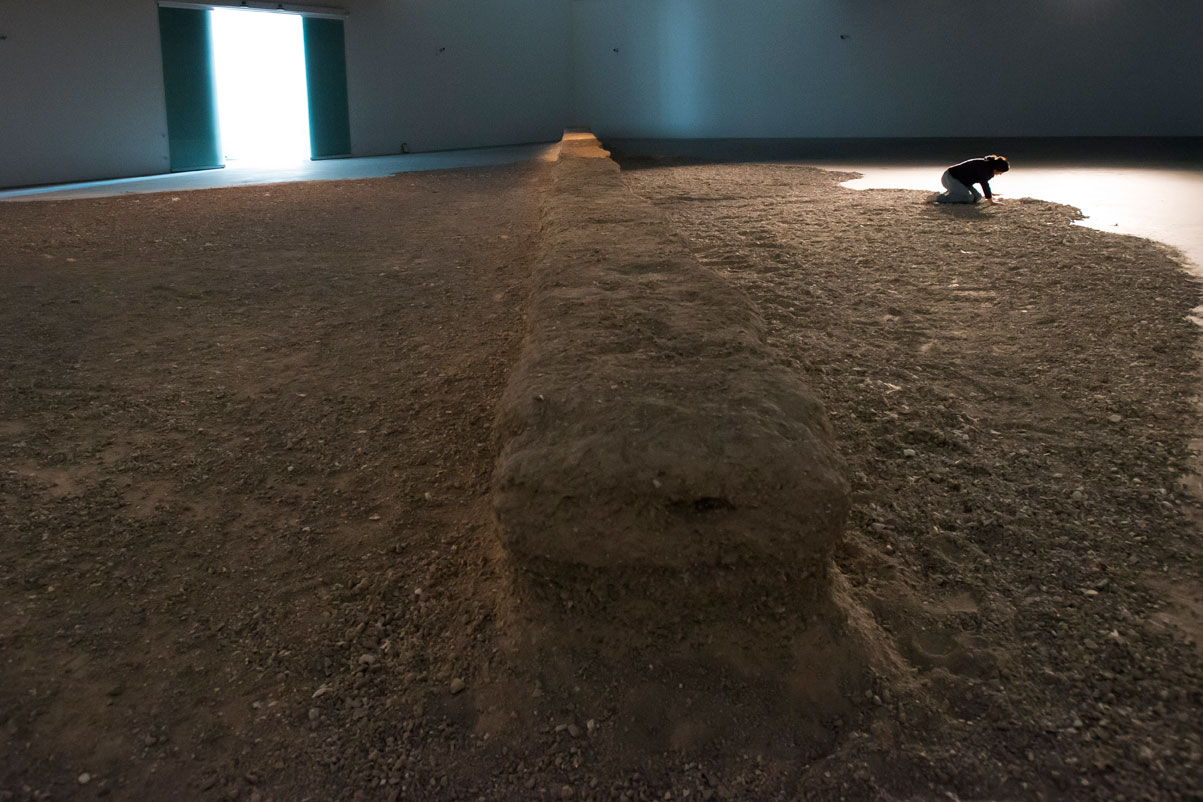
The exhibition’s centrepiece is La promesa, begun in 2012 from the remains of a demolished house in Ciudad Juárez. The project emerged from a city transformed by violence, economic abandonment and migration. Margolles acquired a house, documented its demolition, pulverised the debris and reconstituted it as a monumental block. During exhibitions, the material can be gradually broken apart and spread through the gallery.
It is a simple transformation with enormous moral weight. A home — ordinarily the most private architecture of belonging — becomes anonymous rubble and then a public object. The work does not reconstruct what was lost. It refuses that consolation. Instead, it makes the viewer remain with the material fact of disappearance.
This is where Margolles differs from artists who treat political content as subject matter placed onto conventional forms. The history is not illustrated by the object; it is embedded in the object’s physical existence.

Forensic thinking without spectacle
Margolles trained as a forensic pathologist and photographer, and that background remains crucial to her visual language. Forensic work begins from traces: what can a surface, residue or fragment reveal about an event no longer visible? Her installations repeatedly transfer that logic into the museum.
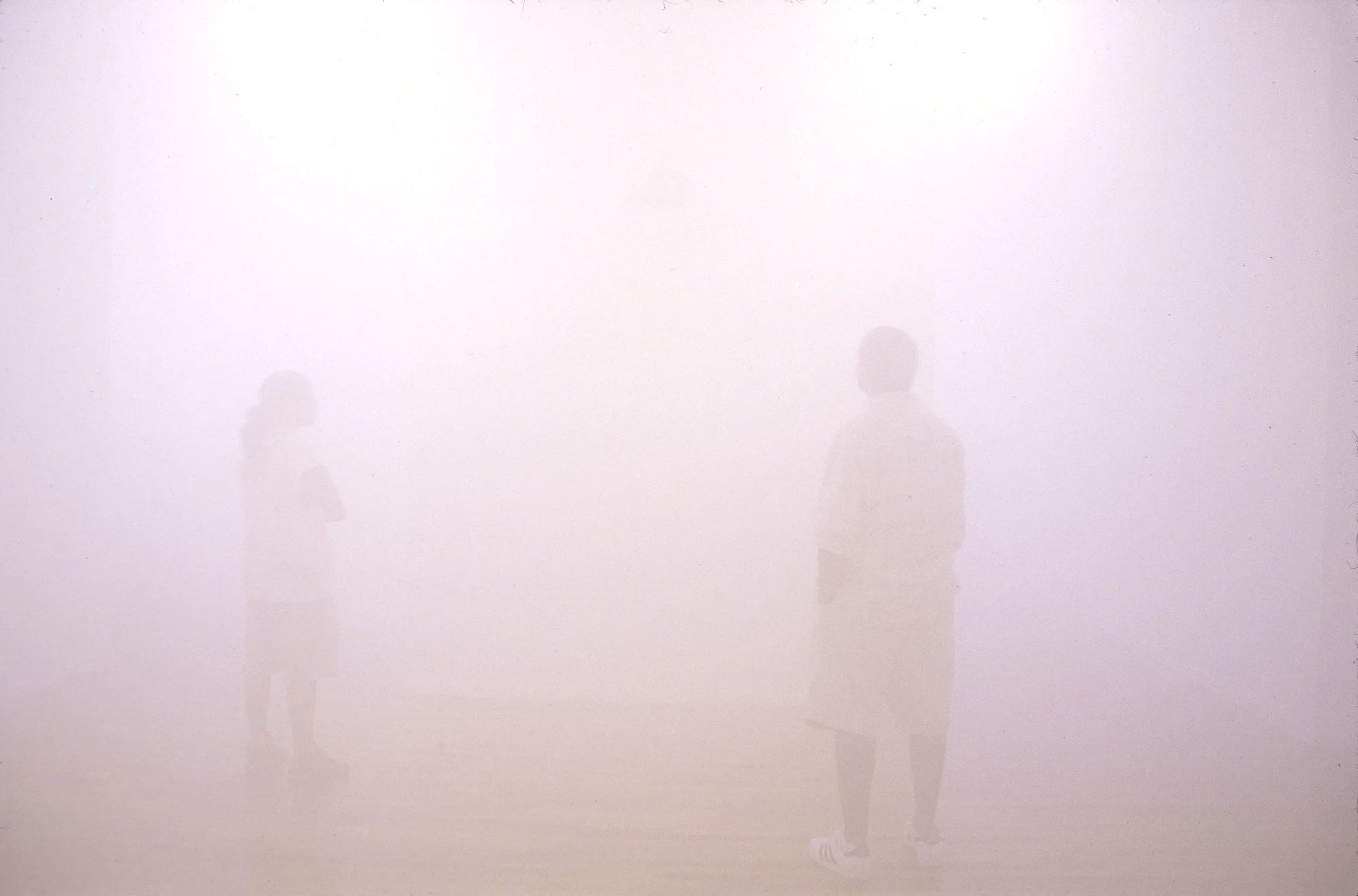
The result is often visually restrained. Minimal forms carry material with extraordinarily charged origins. Empty-looking rooms may contain vapor, water or sound tied to specific deaths or sites. This restraint is not aesthetic distance; it can make the ethical confrontation stronger because the viewer is denied the protective drama of representation.
At a moment when political imagery circulates at extreme speed, Margolles’s work asks whether a slower and more materially exact encounter can resist desensitisation.

The border as lived system
MoMA PS1 frames the exhibition around transnational violence, with particular attention to the US–Mexico border. Margolles has returned repeatedly to sites where migration, femicide, organised crime, labour and political abandonment overlap. Her work does not reduce those conditions to a single explanatory narrative. Instead, it follows the effects through specific bodies, buildings and communities.
That method matters. Border politics can become abstract almost instantly in public discourse. Margolles keeps returning to the local scale: one house, one person, one street, one material trace. The accumulation of specificity prevents the work from collapsing into slogan.
Collectors encountering Margolles should therefore pay close attention to documentation. The title, date and material list may not be enough. Site histories, installation instructions, certificates, artist statements, conservation protocols and the circumstances of fabrication can be essential parts of the work’s meaning.

How do you collect an installation that changes?
This is where the exhibition becomes unusually useful as collector intelligence. Much contemporary art cannot be adequately understood as a stable object. Installations may have variable dimensions; materials may be replenished or replaced; video equipment changes; sculptural elements are activated according to instructions; works exist partly through certificates and diagrams.
For an artist such as Margolles, those questions become even more sensitive because replacement material is not always neutral. A collector or institution needs to know exactly what can be substituted, what must remain original and what aspects of an installation are conceptual rather than materially fixed.
The correct due diligence therefore resembles conservation planning as much as conventional provenance research. Before acquiring a complex installation, collectors should understand display requirements, storage conditions, replacement permissions, edition structure, artist-approved equipment changes and the legal or ethical restrictions attached to source materials.
The memorial after monumentality
Margolles’s work also belongs to a broader rethinking of memorial form. Traditional monuments seek durability and visibility. They stand upright, name heroes and stabilise public memory in stone or bronze. Margolles often does the opposite. Her memorials can disperse, evaporate, stain, fragment or require repeated human action.
That instability is not weakness. It mirrors the way memory actually operates: incomplete, embodied and vulnerable to erasure. La promesa becomes especially potent in this context. The house is not rebuilt into a monument. Its remains are slowly transformed by the labour of exhibition.

Why this museum moment matters
The first large-scale US museum presentation arrives late relative to Margolles’s international importance. She has represented Mexico at the Venice Biennale, exhibited widely across Europe and Latin America and developed a practice central to discussions of violence, gender, borders and public memory. The PS1 exhibition gives American audiences a sustained encounter rather than an isolated work in a thematic group show.
For the market, museum attention can expand collector confidence, but that should not be the main reason to look. Margolles’s importance rests precisely in the fact that her work resists easy commodification. The most powerful pieces force owners and institutions to accept responsibility for the conditions under which the work remains meaningful.
Collector notes
Collectors considering Margolles should distinguish among photographs, videos, editions, objects and large installations, because each carries different conservation and display demands. Ask for complete certificates and installation histories. Confirm whether materials are unique, replaceable or time-based. For video, clarify master files, exhibition copies and permitted migration to new formats. For installations, establish whether dimensions are fixed or variable and what elements require artist or studio approval.
Most importantly, understand the work before acquiring the object. With Margolles, context is not supporting literature added after purchase. Context is part of the medium.
Teresa Margolles: En el lugar de los hechos (At the Scene) runs at MoMA PS1 from 24 September 2026 to 8 February 2027. A concurrent installation opens at The Museum of Modern Art on 17 September. The double presentation makes September one of the most important moments of Margolles’s US career — and one of the season’s most demanding exhibitions for collectors who believe contemporary art should do more than decorate certainty.
Teresa Margolles’s first large-scale US museum exhibition turns rubble, residue and forensic thinking into a radical form of memorial. For collectors, it is also a masterclass in why context and conservation can be part of the medium.
Wangari Mathenge’s first solo exhibition with Lévy Gorvy Dayan expands her Re-membering series into sculpture, turning books, objects and domestic space into a layered inquiry into Kenyan cultural memory.