
The Turner Prize 2025 has been awarded to Nnena Kalu. The winner of the £25,000 prize was announced this evening at a ceremony at Bradford Grammar School presented by magician Steven Frayne, formerly known as Dynamo, in Bradford, this year’s UK City of Culture, and broadcast live on BBC News.
Maria Balshaw to Step Down as Director of Tate in 2026
Tate has announced that Maria Balshaw will step down as Director in spring 2026, bringing to a close a nine-year tenure that has reshaped the institution’s public-facing mission, programming, and long-term strategy. Appointed in 2017, Balshaw leaves Tate at a moment of institutional stability, with major capital projects underway and a strengthened financial framework in place.

From the outset, Balshaw positioned access and public engagement as central to Tate’s remit. One of the earliest and most emblematic expressions of this approach was Steve McQueen’s Year 3 (2019), which brought together a collective portrait of 76,000 London schoolchildren. The project signalled a shift toward participatory, civic-scale initiatives that sought to broaden who Tate speaks to and how contemporary art institutions operate in public life.
Exhibition programming under Balshaw combined a sustained effort to expand art-historical narratives with a reaffirmation of Tate’s role as a platform for canonical figures. Shows such as Women in Revolt, Life Between Islands, Leigh Bowery, and Emily Kam Kngwarray contributed to a more inclusive and plural understanding of modern and contemporary art, while major exhibitions devoted to artists including Cornelia Parker, Isaac Julien, Yoko Ono, and most recently Turner & Constable, re-examined established figures through contemporary lenses. This dual strategy—diversification alongside revision—became a defining characteristic of her directorship.
Balshaw also oversaw a recalibration of Tate’s collecting strategy. Acquisitions during her tenure placed greater emphasis on gender parity, geographic breadth, and media historically marginalised within museum collections. Indigenous artists, Global South practices, and work in textiles and ceramics were given increased prominence, aligning the collection more closely with current artistic production and critical discourse.
Audience development was another key area of expansion. Tate’s membership has grown to 150,000, now the largest of any arts organisation worldwide. The launch of Tate Collective in 2018 further extended this reach, enrolling 180,000 young people aged 16 to 25 and reinforcing Tate’s commitment to cultivating future audiences. Internationally, Balshaw strengthened Tate’s network of global partnerships, enabling the circulation of the collection and supporting collaborative exhibitions, commissions, and research beyond the UK.

Her influence extended beyond Tate’s walls. As Chair of the National Museum Directors’ Council, Balshaw played a role in securing capital maintenance and emergency funding for regional and national museums. She was also involved in the successful campaign to protect Derek Jarman’s Prospect Cottage and served on the board of Factory International, maintaining professional ties to Manchester, where she previously held senior cultural leadership roles.
Several long-term projects initiated under her leadership will come to fruition after her departure. These include the Clore Garden at Tate Britain, opening in 2026; the comprehensive redevelopment of Tate Liverpool, scheduled for 2027; and the renovation of the Palais de Danse at Tate St Ives, Barbara Hepworth’s second studio. Collectively, these projects underscore a focus on sustainability, regional access, and deeper community engagement. Perhaps most consequential has been the establishment of Tate’s endowment fund, developed with Chair Roland Rudd, which has secured over £50 million to date and is intended to underpin the institution’s long-term financial resilience.
Balshaw’s final curatorial project will be a career-spanning exhibition of Dame Tracey Emin at Tate Modern in February 2026, marking a return to direct artistic collaboration. In a statement, Balshaw described the decision to step down as timely, citing a strong forward plan and her desire to refocus on working closely with artists.
Roland Rudd, Chair of Tate, credited Balshaw with broadening access to art and reshaping the institution to better reflect its audiences and artists. Her tenure, he noted, has positioned Tate as both a national and international cultural actor with an expanded public mandate.
As Tate prepares for a transition in leadership, Balshaw leaves behind an institution that is more outward-looking, structurally secure, and consciously responsive to the evolving ecology of contemporary art. The challenge for her successor will be to sustain this balance between public engagement, critical ambition, and institutional scale in an increasingly complex cultural landscape.
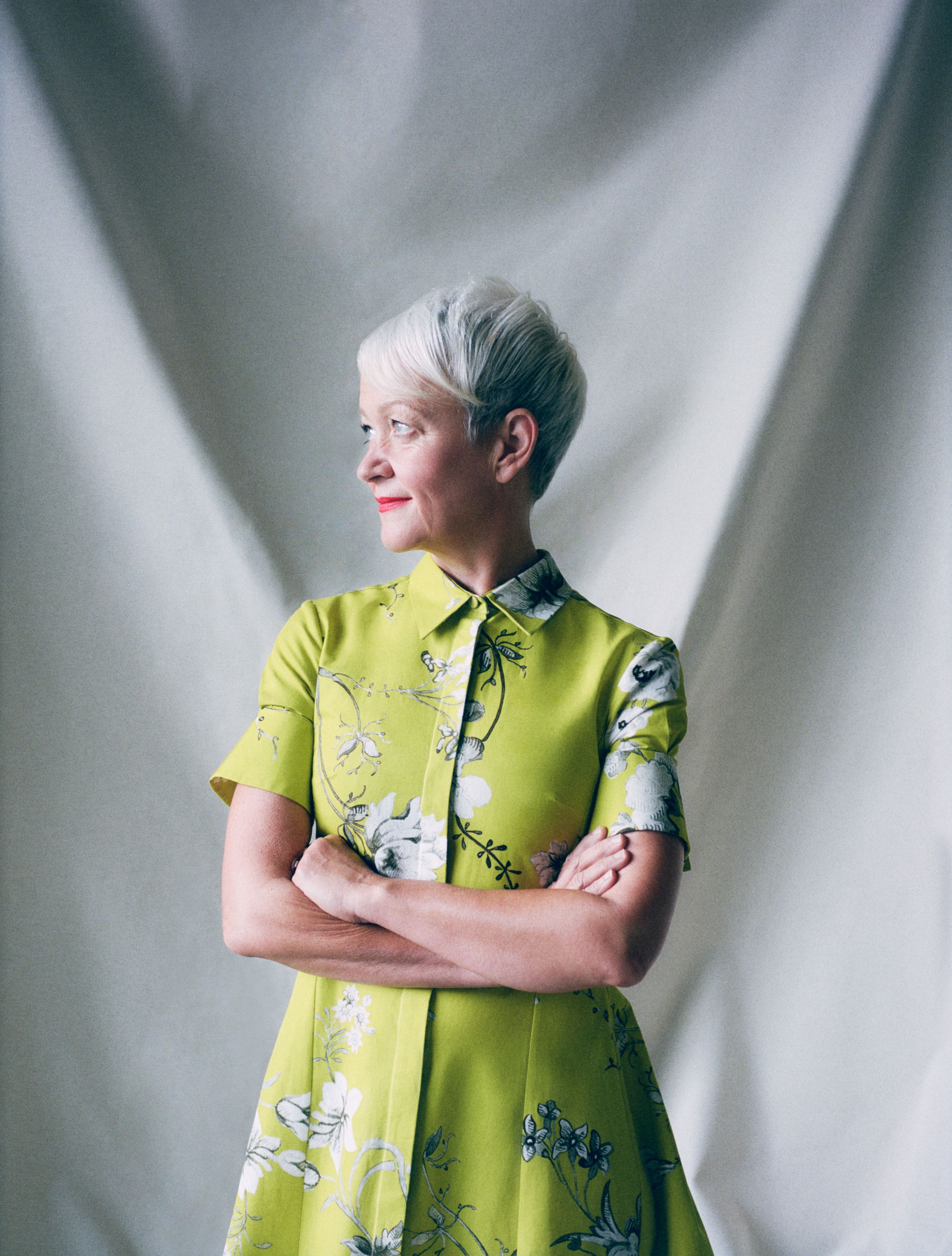
Opening image credit: Maria Balshaw. Photo by Erdem Moralioglu
Tate has announced that Maria Balshaw will step down as Director in spring 2026, bringing to a close a nine-year tenure that has reshaped the institution’s public-facing mission, programming, and long-term strategy. Appointed in 2017, Balshaw leaves Tate at a moment of institutional stability, with major capital projects underway and a strengthened financial framework in place.
At a time when the art world chases spectacle, some pursue a more discreet—and far more meaningful—collecting mission. ARTCOLLECTORNEWS spoke with Irene Y. Panagopoulos, the vision behind the IYP Collection, as she opens her new public space.