
October 12, 2026
Articles
Articles
Yelin Lee's Ghost Play transforms emojis into sculpture, uses chroma-key screens and a two-minute delay, and turns visitors into their own fleeting afterimages.
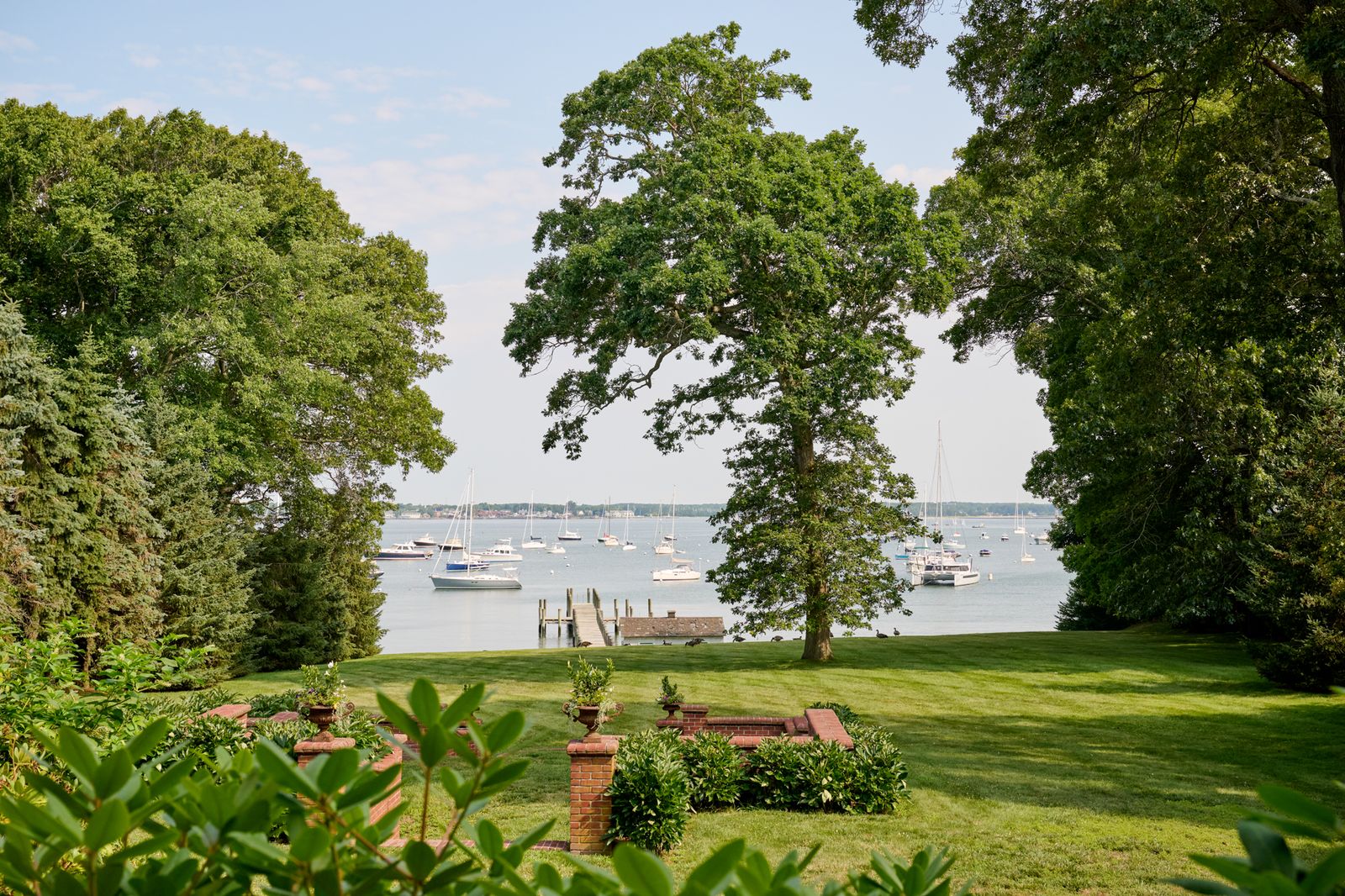
On Shelter Island, John Chamberlain’s actual working studio survives alongside a posthumously converted horse farm that now functions as a private exhibition space. As his 2027 centenary approaches, the Estate is testing how an artist’s environment can remain intact without becoming a conventional museum.
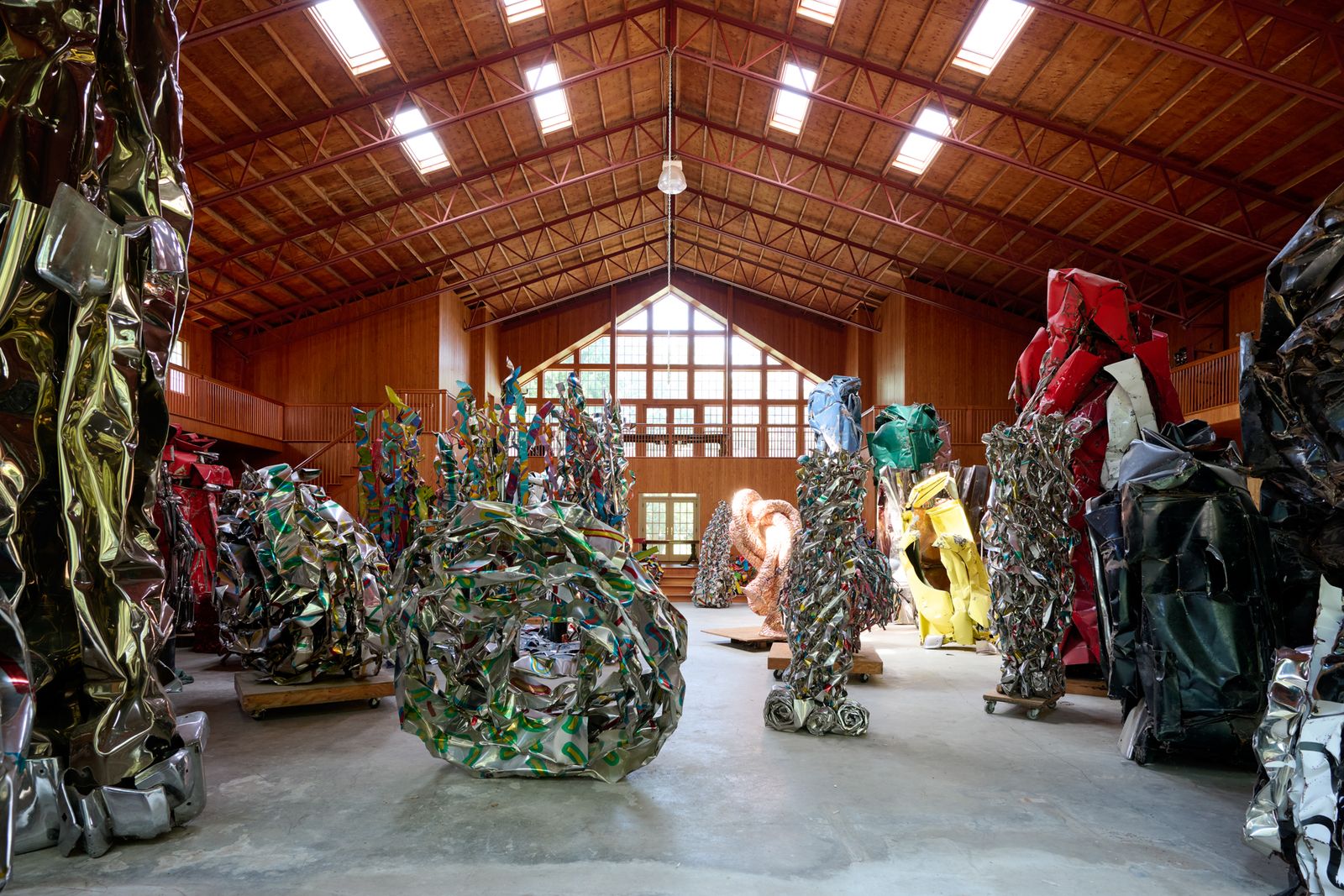
There are artist studios that function as workshops, and there are studios that eventually become something closer to self-portraits. John Chamberlain’s remarkable Shelter Island world increasingly belongs to the second category.
Nearly fifteen years after the American sculptor’s death in December 2011, much of his working environment remains unusually intact. Monumental metal constructions still occupy the purpose-built studio. Models, photographs, tools, domestic objects and fragments of daily life remain in the rooms around them. The result is neither a reconstructed period display nor a conventional archive. It is an artist’s environment that has been deliberately allowed to retain some of its disorder.
That preservation has acquired new importance as Chamberlain’s 2027 centenary approaches. Dia Beacon has returned his sculpture to a major long-term installation, while the John Chamberlain Estate has begun experimenting with selective cultural access on Shelter Island. Earlier this summer the Estate hosted a Chanel arts event; in August, Sotheby’s and Nordic Knots co-hosted a dinner there ahead of a Chamberlain private-sale exhibition planned for Sotheby’s Breuer building this fall. Alexandra Fairweather, Chamberlain’s stepdaughter and director of the Estate, has also been recording the On the Couch series in the space.
The most interesting story, however, is not simply that an important artist’s property is receiving renewed attention. It is the way the Estate is treating the property itself as part of Chamberlain’s legacy.
The distinction matters because the Shelter Island compound is sometimes described too loosely as a converted horse-barn studio. Chamberlain’s principal multi-level working studio was not a converted stable. It was custom-built in 2000, across the street from the waterfront house he shared with Prudence Fairweather. Recent reporting describes the vast building as having been constructed from scratch, with other existing structures adapted for photography and smaller-scale work.
The horse farm came later. Chamberlain had wanted the neighbouring stable complex while he was alive, but its owner would not sell. According to Prudence Fairweather, the opportunity arose only a few months after his death. The family subsequently acquired and converted the former horse farm into a private exhibition and storage environment, where sculptures spanning decades of his career can be seen with the space they demand.
That chronology changes the meaning of the place. One building preserves an actual working studio Chamberlain designed and inhabited. The other is a posthumous estate project: part private museum, part storage facility and increasingly part cultural salon. Together they reveal two different but complementary approaches to legacy — preserving the conditions of making while creating new conditions for looking.
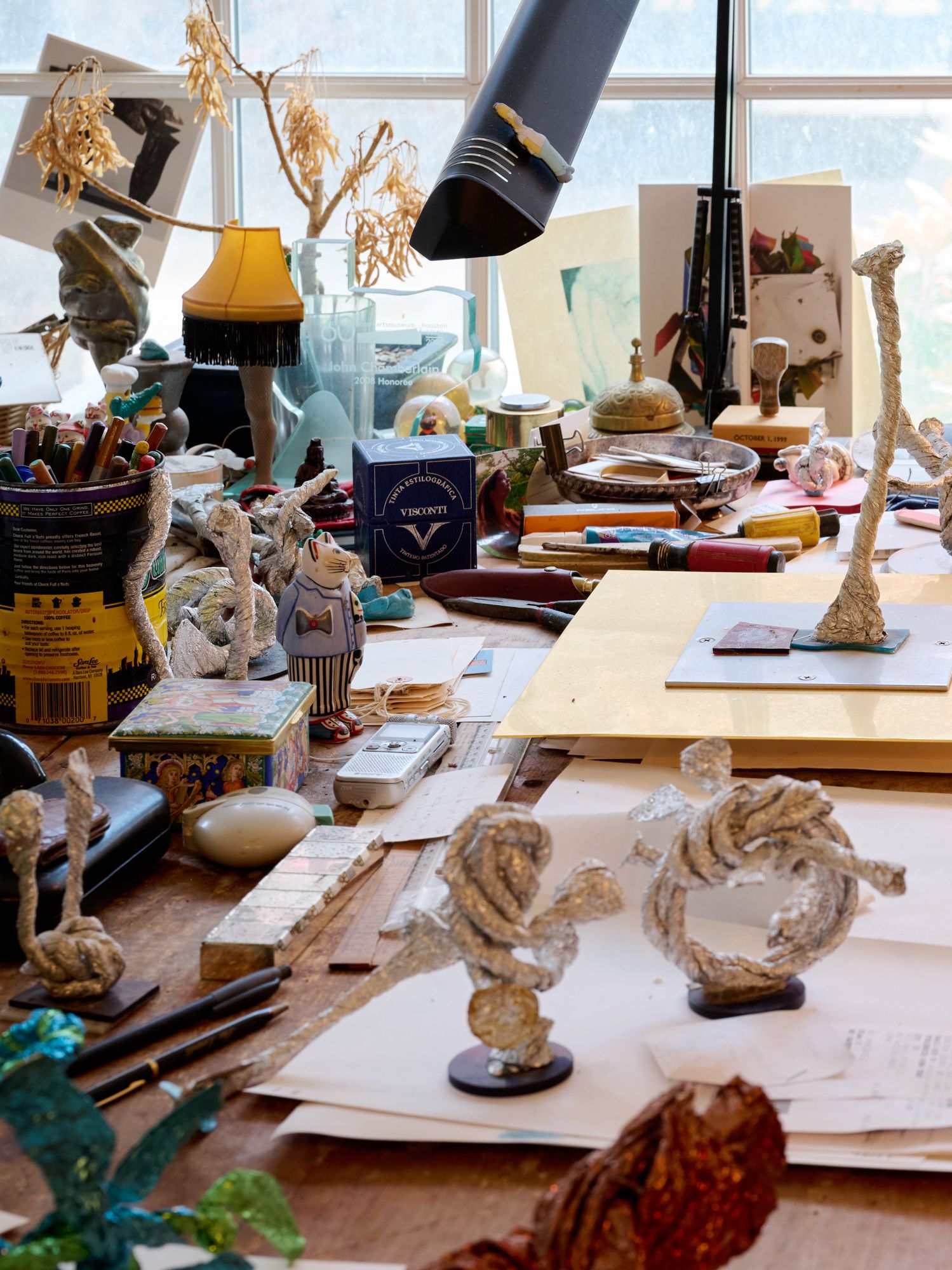
When Chamberlain died, the Fairweathers were advised by people connected to other artists’ foundations not to shift everything in the studio. They largely followed that advice. The decision now looks remarkably prescient.
An intact studio can reveal information that a catalogue raisonné cannot. Scale becomes physical rather than numerical. Materials acquire context. Works that appear autonomous in a museum suddenly belong to families of experiments. The remnants surrounding them — photographs, studies, tools, furniture and accidental accumulations — give evidence of process without having to be promoted into relics.
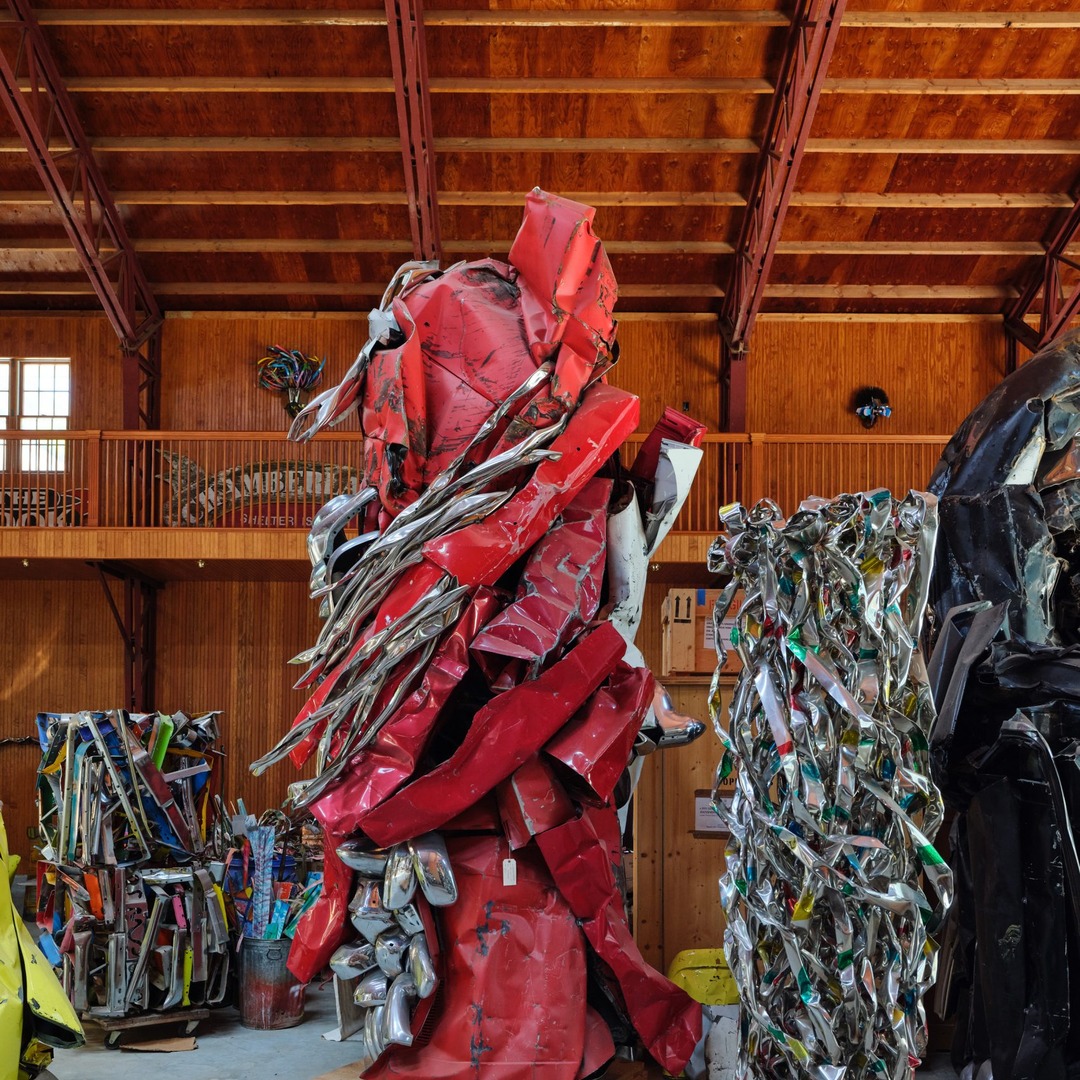
That is especially important with Chamberlain because the familiar shorthand of “crushed car sculpture” conceals how broad his practice became. He worked not only with painted and chrome-plated steel but with urethane foam, aluminium foil, photography, film, ceramics and scent. At the converted stable, one of his enormous soft foam “barges” sits among metal and foil works. In the studio are Widelux photographs and small foil studies. Sotheby’s has also documented the remnants of Chamberlain’s experiments with scent, including Golden Smell and a wider group of fragrances he developed as art.
The surviving environment therefore corrects the art-historical shorthand. Chamberlain was not fundamentally interested in automobiles. He was interested in what materials could be persuaded to do.
Artist estates now occupy an increasingly influential position in the art ecosystem. Authentication and copyright remain part of the job, but the most active estates also commission scholarship, organise exhibitions, manage archives, facilitate loans and shape the circumstances in which an artist’s work is encountered by a new generation.
The Chamberlain Estate is moving in that direction while resisting the obvious temptation to turn Shelter Island into a conventional house museum. The studio is not generally open to the public, and the Estate’s archive is not an open reading room. Researchers can, however, approach the Estate for relevant material, and institutions can request loans. Public access to the property is being tested slowly through invited events, conversations and programming rather than daily footfall.
That controlled approach is not merely logistical. An artist’s studio can lose precisely what makes it meaningful if it is over-restored, over-labelled or reorganised to accommodate tourism. The challenge is to preserve the evidence of use without freezing the place into a mausoleum.
Shelter Island is becoming an unusually visible experiment in how that balance might work.
The renewed focus on Chamberlain is not confined to the Estate. On 13 June 2026, Dia Beacon opened a newly conceived long-term presentation of his work. Chamberlain’s sculpture had occupied Dia Beacon’s expansive west gallery from the museum’s opening in 2003 until 2024, and Dia describes his presence as foundational to the institution.
The new installation spans several phases of his practice, including urethane foam and painted steel, reinforcing the argument that Chamberlain’s significance cannot be reduced to the image of twisted automobile metal.
Commercial attention is increasing too. Sotheby’s has announced a private-sale exhibition at the Breuer building for this fall, while other centenary-related exhibitions and projects are developing ahead of 2027. The timing is likely to bring renewed collector attention to an artist who has always sat slightly awkwardly between the standard postwar categories: gestural without being a painter, industrial without being a Minimalist, chromatically exuberant without belonging neatly to Pop.
Collectors instinctively understand the importance of provenance attached to an artwork. But important places accumulate provenance too.
Donald Judd’s buildings in Marfa, Georgia O’Keeffe’s homes in New Mexico, Barbara Hepworth’s St Ives studio and Constantin Brâncuși’s reconstructed atelier all demonstrate how architecture, landscape and working conditions can become essential to understanding an artist. They preserve relationships that even the best museum installation cannot fully reproduce.
Chamberlain’s Shelter Island studio belongs increasingly to that conversation. Its importance lies not only in the art remaining there but in the friction between art and ordinary life: a monumental sculpture beside an everyday object, a small study near the place it was handled, a room whose proportions explain why a particular work could become so large.
The most compelling future for the property may therefore be one that never fully resolves its identity. Not quite museum. Not quite archive. Not quite private home. Instead, a preserved working environment that can occasionally become a place for scholarship, conversation and looking.
For the market, Chamberlain’s centenary will inevitably generate exhibitions, publications and renewed attention. For art history, the more significant asset may already be standing quietly on Shelter Island: the studio itself, still carrying evidence of the artist who built it.
Artist: John Chamberlain (1927–2011)
Location: Shelter Island, New York
Working studio: Custom-built in 2000
Former horse farm: Acquired and converted by the Estate after Chamberlain’s death
Public access: Not generally open; the Estate is experimenting with selective access and programming
Institutional context: John Chamberlain opened at Dia Beacon on 13 June 2026 and is on long-term view
Centenary: 2027
Yelin Lee's Ghost Play transforms emojis into sculpture, uses chroma-key screens and a two-minute delay, and turns visitors into their own fleeting afterimages.
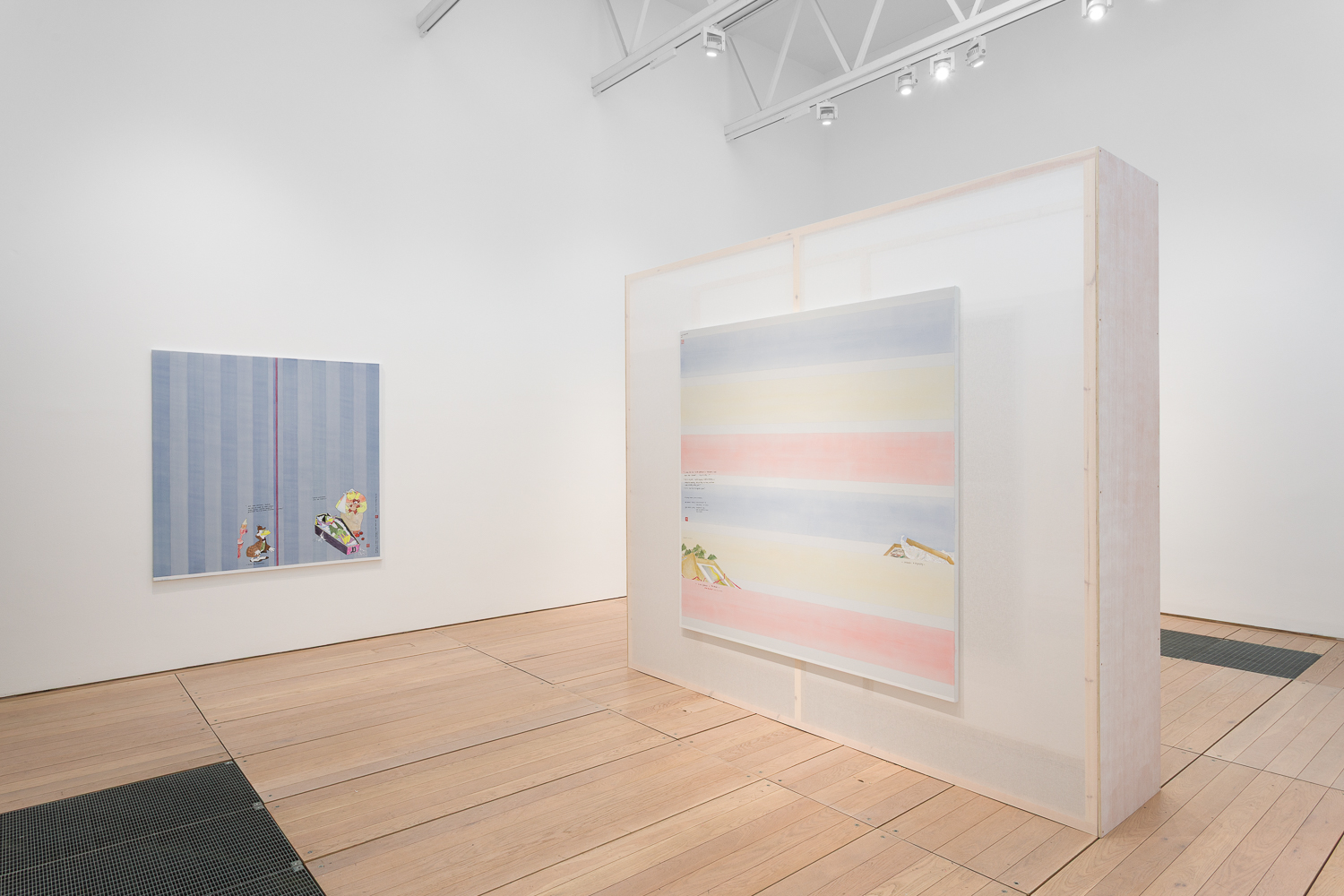
In her first UK institutional exhibition, Evelyn Taocheng Wang turns mistranslation, Agnes Martin, Chinese literati painting and fantasies of Britain into a deliberately unstable language of identity.
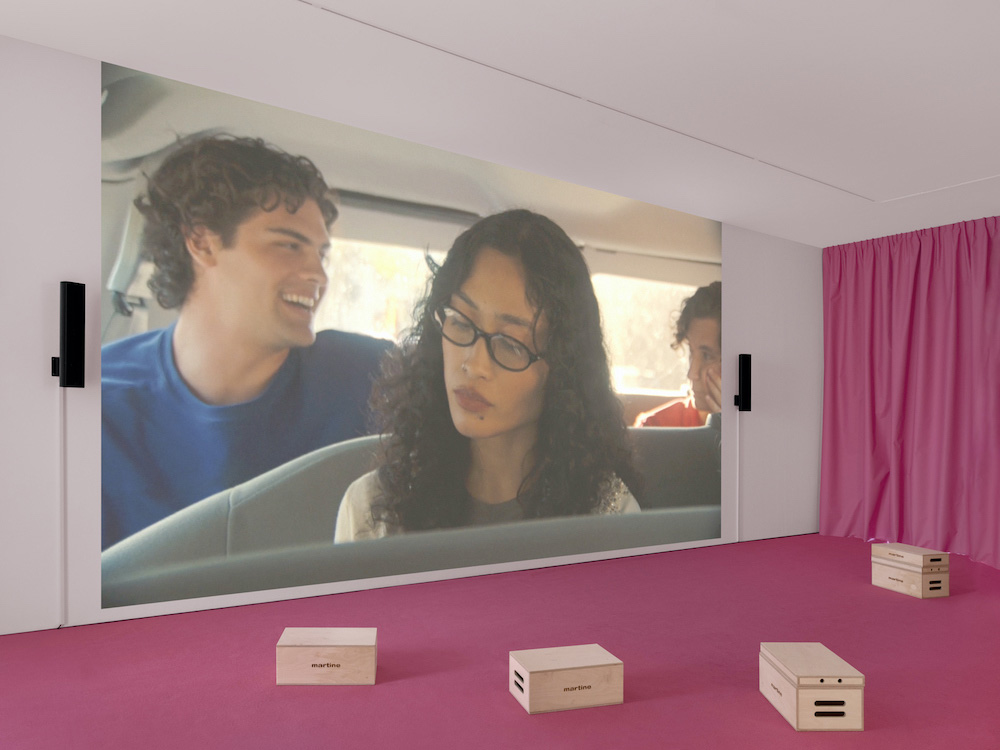
From Robert Ryman and Lorna Simpson to Mary Ramsden, Martine Syms and Nicola Turner, the strongest London route during Frieze week begins outside the fair.