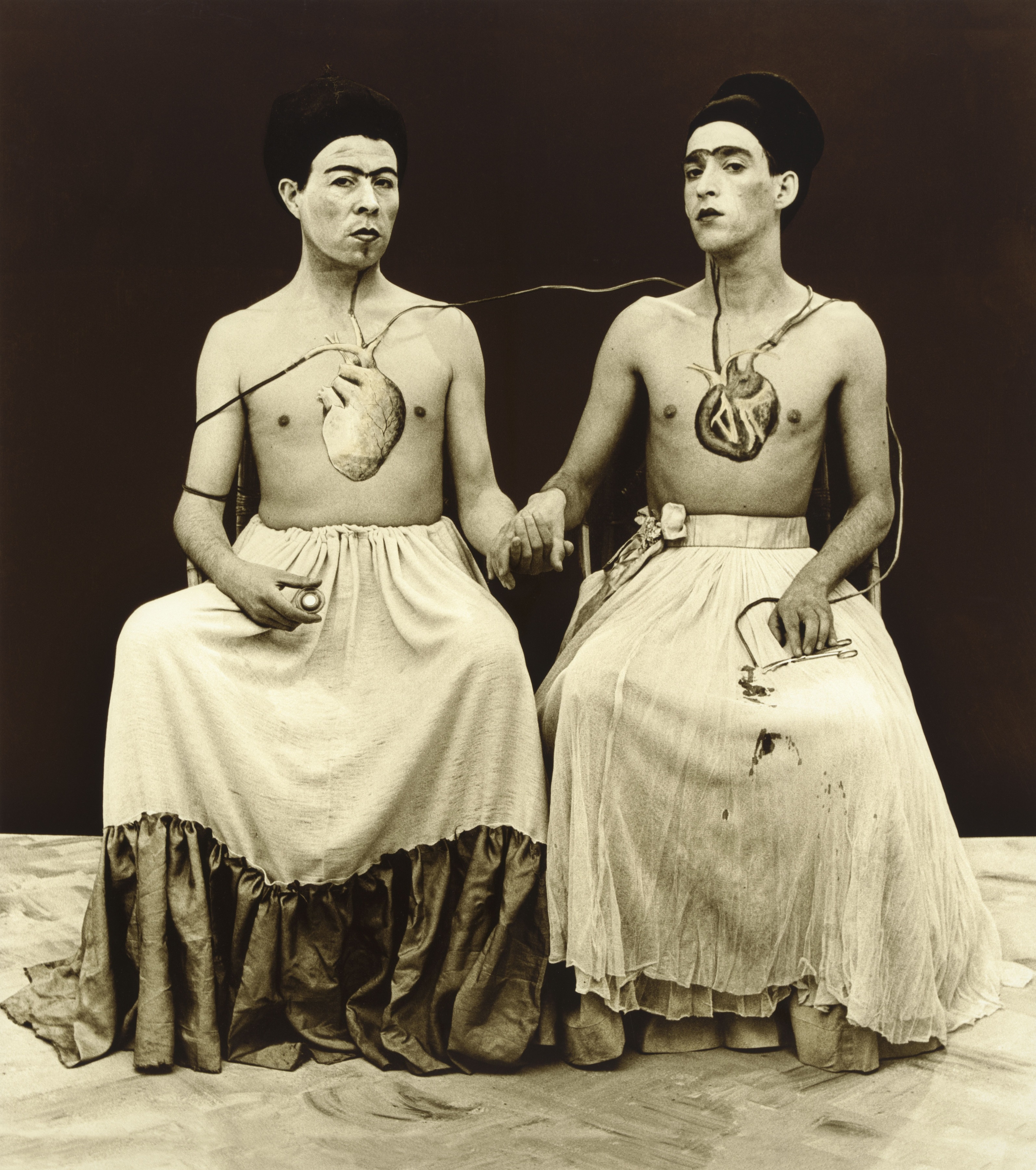
Tate Modern’s Frida: The Making of an Icon (25 June 2026 – 3 January 2027) explores how Frida Kahlo evolved from painter to global cultural icon. Developed with the Museum of Fine Arts, Houston, the exhibition traces her lasting influence across art, feminism and popular culture, positioning Kahlo as a figure continually reinterpreted by new generations.
Frida Kahlo: The Making of an Icon
Tate Modern’s Frida: The Making of an Icon (25 June 2026 – 3 January 2027) explores how Frida Kahlo evolved from painter to global cultural icon. Developed with the Museum of Fine Arts, Houston, the exhibition traces her lasting influence across art, feminism and popular culture, positioning Kahlo as a figure continually reinterpreted by new generations.

This summer, Tate Modern presents Frida: The Making of an Icon, the first major exhibition to examine how Frida Kahlo (1907–1954) evolved from a relatively little-known painter into one of the most recognisable and influential figures in global visual culture. Developed in collaboration with the Museum of Fine Arts, Houston, the exhibition moves beyond biography to consider Kahlo’s afterlife: the artists she inspired, the communities that claimed her, and the cultural mechanisms that transformed her image into a universal symbol.
More than a retrospective, Frida: The Making of an Icon positions Kahlo as a catalyst—an artist whose work continues to reverberate across generations, geographies and media. Through an ambitious constellation of over 30 works by Kahlo, alongside photographs, archival material and works by modern and contemporary artists from around the world, Tate Modern traces the construction, circulation and continual reinvention of her legacy.
The exhibition opens with Kahlo’s deliberate construction of identity. Long before the language of self-branding entered contemporary discourse, Kahlo understood the power of image. Her paintings, clothing and personal presentation formed a carefully articulated visual grammar through which she navigated nationality, gender, politics and physical pain.
Key early self-portraits, including Self-Portrait (With Velvet Dress) (1926) and Self-Portrait with Loose Hair (1938), anchor this section. Here, Kahlo’s gaze is both confrontational and vulnerable, asserting agency while revealing fragility. These works articulate her embrace of Mexicanidad, her queer self-image, feminist conviction and lived experience as a disabled woman. Shown in dialogue with works by figures of the so-called Mexican Renaissance—among them Diego Rivera’s Portrait of Frida Kahlo (c.1935) and María Izquierdo’s Dream and Premonition (1947)—the exhibition foregrounds the intellectual and aesthetic exchanges that shaped Kahlo’s practice.
Photographs, tehuana dresses and personal belongings further expand this portrait of Kahlo as both subject and author of her own myth, revealing how performance and daily life became inseparable from artistic production.

Long before the language of self-branding entered contemporary discourse, Kahlo understood the power of image.
At the heart of the exhibition lies Kahlo’s complex relationship with Surrealism. Although she famously rejected the label—insisting she painted her reality, not dreams—her work shared deep affinities with the movement’s fascination with the subconscious, symbolism and the body as psychic terrain. André Breton’s declaration of Kahlo as a “self-made Surrealist” was less an imposition than an acknowledgment of these resonances.

Following her 1938 solo exhibition at Julien Levy Gallery in New York and subsequent invitation to Paris, Kahlo entered the international avant-garde. Tate Modern brings together pivotal works from this period, including The Frame (1938), acquired by the French national collection, alongside Memory (The Heart) (1937), Survivor (1938), Girl with a Death Mask (1938) and Diego and Frida (1929).
Displayed alongside works by artists such as Leonor Fini and Kati Horna, this section explores shared surrealist motifs—masks, skeletons, doubling, dream states—and a persistent engagement with death. Rather than positioning Kahlo within a European framework, the exhibition insists on a more nuanced reading, situating her within transatlantic exchanges shaped equally by Latin American cosmologies and personal experience. Although Kahlo appeared in US artistic circles during the 1930s, widespread recognition came decades later. In the late 1960s and 1970s, the Chicana/o movement reclaimed Kahlo as a symbol of cultural pride, resistance and resilience. Emerging from the civil rights struggle, these artists recognised in Kahlo a figure who embodied hybridity, defiance and survival.

Works such as My Dress Hangs There (1933–38), with its ambivalent depiction of the United States, resonated powerfully with Mexican migrants and Chicana/o communities navigating displacement and identity. Tate Modern situates this moment alongside works by artists who explicitly engaged Kahlo’s legacy, demonstrating how her image became a political tool as much as an artistic reference. The exhibition also highlights a generation of Mexican artists working in the late 1980s and 1990s—including Nahúm B. Zenil and Georgina Quintana—who reactivated Kahlo’s iconography to critique nationalism, patriarchy and rigid gender norms. In their hands, Kahlo becomes a site of contestation rather than veneration.
The rise of feminist movements in Mexico and the United States during the 1970s and 1980s catalysed renewed engagement with Kahlo’s work. Her self-portraits—featuring cropped hair, a faint moustache, masculine clothing, scenes of childbirth and explicit depictions of female sexuality—challenged deeply entrenched cultural taboos. Tate Modern traces Kahlo’s enduring influence on women artists from the 1970s to the present, pairing her work with figures such as Judy Chicago, Ana Mendieta and Kiki Smith. These juxtapositions create compelling dialogues around violence, vulnerability, embodiment and the body as a site of nature and resistance.

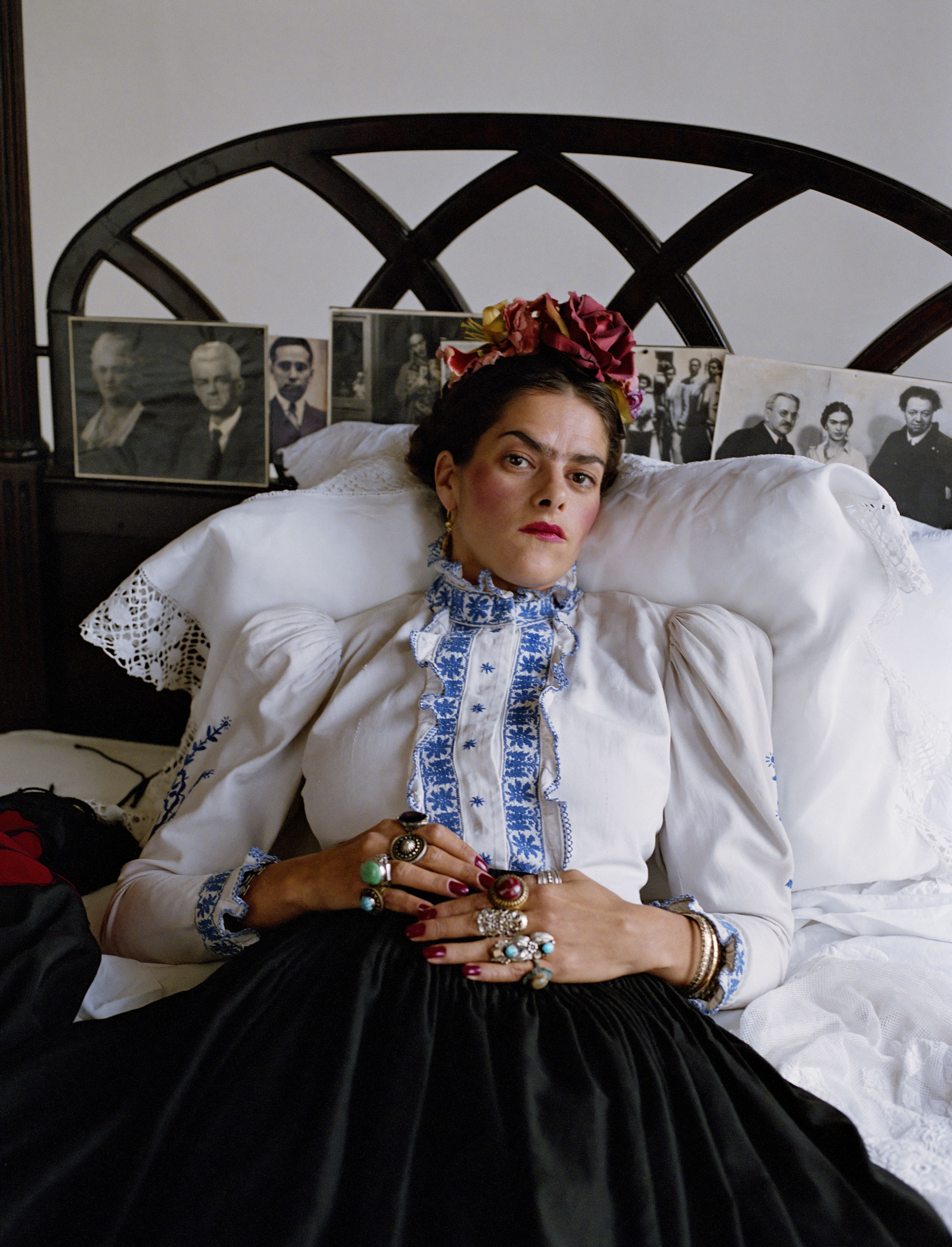
The exhibition extends into the contemporary moment, foregrounding artists who appropriate, perform or inhabit Kahlo’s image to address questions of race, gender, sexuality and disability. Works by Yasumasa Morimura, Martine Gutierrez and Berenice Olmedo demonstrate how Kahlo’s visual language continues to offer a framework for radical self-representation.Concluding by confronting the transformation of Frida Kahlo into a global commodity, a dedicated room of ‘Fridamania’ assembles over 200 objects—from fashion items and tequila bottles to dolls and perfumes—produced through the mass licensing of her image. This proliferation is examined alongside the publication of Hayden Herrera’s seminal 1983 biography, which played a decisive role in canonising Kahlo internationally.
Rather than dismissing this commercial afterlife, Tate Modern interrogates its implications: how does mass reproduction shape collective memory? What is gained, and what is lost, when an artist becomes a brand? The exhibition leaves these questions deliberately open, inviting viewers to reflect on their own relationship to Kahlo’s image. Frida: The Making of an Icon offers a timely and rigorous reassessment of Kahlo’s position within art history and popular culture. By foregrounding influence over chronology and dialogue over reverence, Tate Modern presents Kahlo not as a fixed legend, but as a living, contested and continually reimagined presence. In tracing how Kahlo’s work has been claimed, transformed and mobilised across decades, the exhibition affirms her enduring relevance—not simply as an icon, but as an artist whose radical self-fashioning continues to shape how art engages with identity, politics and the body today.
Frida Kahlo: The Making of an Icon
Tate Modern, London | 25 June 2026 – 3 January 2027
OBTUSE (°): , the inaugural exhibition of Obtuse Archive at Galleria Objets, brings together thirteen artists and three performers across sculpture, installation, sound, and performance. Decentering painting and privileging material experimentation, the show explores spatial tension, encounter, and the productive unresolved, positioning Obtuse Archive as a cultural platform in motion.
The Turner Prize 2025 has been awarded to Nnena Kalu. The winner of the £25,000 prize was announced this evening at a ceremony at Bradford Grammar School presented by magician Steven Frayne, formerly known as Dynamo, in Bradford, this year’s UK City of Culture, and broadcast live on BBC News.