
October 23, 2026
Exhibitions
Exhibitions

From Faye Toogood and Kate Malone to textile art, post-war furniture and new material-led designers, PAD London showed why serious collector homes are built beyond the frame.
In London’s evolving contemporary art landscape, a new generation of collectors is reshaping how galleries are conceived and run. Louis Jacquier, co-founder of Tiderip, represents this shift, where collecting is no longer a private pursuit but an active, collaborative force. Rooted in close relationships with artists and a long-term commitment to their development, Jacquier’s approach has extended into the creation of a gallery that privileges dialogue, experimentation, and emotional depth. At the centre of this approach is a philosophy he often summarises as: “I collect artists rather than artworks.”
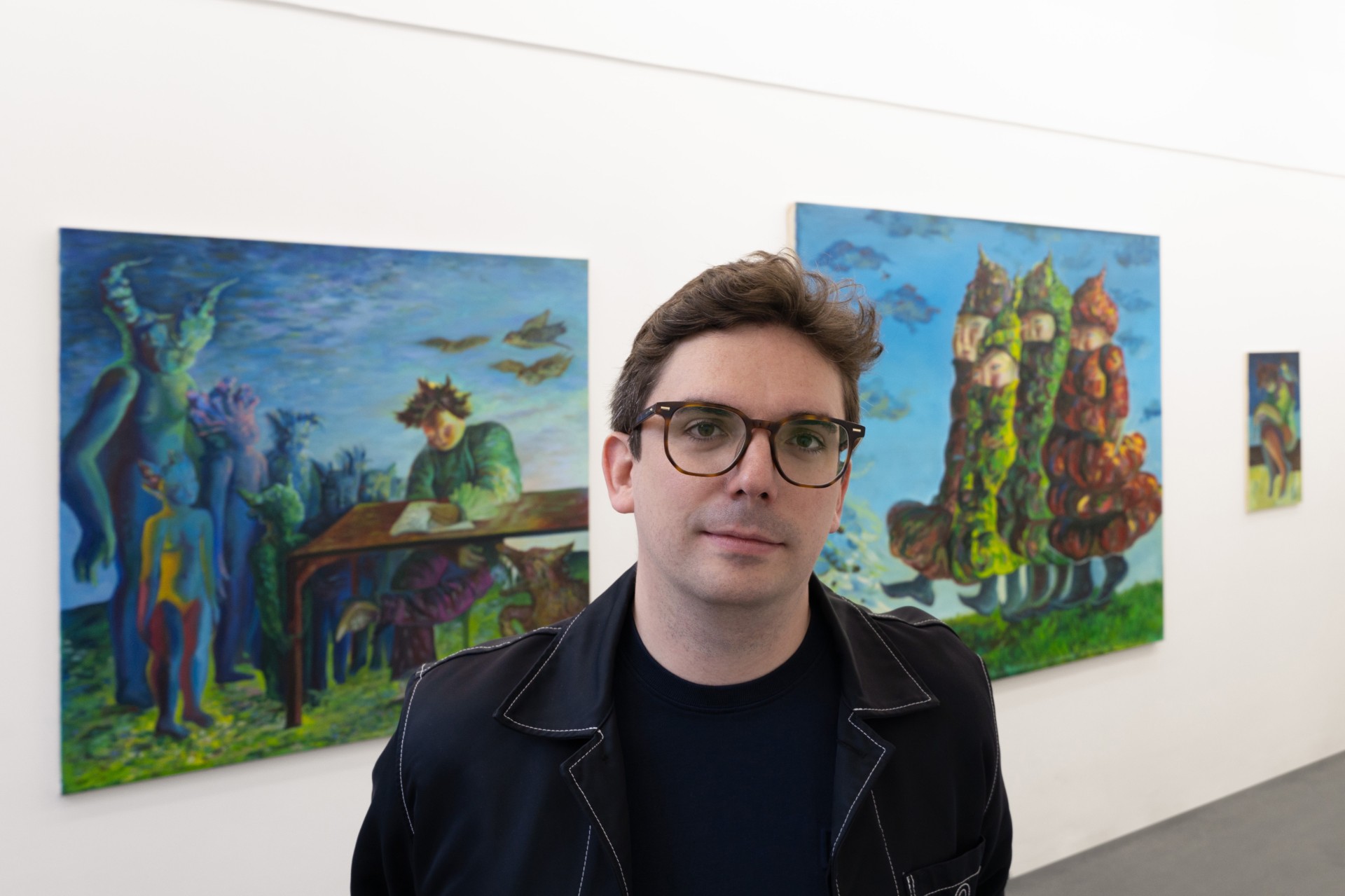
For Louis Jacquier, collecting has never been about acquisition alone. It is a sustained conversation, one that unfolds in studios, across exhibitions, and over time. Based between London and Paris, Jacquier has built a collection defined not by trend or immediacy, but by conviction. His focus lies in artists whose practices demonstrate both emotional resonance and the capacity to evolve, often gravitating toward expressive figuration layered with narrative or surreal undertones.
This ethos has naturally extended into Tiderip, the gallery he co-founded in 2025 with curator Marjorier Ding. Conceived as a space for intimacy and reflection, Tiderip offers a counterpoint to the pace of the contemporary art market. Instead, it embraces a slower, more deliberate rhythm, shaped by close engagement with artists and their work.
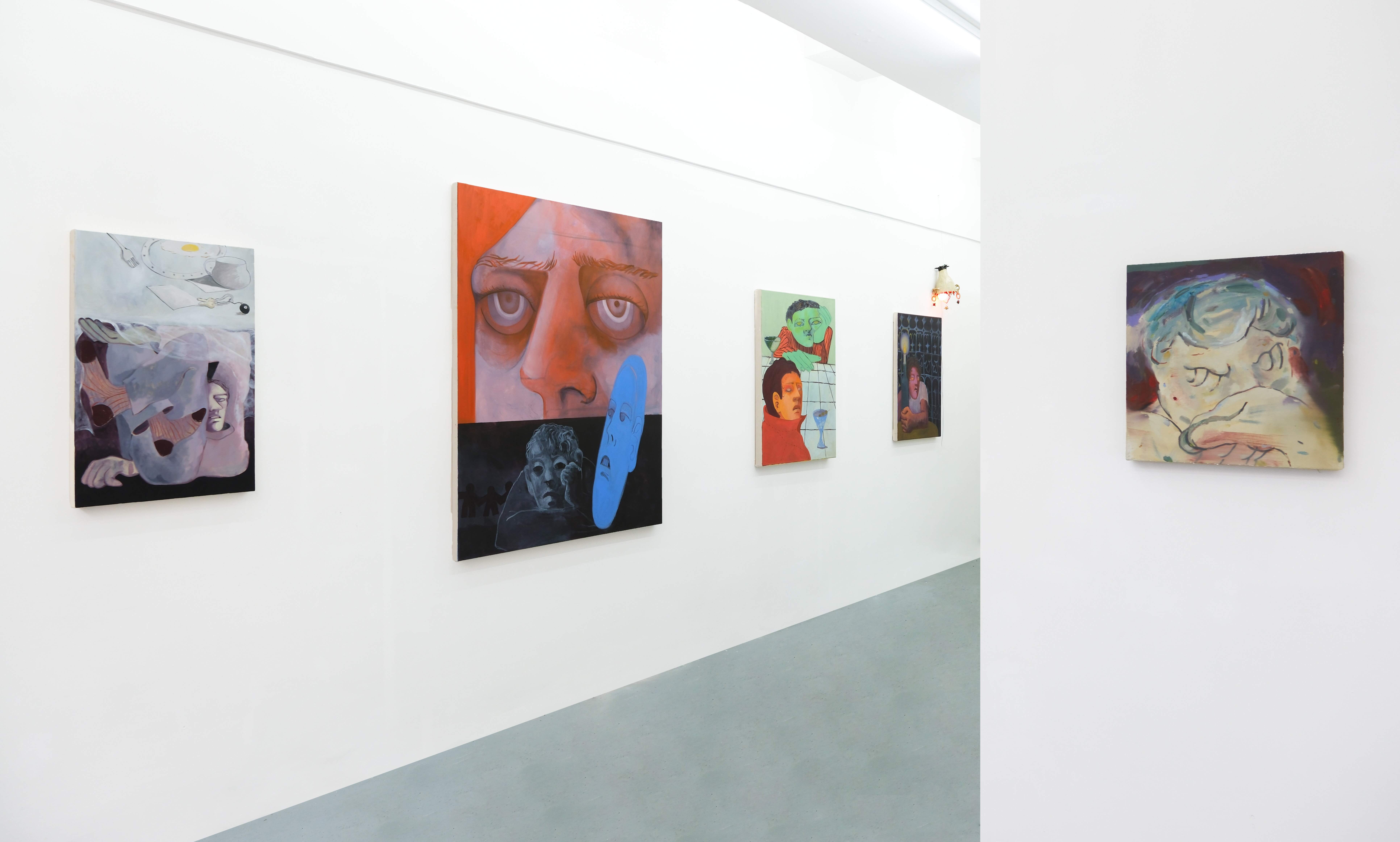
At the core of Tiderip is the meeting point between curatorial and collecting perspectives. Jacquier’s instinct for early conviction, supporting artists before institutional or market validation, meets Ding’s curatorial framing, creating a programme that feels both personal and thoughtfully constructed. The gallery’s focus on emerging and mid-career artists reflects this shared commitment to nurturing practices that carry emotional weight and conceptual depth.
As a patron of the Royal Academy of Arts, Jacquier engages with the institution from the inside, becoming part of the conversations that shape how major artists are presented and understood.
Balancing roles as both collector and gallerist, Jacquier moves easily between the two. His personal collection evolves alongside the gallery, each informing the other. Living with art remains central to how he engages with it, shaping both what he acquires and how he approaches the gallery’s programme.
As Tiderip develops, it reflects Jacquier’s broader philosophy: that meaningful engagement with art requires time, trust and a willingness to embrace uncertainty. In an increasingly transactional art world, the gallery places close relationships with artists at the centre of its approach.
ARTCOLLECTORNEWS: How did your journey into collecting begin, and at what point did you feel your perspective becoming more defined?
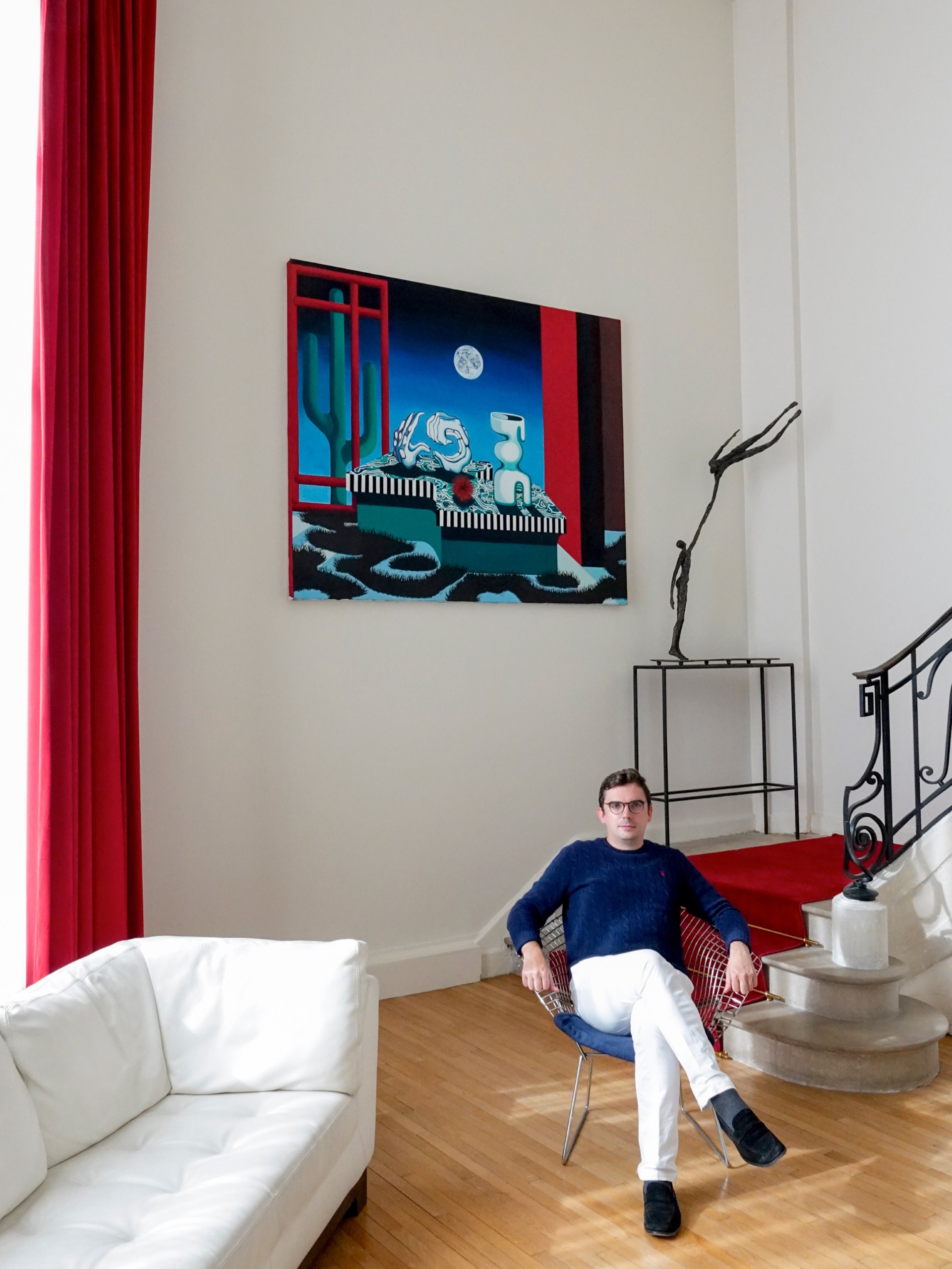
I grew up surrounded by art. My great-grandmother was a sculptor, and the family home was filled with works that were simply part of everyday life, each with its own story. Later, being exposed to the gallery scenes in Paris and London, I gradually began to develop my own eye and started acquiring works that reflect that same sense of narrative. Looking back, I think I was always drawn to works that carried a strong sense of narrative, pieces that continued to reveal themselves over time. That pull towards narrative is probably why I've always been drawn to expressive figuration, often with surreal undertones, works that feel familiar and unsettling at once.
ARTCOLLECTORNEWS: What draws you to expressive figuration, surrealist and narrative-driven works in particular?
I’m drawn to works that leave space for the imagination. Expressive figuration offers a sense of familiarity, while also allowing for ambiguity, and surreal elements introduce a shift that makes you look again. What interests me is that tension between something recognisable and something slightly off. The narrative dimension is important as well. I’m drawn to works that suggest a story without fully explaining it, where meaning builds over time and continues to unfold the more you live with the work. That kind of engagement naturally makes you think more about the artist’s wider practice than any single work in isolation. I think that’s also why I’ve always felt that I collect artists rather than artworks.
ARTCOLLECTORNEWS: At what point did collecting evolve into the idea of founding a gallery?
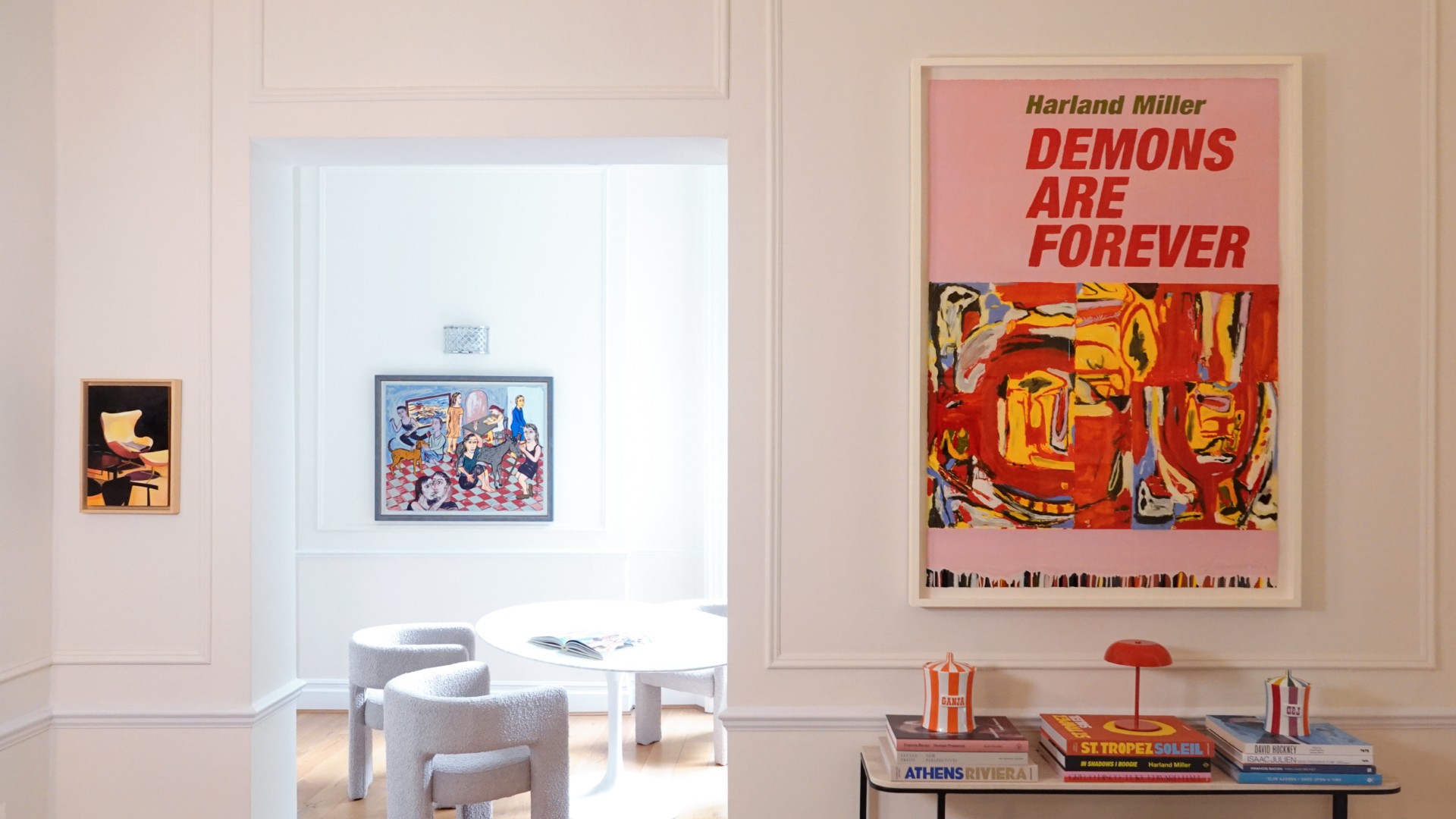
The idea of founding a gallery developed quite naturally through ongoing conversations with Marjorier Ding, who is a curator by training, having studied at the Royal College of Art. She had already been working closely with a number of artists early on, supporting their practice through independent exhibitions and bringing their work to the attention of collectors and galleries. I was also involved in that process from an early stage, and I became increasingly drawn to the idea of supporting artists beyond collecting alone, so opening a gallery together gradually emerged as the obvious next step.
Bringing together a curator’s perspective and a collector’s way of engaging with artists felt like a compelling direction for a young gallery, and something we wanted to explore through Tiderip. The name itself reflects that intention. We were drawn to it because it captures the kind of tension we find productive. A tiderip is the subtle turbulence created when opposing currents meet, often producing a temporary elevation in the water’s surface. It felt like a natural metaphor for the gallery, bringing together different artistic currents in a way that creates new energy and dialogue.
ARTCOLLECTORNEWS: You’ve spoken about “collecting artists rather than artworks”. How does that philosophy shape your decisions in practice?
I like to say that I collect artists rather than artworks, because it naturally places more emphasis on building relationships over time. Spending time with artists, through studio visits and ongoing conversations, allows you to understand their practice on a much deeper level, how it develops, what drives it, and where it might go. That perspective informs how I make decisions, focusing less on individual works and more on the trajectory of a practice.
It also changes what feels meaningful over time. One of the most rewarding aspects, both as a collector and as a gallerist, is seeing an artist you’ve supported develop their practice, find their voice, and reach new audiences.
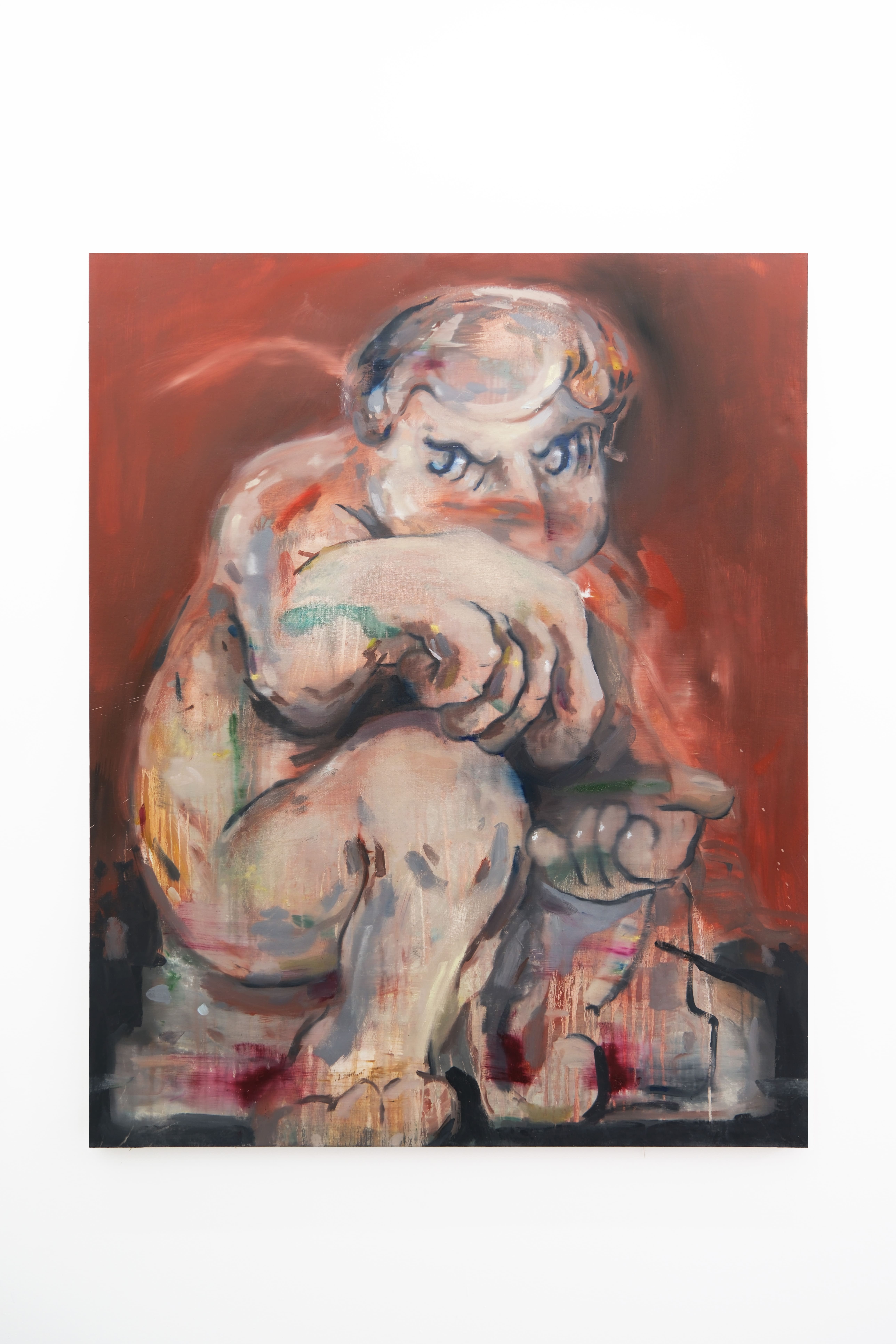
At Tiderip, we’ve been fortunate to support artists like Jordan Rubio and Daniel Roibal early on, when they were still studying at the Royal College of Art. We included them in a number of group shows, and it’s been rewarding to see their work gain momentum and be shown internationally, in places like Hong Kong and New York. It reinforces the idea that collecting, and working with artists more broadly, is about long-term engagement rather than individual moments
ARTCOLLECTORNEWS: How do your collector and curator approaches complement each other?
Our approaches complement each other quite naturally. Marj is deeply immersed in artists’ processes and in shaping the curatorial narrative of each exhibition, while I bring a collector’s perspective, focusing on how works inhabit space, evolve over time, and sit within a broader collection.
We usually visit artists’ studios together, which is where that difference becomes most visible, as each of us brings a slightly different way of looking at the work.
Bringing those two perspectives together allows us to build exhibitions that are both closely engaged with the artist’s practice and attentive to how the work is experienced and lived with over time.
ARTCOLLECTORNEWS: Studio visits seem central to your approach. What do you look for in those encounters?
Studio visits are central because they give you a much clearer sense of how a practice actually develops. What I’m looking for in those encounters is not just the finished work, but the thinking behind it, how ideas evolve, what the artist is trying to work through, and how they speak about the work itself. Conversation plays an important role in that. The way an artist talks about their practice often reveals as much as the work itself, whether there is clarity, intention and a genuine engagement with what they are doing.
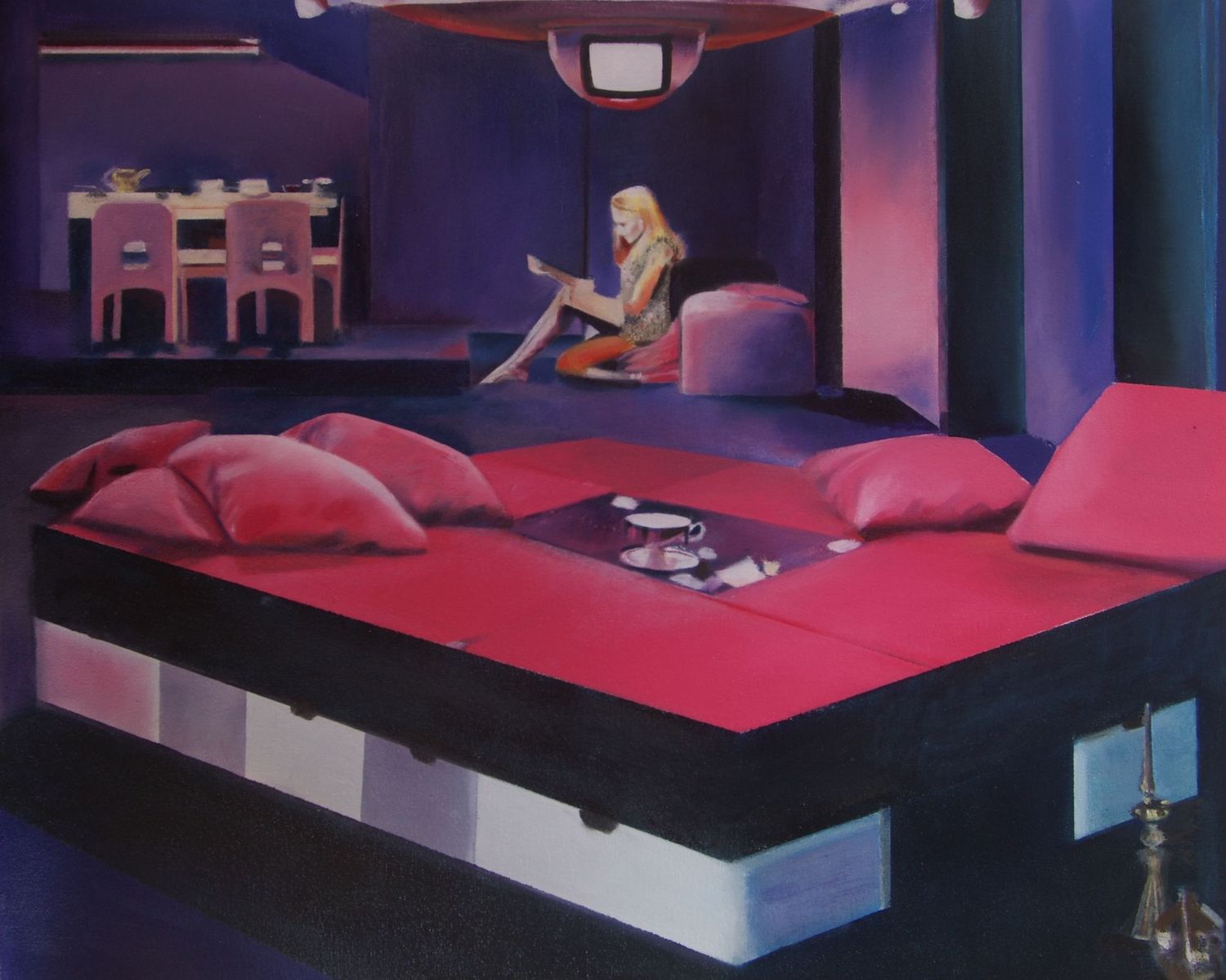
I remember visiting Alexandra Baraitser’s studio and seeing all the references she was working from, ranging from modernist design books to newspaper clippings of Bauhaus interiors and 1950s furniture. Speaking with her about our shared appreciation for Mackintosh furniture and that broader design language gave me a much deeper appreciation of the work and the broader aesthetic surrounding it.
ARTCOLLECTORNEWS: Has running a gallery changed the way you collect?
Running a gallery has definitely broadened the way I approach collecting. As a collector, it’s easy to stay within your comfort zone and focus on works you are familiar with and connect with instinctively. A gallery requires something different. You need to keep renewing your perspective and bring something new to each exhibition, which naturally pushes you beyond that initial comfort zone.
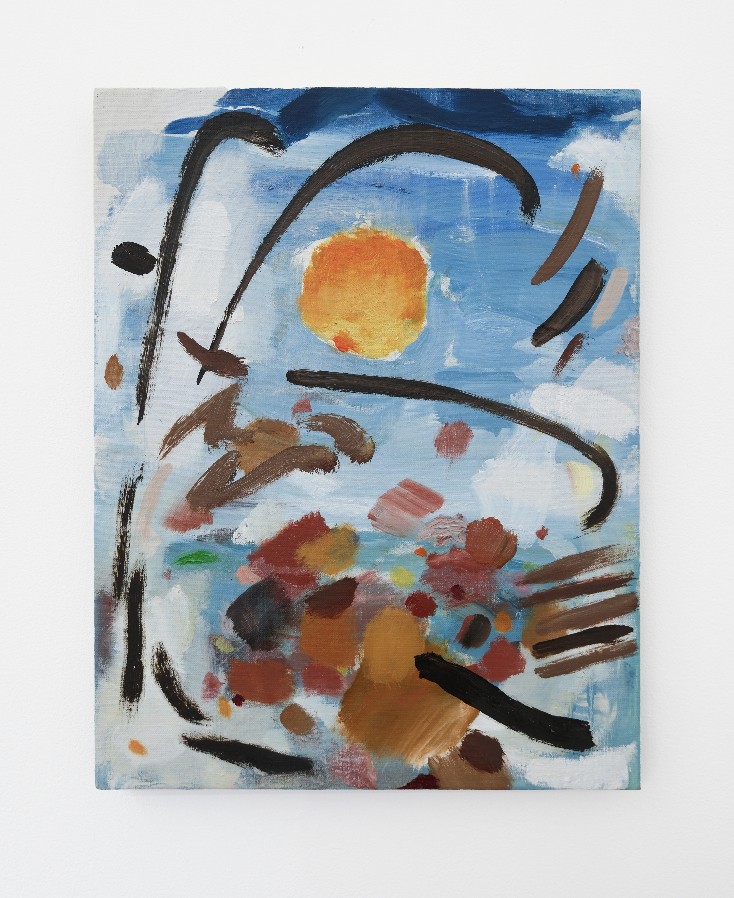
That has been a very positive shift for me. It has exposed me to a wider range of practices and ways of thinking about art. For example, I was initially less drawn to abstraction, but spending time in Daniel Roibal’s studio and seeing the way he approaches colour, layering and composition gave me a much greater appreciation for abstract painting.
Working with the gallery has made my approach to collecting more open and more curious, and my engagement with institutions like the Royal Academy has contributed to broadening that view further.
ARTCOLLECTORNEWS: As a patron of the Royal Academy of Arts, how has that experience shaped your view of the art ecosystem?
Being a patron of the Royal Academy has given me insight into the inner workings of a revered institution that plays a key role in shaping major exhibitions and broader cultural narratives. It’s valuable to be part of that conversation, hearing directly from curators about how they think about the programme, having the opportunity to meet artists exhibited at the RA and understand how a major institution supports and develops their work over time.
One particular highlight this year was a private visit organised by the RA to the home and collection of art dealer Ivor Braka. Experiencing such a significant collection, and seeing works by artists like Francis Bacon, Lucian Freud and Paula Rego in a lived environment, was especially impactful. It reinforced the idea that collecting is not just about acquiring works, but about living with them and engaging with artists over time.
More broadly, that experience has encouraged me to think about being involved in the art world beyond collecting alone, and to take a more active role in supporting artists and contributing to the wider ecosystem, something I am now doing through Tiderip.
ARTCOLLECTORNEWS: How do you approach the international art fair circuit, and what distinctions do you observe between different fairs?
I tend to navigate the art fair circuit as a way of staying close to different scenes at once. What I find interesting is that despite the increasingly global nature of the art world, each fair still retains a distinct identity and local context continues to shape what is being presented.
At Art Basel Hong Kong earlier this year, for example, I noticed a stronger presence of historical references and political imagery, with artists like Yue Minjun and Ming Wong coming to mind. Frieze London felt more focused on material experimentation, for instance in KV Duong’s use of acrylic on latex doors to explore personal and ancestral histories. Basel, on the other hand, felt like a balance between well curated booths with the works you can expect from blue-chip artists, alongside more conceptual works, such as Félix González-Torres’ “Untitled” (Go-Go Dancing Platform) performance.
Those differences are what make moving between fairs so interesting. They offer different entry points into the same broader conversation and help keep your own perspective fresh.
ARTCOLLECTORNEWS: What directions are you currently exploring at Tiderip, and what’s next for the gallery?
Over the past year, the focus has been on building a programme with a clear sense of direction, through ten exhibitions that prioritised depth and long-term engagement with artists. Looking ahead, we have a solo exhibition planned in October with Alexandra Baraitser, whose paintings reference 20th-century modernist design and reflect that balance between technical rigour and narrative that we’re particularly interested in.
Beyond that, there are several artists we’ve been following closely whose works feel genuinely in dialogue with one another, and we're building future exhibitions aroundthose conversations. We're also thinking seriously about how to extend the programme into the broader European art scene, not as a departure from what Tiderip is, but as a continuation of it.
From Faye Toogood and Kate Malone to textile art, post-war furniture and new material-led designers, PAD London showed why serious collector homes are built beyond the frame.

Paris Internationale returns with 56 galleries, a new Canal Saint-Martin venue and a model built around discovery. Here is how collectors should use it.
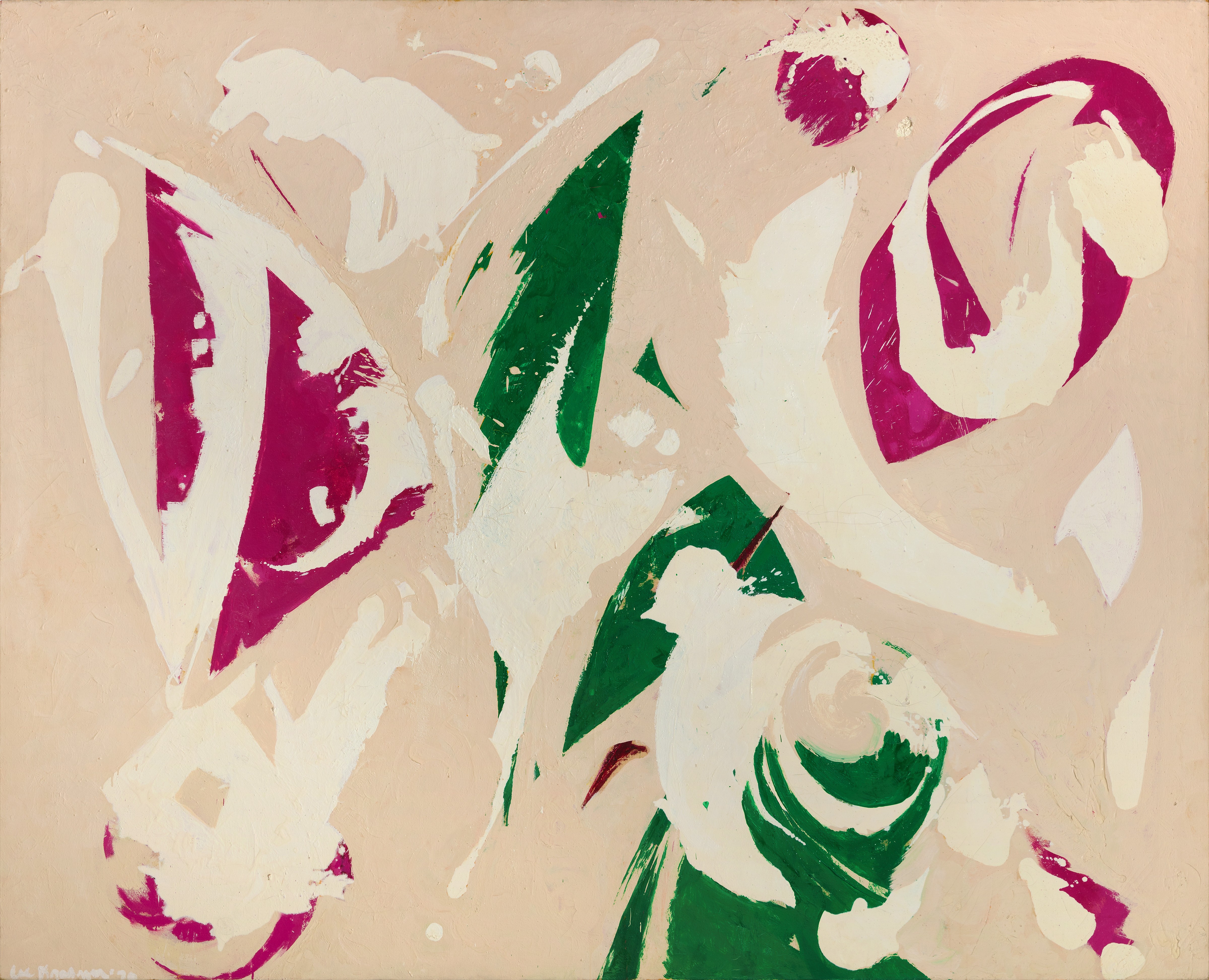
Ibrahim Mahama, Lee Krasner, Oscar Murillo, Tracey Emin and more: the exhibitions that turn Art Basel Paris week into something larger than a fair.