

Following Clive Davis’s death in June 2026, Christie’s dispersal of his collection offers more than a celebrity-provenance story. It reveals how one of music’s great talent-spotters lived with post-war and contemporary art — and how friendship, intuition and domestic space shaped what he bought.
The Golden Ear and the Collector’s Eye: Inside Clive Davis’s Art Collection
Following Clive Davis’s death in June 2026, Christie’s dispersal of his collection offers more than a celebrity-provenance story. It reveals how one of music’s great talent-spotters lived with post-war and contemporary art — and how friendship, intuition and domestic space shaped what he bought.

Clive Davis spent much of his life listening for distinction before consensus arrived. In music, that instinct helped shape careers across rock, pop, R&B and hip-hop. After Davis died in New York in June 2026 at the age of 94, Christie’s announcement that his art collection would come to auction added another dimension to his legacy: the private visual culture he had lived with for decades.
The easy headline is that the man with the 'golden ear' also possessed a collector’s eye. There is truth in the comparison, but the collection is more interesting than the metaphor. Davis did not build a textbook survey of post-war and contemporary art. He bought works that entered his homes, intersected with friendships and, in several cases, crossed directly into the musical world he helped create.
Eight works from the collection are due to headline Christie’s 20th Century Evening Sale in New York during the November 2026 marquee season, with additional pieces appearing in the Post-War and Contemporary Art Day Sale and Prints and Multiples. Artists represented include Frank Stella, Andy Warhol, David Hockney, Jean Dubuffet, Joan Mitchell, Jean-Michel Basquiat, George Condo and Fernando Botero.
A house that seemed designed around a painting
One of Davis’s earliest art acquisitions was Frank Stella’s Attica II, 1978, from the Concentric Squares series. He installed it prominently in his modernist weekend house in Pound Ridge, north of New York City, and later described the relationship between house and picture as though the architecture had been designed for the painting.
That anecdote is more useful than it first sounds. It describes a collector who experienced art spatially rather than as inventory. The work gained meaning through repeated exposure: across seasons, light conditions, furniture arrangements and ordinary domestic life. Christie’s photographs of Davis’s interiors reinforce that point. Strong paintings were allowed to share rooms with rugs, furniture, windows and other works rather than being isolated in a permanent imitation of the white cube.

For ARTCOLLECTORNEWS readers, this is where the collection starts to become instructive. Buying an important work is one decision. Learning how it behaves inside a life is another.
When collecting becomes biographical
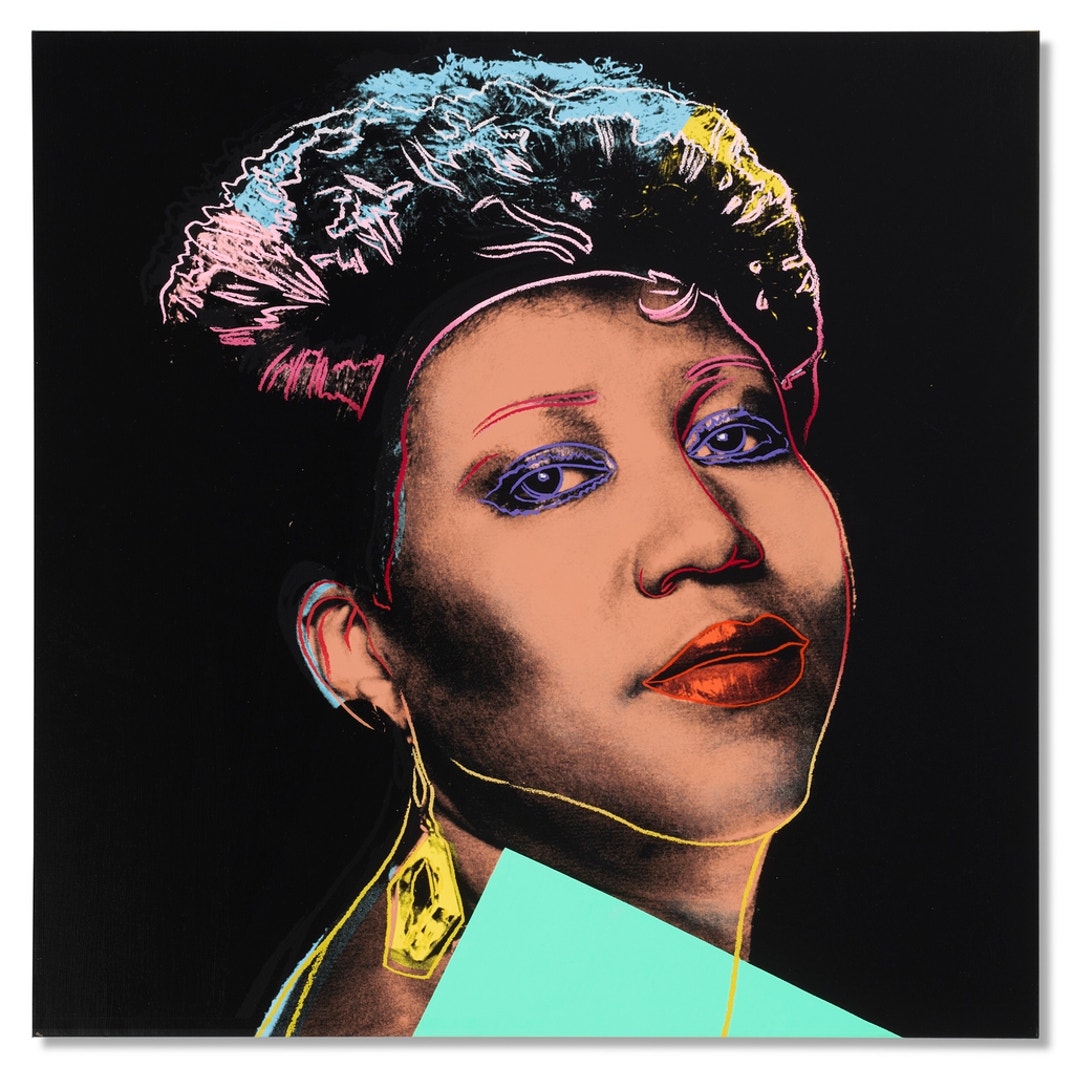
The Warhol portraits are the clearest places where Davis’s professional and collecting histories meet. Aretha Franklin, made around 1986, belongs to the period when Franklin was signed to Arista and rebuilding her commercial career with Davis. The picture is simultaneously a Warhol, an image of one of the great American singers and an object tied to Davis’s own working relationship with Franklin.
The provenance therefore has unusual density. It is not merely 'celebrity owned'. Davis’s history is part of the cultural network around the work itself. He knew Warhol, worked closely with Franklin and helped bring the portrait into being as part of the visual identity surrounding her 1986 album.
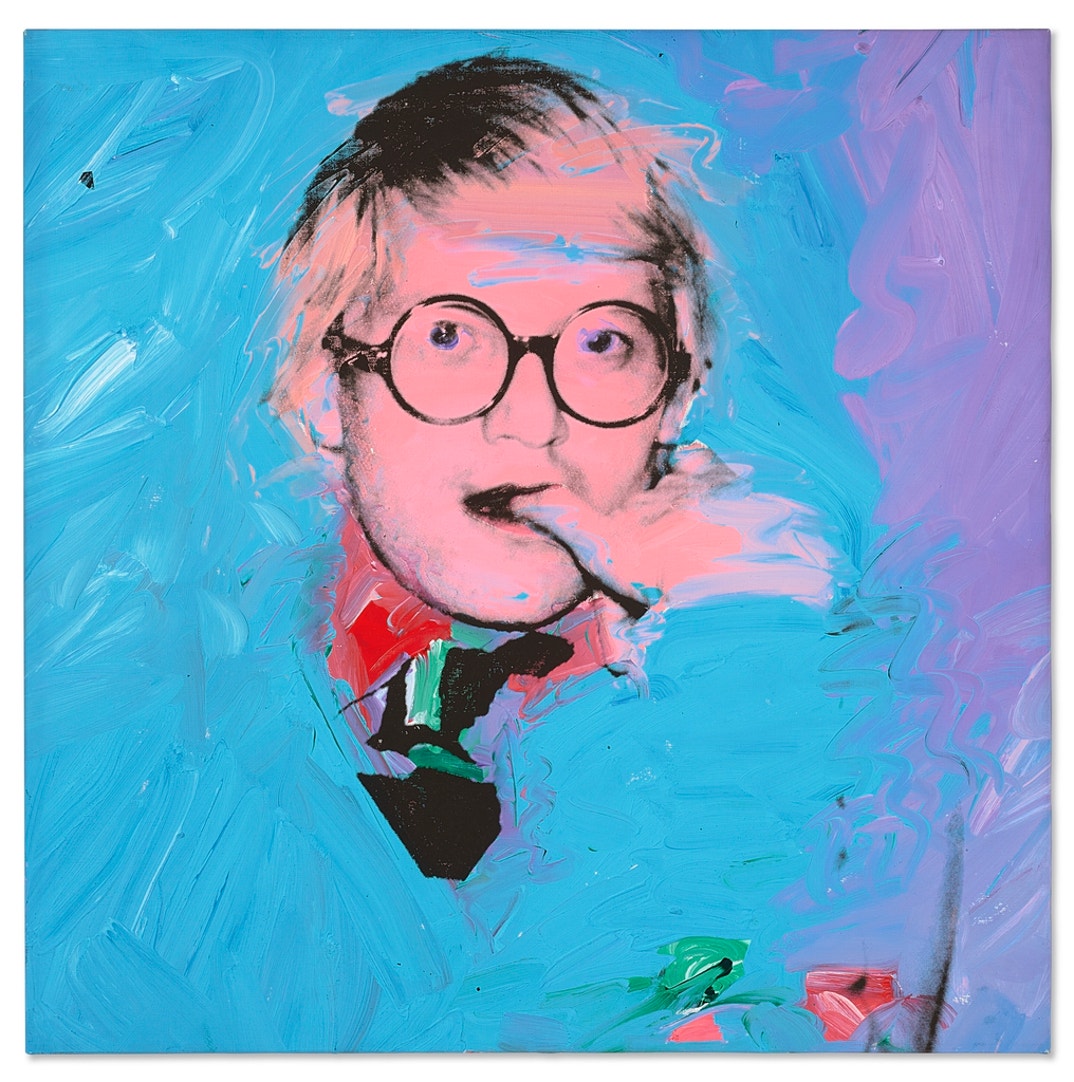
Warhol’s 1974 portrait of David Hockney produces a different triangle. Hockney was a friend of Davis, and decades later Davis travelled to Normandy to sit for the artist when a portrait was commissioned in connection with the Smithsonian National Portrait Gallery’s 2022 Portrait of a Nation Gala. The result was the first Hockney painting to enter the National Portrait Gallery’s collection.

Access is not the same as judgement
Davis’s friendships gave him unusual proximity to artists and cultural figures, but proximity by itself does not make a coherent collection. Access may create opportunities; judgement determines which opportunities matter. That distinction is crucial for any collector whose professional or social world brings them close to artists.
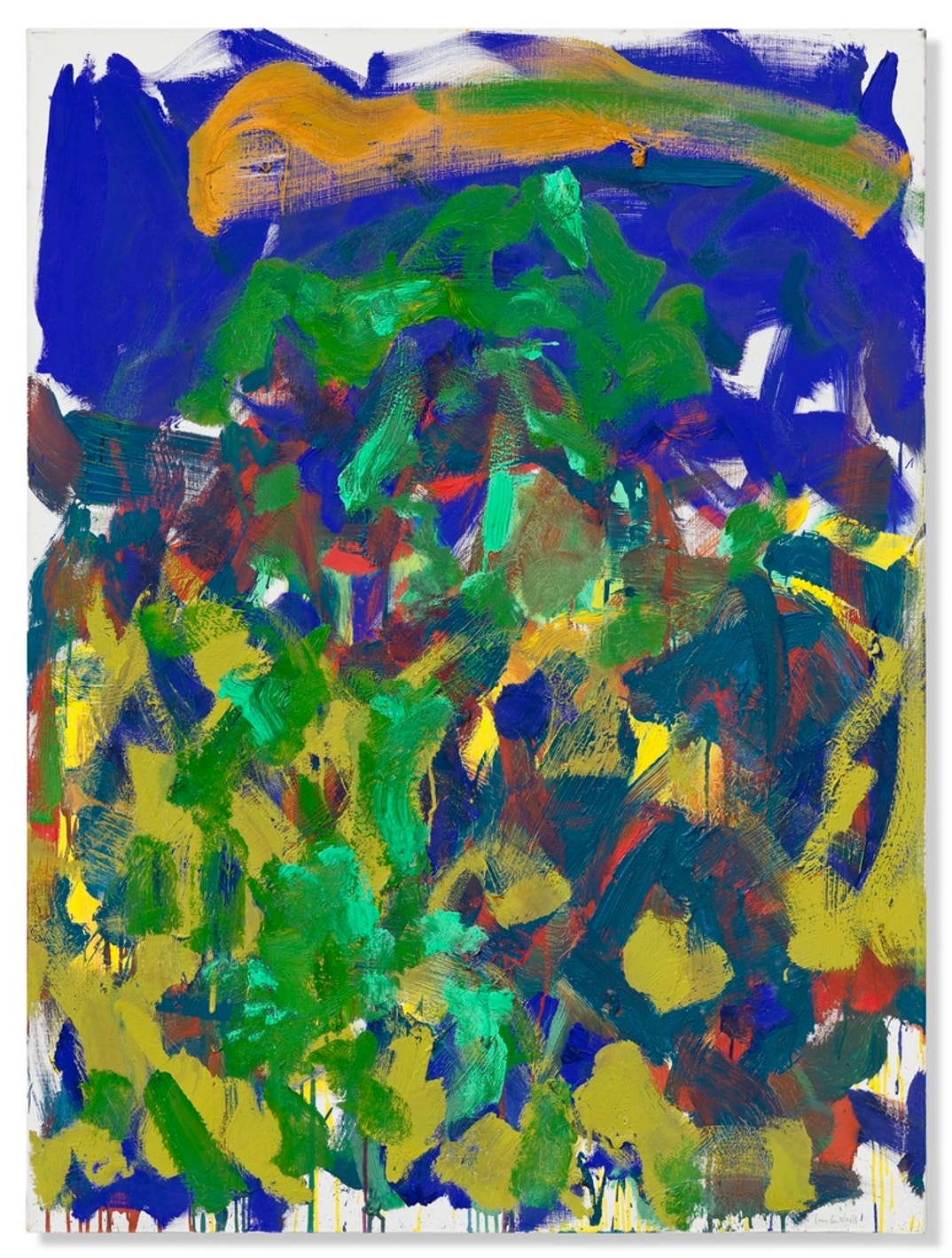
The test is whether the object retains force when the friendship is removed from the wall label. Davis’s strongest holdings do. Warhol’s portraits have independent art-historical lives. Hockney’s Hawthorne Blossom, Woldgate No. 4 belongs to an important late phase of the artist’s return to the East Yorkshire landscape. Dubuffet’s La Flibuste sits within the development of his L’Hourloupe language. Joan Mitchell’s Untitled, painted in 1992, comes from the final year of one of post-war painting’s most distinctive careers.
A collection of singular voices
What ties these works together is not one movement. It is recognisability. Stella’s strict geometry, Warhol’s manufactured celebrity image, Hockney’s heightened landscape, Dubuffet’s deliberately unruly line and Mitchell’s late colour all announce sharply individual artistic positions.
Here the analogy with Davis’s music career becomes useful again. His professional skill was not that the artists he worked with sounded alike. It was the opposite: he identified voices that could remain distinctive while reaching large audiences. The art collection suggests a similar preference for artists whose visual languages were difficult to confuse with anyone else’s.

For collectors, that is a more durable principle than collecting by trend. A collection can cross movements and generations if the owner is consistently sensitive to originality, conviction and the strength of an artist’s internal language.
Living with art rather than displaying status
The domestic photographs are also a useful corrective to the idea that important art needs visual quarantine. Davis’s rooms were polished, but art lived among architecture and furnishings. In one Christie’s image, a Frank Stella hangs above an Alex Katz within a fully furnished interior photographed by Douglas Friedman. The room does not weaken the art. It gives the works another kind of scale.
This matters increasingly as collectors move between art and collectible design. The goal is not to make the art match the sofa. It is to build enough visual hierarchy that strong objects can coexist without competing into incoherence. Davis’s interiors show that a serious collection can remain domestic without becoming decorative.
The market will test more than famous provenance

Davis’s name will inevitably attract attention in November, but celebrity provenance is most persuasive when it reinforces rather than substitutes for the quality of the work. The auction group contains works made at very different moments in their artists’ careers, and the market will assess them through different comparables.
Warhol’s Aretha Franklin carries a biographical history unusually specific to Davis. Stella’s Attica II has to be understood within the artist’s return to the Concentric Squares format. Hockney’s landscape belongs to a market in which date, subject, scale and the East Yorkshire period matter. Mitchell’s late work is judged through another history again.
The sensible collector should therefore separate two things: the narrative premium attached to Davis’s ownership and the independent quality of the object. Provenance can deepen meaning and desirability. It cannot rescue a weak example.
Provenance as a cultural archive
The Davis sale also shows why collectors should document more than invoices. Installation photographs, correspondence, catalogues and records of how a work entered a collection can become part of an object’s biography. That is particularly true when collecting intersects with friendships and other cultural histories.

A future owner of the Warhol Aretha Franklin, for example, is not simply acquiring a painting formerly owned by a famous executive. The relationship among Warhol, Franklin and Davis is part of why that particular object carries unusual narrative force. Preserving that record is a form of stewardship.
What collectors should watch in November
Three questions will be worth separating when the collection reaches New York. First, how do the major works perform against genuinely comparable examples? Second, is there a measurable premium attached to Davis provenance? Third, which works move into museum or high-profile private collections and how prominently is the Davis history carried forward in future cataloguing?
The most interesting answer may take years to emerge. Auction results happen in minutes; provenance accumulates over decades. Davis spent a career helping distinctive voices become culturally legible. His collection suggests that he responded to visual art in a related way — not by forcing different artists into one style, but by recognising the power of a voice strong enough to remain itself.
Sale information
The Clive Davis Collection will be presented by Christie’s across the autumn 2026 season in New York. Eight works are scheduled to headline the 20th Century Evening Sale in November, with additional works in the Post-War and Contemporary Art Day Sale and the Prints and Multiples sale. A touring presentation opened at Christie’s Los Angeles on 14 September 2026.
Teresa Margolles’s first large-scale US museum exhibition turns rubble, residue and forensic thinking into a radical form of memorial. For collectors, it is also a masterclass in why context and conservation can be part of the medium.
Wangari Mathenge’s first solo exhibition with Lévy Gorvy Dayan expands her Re-membering series into sculpture, turning books, objects and domestic space into a layered inquiry into Kenyan cultural memory.