
October 12, 2026
Articles
Articles
Yelin Lee's Ghost Play transforms emojis into sculpture, uses chroma-key screens and a two-minute delay, and turns visitors into their own fleeting afterimages.
At Nottingham Contemporary, the gym has entered the museum — but the weights have been replaced by fragments of art history. Lithuanian artist Augustas Serapinas has transformed two of the institution’s largest gallery spaces into something caught between an art school, a sculpture studio and a functioning fitness centre. Physical Culture, his first institutional solo exhibition in England, brings together steel exercise machines, easels and sculptural casts that reference everything from student studies to some of Western art’s most familiar ideals of physical perfection. Among them are replicas derived from Michelangelo’s David and the Apollo Belvedere, figures that have spent centuries functioning as models of the idealised male body. Here, however, their authority is subjected to a rather different form of pressure. They become weights.
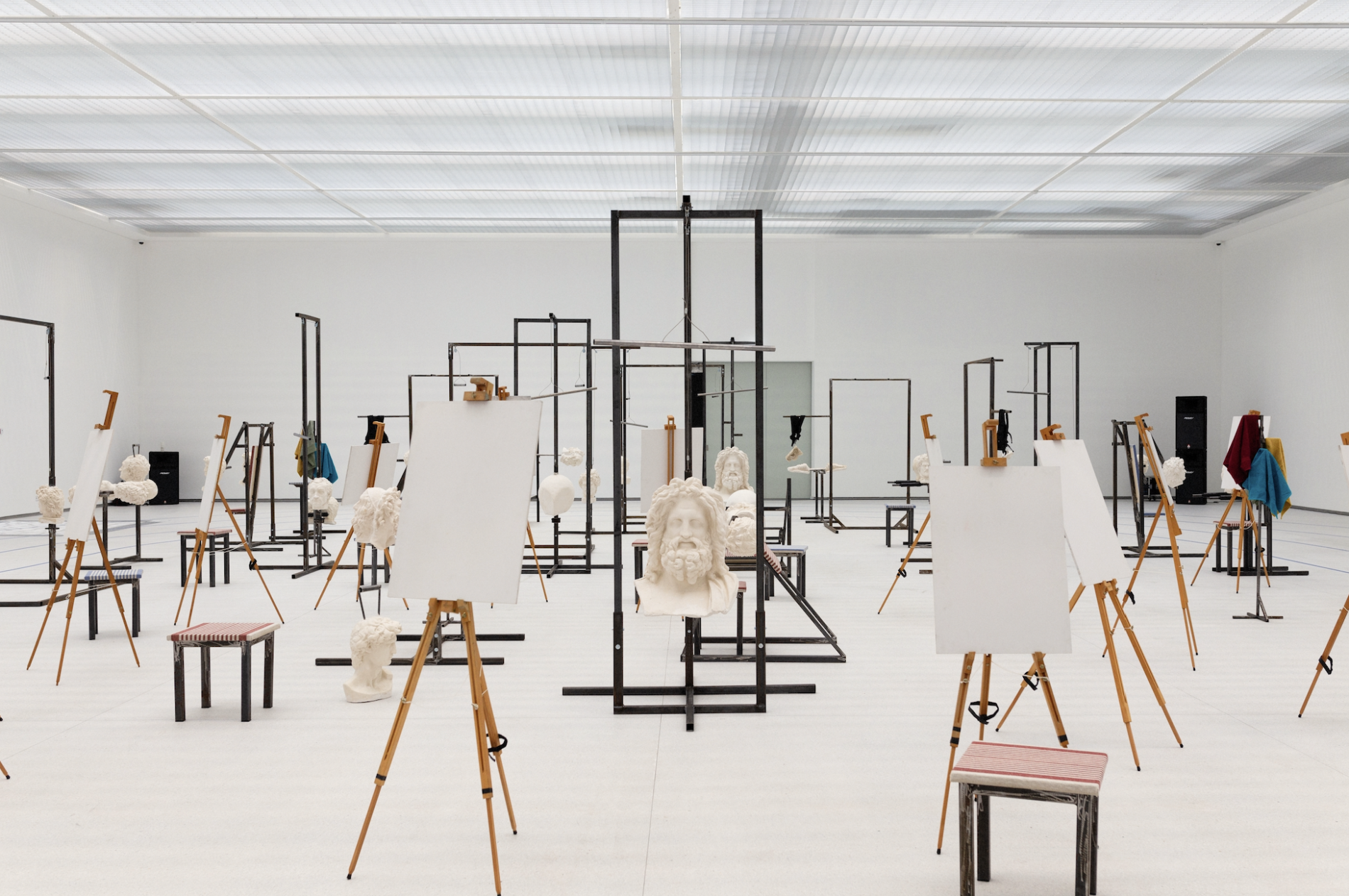
At Nottingham Contemporary, the gym has entered the museum — but the weights have been replaced by fragments of art history.
Lithuanian artist Augustas Serapinas has transformed two of the institution’s largest gallery spaces into something caught between an art school, a sculpture studio and a functioning fitness centre. Physical Culture, his first institutional solo exhibition in England, brings together steel exercise machines, easels and sculptural casts that reference everything from student studies to some of Western art’s most familiar ideals of physical perfection.
Among them are replicas derived from Michelangelo’s David and the Apollo Belvedere, figures that have spent centuries functioning as models of the idealised male body. Here, however, their authority is subjected to a rather different form of pressure.
They become weights.
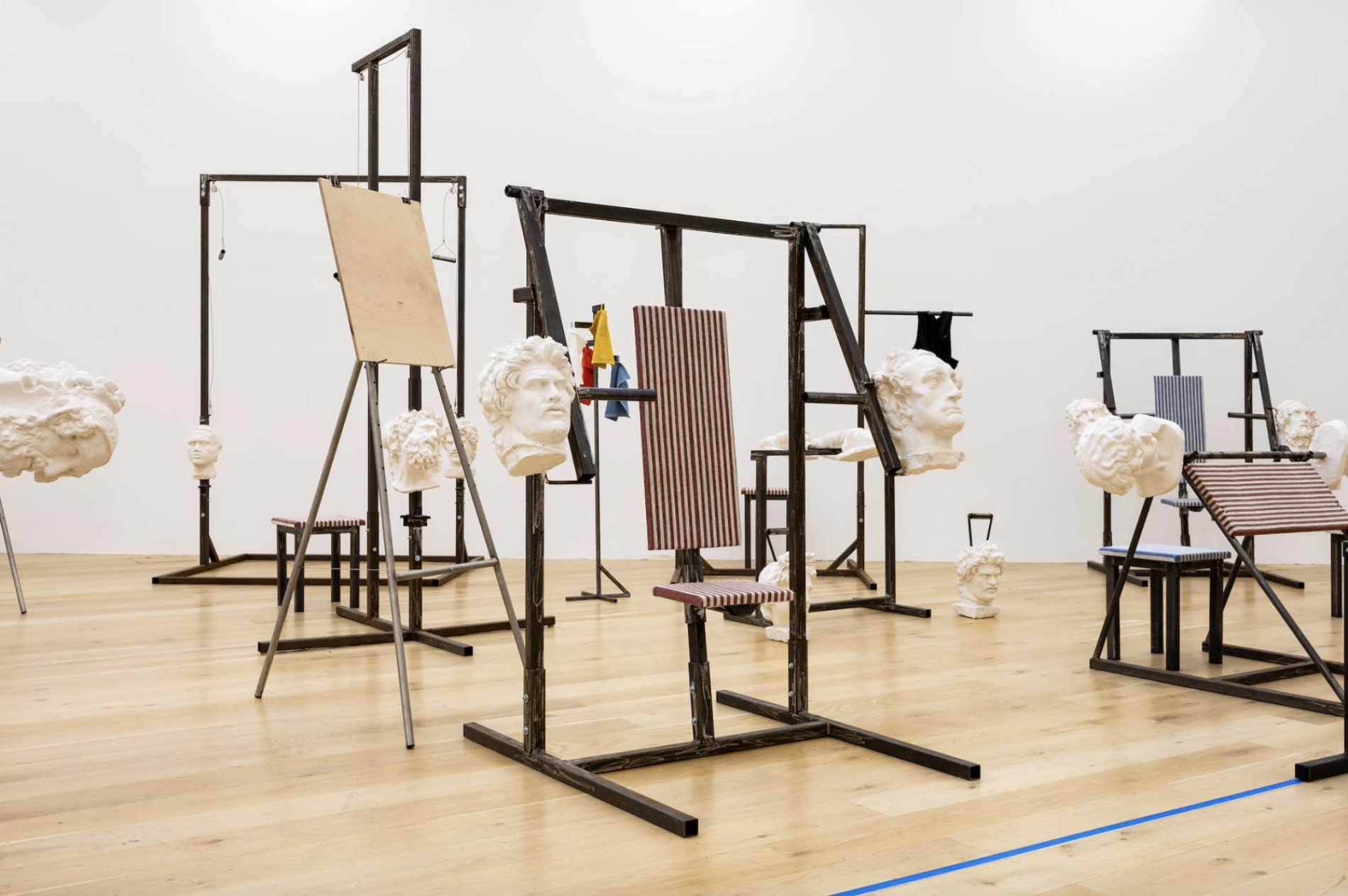
Serapinas replaces conventional gym plates with jesmonite sculptural forms, allowing visitors not simply to look at art history, but quite literally to feel its weight. The exercise machines are fully operational and form part of an active programme involving fitness groups, drawing sessions and community participation.
It is a remarkably simple proposition — and one that expands almost immediately.
The origins of Physical Culture lie in Serapinas’s own education.
As a student at the National M. K. Čiurlionis School of Art in Vilnius, he was trained within a classical system in which repeated drawing from plaster casts and mastery of technique were central to artistic education. For the present work he has returned to that experience, reconstructing student sculptures and academic models alongside replicas of canonical works from antiquity and the Renaissance.
What emerges is a comparison between two systems of discipline.
In the academy, a student repeatedly draws the body in an attempt to train the hand and eye.
In the gym, someone repeatedly lifts a weight in an attempt to train the body.
Both depend upon repetition.
Both contain implicit ideas about improvement.
And both, at their extremes, can become systems through which an “ideal” is pursued.
Serapinas has described the parallel between repetitive academic drawing and physical training as one based upon discipline, precision and the desire to improve. Rather than illustrate that connection from a distance, he constructs an environment in which both behaviours can take place simultaneously.
That is where the exhibition becomes particularly interesting.
The gallery does not simply resemble a gym.
It functions as one.
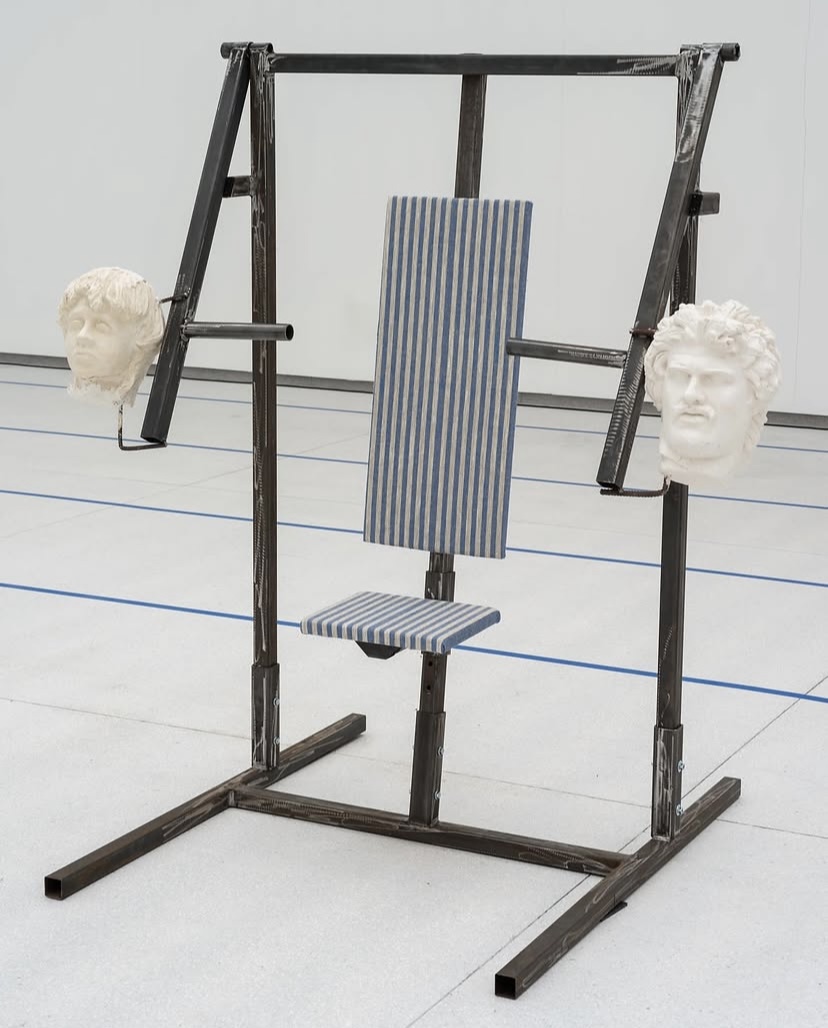
There is something almost inevitable about encountering Apollo Belvedere in this context.
For generations, copies of the celebrated antique sculpture occupied art academies as models of physical proportion and artistic excellence. Serapinas places that historical inheritance beside contemporary fitness culture — a world increasingly shaped by personal optimisation, wellness, gym memberships and bodies continually photographed and circulated online.
The ideals may have changed, but the desire to construct an exemplary body has hardly disappeared.
Serapinas argues that even at a moment when universal standards of beauty are openly questioned, ideas of physical perfection continue to influence how people view themselves. He points to the extraordinary popularity of gyms and the growing consumer culture surrounding fitness, longevity and wellbeing.
In this sense, Apollo has not vanished.
He has simply acquired a membership.
The marble body of antiquity, the academic plaster cast and the contemporary gym physique belong to different historical moments, yet each participates in a culture of comparison.
Serapinas makes those comparisons physical.
You can stand beside these sculptural fragments.
Draw them.
Or lift them.
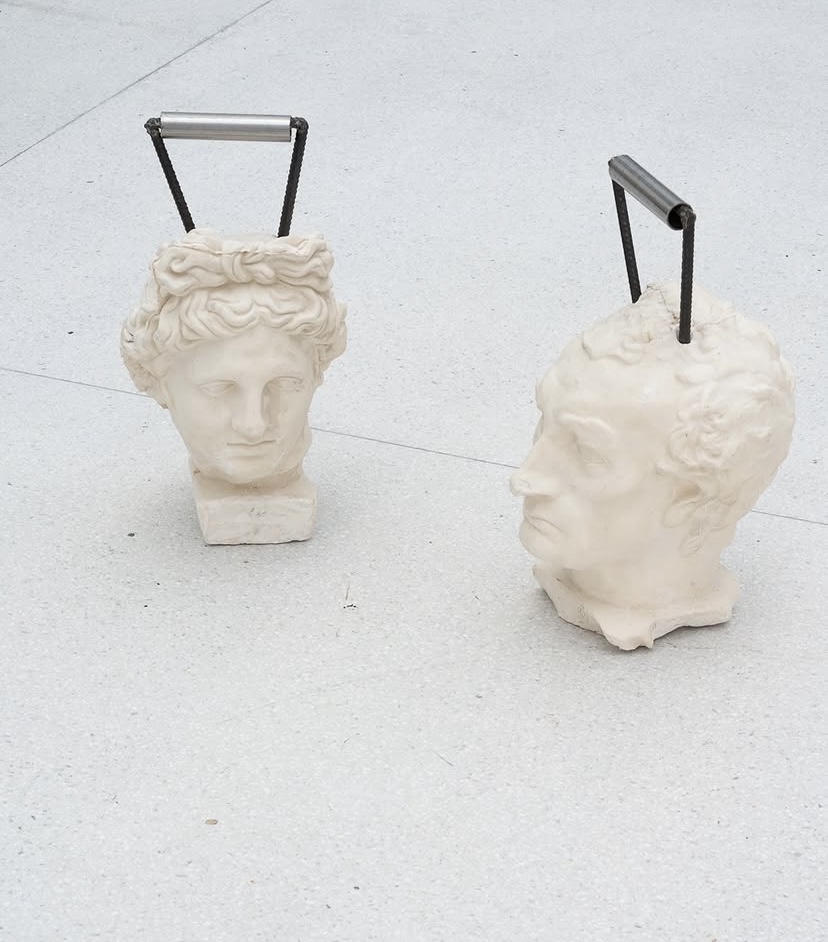
The strongest aspect of Physical Culture may be its refusal to remain static.
Local fitness groups have been invited to use the machinery. Students participate in life-drawing sessions. Community groups activate the galleries through workshops and exercise. The installation therefore changes depending upon who enters it and what they choose to do.
An unoccupied machine reads as sculpture.
A person using it turns that sculpture into equipment.
Someone sketching nearby transforms the room again — suddenly the museum resembles an academy.
This movement between functions is characteristic of Serapinas’s broader practice, in which familiar spaces and objects are frequently displaced, reconstructed or assigned unexpected uses.
Here, the boundaries become particularly unstable.
Who is performing?
The person exercising?
The person drawing?
The visitor watching them?
And at what point does an activity performed inside an art institution become part of the artwork?
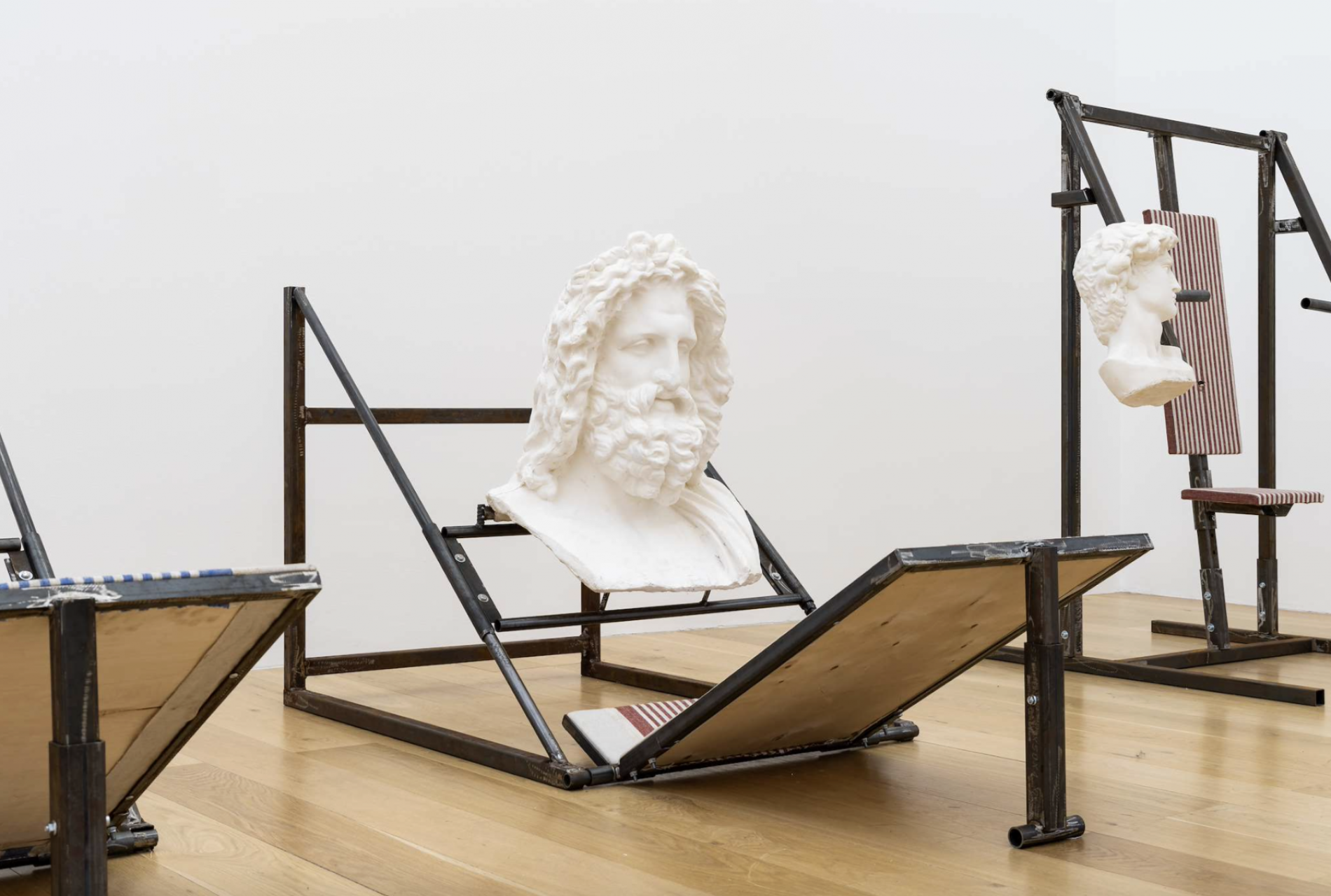
There is humour throughout the exhibition.
A classical head appearing where one expects to find an iron gym weight has an immediate absurdity.
But the joke carries considerable historical baggage.
The term “physical culture” itself developed around movements that connected exercise with discipline, morality, health and ideas of the productive citizen. Serapinas’s work inevitably brushes against the ways bodies have been categorised, trained and politicised — particularly across European history.
The artist does not reduce this history to a single political statement.
Instead, Physical Culture creates a system in which the viewer encounters different traditions of self-improvement simultaneously: artistic education, physical training, classical aesthetics and contemporary wellness culture.
The result is less an argument than a machine for producing associations.
And that may explain why the installation feels so contemporary.
We live in a period obsessed with improvement.
Improve your body.
Improve your productivity.
Improve your health.
Improve your skills.
Track the progress.
Document it.
Repeat.
Serapinas takes that contemporary instinct and places it beside one of art history’s oldest educational methods: copy the ideal until you understand it.
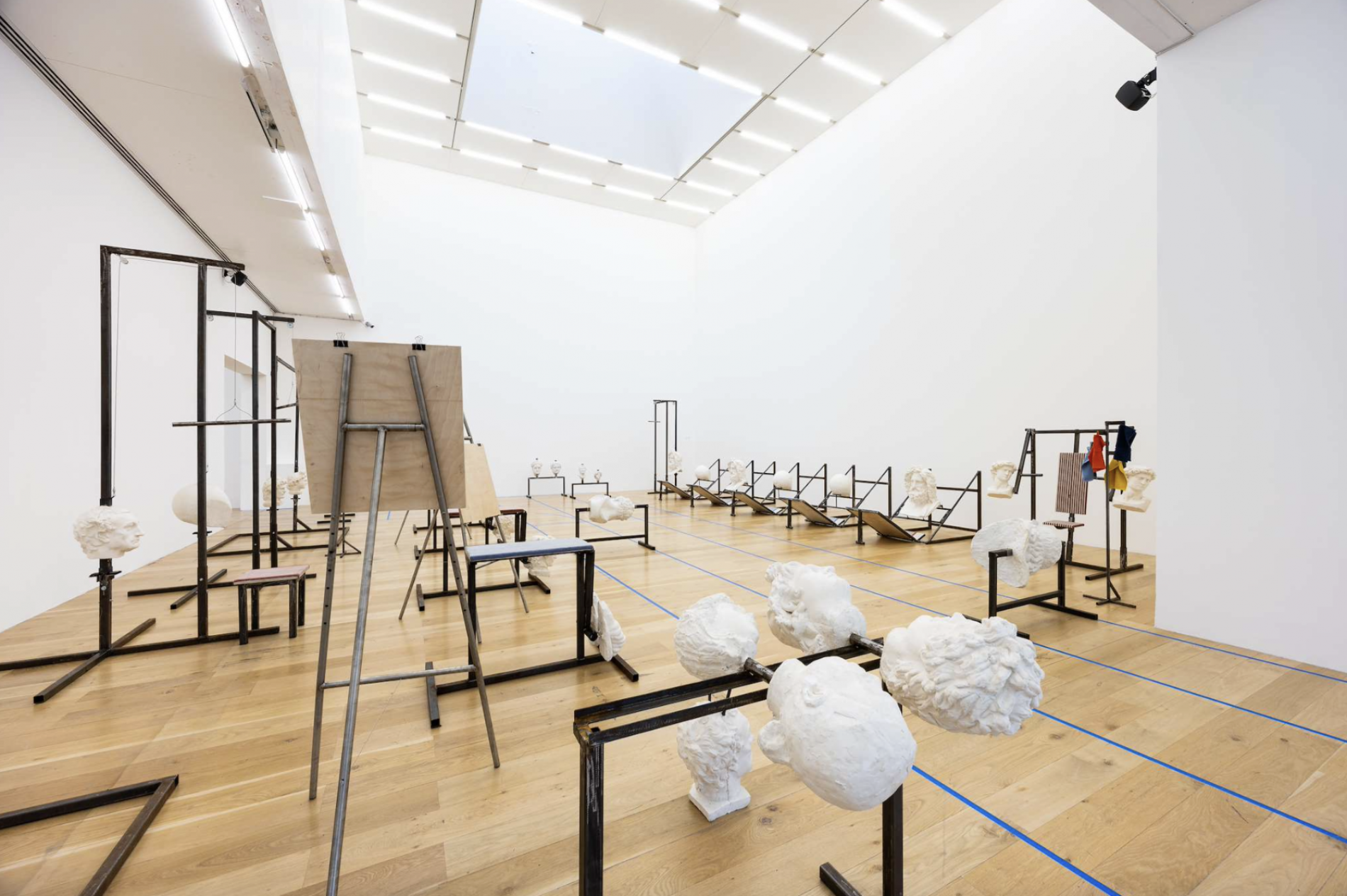
For collectors accustomed to thinking about sculpture primarily as an object, Physical Culture offers another proposition.
The sculptural object does not disappear — quite the opposite. Cast heads and bodies remain visually dominant throughout the exhibition — but meaning comes from the system built around them.
A sculpture becomes a weight.
A weight becomes a device for performance.
A gym becomes an exhibition.
And an image of historical perfection becomes something physically difficult to move.
There is an elegant conceptual economy to the entire project.
Serapinas does not need to destroy Apollo to challenge what Apollo represents.
He simply asks us to pick him up.
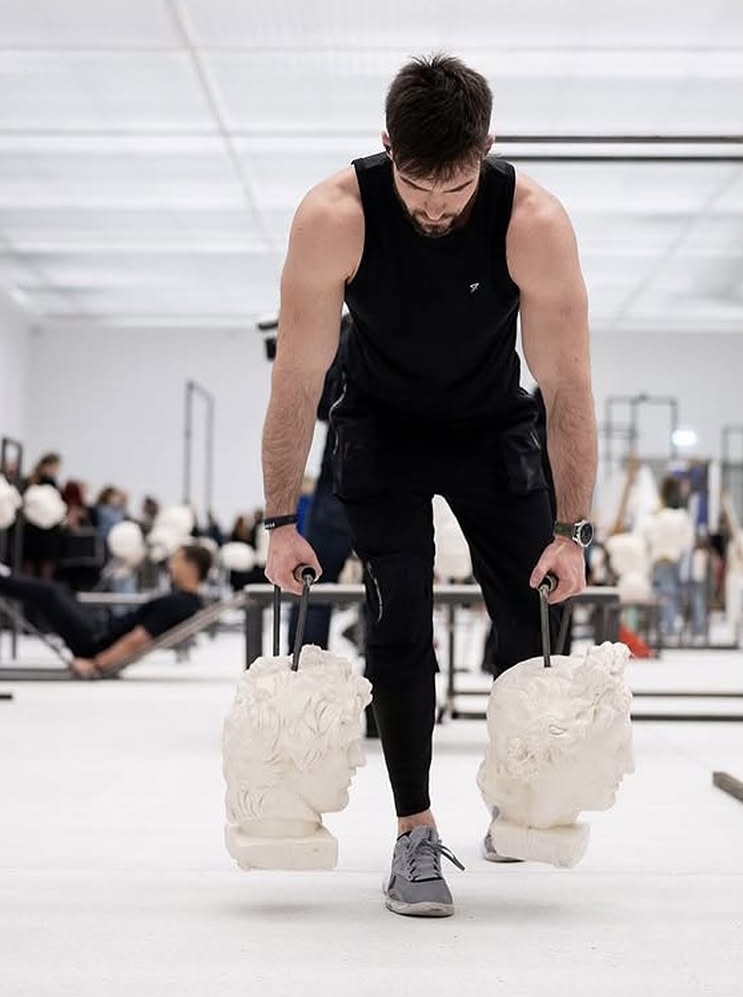
Augustas Serapinas: Physical Culture
Nottingham Contemporary
6 June – 13 September 2026
Curated by Katie Simpson and Klara Szafrańska.
Yelin Lee's Ghost Play transforms emojis into sculpture, uses chroma-key screens and a two-minute delay, and turns visitors into their own fleeting afterimages.
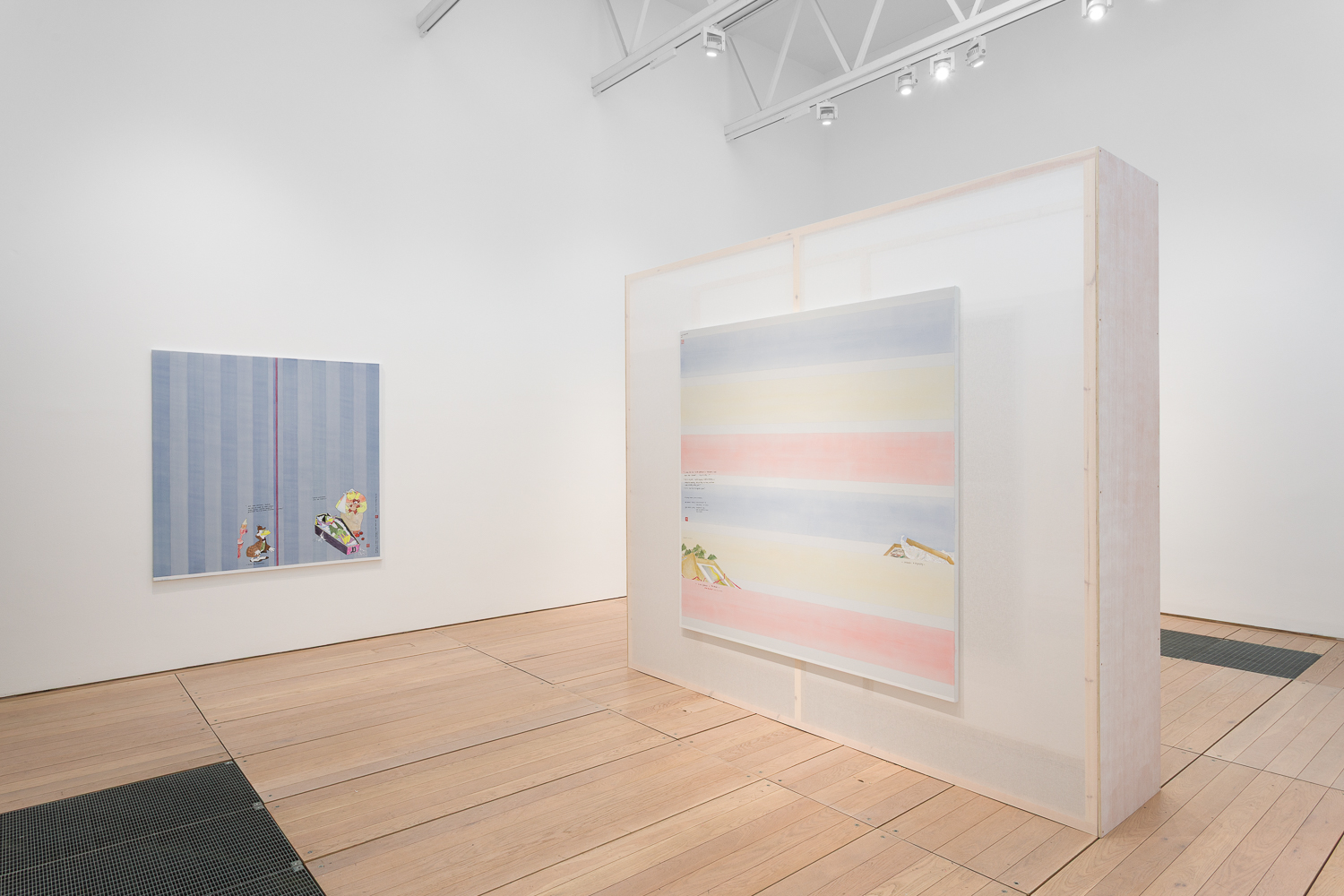
In her first UK institutional exhibition, Evelyn Taocheng Wang turns mistranslation, Agnes Martin, Chinese literati painting and fantasies of Britain into a deliberately unstable language of identity.
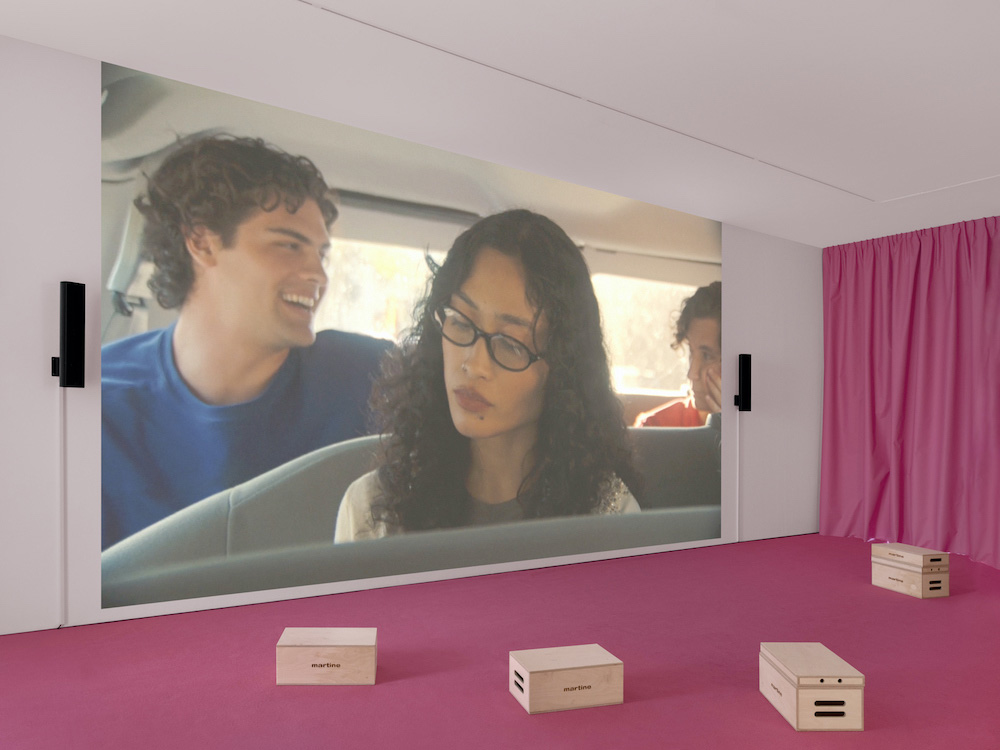
From Robert Ryman and Lorna Simpson to Mary Ramsden, Martine Syms and Nicola Turner, the strongest London route during Frieze week begins outside the fair.